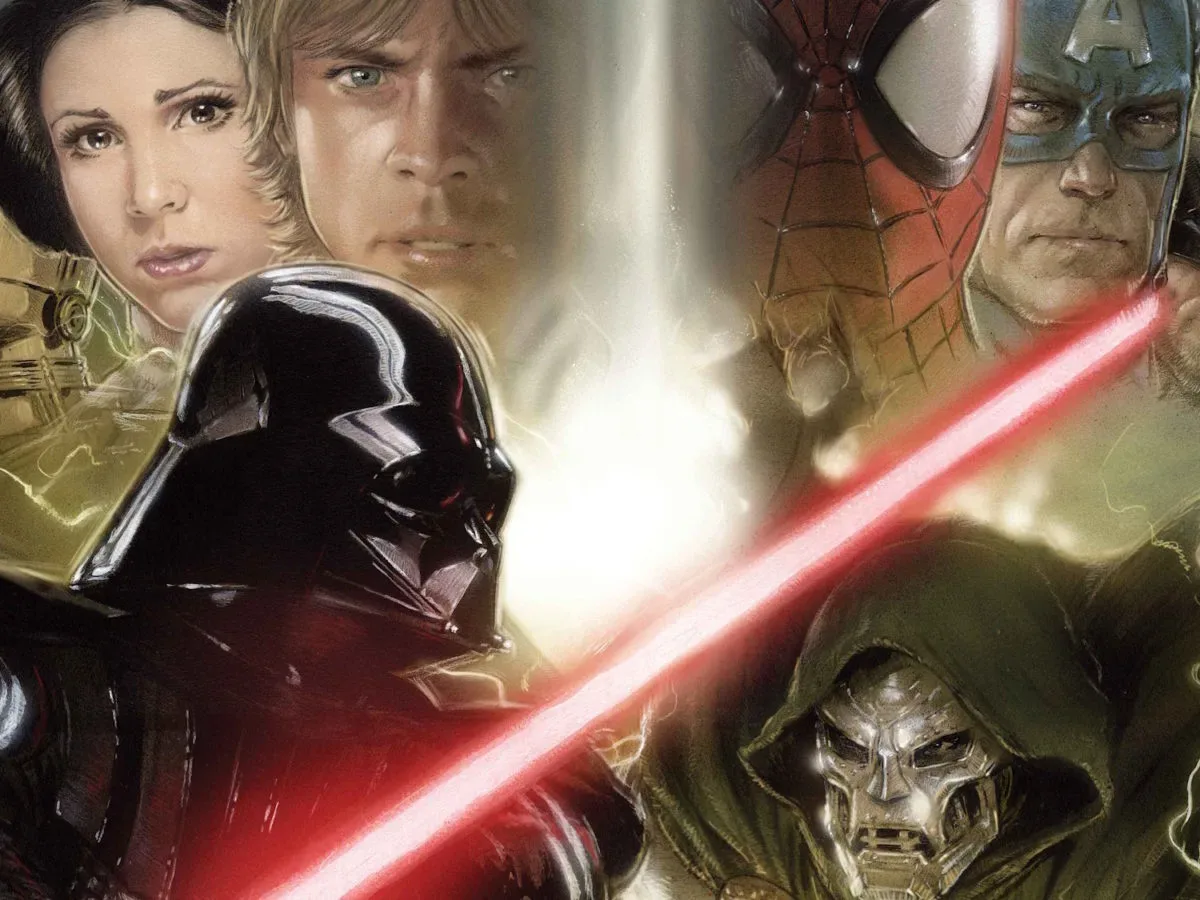
Marvel’s Marvel X Star Wars: Hope Assembles has become a little larger in two different ways. The comic crossover from writer Kevin Smith and artist David Marquez has expanded from five issues to six, while a connected LEGO Ideas challenge is inviting builders to imagine what happens when the two franchises collide brick by brick.
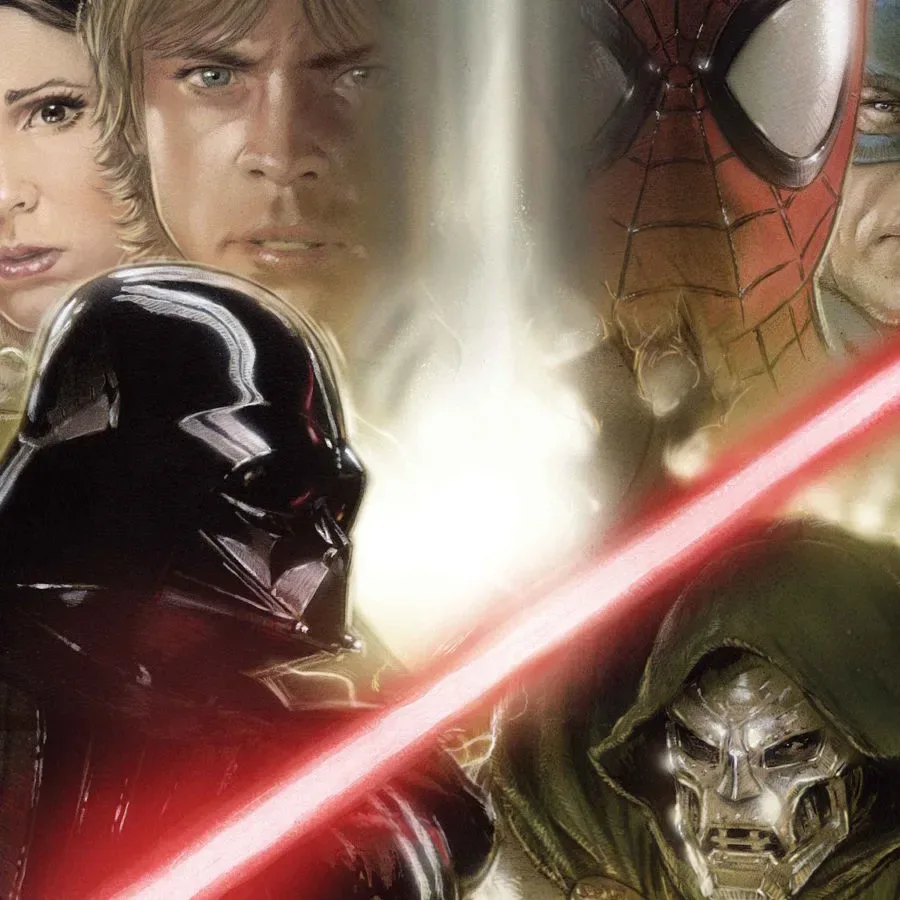
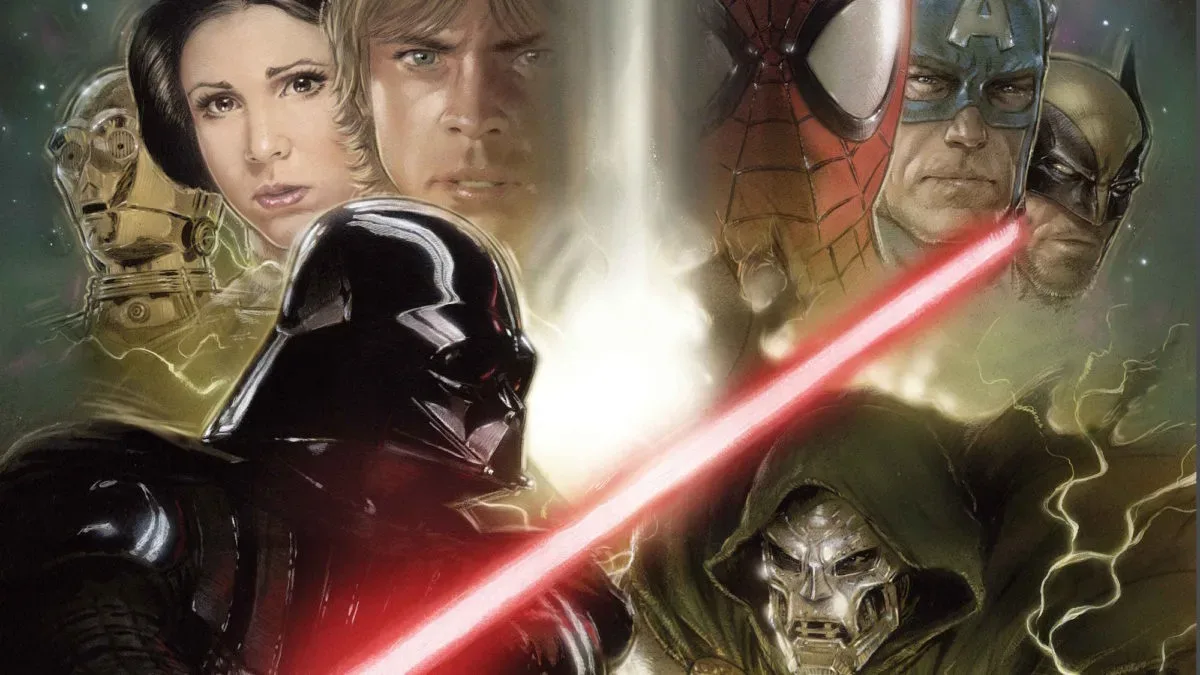
The key comic-book detail is not merely that familiar characters will meet. The story is set to place Star Wars within Marvel’s Earth-616 continuity, meaning its consequences are intended to remain part of the Marvel Universe going forward. That is a substantial distinction from a self-contained novelty crossover, even before considering the early tease of Darth Vader and the Infinity Gauntlet.
For a story built around two immense fictional toolboxes, a sixth issue potentially gives the creative team more room to establish the collision, play through its character pairings, and address what it means for the setting after the event ends. It also means readers keeping track of the series will need to plan for six chapters rather than the initially announced five.
What “Earth-616 continuity” means here
In Marvel terminology, continuity is the shared ongoing narrative framework in which events can matter beyond a single miniseries. Earth-616 is the label used for Marvel’s principal comic-book universe. Saying that Hope Assembles is in continuity signals that this is designed to be more than an imaginary encounter with no lasting connection to the wider Marvel line.
That does not, by itself, explain every practical consequence. The available information does not specify which characters or titles will follow up on the crossover, how long its effects will last, or precisely how Star Wars’ presence will be handled in subsequent stories. Those are questions for the six-issue series to answer. Still, the stated continuity status changes the frame considerably: readers should approach the book as a Marvel Universe story that incorporates Star Wars, rather than simply a celebratory side trip.
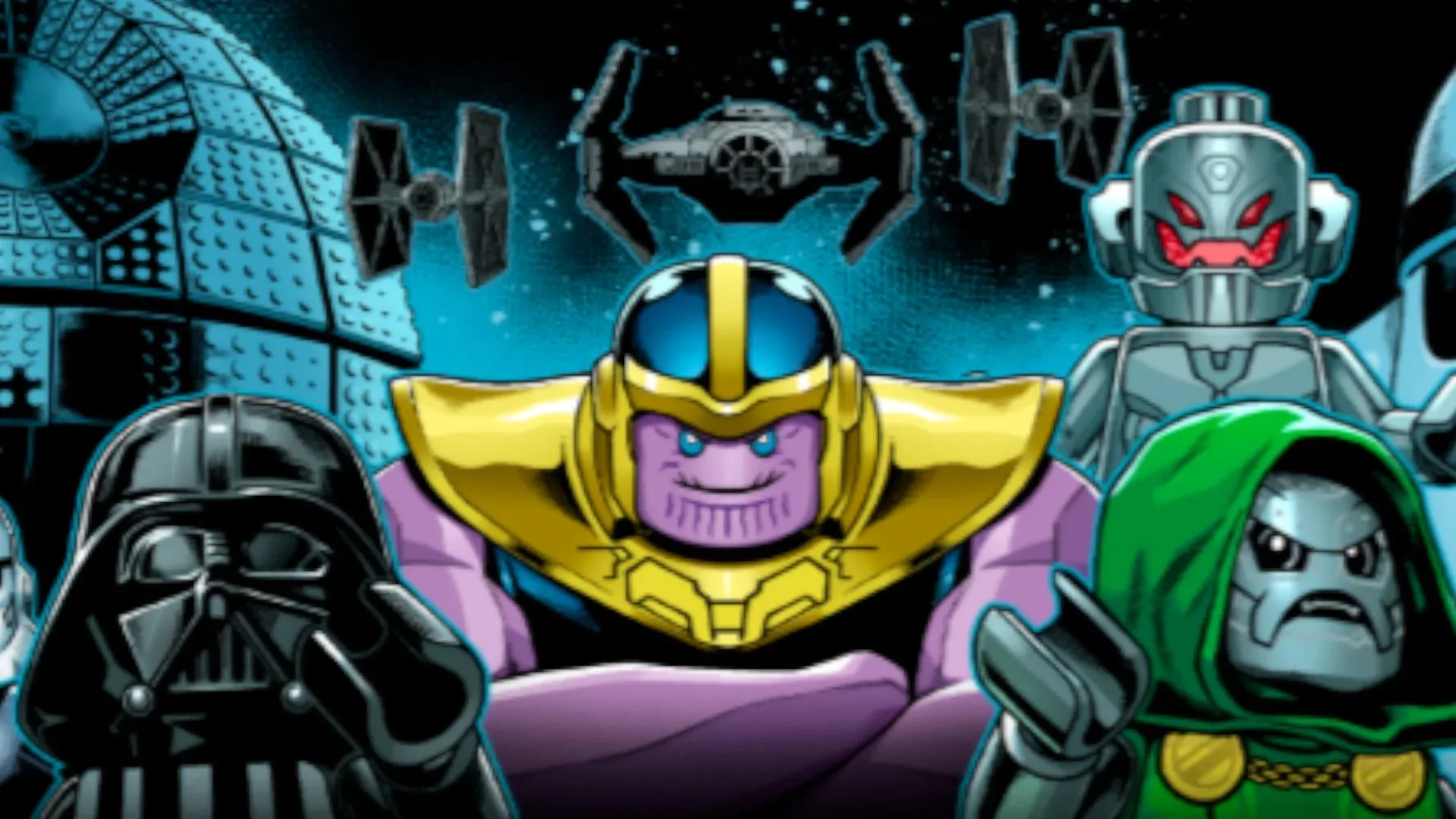
The Infinity Gauntlet tease helps communicate the scale of that premise. The Gauntlet is a defining Marvel artifact, so Vader potentially obtaining it is an immediately legible high-stakes image: Star Wars’ most imposing villain intersecting with one of Marvel’s most consequential symbols of power. At this stage, it is a tease rather than a complete plot description. It establishes a possibility and the kind of threat the crossover may explore, not a guarantee of the exact outcome.
Kevin Smith and David Marquez lead the six-issue series
Smith is writing Marvel X Star Wars: Hope Assembles, with Marquez as series artist. The book was discussed during New York Comic Con 2026, where Smith appeared alongside former Marvel editor-in-chief C.B. Cebulski. The crossover was described as having received Lucasfilm’s agreement in connection with the 50th anniversary.
The expansion to six issues is the clearest concrete update to the comic’s original structure. A one-issue increase may sound small, but serialized comics are constructed in individual installments, each of which has to balance plot movement, character moments, and a reason to return for the next chapter. For a crossover involving separate casts, iconography, and competing fan expectations, another issue can make a meaningful difference to pacing.
It is also worth separating confirmed information from easy assumptions. The series has a writer, artist, six-issue length, continuity placement, and a Vader/Infinity Gauntlet tease. The supplied details do not provide an issue-by-issue synopsis, a release schedule, a full cast list, or a complete explanation of how the universes initially meet. Those absences are part of the appeal for readers who want to discover the premise on the page, but they are also a reason not to treat early promotional imagery as a finished account of the plot.
Seven cover lanes give the crossover a broad visual program
Alongside the main issues, the series will have recurring variant-cover themes. A variant cover is an alternate piece of cover art for the same comic issue; the interior story is generally the same, while the cover presentation differs. In this case, the planned structure is unusually clear, with seven named approaches:
- Main Cover: connecting covers by David Marquez, allowing the sequence to form a larger image across issues.
- Alliance Variant: Marvel heroes and villains paired with Star Wars counterparts in joint action.
- Battle Variant: one-on-one confrontations between the franchises.
- A New Hope Variant: Marvel-character recreations of recognizable moments from Star Wars: A New Hope.
- Crossover Variant: characters adopting the weapons, costumes, or symbols associated with the other universe.
- Retro Variant: new artwork intended to evoke Marvel’s original Star Wars comic-book run.
- Marvel Homage: well-known Marvel covers recreated using figures from both worlds.
The categories do more than multiply cover choices. They outline several different ways to read the core idea of a crossover. Alliance images emphasize team-ups. Battle art leans into hypothetical matchups. Recreated scenes and cover homages put the focus on visual recognition, while the crossover category centers the act of trading identities and iconography.
For physical-comic collectors, the practical point is simple: a recurring cover program can make it useful to decide in advance what kind of collection is wanted. Someone interested primarily in the narrative may choose a single edition per issue. A reader drawn to Marquez’s sequential connecting image may prioritize the main covers. Others may prefer one visual concept, such as retro art or homage compositions, instead of attempting every variant. The announcement identifies the themes, but does not establish print quantities, retailer plans, or the total number of covers for each individual issue.
LEGO Ideas turns the premise into a fan-building brief
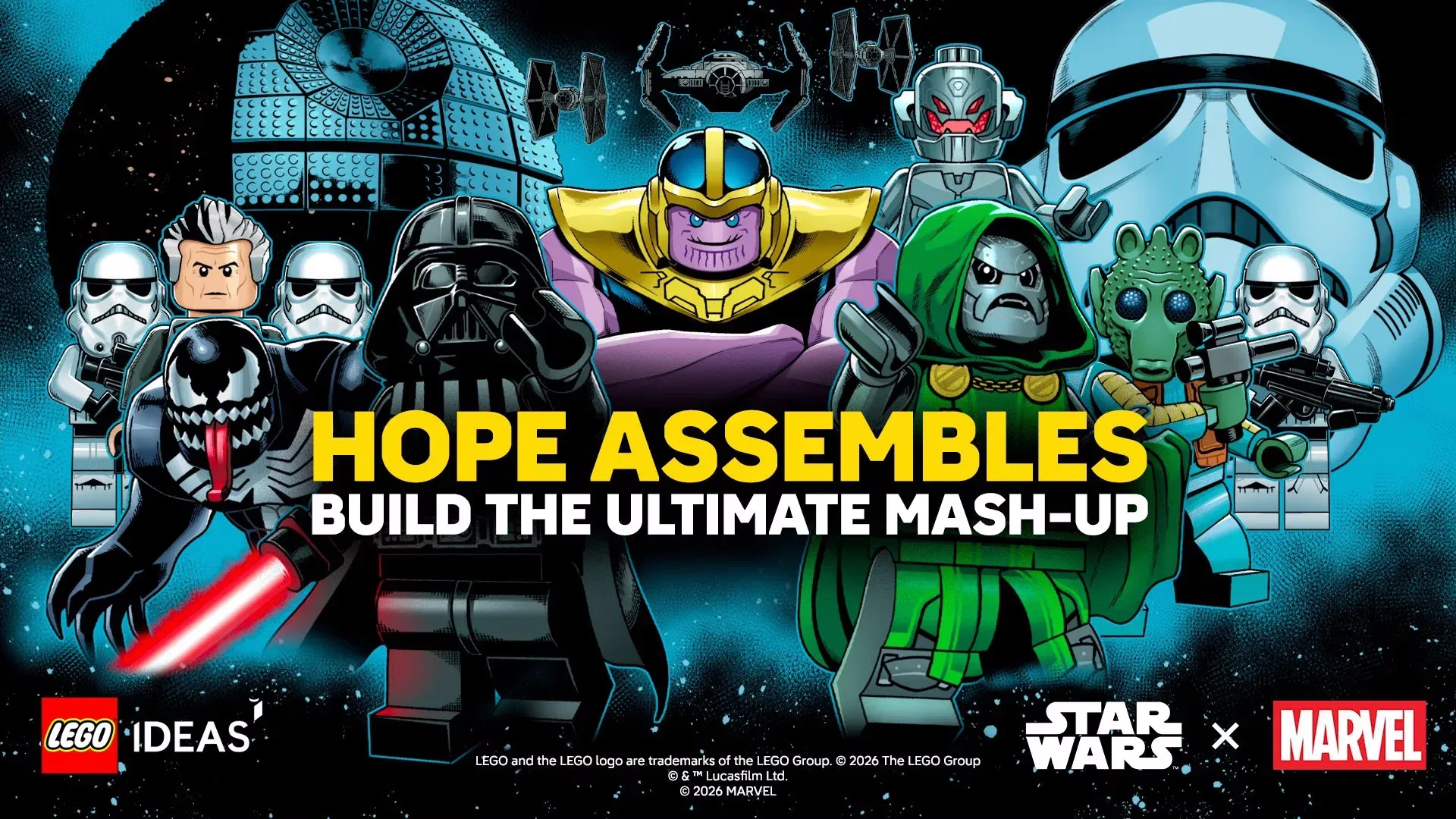
The LEGO side of Hope Assembles is not a previously announced retail set. It is a LEGO Ideas challenge centered on Marvel and Star Wars mash-ups. Builders can enter using standard LEGO elements, select one of three categories, and submit a creation under the published challenge rules and guidelines.
The three categories are deliberately broad:
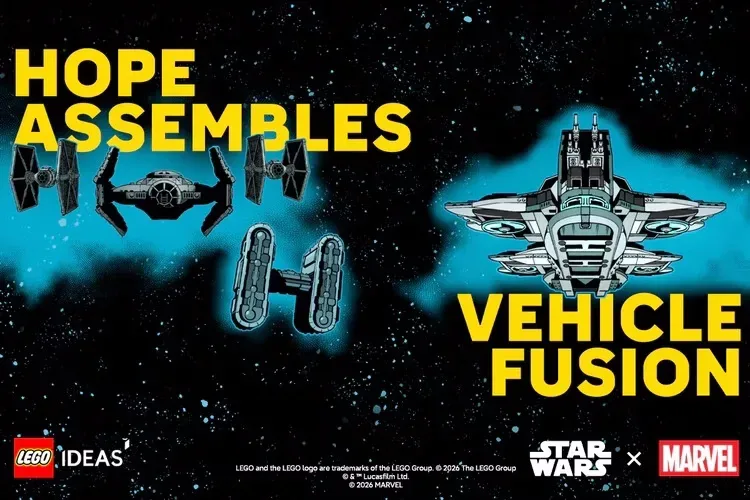
- Vehicle Fusion: combined or reimagined vehicles drawing from Marvel and Star Wars.
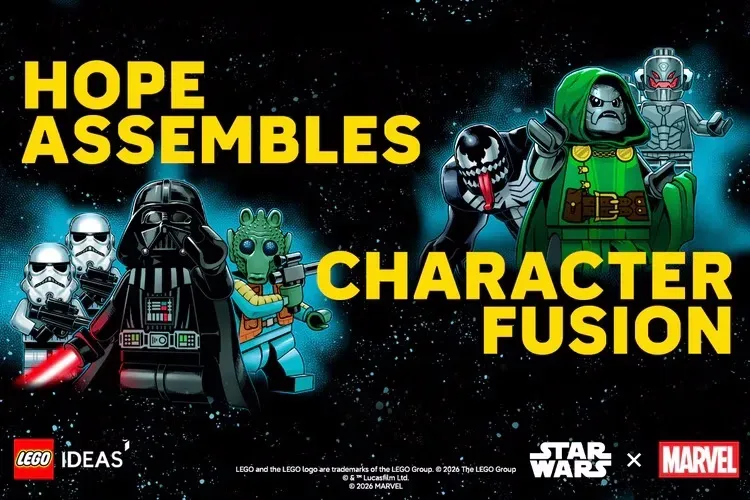
- Character Fusion: character-focused combinations across the two properties.
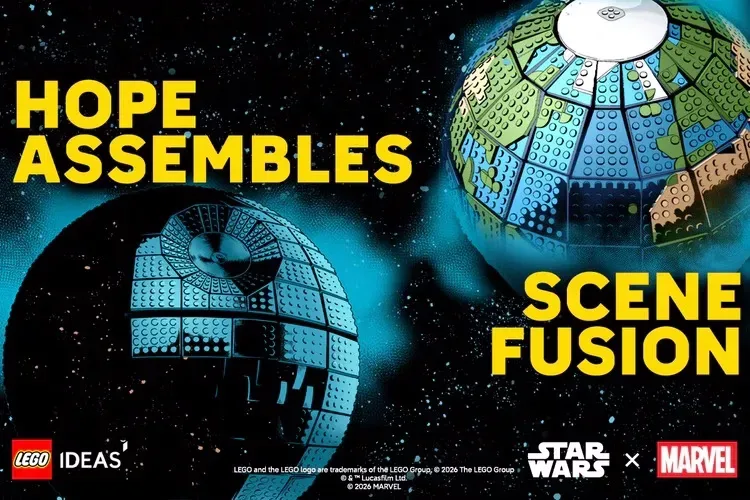
- Scene Fusion: locations or situations where the two worlds meet.
That framework matters because it provides a creative constraint without dictating a single answer. A vehicle build, character build, and scene build ask for different kinds of design choices. Vehicles place emphasis on silhouette and recognizable function; characters require a readable blend of visual identities; scenes need composition and storytelling. In all three cases, the challenge is to make the crossover understandable at a glance while still producing a coherent model.
LEGO Ideas is the LEGO Group’s fan-participation platform, and the stated outcome here is that favorite submissions may be developed into official LEGO products. “May” is important. Builders have an opportunity to enter the challenge and potentially influence an eventual official product, but a submission is not itself a promise of production. Development, selection, and the applicable rules remain part of the process.
For a closer look at the building initiative and its key dates, see our LEGO Hope Assembles challenge coverage.
Dates builders need to know
Entries for the challenge close on November 12, 2026. Fan voting is scheduled to begin on December 8, 2026, and grand-prize selections are expected to be announced in 2027. Anyone considering an entry should consult the official guidelines before building or submitting, particularly because the challenge requires standard LEGO elements and uses separate fusion themes.
There is a useful practical lesson in the schedule: the construction window and the voting window are different stages. Builders need to submit before the November deadline. Supporters who want to participate in the voting portion should watch for the December start rather than assuming voting opens as soon as submissions close.
Smith described the LEGO initiative as reflecting the same imaginative spirit as the comic and said he was eager to see the mash-ups it inspires. Fede Begher, Senior Vice President and Head of Product Group at the LEGO Group, characterized it as the first LEGO Ideas challenge to let fans build with Marvel and Star Wars together, emphasizing the new storytelling possibilities available to the community.
A crossover that is asking for participation
The comic and LEGO components operate differently, but they share a clear theme: combining established visual languages. On the comics side, that arrives through a canonical Earth-616 story, cover lines built around collisions and re-creations, and a threat suggested by Vader and the Infinity Gauntlet. On the LEGO side, it becomes an invitation for fans to make those kinds of collisions tangible through vehicles, characters, and scenes.
That paired approach gives Hope Assembles an unusually broad footprint without requiring the comic itself to do every job. The miniseries can tell its six-part story; the variants can explore iconic visual riffs; and builders can propose interpretations that may ultimately inform an official product. The central facts remain straightforward: six issues, Earth-616 continuity, David Marquez’s art, Kevin Smith’s script, and a LEGO Ideas challenge with a November 12 submission deadline. Everything else—from how the continuity reshapes the Marvel Universe to which fan concept, if any, becomes a set—remains part of the unfolding crossover.