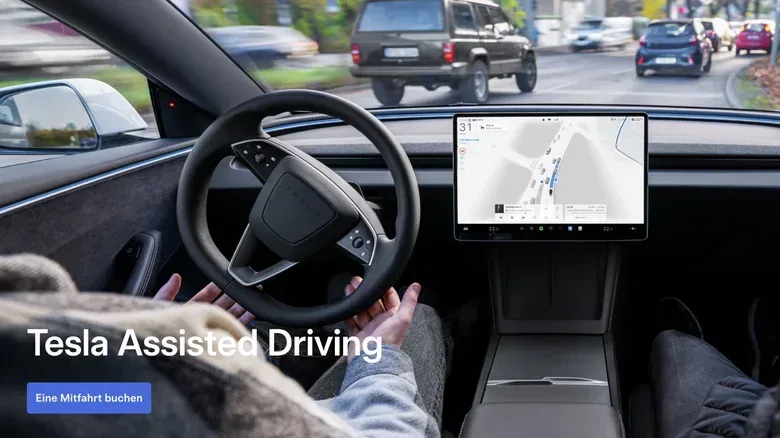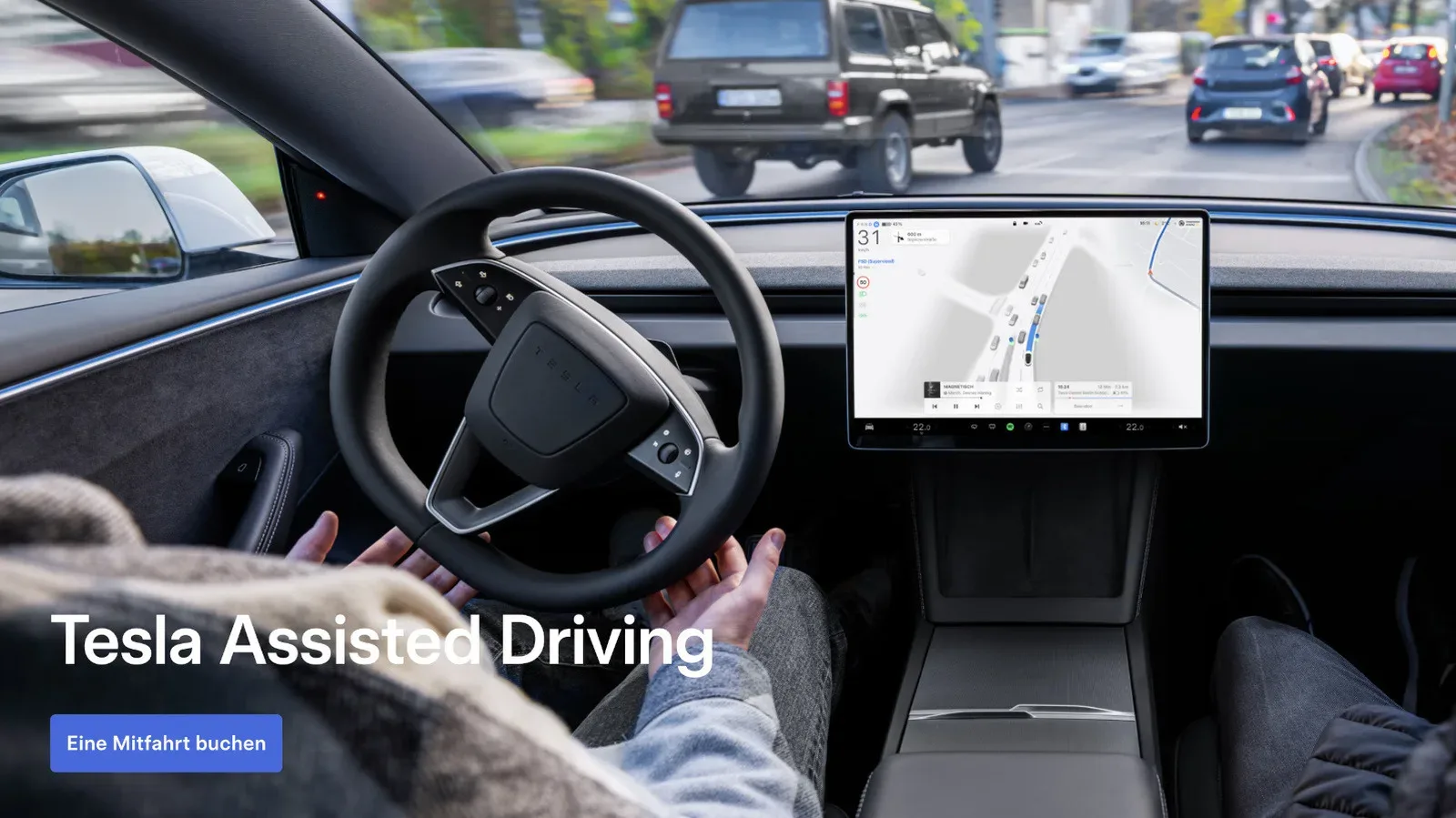
Tesla has begun changing the European name of its Full Self-Driving feature to Tesla Assisted Driving, a shift that puts the product’s label closer to the capability officials say it actually provides. The revised wording has appeared on Tesla websites in countries including Germany, Spain and France.
The change matters because “Full Self-Driving” is an unusually expansive name for a system described as supervised. German officials said the previous wording could be misleading: it may lead consumers to think the vehicle can drive without a person responsible for monitoring it, even though the system does not turn the car into a driverless vehicle.
In practical terms, the dispute is not merely over branding polish. It is about what a customer reasonably expects when they see a feature name, and whether that expectation matches the role the human in the driver’s seat must still play.
What Tesla Assisted Driving means in this context
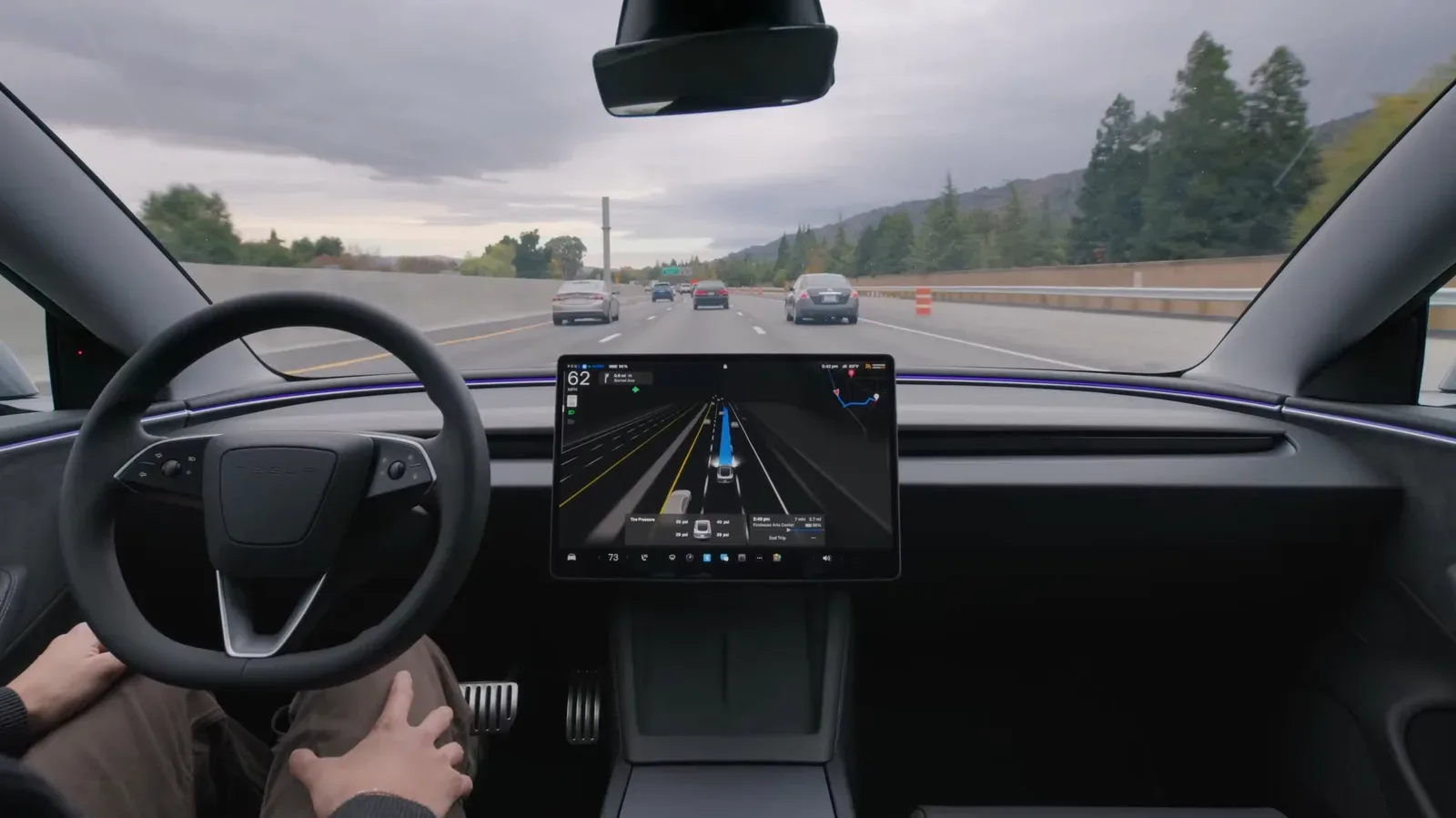
The renamed system is presented as assistance for driving tasks, including acceleration and braking. That distinction is central to the European regulatory concern. Assistance means the technology can support aspects of operating the car; it does not mean the system independently assumes the full responsibility of driving.
“Supervised” is the essential technical qualifier here. A supervised driving-assistance system requires a human driver to remain engaged and accountable, rather than treating the vehicle as an autonomous taxi or a car that can be left to complete a trip on its own. The concern raised by officials is that “Full Self-Driving,” without that context carrying equal prominence, can imply the latter.
A feature can be sophisticated, perform several tasks and still fall short of unsupervised autonomy. These categories are easy to blur in ordinary conversation, especially when a product name uses language associated with complete automation. Tesla’s European rebrand replaces that implication with a plain statement of the system’s role: it assists.
The core issue is that the system assists with driving tasks; it does not itself become the driver.
Germany’s push for a clearer label
Germany’s Federal Ministry for Digital and Transport characterized the older Full Self-Driving name as potentially misleading, particularly because the offering remains supervised. Transport Minister Steffen Bilger said he discussed regulators’ concerns with Tesla in September, and that the two reached an understanding under which the company would use the Tesla Assisted Driving name.
Bilger has said he would advocate for timely approval of the system across Europe following that understanding. That makes the renaming consequential beyond Germany: a terminology change may help address a hurdle facing wider deployment in markets where authorities are assessing both the product and the way it is described to potential buyers.
Regulators are not necessarily objecting to every driver-assistance feature simply because it assists with acceleration or braking. The narrower issue described here is the gap between an attention-grabbing product label and a system whose operation still demands human supervision. A clearer name does not alter what the feature can do, but it can alter the expectations established before a person ever activates it.
Availability is already uneven across Europe
Tesla Assisted Driving is already available in several European countries: the Netherlands, Denmark, Belgium, Slovenia, the Czech Republic and Croatia. Tesla is also pursuing approval in additional European markets.
That country-by-country picture is important. Europe is not functioning as one uniform switch that flips a feature on everywhere at once. Availability and approval can differ by market, and local authorities may take different views of how a product’s name communicates its limits. As with other region-specific digital services and storefront rules, the country attached to a feature can be more consequential than customers expect; changing an Apple Account country is similarly more than a simple settings toggle.
In this case, the relevant difference is not an account setting but a regulatory and consumer-information question. The same underlying branded feature can face a different path depending on where it is offered and how officials assess the wording used to sell it.
Sweden and Italy are weighing the risk of confusion
Authorities in Sweden and Italy are assessing whether the Full Self-Driving label could confuse consumers into believing it offers unsupervised driving capability. That scrutiny helps explain why a rename could have broader value for Tesla’s European rollout.
For a buyer, “unsupervised” would suggest a fundamentally different proposition from “assisted.” The former suggests that a car can handle the task without continuing human oversight. The latter says the technology is a support system. The naming change therefore creates less room for a consumer to infer a capability that officials say is not present.
It also gives regulators a more direct term to evaluate. Rather than asking customers to mentally translate an absolute-sounding name through the fine print of a supervised designation, “Assisted Driving” puts the limitation into the product title itself. That does not settle every safety, approval or operational question. It does, however, address the specific concern that the marketing language may overstate the independence of the technology.
Why the word choice has practical consequences
Vehicle technology often arrives wrapped in short labels, while its real operating boundaries are more detailed. “Assisted” is not just a weaker-sounding alternative to “self-driving.” It describes a different allocation of responsibility: the system provides support, while the person driving remains responsible for supervision.
That distinction affects how a customer may approach the feature. A name that sounds autonomous can encourage an assumption that monitoring is optional or secondary. A name that foregrounds assistance is more aligned with the requirement to stay attentive. The supplied information does not establish what every driver believes about either label, but it does establish that German, Swedish and Italian authorities have viewed the potential for confusion as a live issue.
For Tesla, the shift may be strategically useful because it narrows an avoidable argument over terminology while approval discussions continue. For regulators, it is a consumer-clarity measure. And for drivers, it is a reminder to distinguish between automation that supports individual driving tasks and a vehicle that can operate without the driver’s active supervision.
What has changed—and what has not
- Changed: Tesla is using the name Tesla Assisted Driving on some European websites, including those for Germany, Spain and France.
- Changed: The new name directly frames the feature as a driver-assistance system.
- Not established by the rename: that the system has become an unsupervised or fully driverless product.
- Still relevant: approval remains a market-by-market matter as Tesla seeks access in more European countries.
- Already available in named markets: the Netherlands, Denmark, Belgium, Slovenia, the Czech Republic and Croatia.
The most meaningful result of the rebrand may be its simplicity. “Full Self-Driving” invited a debate over whether the words promised too much. “Assisted Driving” makes the supervised nature of the feature harder to miss. Whether that is enough to smooth approvals elsewhere in Europe will depend on regulators’ continuing assessments, but it directly responds to the objection they raised.