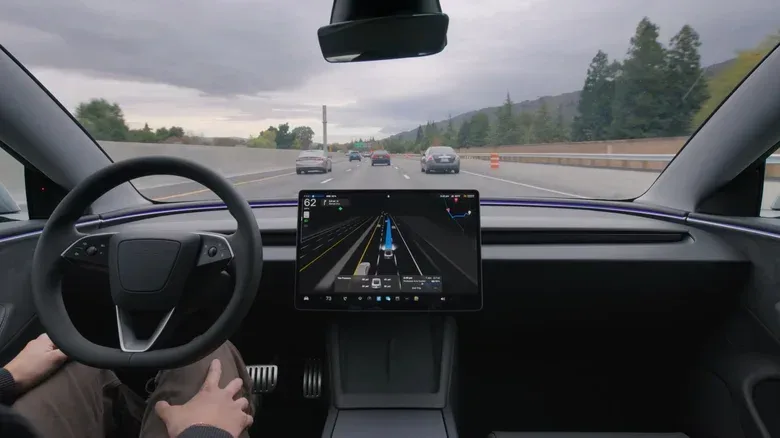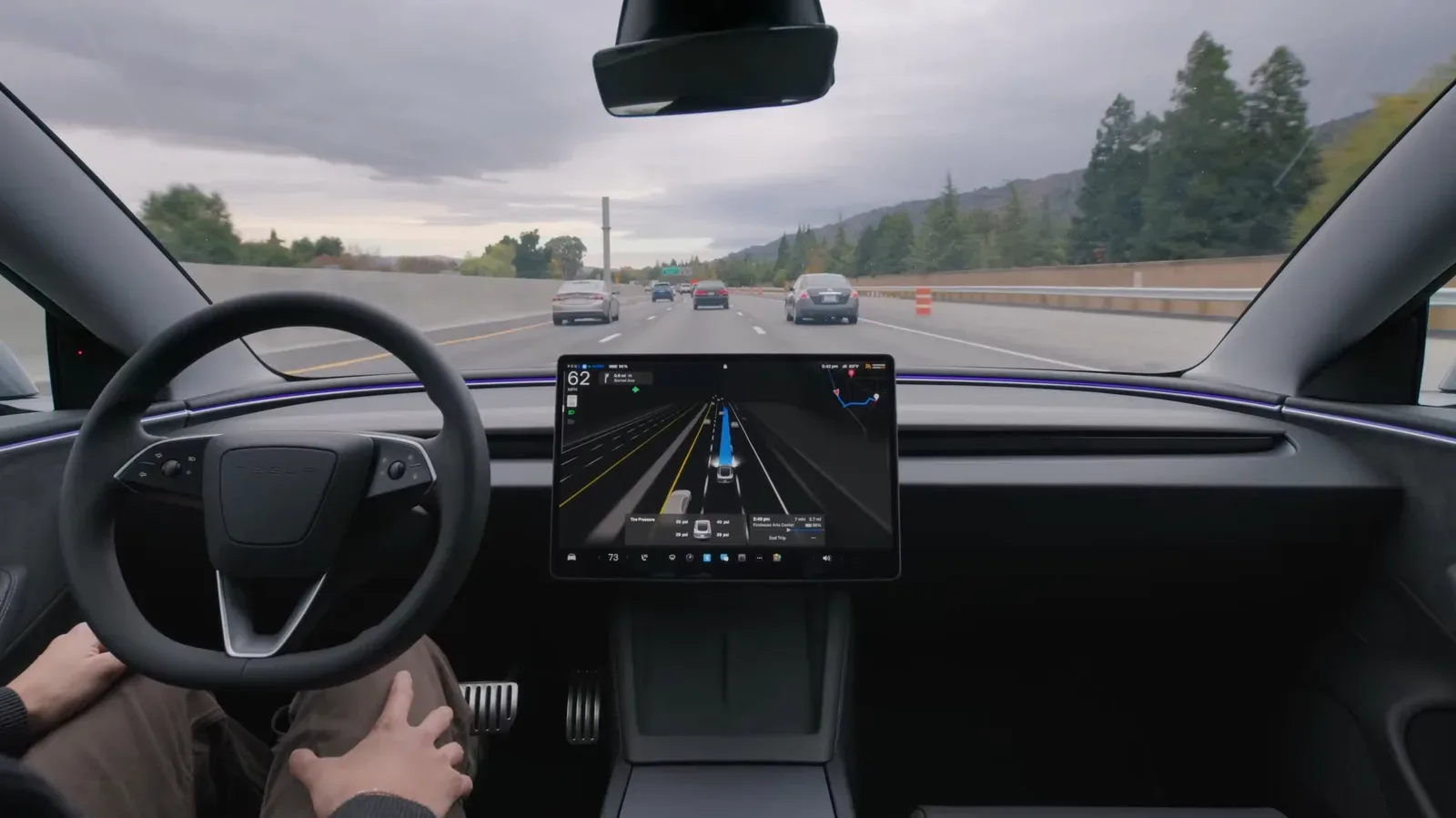
Tesla’s Full Self-Driving (Supervised) is set to reach drivers in the Czech Republic after the country’s Ministry of Transport granted the driver-assistance system provisional approval. Tesla has said availability for Czech residents will begin rolling out soon, placing Czechia among a growing group of European countries allowing the software on public roads.
The approval matters less as a finish line than as another carefully bounded step in Tesla’s European expansion. The system’s name contains the essential caveat: Supervised. The Czech review specifically considered the system’s handling of traffic lights and speed limits, as well as the measures intended to ensure a driver remains attentive and prepared to take control. In other words, the permission does not remove the driver from the driving task.
A seventh European country for FSD Supervised
Czechia is the seventh European country identified as allowing FSD Supervised. It follows the Netherlands, Lithuania, Estonia, Denmark, Belgium and Slovenia. The Netherlands was the first European country to begin the approval process, and its road-traffic authority, RDW, issued a provisional approval in April that informed the Czech decision.
That sequence illustrates an important feature of the current rollout: regulatory decisions are not occurring in a vacuum. Czech officials reviewed the Dutch provisional approval and examined experience from countries where the system was already in use before granting their own provisional authorization. That does not mean every European country will automatically make the same call, but it shows how an early national decision can become part of the evidence considered elsewhere.
The Czech Ministry of Transport’s stated concerns also provide the clearest practical outline of what regulators are examining. Traffic lights and speed limits are everyday parts of road use, but they are also precisely the kinds of road-rule interactions that make a driver-assistance rollout consequential. The agency also looked at whether the system maintains the expectation that the person behind the wheel is alert and ready to intervene.
What “supervised” means in this approval
It is easy for a product name containing “Full Self-Driving” to obscure the more meaningful word in this particular story. Supervised means the human driver remains responsible for monitoring the vehicle and taking over when needed. Czech regulators explicitly considered the driver-attention question in their evaluation, making that limitation a central part of the approval rather than a footnote.
For prospective users, the practical message is straightforward: provisional permission for the software is not permission to disengage. A driver should understand that the system is a driving aid operating under supervision, not a replacement for active readiness at the wheel. The focus on takeovers suggests that a safe use case depends not merely on what the software can attempt, but on whether the driver can recognize when intervention is required.
This distinction is especially useful in conversations that lump all vehicle automation together. The supplied information identifies FSD Supervised as a driver-assistance system, and the Czech agency’s review centered on human oversight. Those two facts define the scope of what has been approved. Claims that go beyond that scope—such as treating the authorization as acceptance of an unsupervised vehicle—would miss the point of the regulator’s stated conditions.
Why a provisional decision is significant
“Provisional” is doing real work here. The Czech approval was issued after months of evaluation, not as an unrestricted or final blanket endorsement. It reflects an assessment based on the Dutch authority’s earlier action, experience from existing deployments and attention to concrete road-safety questions. The result is a route for Tesla to begin making FSD Supervised available in Czechia while the regulatory framework remains defined by those conditions.
For Tesla, each additional country is both a new market for the feature and a meaningful regulatory milestone. For Czech drivers, the rollout creates an opportunity to use the system in a country whose transport authority has reviewed issues that directly affect ordinary journeys: signals, posted limits, and the continuing need for a watchful driver.
For regulators, the decision also reinforces that this category of software is judged by more than a company’s feature label. The questions described by Czech officials are operational: how does the system respond to road controls, and how does it keep the human driver in the loop? Those are the questions likely to remain important as similar systems seek access to more roads.
The larger European hurdle remains ahead
Despite the new Czech approval, Tesla’s wider ambitions in Europe still depend on additional national and European support. France is currently testing FSD Supervised, but has not been listed among the countries permitting it. Tesla ultimately hopes to extend the feature across the European Union.
That broader path may require support from at least 15 of the EU’s 27 member states in a vote that could occur as early as October. The potential vote places the recent country-by-country progress in context. Seven countries allowing the system is a notable foothold, but it is not the same as an EU-wide green light.
The distinction matters for anyone trying to read the Czech news as a prediction for the whole continent. It is evidence of momentum, not proof of a settled European outcome. National assessments have helped build a record of experience, while the possible EU vote would introduce a separate and larger political and regulatory test.
Software capability is only one side of the rollout
FSD Supervised’s Czech expansion is also a reminder that advanced software does not simply arrive everywhere at once. A company can develop and prepare a feature, but local authorization determines where it can be used. In this case, the regulatory process focused on a blend of software behavior and human behavior: responses to traffic controls on one side, and driver attention and takeover readiness on the other.
That dual focus is relevant across consumer technology. As software takes on more consequential tasks, its usefulness is often inseparable from the guardrails around it and from the person expected to oversee it. The same broad tension—more capable systems alongside clear user responsibility—also appears in other evolving software experiences, such as efforts to make digital assistants handle more of a user’s information. The stakes on the road are plainly different, but the underlying question of what software should do independently, and what a user must still supervise, remains central.
What Czech Tesla owners should watch for
The immediate development is a forthcoming rollout, not a promise that every question surrounding the system has disappeared. Tesla has said it will start making FSD Supervised available to Czech residents soon. Drivers interested in using it should keep the approval’s terms in mind: the system is supervised, road rules such as lights and speed limits were a focus of the review, and human attention remains essential.
The next meaningful markers will be the Czech rollout itself, any developments from France’s testing, and whether enough EU member states support the prospective wider vote. Until then, Czechia’s decision stands as a significant but deliberately qualified expansion: a new country for Tesla’s driver-assistance software, with regulators making clear that the driver is still part of the system.