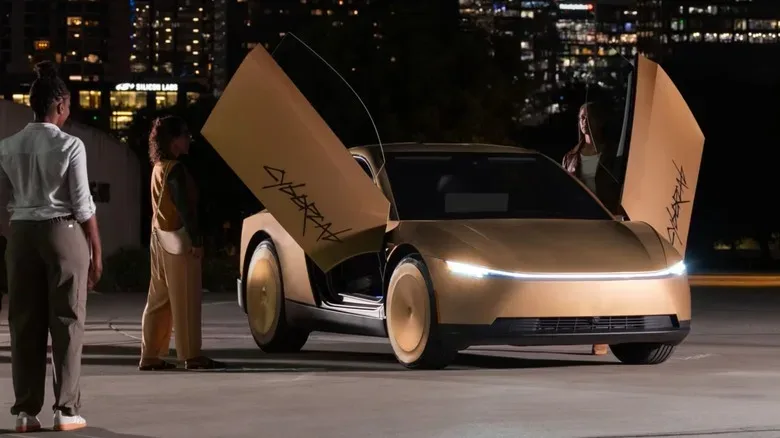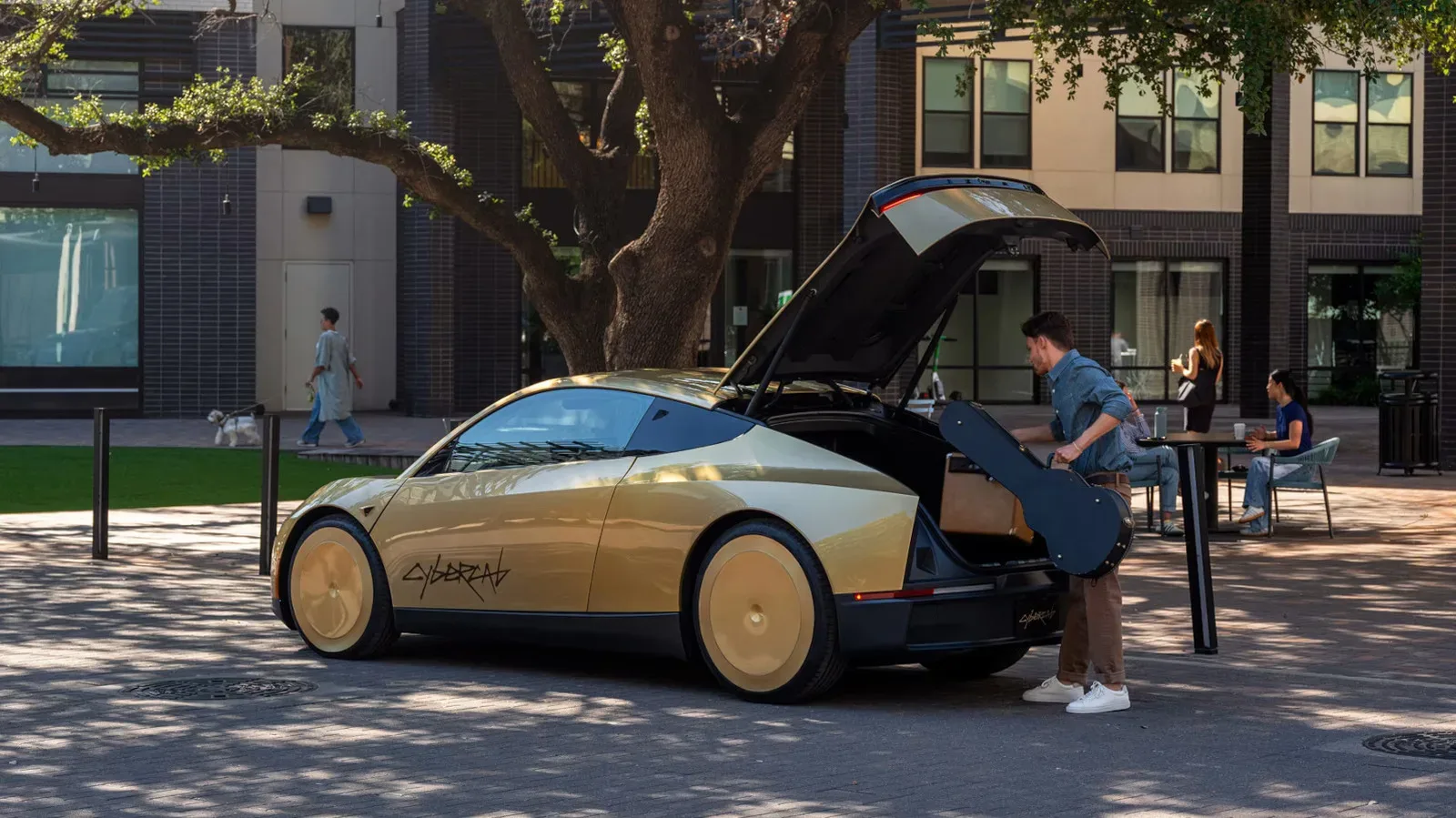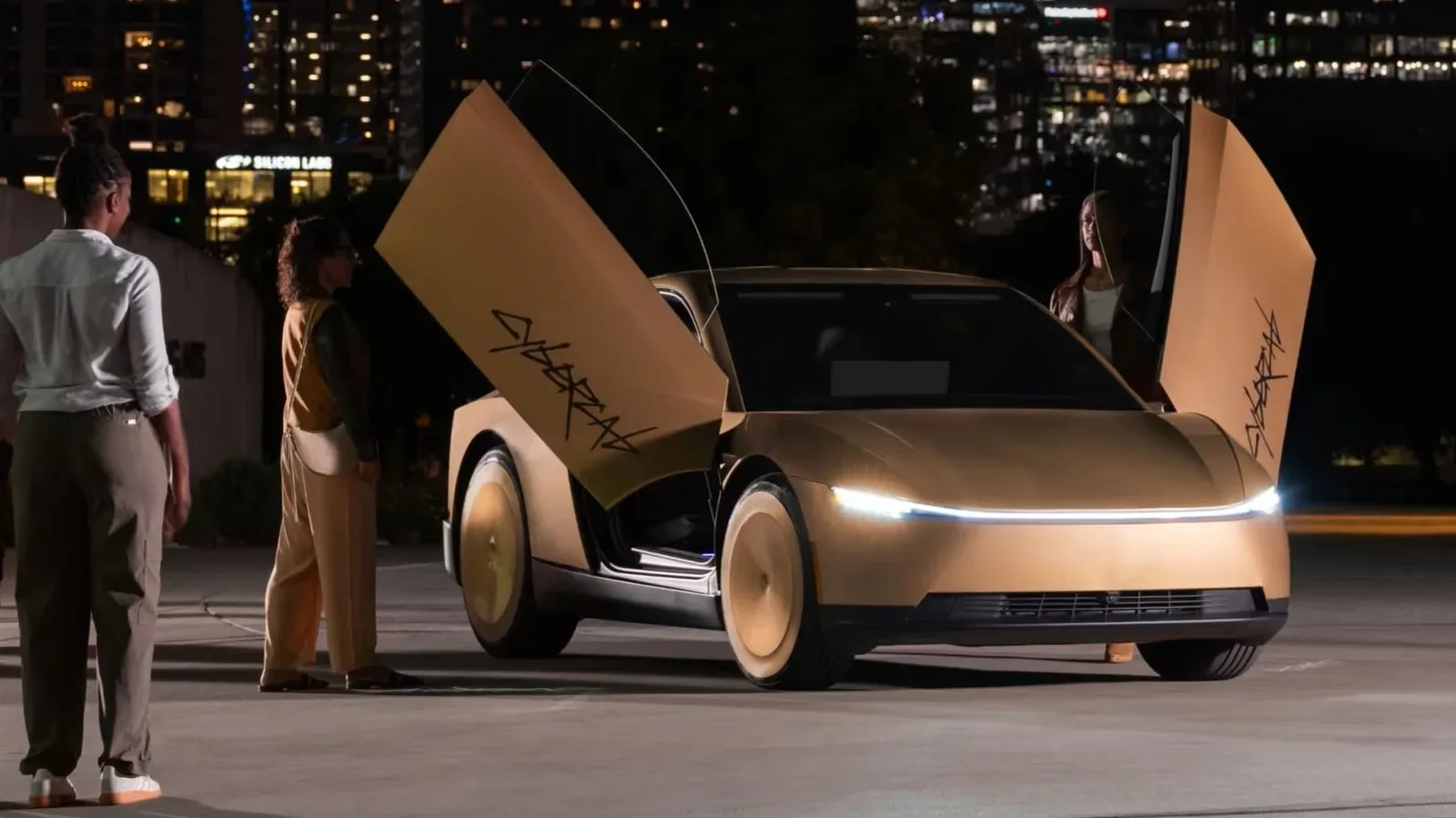
Tesla’s Cybercab has barely begun its public-facing chapter in Austin, Texas, and it has already encountered a federal regulatory spotlight. The National Highway Traffic Safety Administration has opened what it describes as an audit query covering roughly 1,000 Cybercab vehicles, focused on how Tesla certified the purpose-built autonomous vehicle for compliance with federal safety requirements.
The timing is notable because Tesla started commercial Cybercab service with only a small number of vehicles on Thursday. The company has indicated that it intends to grow the operation, adding vehicles and expanding to further locations. That makes the federal review less a postscript to an established fleet and more an early examination of the paperwork, data and regulatory judgments supporting a service that is still at a limited scale.
For anyone who has spent years watching technology companies treat rollout day like a game launch, the setup will feel faintly familiar: a highly visible new product enters the world, the feature list is unusual, and the rulebook becomes as important as the hardware. Only this particular patch note involves real streets, passengers and federal motor-vehicle standards—not a balance tweak for an overpowered character.
What the NHTSA is examining
The Cybercab is distinct from a conventional car in a central, practical way. NHTSA says the vehicle does not have permanently installed traditional manual controls such as a steering wheel, accelerator pedal, brake pedal or mirrors. That design is fundamental to Tesla’s robotaxi concept. It is also why the agency is looking closely at the basis for the company’s certification.
Automakers generally self-certify that their vehicles meet applicable Federal Motor Vehicle Safety Standards, commonly shortened to FMVSS. The government does not pre-approve every individual model before it goes on sale. Instead, manufacturers are responsible for ensuring compliance, while NHTSA can investigate, audit and take action when it identifies potential safety issues or needs more information.
In this case, the agency is not simply asking whether Tesla checked a box. It is examining the process and technical material used for the Cybercab’s self-certification, including related questions around which standards Tesla may have treated as not applicable to the vehicle.
The key regulatory question is not whether a steering wheel-less taxi looks futuristic. It is whether the company’s reasoning and evidence support the safety certification it filed for that specific design.
That distinction matters. A vehicle without conventional driver controls does not automatically mean it fails a federal requirement, nor does an audit query by itself establish that Tesla has broken a rule. The review signals that NHTSA wants to assess the foundation of Tesla’s compliance position. Its attention includes the extent to which that position depends on deciding that certain FMVSS provisions do not apply to the Cybercab.
In ordinary-driver vehicles, features such as pedals, steering equipment and mirrors are intuitively connected to a person operating the car. A robotaxi designed around autonomous driving changes the assumptions beneath those familiar components. The regulator’s task is therefore partly technical and partly interpretive: determine which rules govern this vehicle, whether Tesla applied them appropriately, and whether the supplied data supports those decisions.
A limited Austin launch, with a potentially larger footprint ahead
Tesla began commercial Cybercab operation in Austin using a small fleet, while signaling an intention to scale. The precise number of Cybercabs currently transporting paying riders is unclear. Public registration information reported for Texas lists 420 autonomous vehicles registered by Tesla, of which 45 are Cybercabs. Those figures do not establish how many of the 45 are actually in customer service versus testing, support or other operational roles.
That uncertainty is worth keeping intact. “Registered” and “actively carrying passengers” are not interchangeable descriptions, especially for autonomous vehicle operations that may rely on testing fleets, validation vehicles, backups and staggered deployments. The reported numbers do indicate that Cybercabs represent a comparatively small portion of Tesla’s registered autonomous vehicles in Texas at present.
Tesla’s broader robotaxi activity is not limited to the Cybercab or to Austin. The company is also offering robotaxi rides with Model Y vehicles in Dallas, Houston, Miami, Orlando and Tampa. Those cars differ from the Cybercab in a consequential respect: the Cybercab was designed without the permanently attached conventional manual controls identified by NHTSA. As a result, the regulatory questions around the dedicated robotaxi may not map neatly onto a Model Y-based service.
That split is one reason the Cybercab deserves attention even in a crowded autonomous-transportation market. A modified or software-enabled version of an existing production vehicle and a vehicle conceived from the outset as a driverless taxi can present different compliance arguments. The latter asks regulators and the public to accept a transportation experience where the visible fallback tools of ordinary driving simply are not there.
Why self-certification is the real plot point
It is easy to reduce the story to a striking visual: a taxi with no steering wheel and no pedals meeting a regulator shortly after entering service. But the deeper issue is self-certification. Tesla certified that the Cybercab complies with relevant federal safety standards, while NHTSA is now reviewing the rationale and technical evidence behind that certification.
Self-certification places a heavy obligation on the manufacturer. It is not a marketing claim and it is not an optional early-access label. For a conventional vehicle, the framework is already supported by decades of established design practice. A vehicle constructed around the absence of human driving controls can force more scrutiny over the boundaries of existing requirements and the evidence used to navigate them.
That does not make innovation inherently suspect. Safety rules must be applied to evolving technologies, and new vehicle designs are exactly where regulators may need to distinguish between a truly irrelevant requirement and one that still serves a safety purpose despite a changing form factor. The audit query is a mechanism for taking a harder look at that distinction.
There is also a public-trust component. Robotaxi services ask riders to place confidence in hardware, software, operations and oversight at the same time. An ordinary passenger can understand a car’s basic controls even if they never use them. In a Cybercab, the passenger’s relationship to control is different by design. That makes the clarity and rigor of the safety case especially significant, whether a rider ever reads an FMVSS document or not.
The wider technology-industry context
Autonomous vehicles sit at the collision point of several industries: automotive manufacturing, artificial intelligence, mapping, fleet operations, insurance, municipal policy and federal safety regulation. The Cybercab audit query is a reminder that deployment is not just a software problem. A company can have an ambitious service map and a distinctive vehicle concept, but it must still make a defensible case under rules built to protect people in and around vehicles.
The same broad tension appears across immersive and emerging technologies: impressive demonstrations can move quickly, while durable public adoption depends on practical safeguards, clear responsibilities and systems that people can understand. That wider push toward new shared technology spaces is also visible in ongoing work around XR, smart glasses and shared digital experiences, though a robotaxi naturally carries a more immediate physical safety burden than a headset or gallery installation.
For Tesla, the near-term facts are relatively narrow. Cybercab service has started in Austin with a small number of vehicles. NHTSA has launched an audit query involving about 1,000 Cybercabs. The agency wants to inspect Tesla’s self-certification process and technical data, with particular interest in determinations that some federal standards could be inapplicable. Tesla plans to expand Cybercab operations, but the current deployment remains limited and the active passenger-service count is not clear.
For the rest of the industry, it is an early test of how purpose-built autonomous vehicles transition from concept art and controlled demonstrations into regulated commercial transportation. The vehicle may have omitted the steering wheel, pedals and mirrors; the regulatory homework, it turns out, is still very much attached.