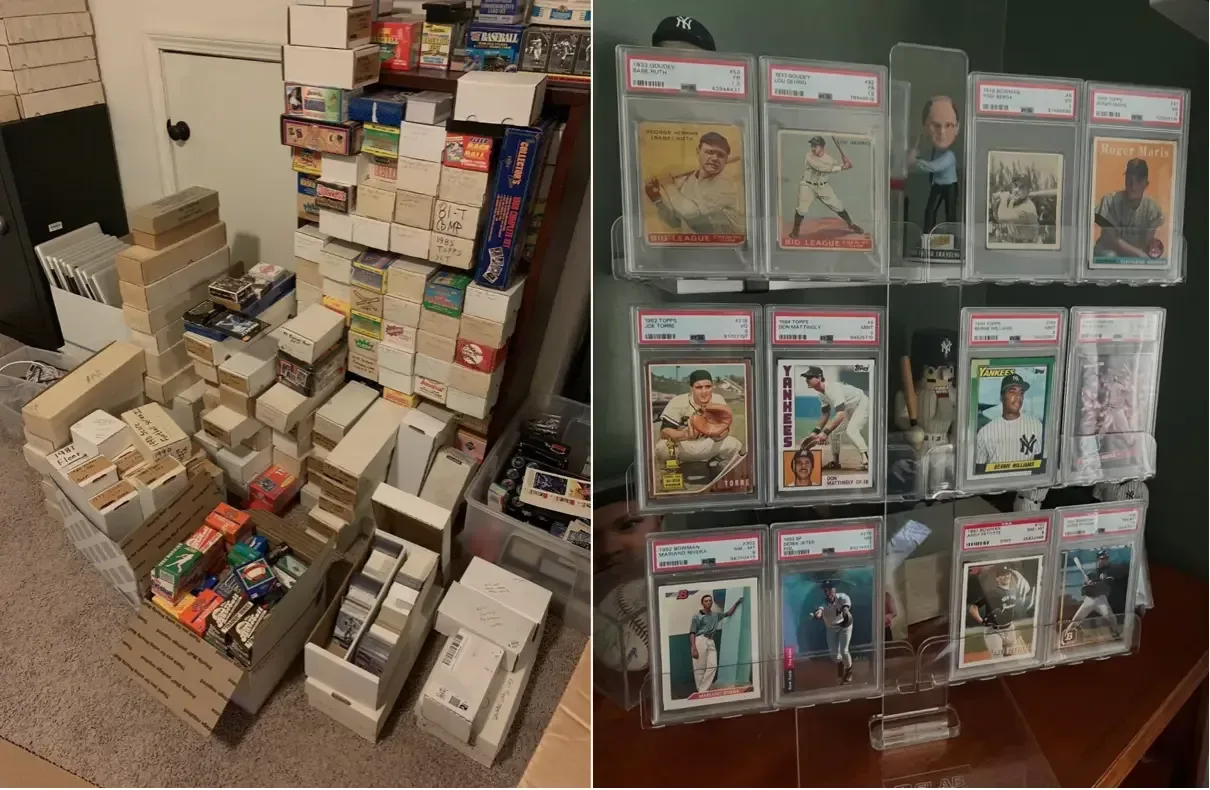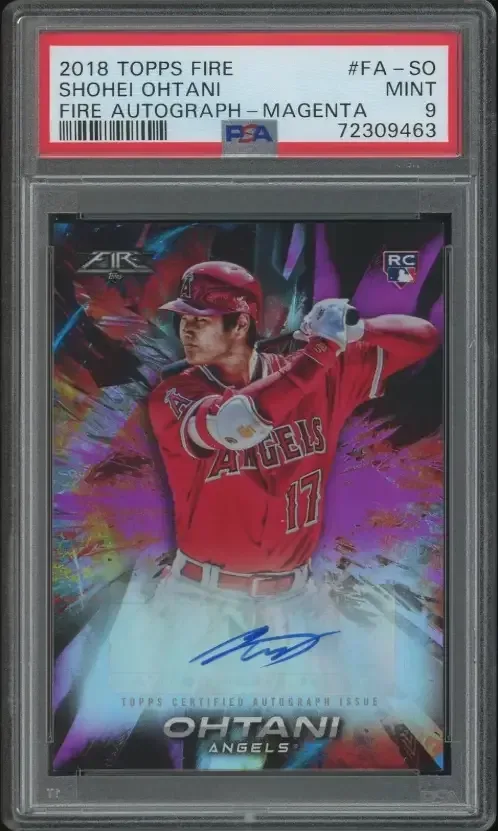
A baseball card listing can turn a small rectangle into a sentence with the density of a tax form. Player name, rookie designation, product, parallel, autograph, grade: each term describes a different part of the object. Reading them separately is the quickest way to understand what a seller is actually offering.
Start with the product
Record year, manufacturer, product name, player, and card number. A player can appear in many products in one season, so the name and year alone rarely identify the card you want. Look for the exact product checklist and keep its source with your notes.
A seller’s abbreviations may be useful once you know them. Until then, expand the title into a structured entry instead of copying it intact. Anything you cannot resolve belongs in a question to the seller, not in your inventory as an established fact.
The main collecting terms
Topps describes a base card as part of the core set; a parallel as a related version with a distinguishing feature; and an insert as part of a separate themed group within a product. Its glossary also distinguishes an autograph placed directly on a card from one on an attached sticker. A numbered example such as 10/100 identifies an individual within that numbered issue. See Topps’ collector glossary for the manufacturer’s terminology.
Topps further distinguishes rookie cards from its Rookie Cup recognition and from a prospect’s first Bowman appearance. Those labels should not be treated as interchangeable. Check what the actual card says and how the manufacturer categorizes the release.
Keep the categories separate
A parallel can have its own numbering, and an insert can have variants. A signature does not by itself tell you the production quantity. A piece of memorabilia requires attention to the exact statement printed on the card; do not supply a stronger claim about its use than the manufacturer provides.
Our practical method is to give every claim its own field. This helps prevent an impressive-looking title from blending several independent facts into one vague impression of importance.
A checklist for a listing
- Match the front and back to the named product and card number.
- Verify the parallel or insert against the appropriate checklist.
- Read any serial numbering and certification language carefully.
- Record whether an autograph is present and how it is described.
- Check the actual physical condition and, if graded, the full label.
- Compare only suitably matched completed sales when price is relevant.
Request clearer photographs if lighting hides a finish or a number is cropped. A listing with insufficient evidence does not become easier to evaluate because its title contains more adjectives.
Choose a collection with a clear scope
A team set, a player’s cards from a particular product, or one base set can all provide satisfying boundaries. You do not have to complete every parallel to have a legitimate collection. Write down what you are collecting and what sits outside the plan.
For example, you might collect the base cards of a favorite team for one season and reserve one binder page for a few personally meaningful extras. The structure gives you a finish line without turning every new release into an obligation.
Keep identification, condition, and personal appeal as separate decisions. When they are clear, a listing becomes a description you can verify instead of a string of abbreviations you are expected to fear missing out on.