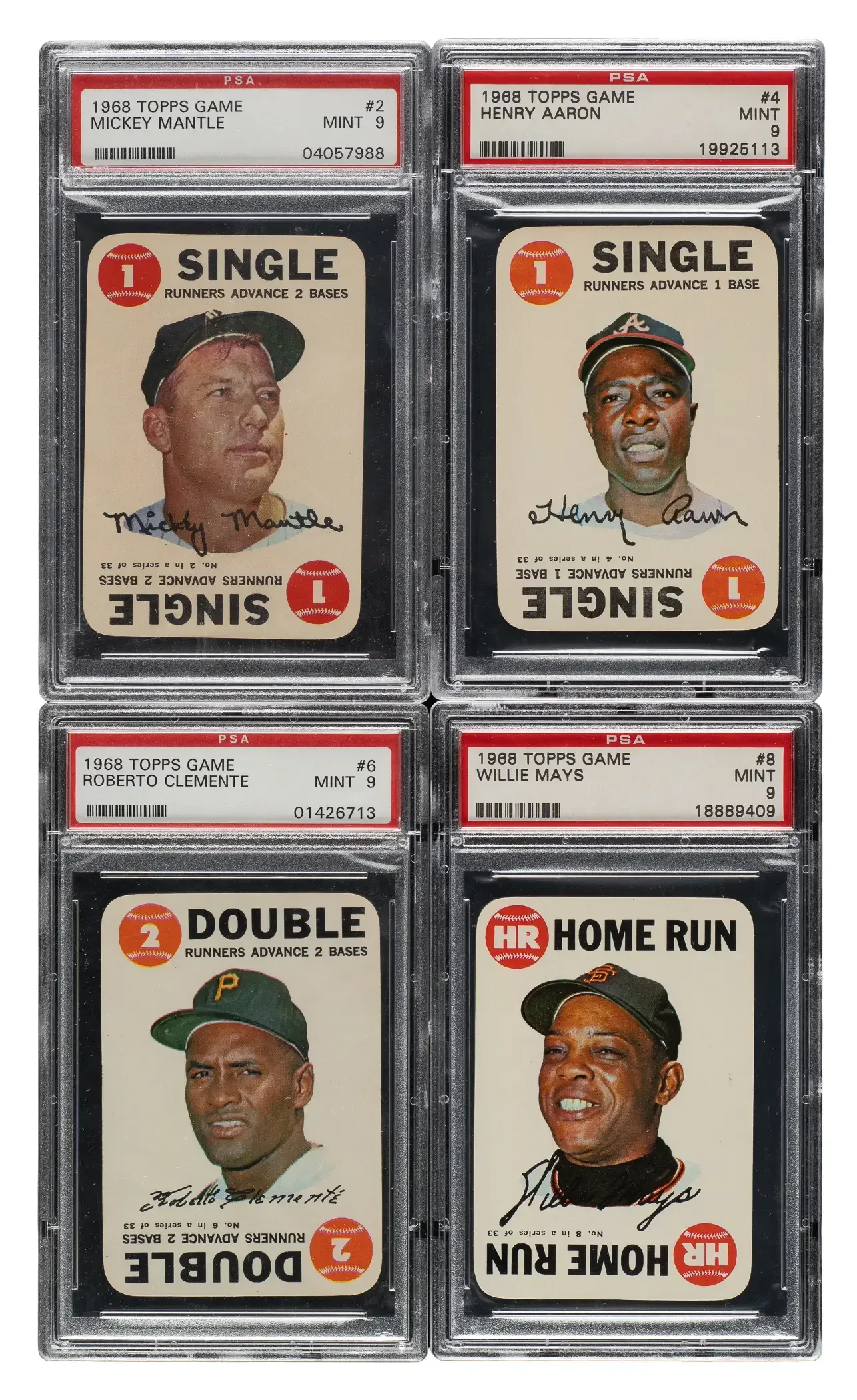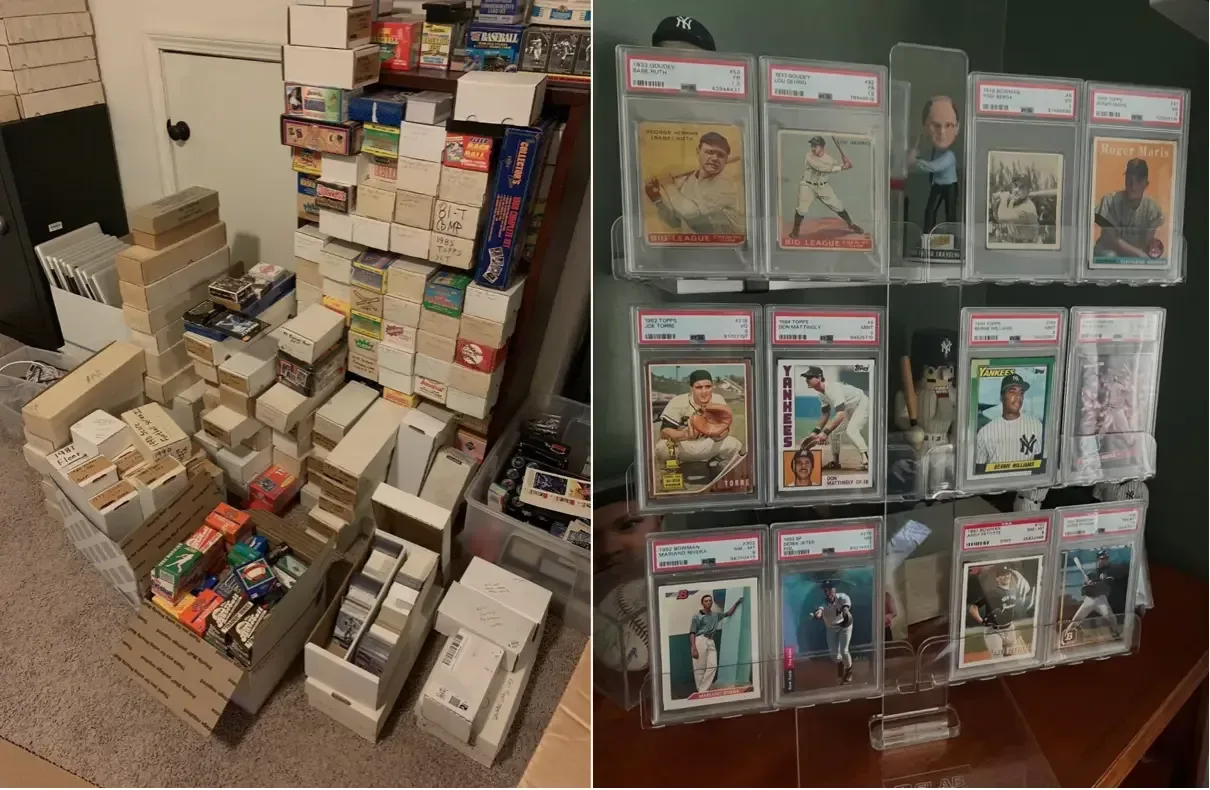
Baseball-card collecting does not have to mean accumulating endless stacks of cardboard. A focused approach can be more deliberate: reduce a broad collection, move lower-value cards, and target a small number of meaningful pieces. One appealing version of that project is a decade-by-decade rookie-card collection.
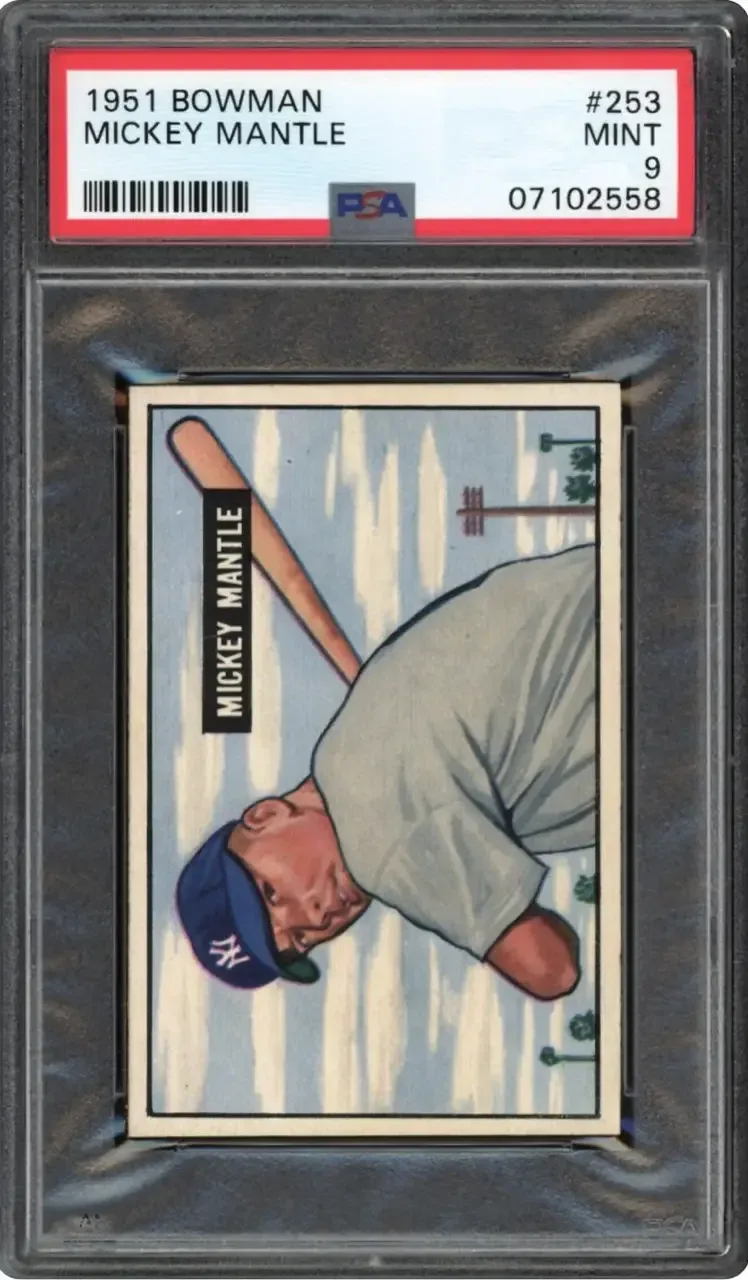
That idea immediately exposes a key hobby truth. “Best” can mean several different things. It might mean the card with the highest known sale, the scarcest surviving example, the player with the biggest legacy, or simply the card collectors most readily associate with a star. Those measures overlap sometimes, but not always. Mickey Mantle’s 1952 Topps is perhaps the famous Mantle card, for example, while the 1951 Bowman is his recognized rookie card.
Values cited below are specific recorded prices or sale highs, not fixed price guides. Card condition, centering, surface wear, missing original material, grading company and the timing of a sale can create enormous differences between otherwise identical cards. The result is not a shopping list of guaranteed values; it is a map of the cards that define each era, alongside one more approachable rookie-card target per decade.
How to read the terms behind the prices
Population refers to the number of examples recorded by a grading company in a particular population count. It is useful evidence of how often a card has been submitted and graded, but it is not automatically a complete census of every copy in existence. A low figure can help explain scarcity, while a very large one does not necessarily mean a top-grade copy is easy to locate.
For more context, explore Frank Cho Claims Marvel Ban and Star Wars Blank-Cover Fallout, but the Timeline Is Unclear.
PSA, SGC and BGS are third-party grading labels seen in the recorded prices. The number following the company name is the assigned condition grade. At the broadest level, higher grades typically command higher prices. Yet the surviving condition distribution matters as much as the total supply. Rickey Henderson’s 1980 Topps rookie has a huge recorded population, but only 26 PSA 10 examples are noted here; that makes the gap between a lower-grade card and a pristine one dramatic.
Modern-card language adds its own vocabulary. A refractor is a shiny parallel variation. A card marked /500 was serial-numbered as one of 500 copies. A Superfractor 1/1 is a one-of-one parallel. Those features make the Pujols, Judge and Ohtani selections structurally different from the older cards, where scarcity often came from survival rather than an intentional printed limitation.
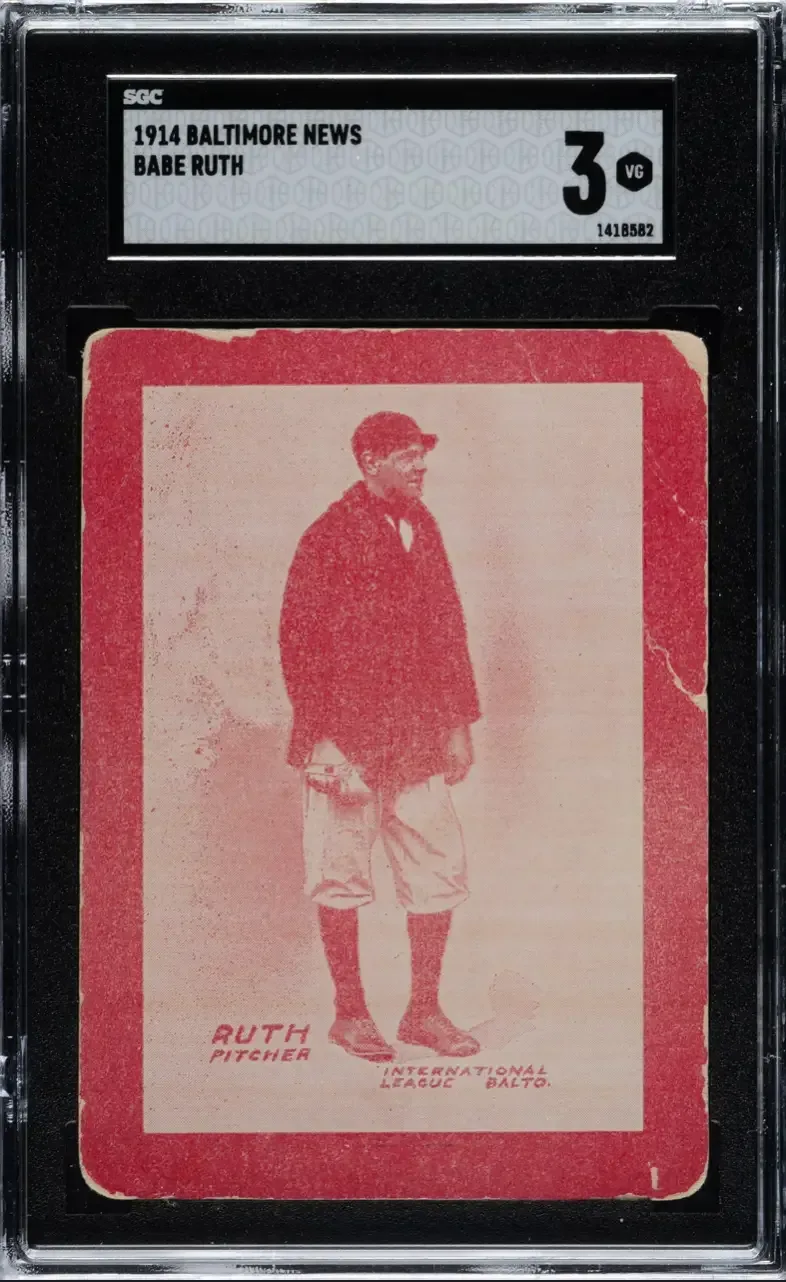
1910s: 1914 Baltimore News Babe Ruth rookie card
The 1914 Baltimore News Babe Ruth is an extraordinary starting point for a century-spanning project. It depicts Ruth at 19, pitching in the minor leagues for the Baltimore Orioles organization, long before the identity most fans associate with him. Produced as a promotional item, it was apparently unknown to the hobby until the 1980s. One copy sold for $6,600 in that decade; the same SGC 3 example later sold for $7.2 million in 2023, before a cited $4 million sale.
Related coverage includes Baseball’s Defining Rookie Cards by Decade, From Ruth to Ohtani.
Only nine copies are listed in the relevant population count. That combination of extremely limited survival, Ruth’s stature and the image of his pre-Yankees life makes it a defining early baseball rarity rather than a conventional entry point. For a collector who wants a much less expensive historic rookie, a 1909–11 T206 Tris Speaker in PSA 1 was cited at $770. Its date sits just before the 1910s, but it supplies a famous early-era alternative below $1,000.
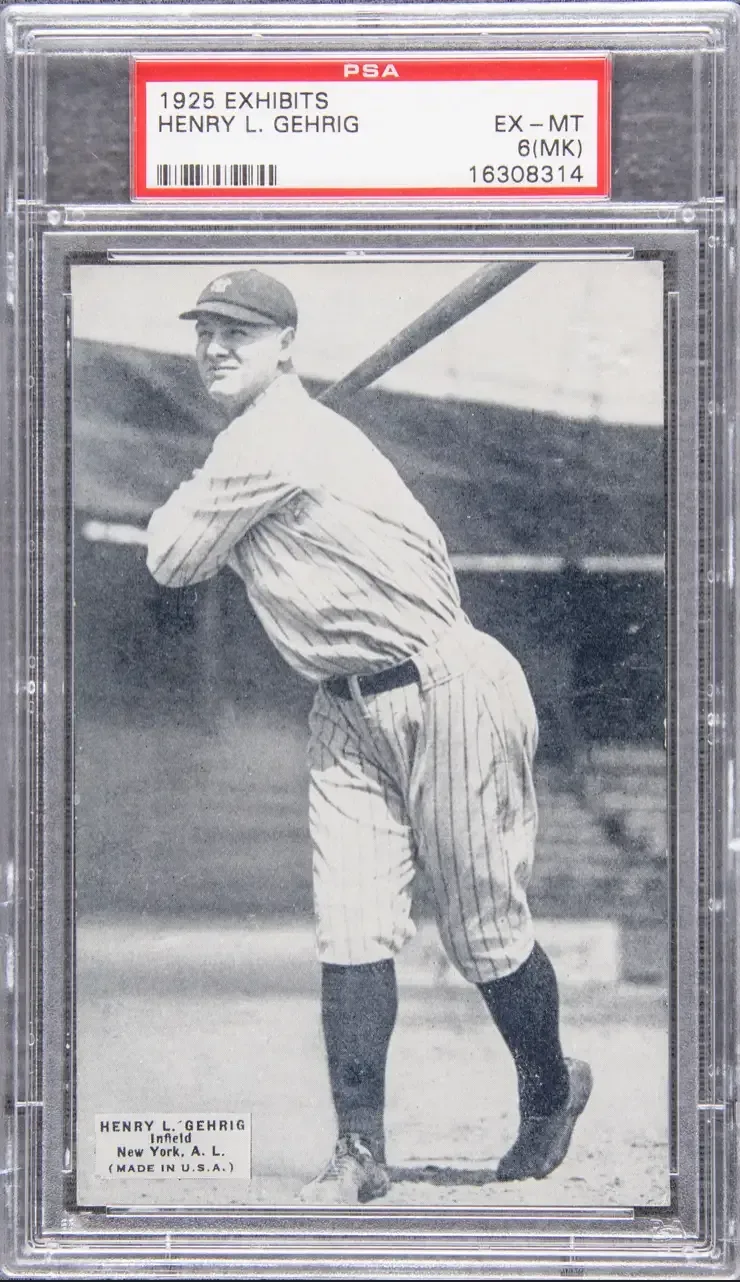
1920s: 1925 Exhibits Lou Gehrig
Lou Gehrig’s 1925 Exhibits is his only rookie card and arrived in his actual rookie season. Its format is a reminder that cards did not always follow the pack-issued gum-card model. Exhibit cards were oversized and sold individually for one or two cents through arcade-style vending machines. That unusual distribution and physical presentation distinguish the Gehrig from the cards that became more familiar in the following decade.
The stated population is 91. Recent cited values range from $61,000 for a PSA 3 to $172,000 for a PSA 4, while a PSA 6 achieved a $782,400 high in 2021. The sharp grade-to-grade movement is a practical warning against treating a player name alone as a value estimate. As a lower-cost 1920s name, the raw 1923 Maple Crispette V117 Jim Bottomley rookie card was cited at $700.
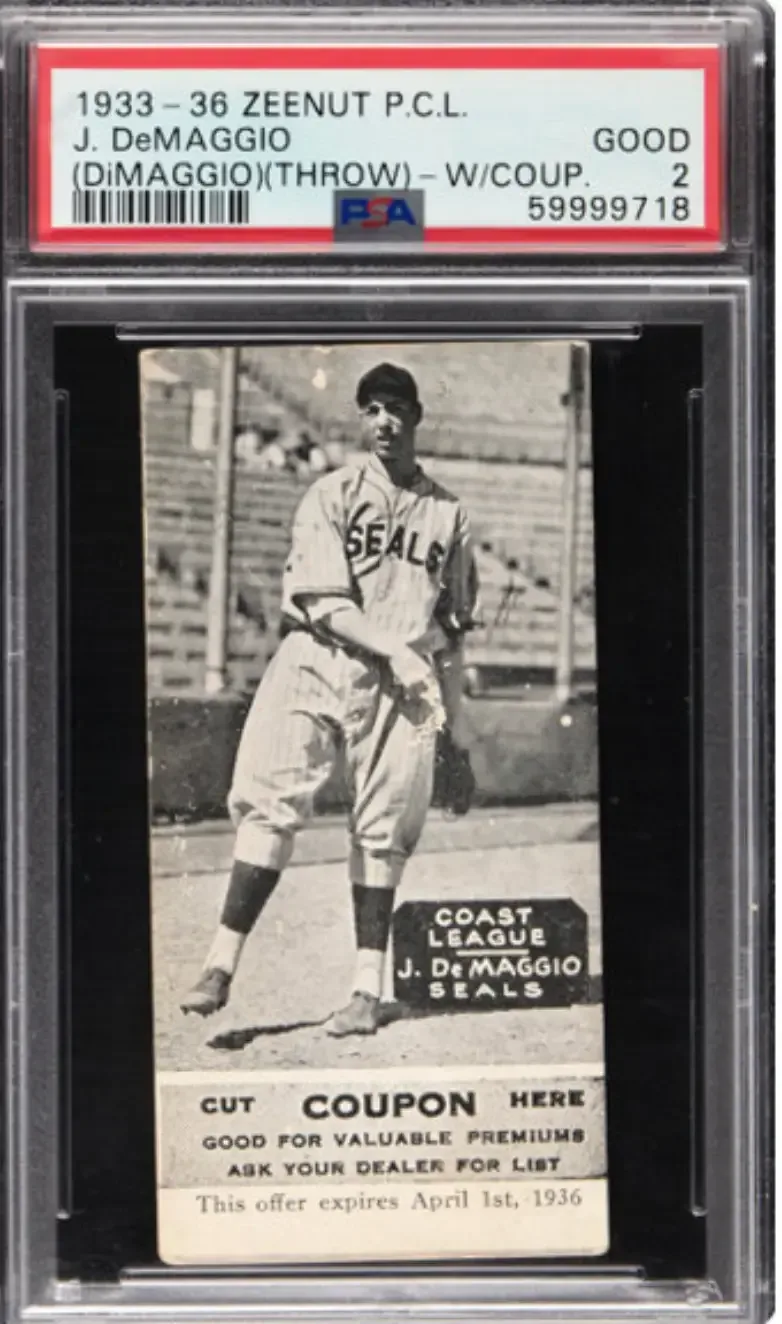
1930s: 1933–36 Zeenut Joe DiMaggio, throwing variation
Joe DiMaggio’s Zeenut rookie shows him with the San Francisco Seals of the Pacific Coast League, before his Yankees career. Zeenut cards were placed directly into snack packages and wrappers. That origin helps explain both the card’s appeal and its scarcity, especially when compared with DiMaggio’s later major-league issues.
The throwing version is the standout selection, although a batting variation also exists. Original coupons matter: a copy retaining its coupon has additional collector appeal, and a PSA 2 with coupon sold for $79,300 in 2025. A PSA 4 was cited at $59,000, illustrating that attached original material can outweigh what might otherwise seem like a straightforward grade comparison. With just 35 examples in the listed population, context is essential. For the decade’s sub-$1,000 option, a PSA 1 1934 Goudey Hank Greenberg rookie card was cited at $900.
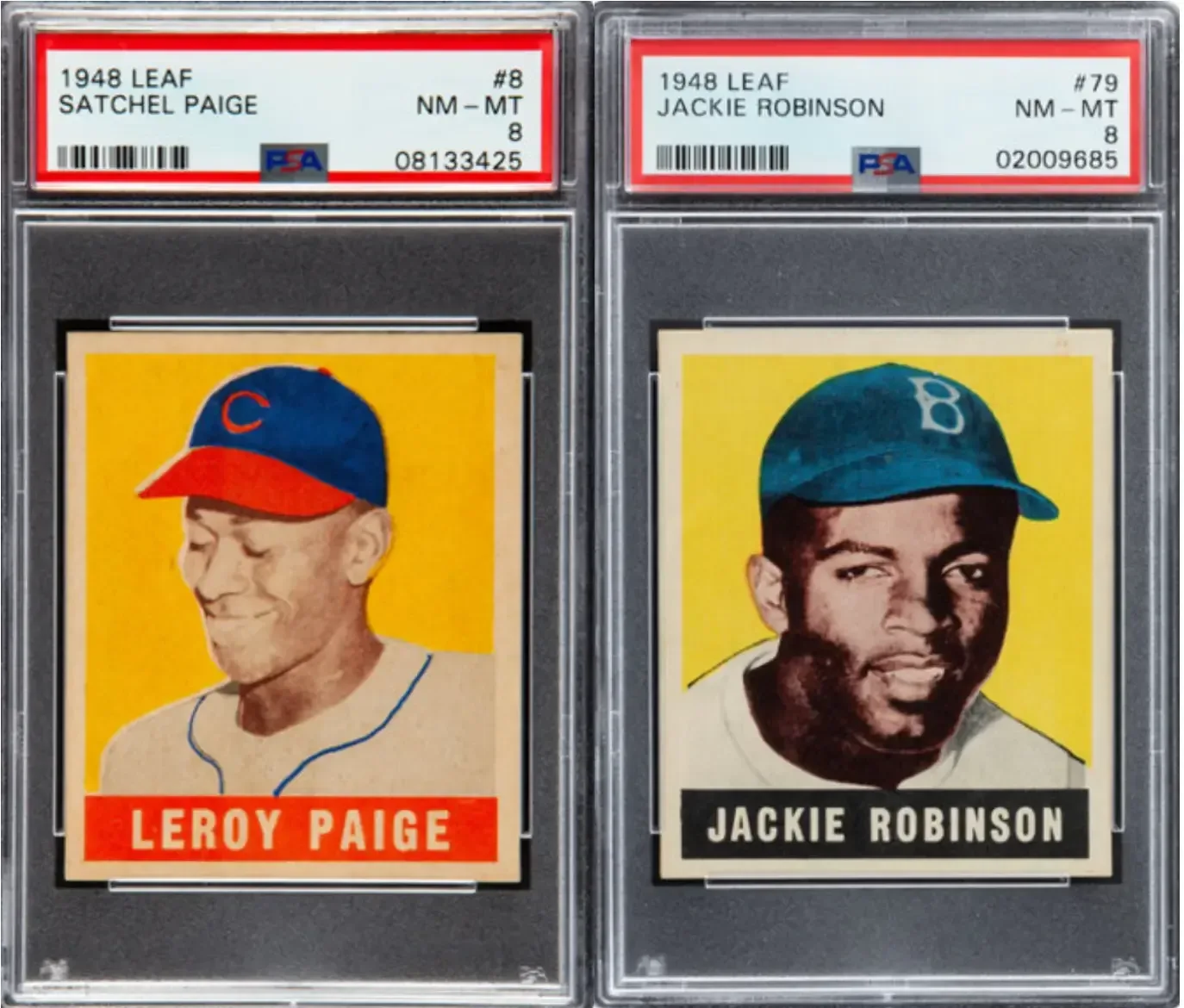
1940s: 1948 Leaf Satchel Paige and Jackie Robinson
The 1940s selection is a tie between Satchel Paige’s No. 8 and Jackie Robinson’s No. 79 in the 1948 Leaf set. The dating is worth handling carefully: despite the conventional “1948 Leaf” set name, the set was released in 1949, around the time of 1949 Bowman.
Both cards carry historical weight beyond the checklist. Paige finally entered the majors at 42 after becoming a Negro Leagues legend. Robinson broke baseball’s color barrier in 1947. Their market comparison changes by grade and supply. Paige’s card is more expensive in lower grades, helped by a listed population of 293 versus Robinson’s 2,975. Robinson’s card becomes more expensive in higher grades. Cited high sales were $432,000 for Paige in 2018 and $468,000 for Robinson in 2022.
A PSA 4 Paige was cited at $47,600 and a PSA 4 Robinson at $31,500; at PSA 7, the cited figures were $184,700 and $197,600 respectively. That reversal is a useful example of why collectors should compare the exact card and grade rather than rely on a single blanket verdict. A PSA 2 1948 Bowman Yogi Berra rookie card, cited at $750, is the era’s more attainable landmark.
1950s and 1960s: Rookie status versus fame
The 1951 Bowman Mickey Mantle No. 253 is Mantle’s recognized rookie card, even though the 1952 Topps is the more famous and prestigious Mantle issue. That distinction makes the Bowman a particularly important card for collectors pursuing actual rookies rather than an athlete’s most celebrated card. A PSA 2 was cited at $19,100, a PSA 7 at $125,800, and the listed population is 4,349. Its high sale reached $3.192 million in 2022. A PSA 1 1955 Topps Sandy Koufax No. 123, at a cited $870, fills the budget role for the decade.
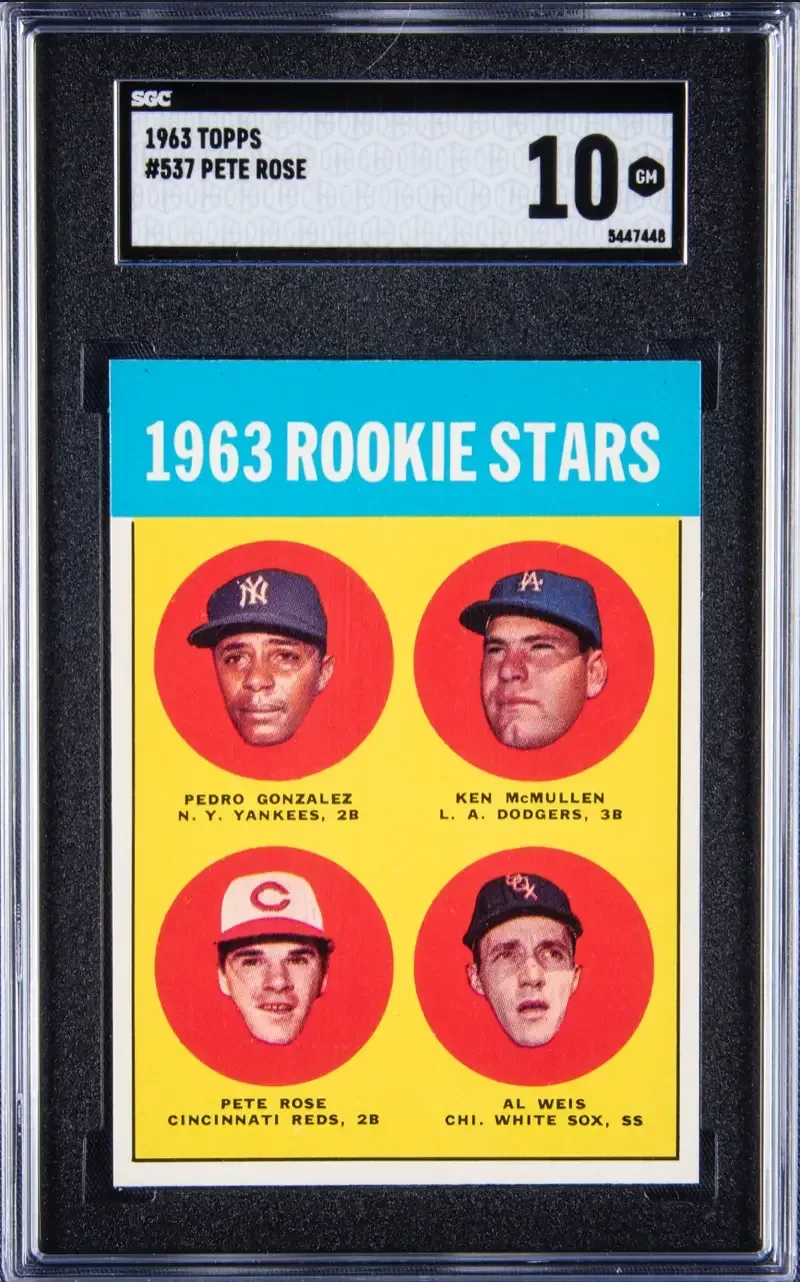
For the 1960s, 1963 Topps Pete Rose No. 537 is a shared rookie card, pairing Rose with Pedro Gonzalez, Ken McMullen and Al Weis in the Rookie Stars subset. It is a reminder that early rookie cards were not always solo portraits. The card became a major chase during Rose’s pursuit of the all-time hits record in the 1980s, a moment associated with a larger vintage-market boom. Whether it rises again if Rose is inducted into the Hall of Fame remains speculative, not a certainty.
The listed population for the Rose rookie is 11,236. Cited values include $1,400 for PSA 2 and $5,995 for PSA 7, with a $264,000 high sale in 2021. For a lower-cost 1960s target, a PSA 1.5 1967 Topps Tom Seaver No. 581 was cited at $930.
1970s through 1990s: Scarcity, centering and foil surfaces
Mike Schmidt’s 1973 O-Pee-Chee No. 615 shows how regional versions can reshape a rookie-card hierarchy. The Canadian edition uses English and French text on both front and back. Its listed population of 692 is far smaller than the 20,153 listed for the Topps version. A PSA 3 was cited at $319 and a PSA 9 at $6,710; the O-Pee-Chee card reached $91,500 in August 2026. Schmidt’s three National League MVP awards and 548 home runs reinforce why this scarcer version attracts such attention. A PSA 8 1975 Topps George Brett No. 228, cited at $860, provides an accessible 1970s alternative.
Rickey Henderson’s 1980 Topps No. 482 reverses the scarcity story. Its 72,237 listed examples indicate broad availability, and a PSA 3 was cited at only $65. But centering in mint condition is unusually difficult: just 26 PSA 10s are noted, and a PSA 9 was cited at $4,000. It is Henderson’s only rookie card, a situation shaped by the fact that Donruss and Fleer did not obtain MLB licensing until 1981. The card demonstrates that a common issue can still be difficult in elite condition. A PSA 10 1986 Topps Traded Barry Bonds No. 11T was cited at $915.
Derek Jeter’s 1993 SP No. 279 is another condition-sensitive card, this time because its foil surface is readily damaged. The set came near the end of the Junk Wax Era, yet surviving quantity has not translated into abundant pristine copies: only 22 PSA 10s are noted from a listed 53,412 population. A PSA 3 was cited at $45, while PSA 9 reached $8,500; the high sale was $600,000 in 2022. Jeter has eight 1993 rookie cards and 25 1992 pre-rookie cards, but SP is the most iconic of his rookie issues. A PSA 6 1991 Topps Desert Shield Chipper Jones No. 333, cited at $995, is the budget-era selection.
2000s and 2010s: The modern premium recipe
Albert Pujols’ 2001 Bowman Chrome Autograph Refractor No. 340/500 unites three attributes that define modern high-end collecting: a pack-issued autograph, refractor finish and serial number. The numbered designation identifies it as one of 500 copies, rather than merely a short-printed variant. A PSA 5 was cited at $5,878 and a PSA 9 at $34,000; the card’s high sale was $462,000 in 2022. Pujols finished with 703 home runs. The possibility of further attention around a future Hall of Fame induction is an outlook, not an established price catalyst. A PSA 5 2001 Topps Chrome Traded Ichiro Suzuki Retrofractor No. T266, cited at $940, offers a second defining 2000s rookie name at a lower threshold.
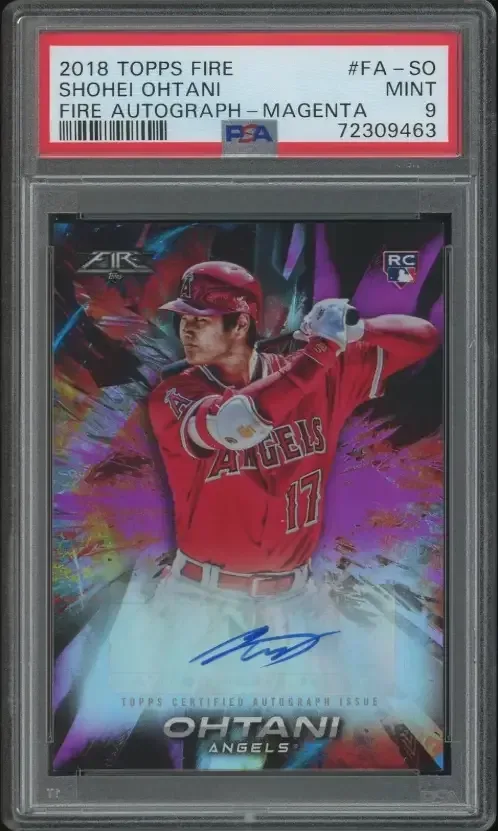
The 2010s are represented by two one-of-one autograph cards: the 2013 Bowman Chrome Aaron Judge Superfractor Autograph No. AJ, graded BGS 9.5, and the 2018 Bowman Chrome Shohei Ohtani Superfractor Autograph. Judge’s prospect card recorded a $5.2 million private sale in 2026 and is described as the most expensive modern baseball card sold. Ohtani’s corresponding Superfractor has no public sale on record. Any prediction that it would surpass Judge is necessarily speculative, because there is no public transaction to establish a price.
The practical lesson is not that a collector needs a one-of-one. It is that modern value often rests on a stack of attributes—player, rookie or prospect relevance, autograph, parallel and intentional serial scarcity. A cited $950 SGC 10 for Mike Trout’s 2011 Topps Update rookie No. US175 shows that a carefully chosen flagship-style rookie can remain a more realistic way into the decade.
Building an era-focused collection without confusing price with purpose
The cards above show several distinct paths to importance. Ruth and Gehrig combine monumental players with extreme scarcity. Paige and Robinson are inseparable from baseball history, while Mantle illustrates the difference between a rookie and an iconic later-year issue. Schmidt, Henderson and Jeter demonstrate three separate routes to premium value: a scarce regional edition, difficult high-grade centering, and a fragile foil surface. Pujols, Judge and Ohtani reflect the modern emphasis on autographs, parallels and numbered production.
For collectors working with a fixed budget, the “under $1,000” examples are more than consolation prizes. They show how grade, format and player selection can create real choices. A lower-grade T206 Speaker, a raw Bottomley, a PSA 1 Greenberg, a low-grade Koufax or Seaver, and a high-grade Brett all deliver different collecting experiences. The sensible question is whether the card fits the intended story of the collection—not whether it resembles a seven-figure headline.
Above all, compare like with like: the same issue, the same grade, the same variation, and the same presence or absence of original material such as the Zeenut coupon. A decade collection built with that discipline can stay focused while still showing how baseball cards evolved from promotions, vending machines and snack wrappers into foil stock, autographs and one-of-one parallels.