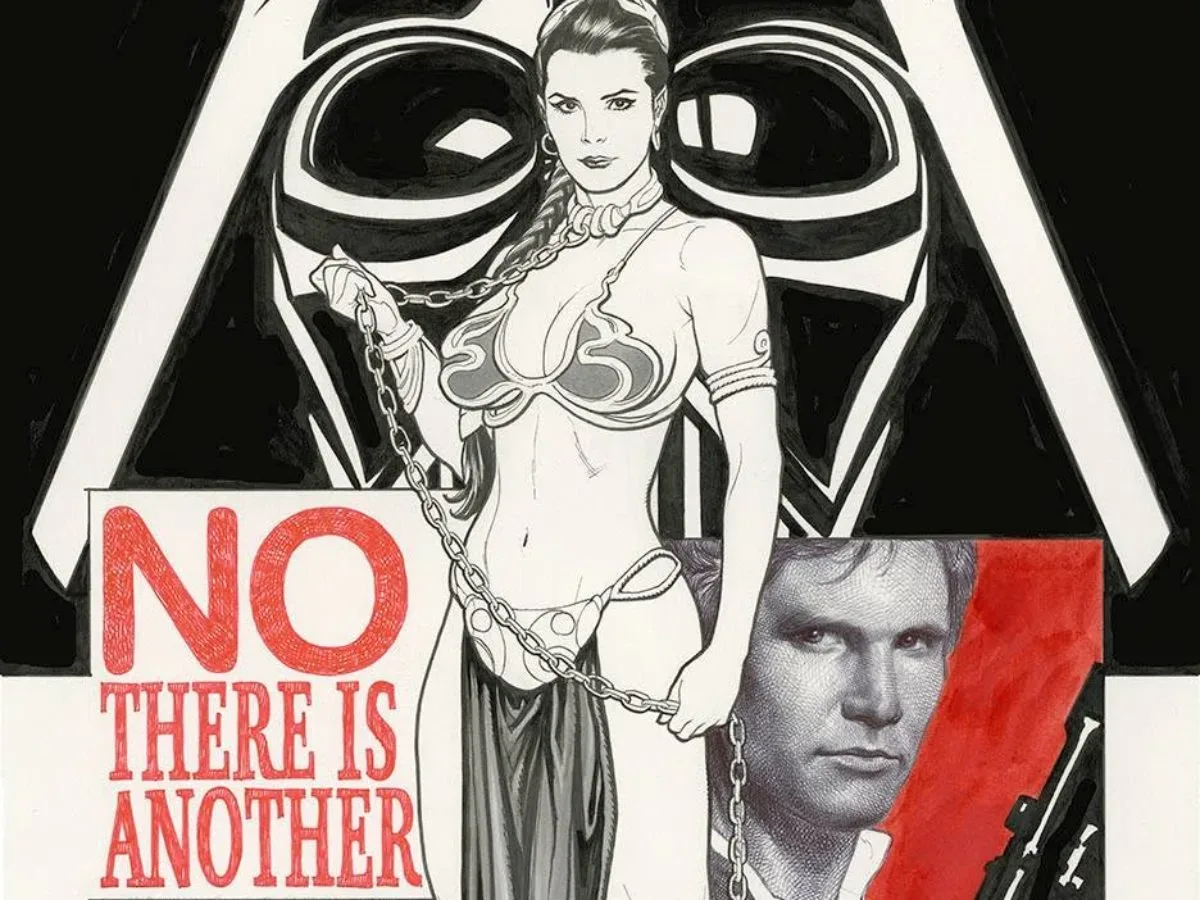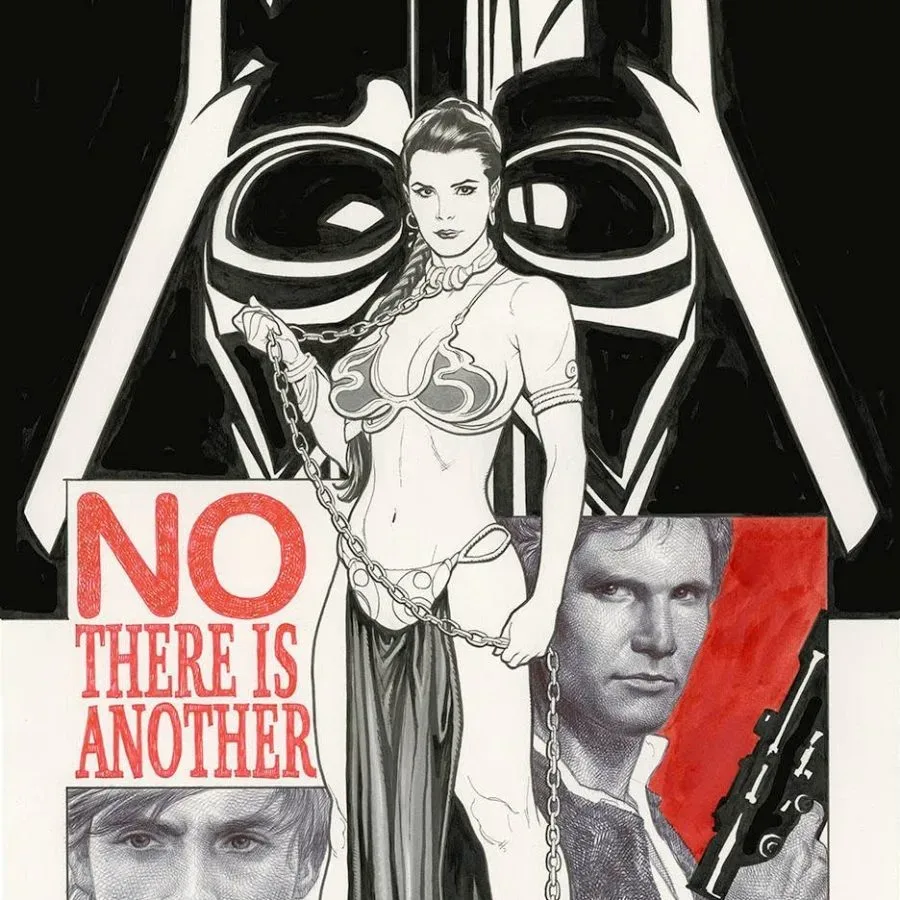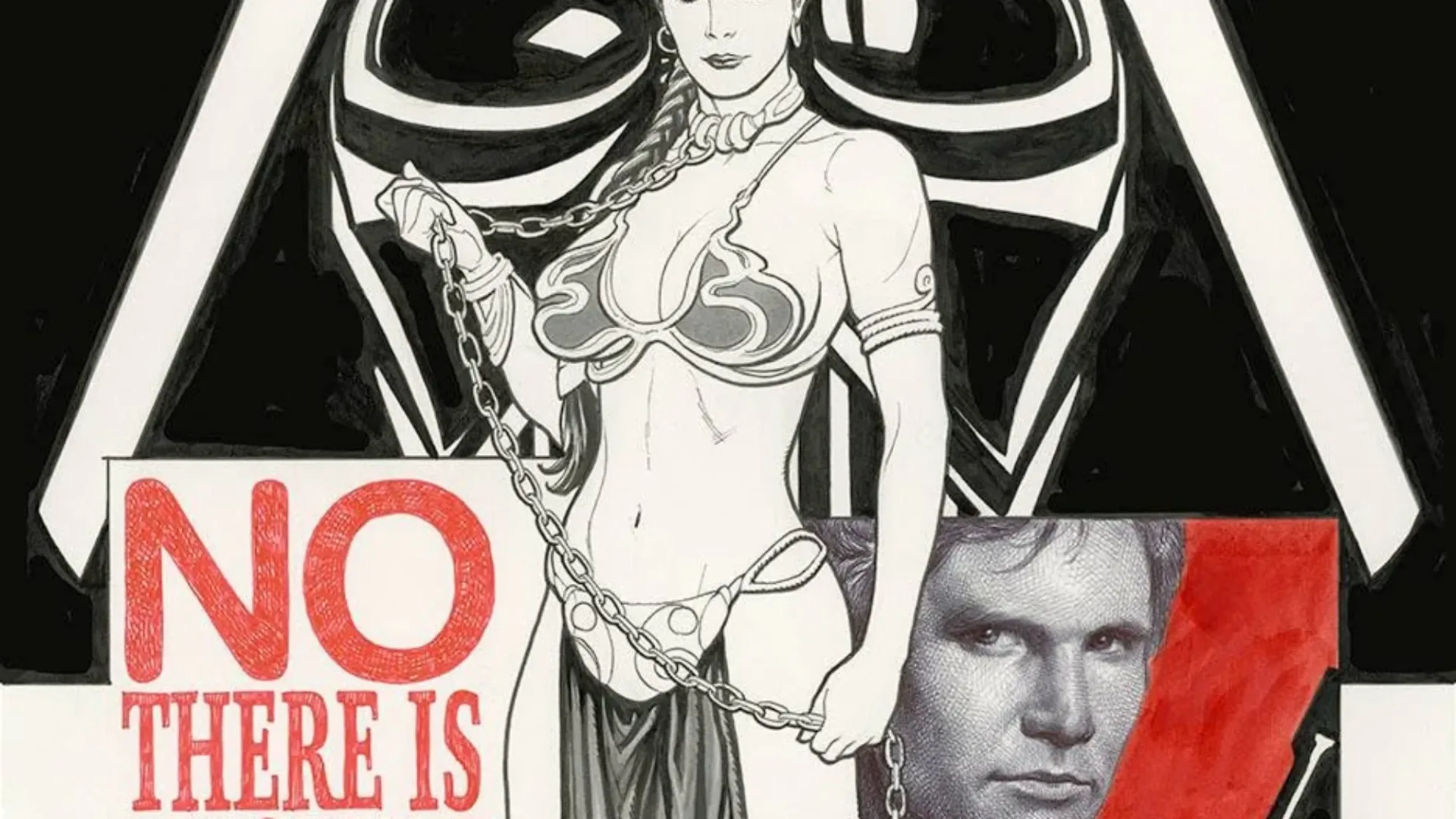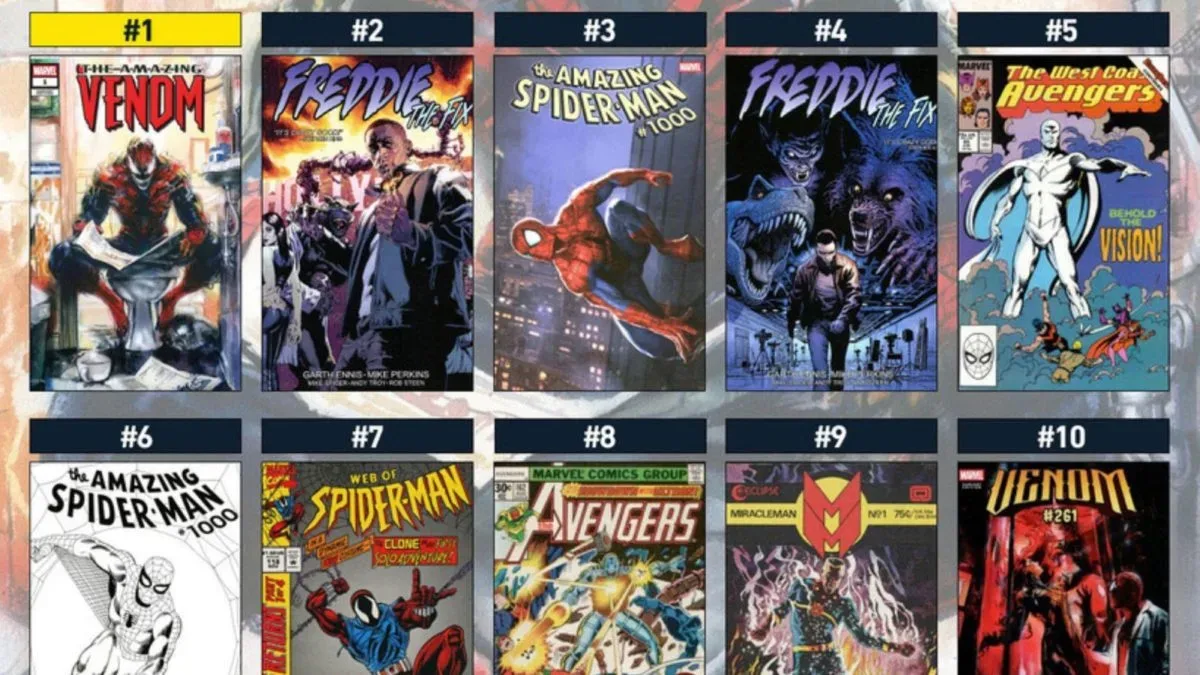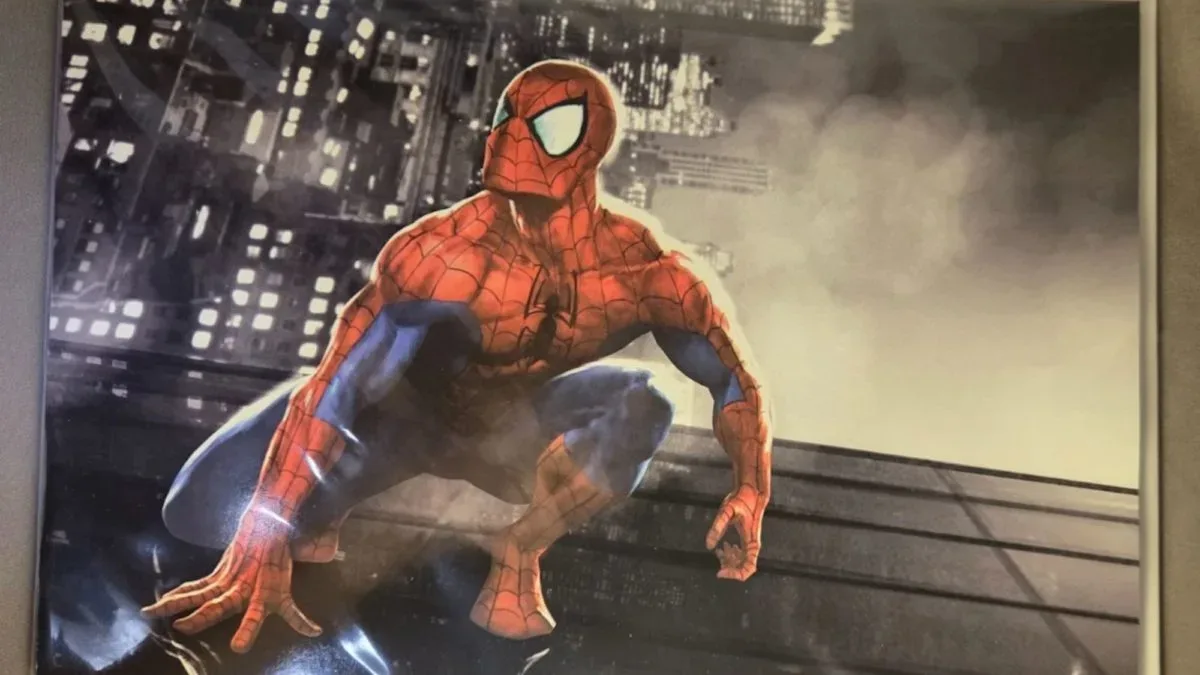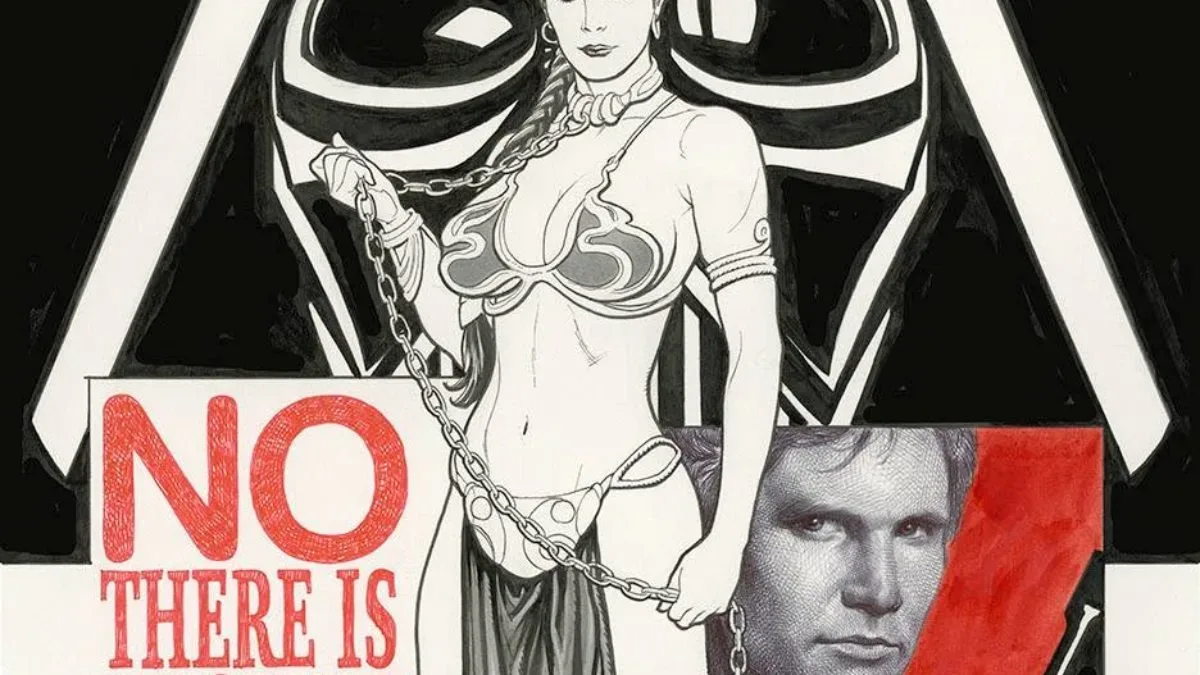
Comic artist Frank Cho has said he has been barred from working for Marvel Comics for roughly three years, attributing the situation to his Star Wars sketch-cover cartoons and to pressure he says came from Lucasfilm leadership. He also contends that the controversy brought an end to Marvel’s Star Wars blank sketch-cover program.
Those are serious claims, but they remain Cho’s account. The dates currently visible around his Marvel work and the final known Star Wars blank variants do not neatly align with the sequence he described. That discrepancy matters, particularly for collectors interpreting the absence of newer Star Wars blanks as proof of a formal, permanent cancellation.
What Cho says happened
Cho discussed the matter during a New York Comic-Con 2026 podcast appearance. He said Marvel staff were not personally opposed to him, but that Kathleen Kennedy, then Lucasfilm’s president, demanded that Marvel no longer employ him after seeing his commissioned Star Wars art.
The work at the center of Cho’s account was drawn on official blank-cover editions. These are comics manufactured with a largely unprinted front cover, leaving room for an artist to create an original drawing. They are commonly used at conventions and private signings, where a buyer can commission art directly from a creator, and artists may also produce completed examples for sale.
Cho said his Star Wars pieces were cartoons intended to poke fun at the franchise, despite his own stated affection for Star Wars. He further alleged that Lucasfilm’s response did not stop at his own relationship with Marvel: he said the Star Wars blank-cover initiative itself was ended so that artists could no longer use those official comics as a surface for unsupervised commissioned drawings.
Cho’s position is that his satire led both to an effective Marvel ban and to the removal of Star Wars blank variants from the publisher’s offerings.
Neither Marvel nor Lucasfilm is represented in the supplied material with a response to those allegations. As a result, readers should distinguish between the confirmed fact that Cho made the statements and the unconfirmed claims about why editorial and licensing decisions were made.
The dates leave important unanswered questions
The available timeline complicates a simple cause-and-effect reading. Cho’s last identified new Marvel work was on Fortnite X Marvel and Moon Knight in 2022. Meanwhile, the last Star Wars blank variants identified were Star Wars: Bounty Hunters #1 and Star Wars Vol. 3 #1, both from 2020.
That means the apparent end of the Star Wars blank covers predates the last cited Marvel work by around two years. It does not disprove Cho’s account: projects can be commissioned, published, or credited on schedules that do not reveal every behind-the-scenes decision. But it does mean the known publishing record does not independently establish the proposed chain of events.
Cho also connected the dispute to wider criticism aimed at Star Wars and cited The Acolyte. Yet that series arrived in 2024, after the 2020 endpoint identified for the blank variants. That is another point that prevents a clean chronology based only on the evidence available.
The practical takeaway is straightforward: it is reasonable to say that new Star Wars blank covers have not been identified after those 2020 issues, and that Cho believes his work was a factor. It is not yet supported to state as settled fact that a particular executive ordered a ban, that Marvel formally prohibited Cho from future work, or that his illustrations definitively caused the product line to stop.
Why licensed blank covers can create a control problem
Blank variants occupy an unusual space in comics licensing. The printed comic is an official branded product, while the eventual cover drawing can be an individual artist’s interpretation created outside a publisher’s normal commissioned-cover process. A publisher ordinarily approves a standard cover before it reaches shops. A sketch cover bought by a fan can later receive one-off artwork at a convention table or through a private commission.
That distinction can be significant for a tightly managed property such as Star Wars. The underlying comic remains an authorized Lucasfilm and Marvel item, but the added artwork may not have passed through the same editorial, marketing, or licensor review that governs a cover commissioned for publication. Satire adds a further complication because it can be designed to challenge, criticize, or ridicule elements of the franchise.
That does not establish that the blank variants were removed for this reason. It does, however, explain why a rights holder could view this kind of product differently from a conventional variant cover. The concern would not necessarily be that artists are drawing Star Wars at all; it could instead concern the use of a branded, official-looking physical object for art that the licensor cannot preview or approve.
Marvel still uses blank variants outside Star Wars
The reported absence of Star Wars blanks should not be confused with an overall end to blank comics at Marvel. Marvel has continued offering blank sketch variants on other titles, including DNX #1, Marvel Knights: The World to Come #1, Spectacular Spider-Man: Brand New Day #1, and an upcoming Avengers #1. They may be less prevalent than in earlier periods, but the format itself remains in use.
That contrast is central to the story. If the Star Wars line truly has ceased issuing blanks while Marvel continues the practice for superhero books, it points to a franchise-specific licensing or publishing choice rather than a companywide rejection of sketch covers. But the reason for that apparent difference has not been publicly established in the information available here.
Marvel’s comics remain a broad creative ecosystem beyond Star Wars, as recent discussion around characters and series such as Catwoman #92 also illustrates. The key point in Cho’s claim is not that sketch covers disappeared everywhere, but that Star Wars blanks appear to have stopped while similar products continued elsewhere.
What this could mean for existing Star Wars blank-cover collectors
Collectors should be cautious about treating the controversy as an automatic price signal. If a product is no longer printed, finite supply can increase attention, especially when there is an easy story attached to it. Star Wars blank variants also have an extra layer of individuality once they are sketched: two copies of the same issue can become dramatically different collectibles depending on the artist, subject, condition, provenance, and quality of the art.
Still, scarcity and value are not interchangeable. The available evidence identifies a possible endpoint in 2020, but does not provide print runs, sales data, a formal cancellation notice, or confirmation that no future Star Wars blank can ever be produced. Collectors should avoid paying a premium solely because a listing presents a book as “banned” or claims an official causal link that has not been verified.
Useful checks before buying a Star Wars blank variant
- Identify the exact issue: Confirm whether it is one of the known blank editions, rather than a standard variant or a later fan-made item.
- Separate the comic from the commission: The published blank is one component; the added original art is another, with its own provenance and desirability.
- Ask about condition: Blank white cover stock shows handling marks, smudges, ink transfer, and spine wear more readily than a fully printed cover.
- Document the artist and circumstances: A signature, date, commission record, or signing information can be useful when an original sketch is involved.
- Be skeptical of certainty: “No more will ever exist” is stronger than the currently supported fact that no newer Star Wars blank variant has been identified here.
Cho’s Marvel history provides context, not confirmation
Cho is a Korean-American writer, penciller, and illustrator whose work includes the syndicated strip Liberty Meadows, which began in 1997. His Marvel credits include Shanna the She-Devil, Mighty Avengers, Hulk, Totally Awesome Hulk, New Avengers, Savage Wolverine, and projects involving Spider-Man and the X-Men. His creator-owned work includes Fight Girls and Skyborne, alongside returns to Liberty Meadows.
He has also received National Cartoonists Society awards for comic-book and book-illustration work, as well as the Charles M. Schulz Award for Excellence in Cartooning. That career history gives weight to the industry impact of his allegation, but it does not independently validate its specifics.
For now, the story is best understood as a disputed account with a real collecting angle. Cho says his satirical sketch covers prompted consequences at Marvel and Lucasfilm. The publication record supplied here confirms that Star Wars blank variants appear to have stopped after 2020 and that Marvel continued to make blanks for other properties. What remains unproven is the direct connection between those facts.