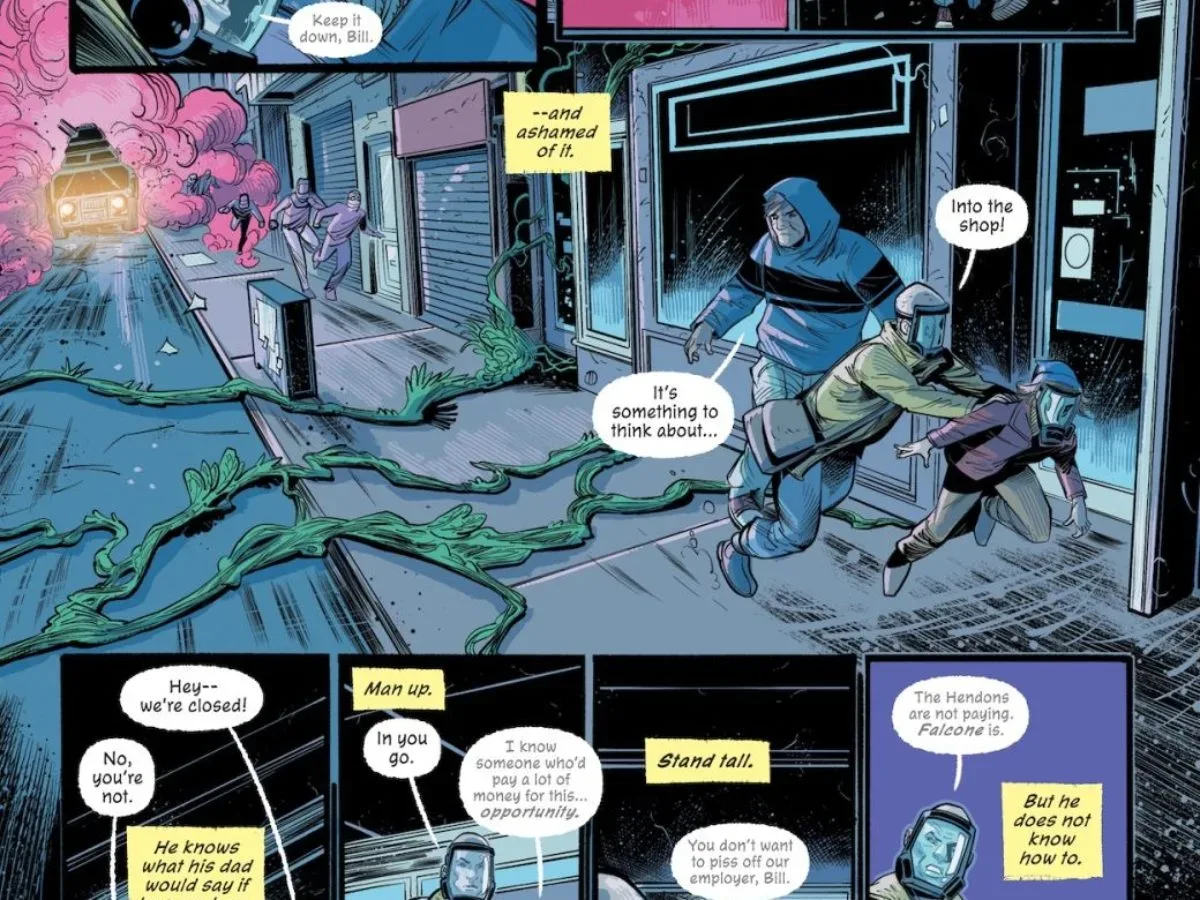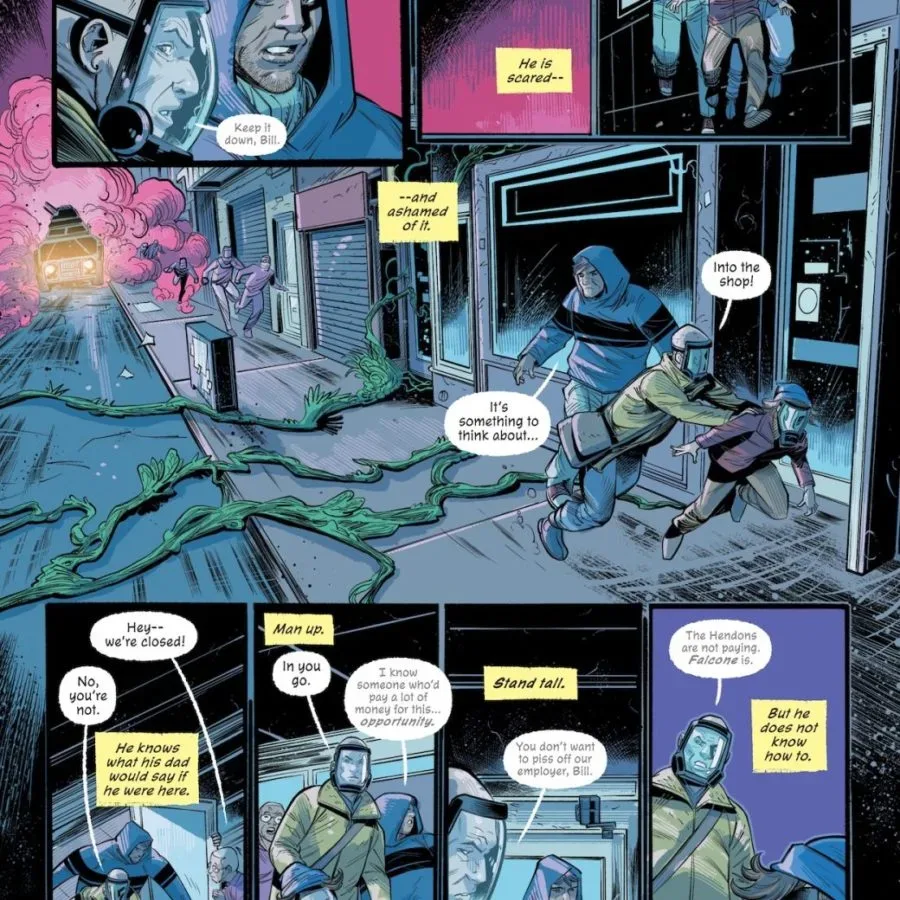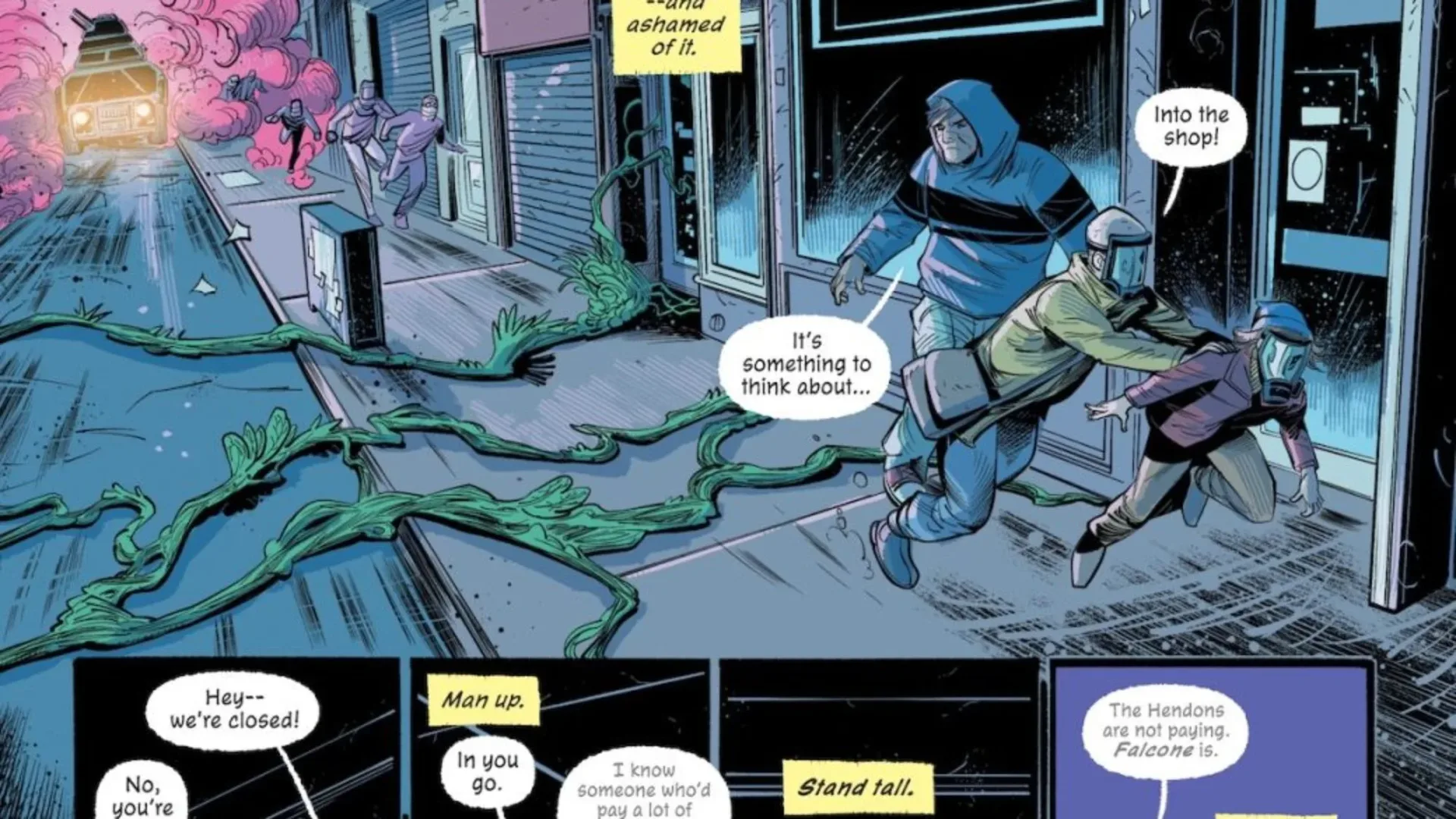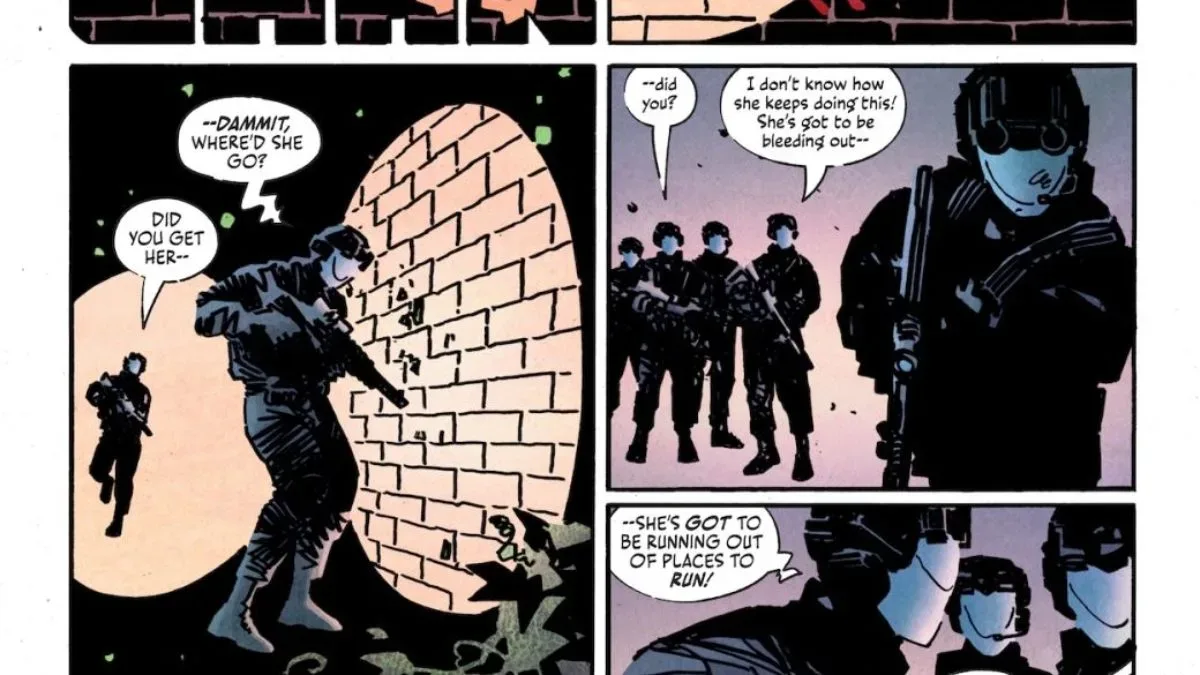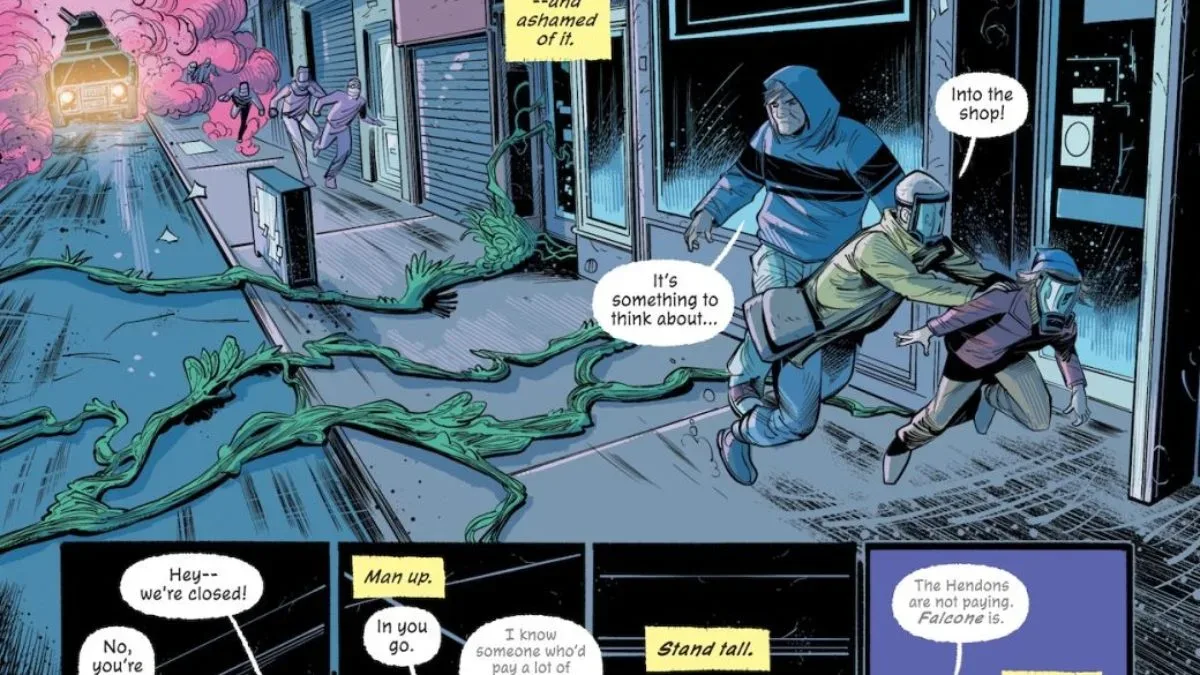
Selina Kyle’s latest mission is not being framed as a score, a heist or an escape. Catwoman #92 instead places her in the uneasy role of protector as she travels through a verdant, chaotic version of Gotham City with a lost child in her care.
DC Comics lists the issue for release on Wednesday, October 21, 2026. The central premise is succinct: Catwoman continues her solo trek through Gotham’s overgrown wasteland and becomes the unlikely guardian of a solitary innocent amid widespread danger. The available material identifies the child as Alfie Hendon, whom Selina rescues while the city’s plant life behaves unpredictably.
That is a significant shift in emphasis for a character usually associated with agility, independence and the ability to slip away before a situation can pin her down. A journey built around protecting someone who cannot simply match Catwoman’s pace turns the setting itself into the immediate threat. Gotham’s uncontrolled vegetation is not merely scenery; it is the condition shaping every choice of route, risk and responsibility.
A survival story built around an unwanted responsibility
The issue’s “Lone Cat and Cub” setup clearly invokes the familiar dramatic structure of a solitary, highly capable adult traveling with a child who needs protection. In basic storytelling terms, that structure does two things at once. It gives the lead character a concrete task—keep the child alive and get them through hostile territory—and it tests that character’s values under pressure.
For Catwoman, the premise carries a natural tension. Selina is described here as being on a one-woman mission, a phrase that stresses self-reliance and focus. Introducing Alfie means that her priorities can no longer be only her own. The child’s safety becomes a practical complication, but it also creates an emotional one: Selina must make decisions for someone else while the environment around them remains unstable.
The material does not establish the wider cause of Gotham’s transformation or say where Selina and Alfie are headed, so readers should not assume more than the announced setup. What is clear is that the issue treats Gotham as a landscape of ruins overtaken by growth, with carnage and chaos surrounding its central pair. That makes this less a conventional city patrol than a passage through terrain where familiar streets may no longer behave like familiar streets.
What “verdant wasteland” means for the issue’s atmosphere
Verdant normally describes lush, green plant growth. A wasteland, by contrast, suggests abandonment, destruction or an area made difficult to inhabit. Putting those ideas together is useful shorthand for the comic’s version of Gotham: it is not simply destroyed, and it is not a peaceful reclaimed garden. It is a place where thriving vegetation and urban breakdown exist at the same time.
That contrast gives the premise a distinctive visual and narrative hook. Plant life is often associated with renewal, but the solicitation characterizes this growth as unpredictable and positions it within a dangerous cityscape. In that context, greenery can obscure routes, create barriers and make a dense urban environment harder to read. The announcement does not detail specific hazards, but it does make the vegetation’s unusual behavior part of the story’s conflict rather than a passive backdrop.
For a character known for navigating Gotham’s built environment, that matters. Catwoman’s image is deeply connected to rooftops, alleys and architectural escape routes. An overgrown Gotham alters the practical logic of those spaces. The tension lies in seeing a skilled survivor contend with a city whose usual pathways are being swallowed, changed or rendered unreliable.
Selina Kyle and Alfie Hendon at the center
The rescue of Alfie Hendon provides the issue’s most immediate human stake. Rather than presenting Catwoman solely as someone passing through catastrophe, the story gives her a direct relationship to one vulnerable person caught inside it. This is a compact way to make a massive environmental crisis feel personal.
It also gives the title’s “cub” wording a purpose beyond a cat-themed pun. Selina is not literally becoming a parent, and no such longer-term relationship has been announced. But the guardian-and-child framework can explore protectiveness without requiring the character to abandon the sharper, more self-contained qualities readers expect from her. The drama comes from the friction between a mission that seems designed for one person and a circumstance that makes leaving another person behind impossible.
Readers looking for a major explanation of the plant phenomenon should keep expectations measured. The available description confirms that Gotham’s vegetation continues to act in unpredictable ways, but it does not promise that this installment will resolve the citywide situation. Catwoman #92 is positioned first as a chapter of survival and protection, with its emotional question rooted in how Selina handles the person now depending on her.
The creative team and cover options
Torunn Grønbekk is credited as writer, with Danilo Beyruth on interior art. Sebastian Fiumara provides the main cover. Together, those credits define the core edition listed at a suggested retail price of $3.99.
Four additional cover listings are also attached to the release:
- Marcio Takara cover — $4.99
- Charlie Adlard cover — $4.99
- Chloe Brailsford cover — $4.99
- David Nakayama cover — $6.99
For readers, variant covers are alternate exterior artwork editions of the same comic issue. The supplied listing does not indicate differences in story content among these editions, so the practical choice is primarily about cover preference and price. Anyone specifically wanting Beyruth’s interiors and Grønbekk’s script can find them in the standard edition; the variant decision is separate from the main narrative premise.
The multiple-cover approach also gives fans several visual interpretations of a story built around a radically changed Gotham and a more protective side of Catwoman. No cover art description is provided in the listing, however, so it is best not to infer which version focuses on Selina, Alfie or the transformed city.
Why the premise stands out for Catwoman
The strongest element in Catwoman #92’s announced setup is its scale. The issue reduces a broad urban disaster to a simple, urgent problem: one capable adult and one lost child trying to get through a place that has become hostile. That can make the series’ environmental upheaval legible without needing the reader to absorb every detail of the larger crisis at once.
There is also a built-in contrast between Gotham’s immense chaos and the intimacy of Selina’s obligation. The city may be in ruins, but the story’s dramatic engine is not a broad promise to fix everything. It is the more immediate responsibility to protect Alfie amid conditions neither character controls. That limited focus can make a disaster setting feel more tense, because every detour and encounter matters to the two people at its center.
Those following current superhero-comic solicitations may also want to compare how other books turn larger speculative crises into character-focused stakes. For another recent team-book setup built around leadership pressure and a future-facing dilemma, see Inglorious X-Force #10’s future leadership crisis.
Release details
Catwoman #92 is scheduled to reach comic shops on October 21, 2026. Its standard edition carries a $3.99 suggested retail price, while the listed alternate covers range from $4.99 to $6.99. The issue’s announced direction is clear: Selina Kyle’s path through Gotham’s plant-consumed ruins becomes a test of endurance, improvisation and her willingness to protect a child when chaos would make it easier to keep moving alone.