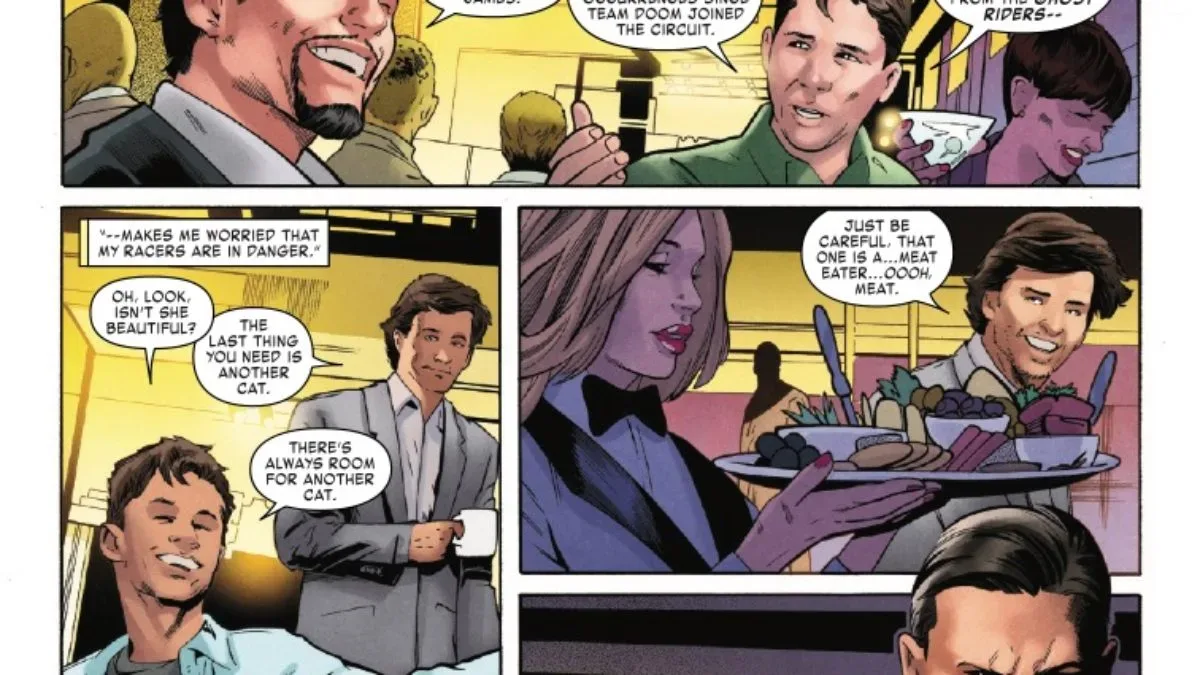
Inglorious X-Force #10 is set to turn its time-displaced premise into a crisis of command. The 32-page Marvel issue, on sale October 21, 2026, sends X-Force into the far future, where Cable’s condition raises a question with consequences beyond one team member: can the group still trust the leader guiding its mission?
The central setup is deliberately stark. Cable may have been compromised, X-Force begins questioning the purpose and basis of its assignment, and a new leader emerges while the team is already deep in the consequences of its actions. That combination makes issue #10 sound less like a straightforward future-set action detour and more like a pressure test for the team’s internal loyalties.
What is known about Inglorious X-Force #10
- Title: Inglorious X-Force #10
- Release date: October 21, 2026
- Publisher: Marvel
- Creators: Tim Seeley and Michael Sta. Maria
- Cover artist: R.B. Silva
- Format: 32 pages, rated T+
- Price: $4.99 US
- Variant: An Ivan Fiorelli variant is also listed at $4.99 US and $6.25 CAN.
The premise places the whole unit in the far future rather than isolating Cable in a personal subplot. That distinction matters. A compromised leader can create an immediate tactical problem, but X-Force’s uncertainty here extends to the mission itself. The team is not simply asked to decide whether Cable needs help; it is pushed toward reconsidering what it has been doing and whether its decisions have been shaped by a leader who cannot be fully relied upon.
Cable’s condition is the issue’s central fault line
Preview material identifies a possible biochemical infection called Catharsis 6.0 as part of Cable’s deteriorating or altered state. “Biochemical” generally describes a process involving chemical activity within living systems. In story terms, that wording suggests Cable’s potential compromise is not merely ideological disagreement, bad intelligence, or a normal injury. It points to an affliction that could affect the person at the center of X-Force’s authority.
The available details do not establish exactly how Catharsis 6.0 works, who is responsible for it, whether Cable is aware of its influence, or whether it can be reversed. Those are important unknowns. What is established is that the team sees enough cause for concern to confront the possibility that its leader has been compromised.
That uncertainty creates a more interesting problem than a clean betrayal reveal. If Cable were unquestionably an enemy, replacing him would be comparatively simple. If he is still Cable but affected by an outside force, X-Force must balance the safety of the mission against loyalty to a teammate. The solicited setup also raises the possibility that the group’s response may come too late to prevent damage already set in motion.
Why the far-future setting changes the stakes
Time displacement is doing narrative work here, not simply supplying futuristic scenery. By flinging X-Force into the far future, the issue moves the team away from its normal context and places it in an era shaped by outcomes they may have helped create. The question in the premise—whether it is already too late to save X-Force from what it has set in motion—suggests the future could confront the group with consequences rather than merely new enemies.
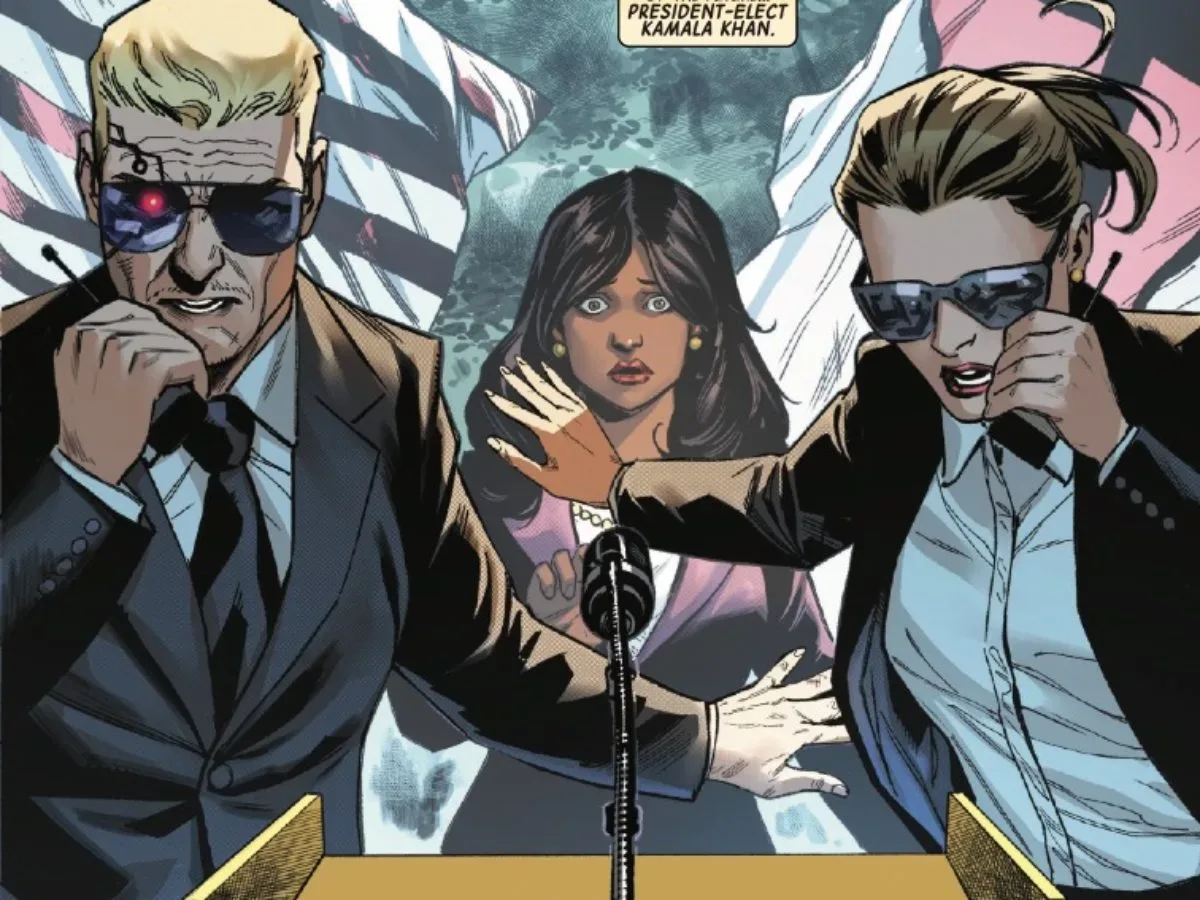
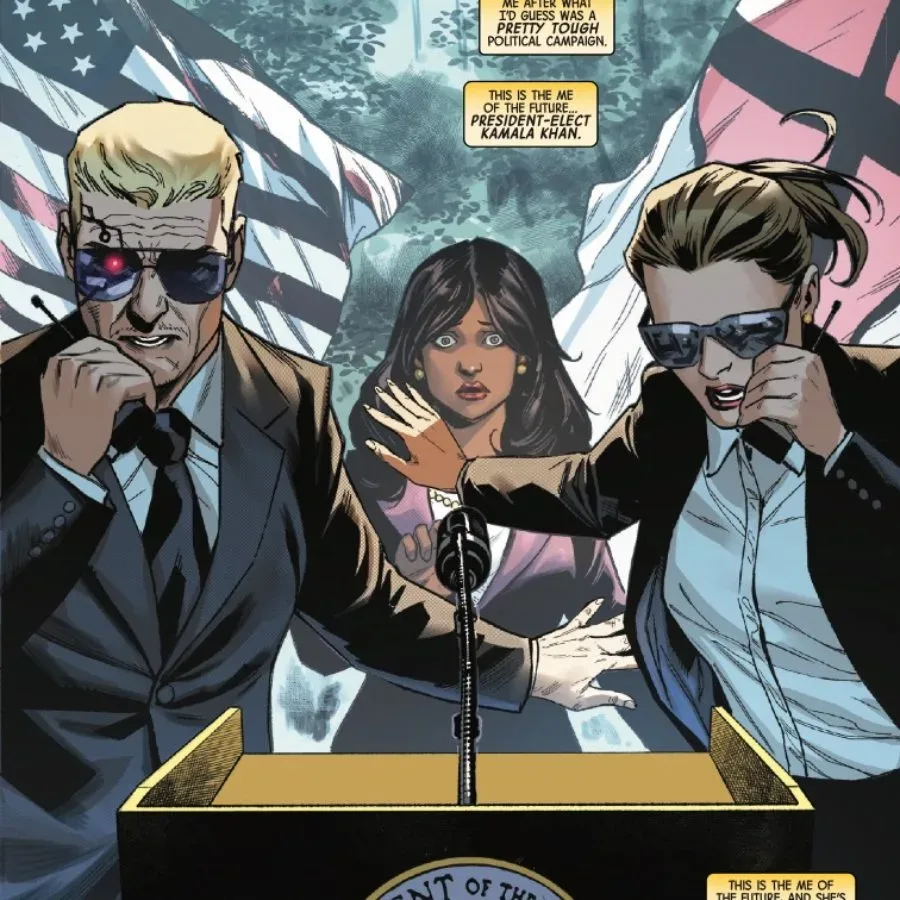
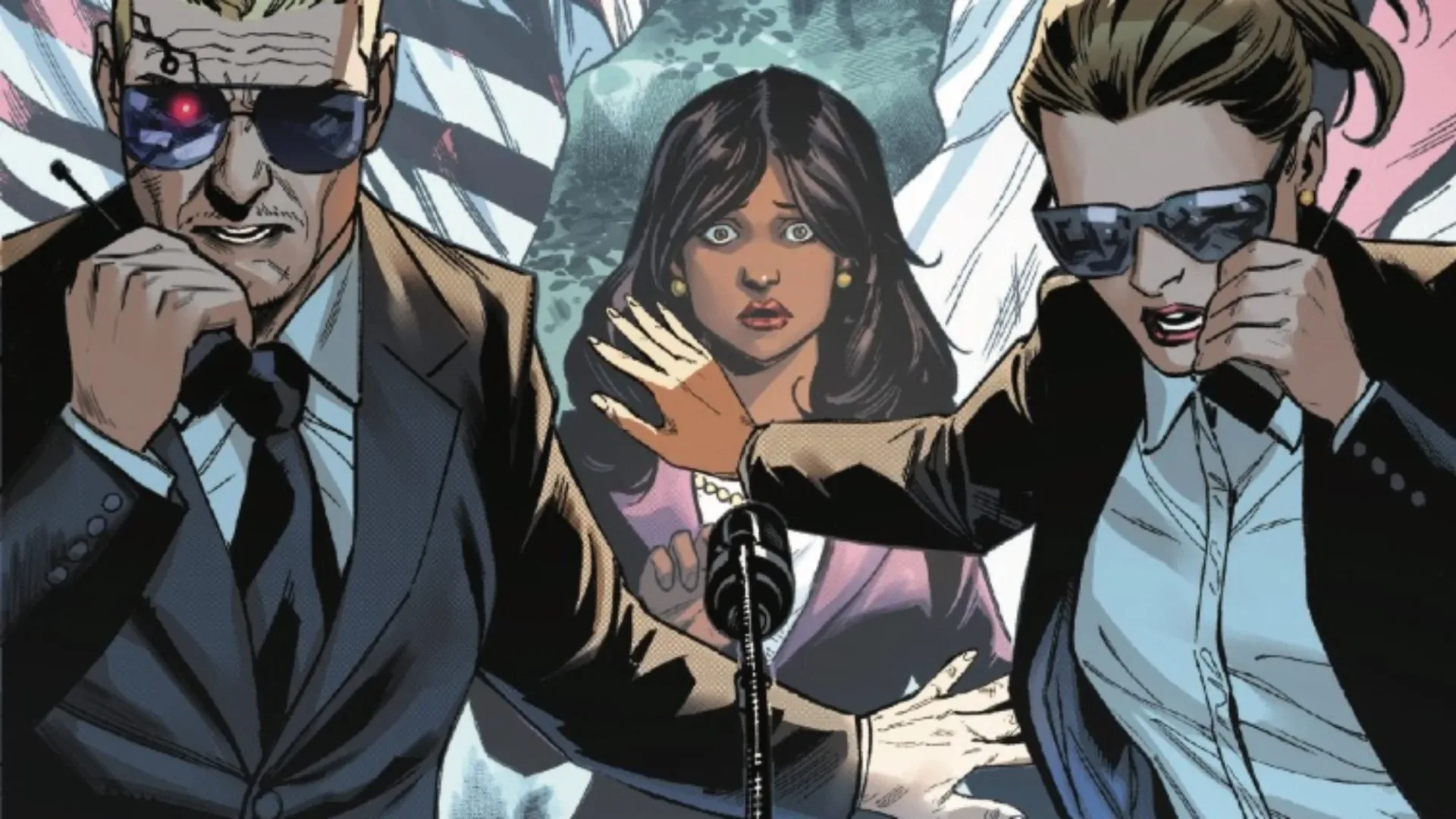
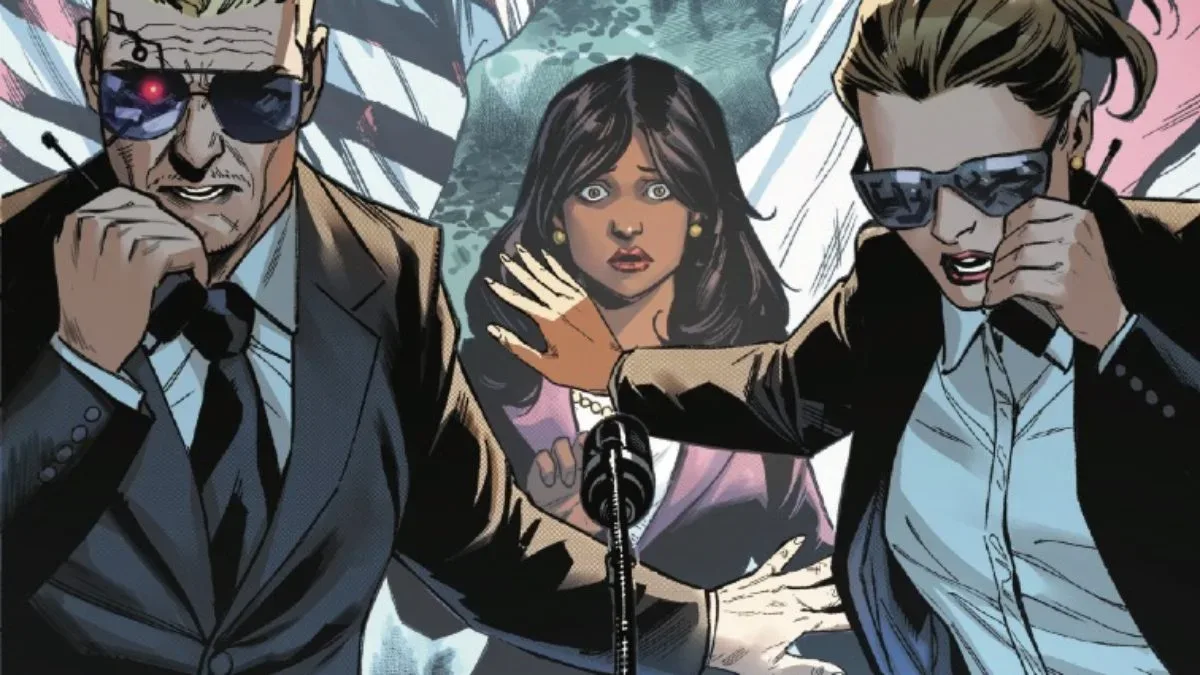
Preview pages reportedly include Kamala Khan as a future President, accompanied by bodyguards. That is a striking image, but the available material does not explain her role in the plot, the political circumstances of this future, or whether she is aligned with X-Force. Readers should treat her appearance as a preview detail, rather than proof of how extensively she figures into the issue.
Still, her presence fits the comic’s wider concern with security and institutional trust. A president protected by guards, an X-Force leader under suspicion, and a new leader rising within the team all point toward a future in which authority is both necessary and vulnerable.
A succession conflict, not just a Cable story
The solicitation’s promise that “a new leader emerges” is arguably the biggest unknown going into issue #10. It does not identify that character or confirm whether the change is accepted, temporary, contested, or forced by events. The lack of clarity leaves several possibilities open: a successor could stabilize the group, split it further, or make a difficult but necessary decision that Cable would not have made.
For a team operating in a hostile future, leadership succession is not a procedural detail. It affects who determines the mission, who decides which information is credible, and who bears responsibility for choices made under pressure. The core drama, then, is likely to be about legitimacy as much as capability. The person who takes charge must persuade teammates that they are acting on sound judgment at precisely the moment when the group’s old chain of command has broken down.
There is also a built-in tension between speed and scrutiny. X-Force presumably cannot pause indefinitely to investigate Cable’s condition when it is displaced in the future and facing unknown circumstances. Yet acting quickly without checking the underlying premise of its mission risks making the crisis worse. That is the kind of dilemma the issue’s setup appears designed to explore.
What readers should and should not expect from the preview setup
The official description supports a few clear expectations: a far-future location, serious concern about Cable’s reliability, internal questioning within X-Force, and an emergent replacement leader. It does not confirm the nature of the threat facing the team, the identity of that successor, the full impact of Catharsis 6.0, or the status of Cable by the end of the issue.
That distinction is useful with a preview-driven story. A cover image, one scene, or a single alarming line can establish tone without revealing the structure of the plot. Here, the available material sells a team forced to reassess its leader and its own actions; it does not yet provide enough information to treat any apparent betrayal, political alignment, or future outcome as settled fact.
The story’s focus on a compromised figure in command also gives the issue a timely speculative hook without needing to resolve it into a simple technology panic. Fictional stories about trust can be compelling precisely because they make characters assess evidence, motivations and accountability under stress. In a different corner of pop-culture coverage, questions around AI and creative work are also affecting game demos and public releases, as seen in this report on a canceled Steam demo amid AI copycat concerns. The situations are not equivalent, but both show why context matters before readers—or players—jump to a conclusion.
Release and collecting details
Inglorious X-Force #10 carries the standard issue identifier 75960621362701011. The listed Ivan Fiorelli variant uses identifier 75960621362701021. Both editions are listed at $4.99 in the United States, while the variant has a listed Canadian price of $6.25.
For readers deciding between editions, the substantive story information provided applies to the issue itself; no distinct story content for the variant is indicated. The choice is therefore primarily one of cover preference, assuming both versions remain available through a preferred comic shop or digital retailer. The standard release is rated T+, an age guideline indicating material intended for teen readers and above.
With Cable’s authority under a biochemical cloud, a future that may reflect the team’s own past decisions, and an unidentified successor waiting in the wings, issue #10 has a compact but consequential setup. Its biggest question is not only whether Cable can be saved. It is whether X-Force can make sound choices once the person who gave its mission coherence becomes the reason that mission is in doubt.