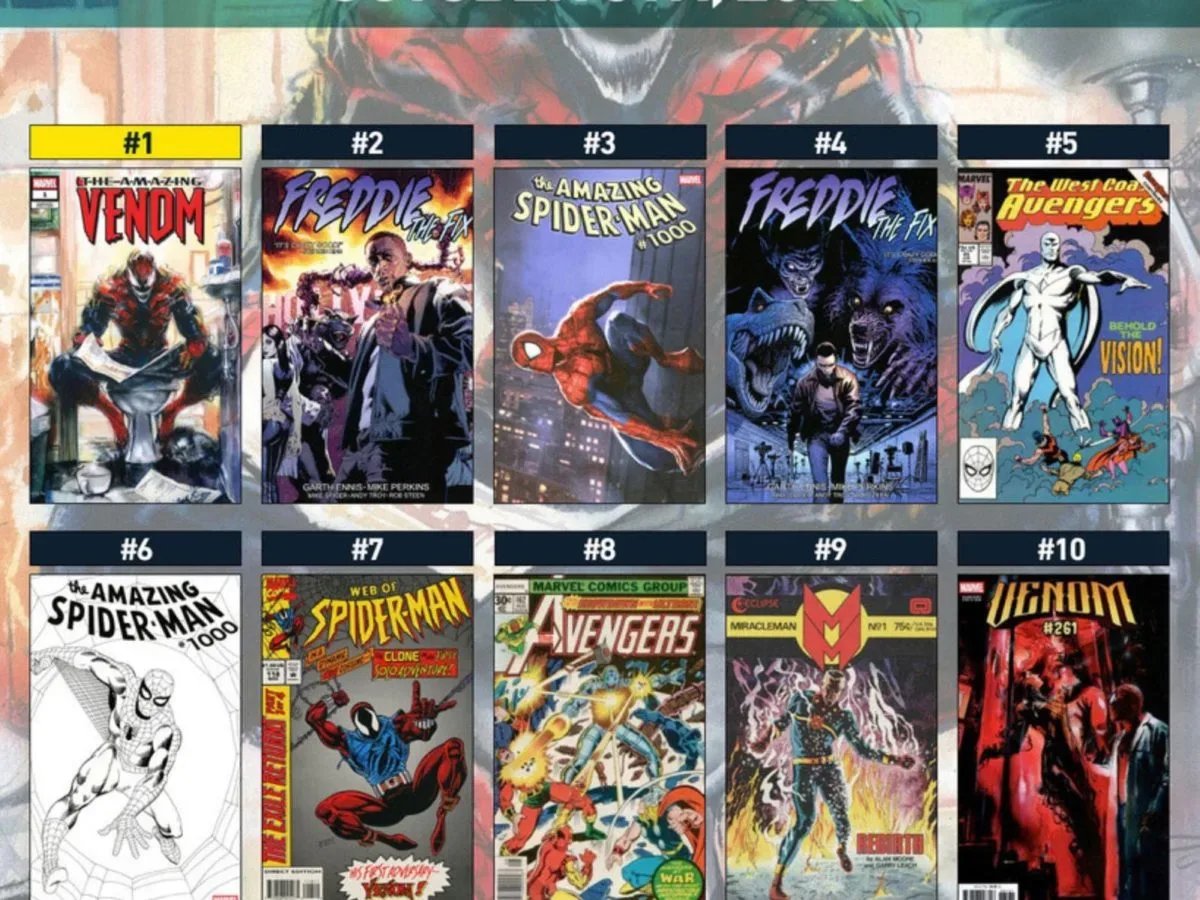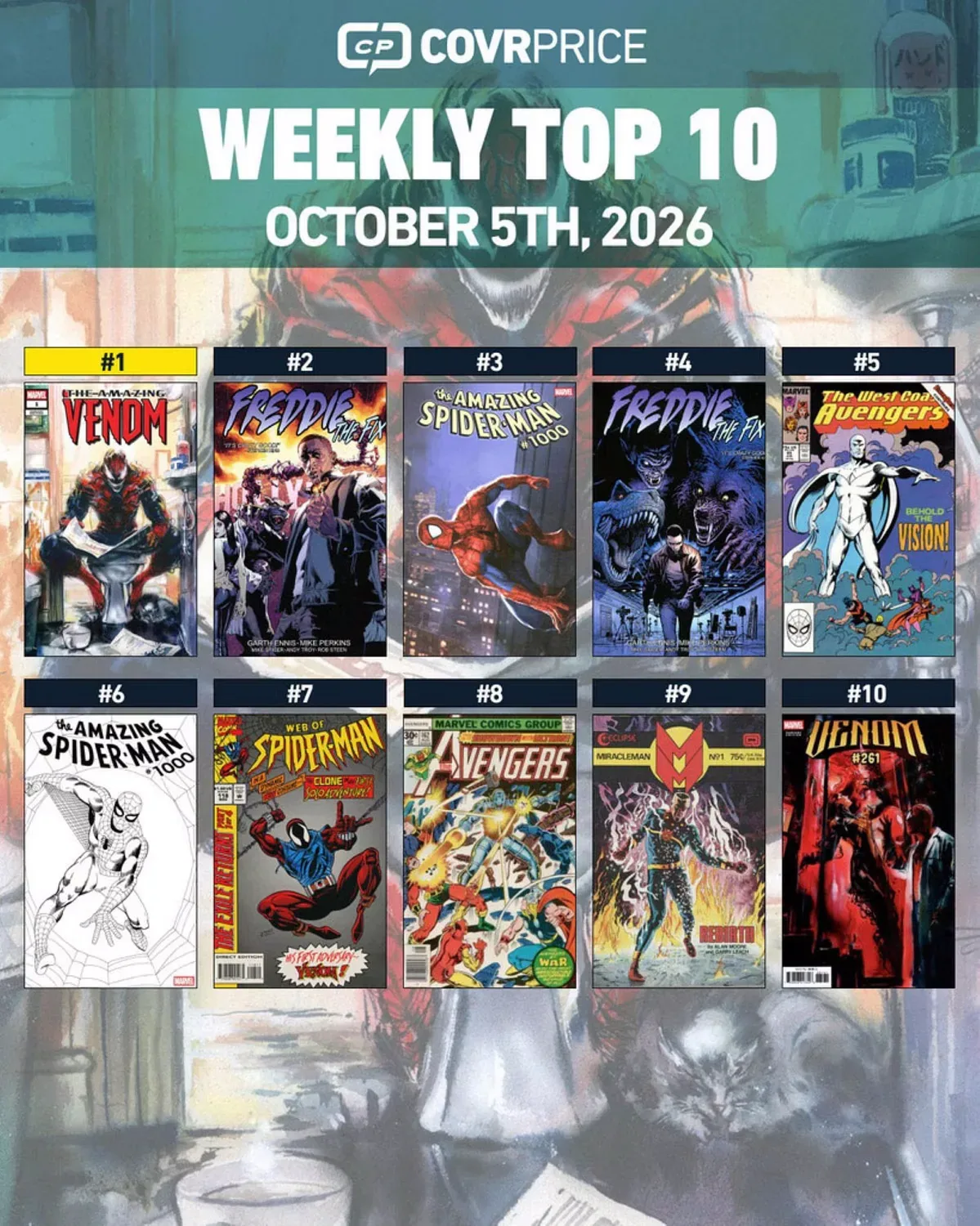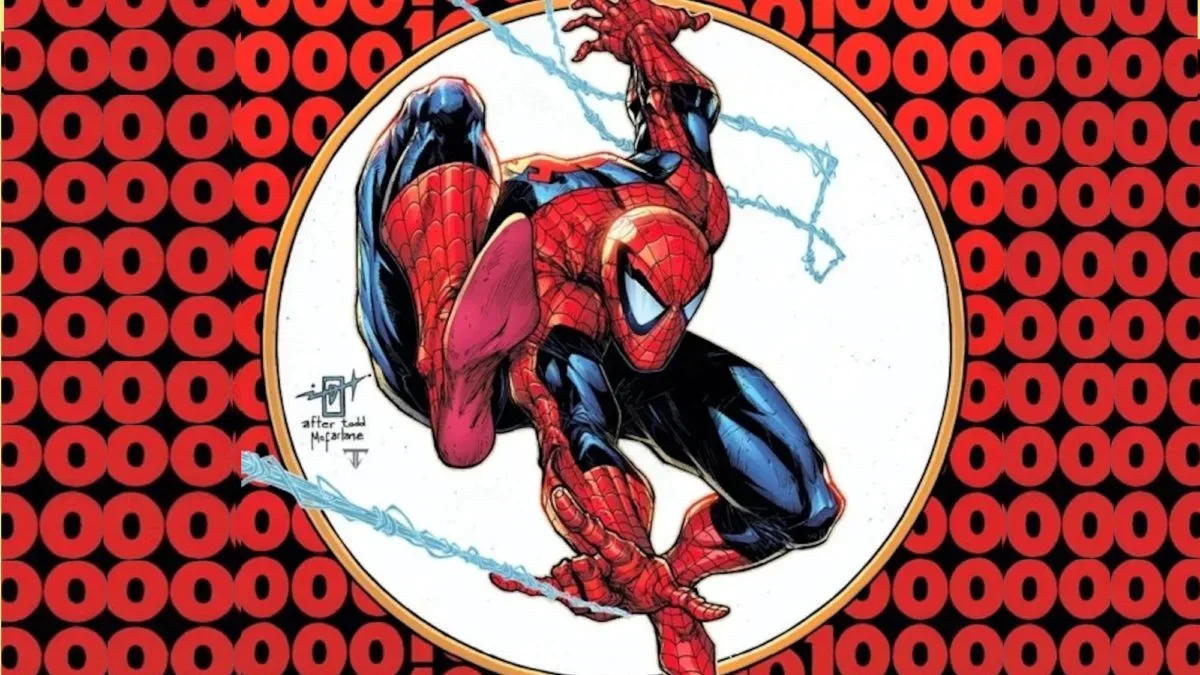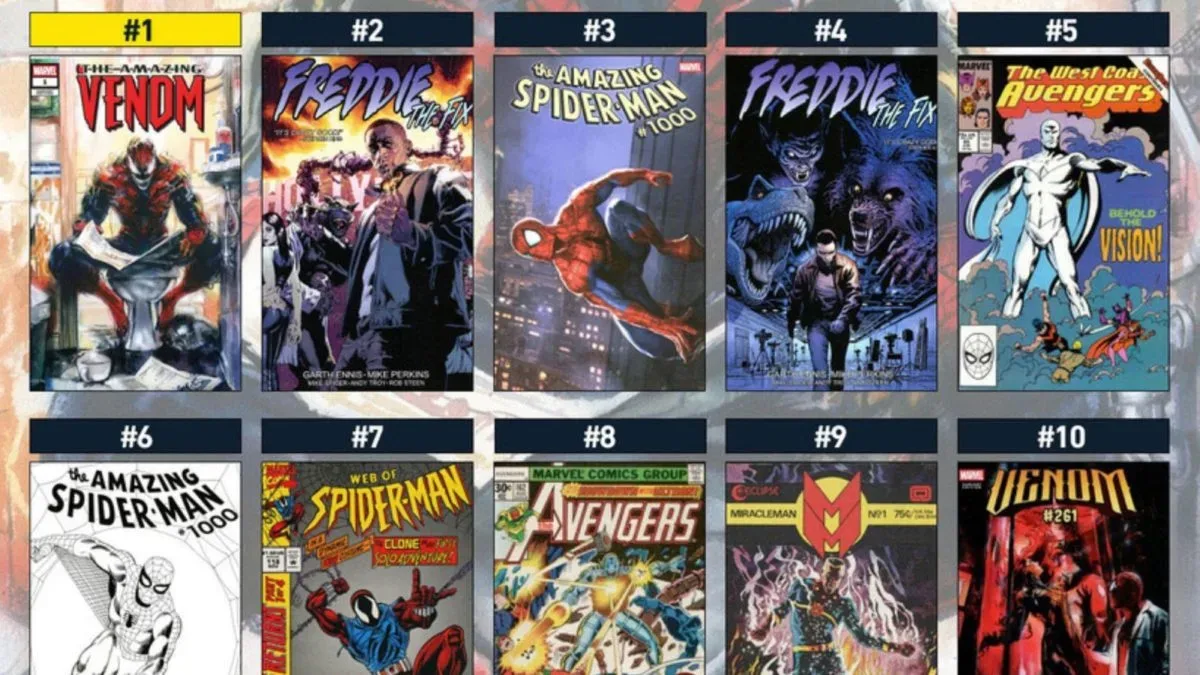
Comic collectors spent the week chasing a notably split field: brand-new Marvel variants, older issues tied to screen speculation, and an Image debut that has picked up momentum after a movie-development report. The sales-and-price-movement chart for the week ending October 4 puts an Ito variant of The Amazing Venom #1 at the top, but the larger story is how many different reasons can put a comic on collectors’ radar at once.
Venom and Spider-Man account for several entries, with cover artists and milestone numbering doing much of the work for modern issues. Elsewhere, Freddie the Fix #1 appears twice following reports that Amazon is developing a live-action movie based on the Garth Ennis property. A new VisionQuest trailer has also prompted attention for older Vision- and Jocasta-related Avengers books. Meanwhile, Miracleman’s reported appearance in Avengers Armageddon #4 has helped renew interest in an Eclipse-era issue.
It is important to read a weekly “hot” list for what it is. The ranking is automatically generated from aftermarket sales data using a weighted combination of sales volume and price movement. It records activity, rather than declaring a permanent hierarchy of desirability or offering a buying recommendation. A comic can place highly because it sold often, because a smaller number of sales moved sharply upward, or because both happened together.
Venom’s cover-art pull is front and center
The Amazing Venom #1 Ito variant, dated September 2026, takes the first position. The reported high sale for a raw near-mint copy was $20, with a current raw near-mint fair-market value, or FMV, of $14.
For more context, explore iOS 27.2 Beta Points to Per-Feature Controls for Messages Suggested Actions.
The issue also has a 1:100 virgin variant. In comic retail terminology, a retailer incentive such as 1:100 means a shop generally has to order a specified quantity of qualifying copies to receive one of that particular variant. A virgin cover typically omits the usual logo and cover text, while a trade-dress cover includes that normal publication information. The market activity described here favors the more readily found trade-dress edition over the higher-ratio virgin version.
Ito also appears at No. 10 with the September 2026 Venom #261 Ito variant. It is identified as Ito’s first Marvel cover, and reported sales reached $18 for a raw near-mint copy, against a current raw near-mint FMV of $13. Taken together, the two placements show cover-focused demand extending beyond a single issue. That does not make every future cover a guaranteed winner, but it does demonstrate how a sought-after artist can become a major factor in the modern single-issue market.
For collectors, “raw” simply means a comic has not been professionally encapsulated and assigned a third-party grade. Condition shorthand matters as well: NM means near mint, VF is very fine, and FN is fine. Even within the same title and printing, a price tied to raw NM should not be treated as interchangeable with a raw VF sale.
Spider-Man #1000 splits demand between milestone and scarcity
The Amazing Spider-Man #1000 appears twice, with two very different variants illustrating why an issue number alone never tells the whole market story.
At No. 3, the Skan Srisuwan 2026 Local Comic Shop Day variant had a reported high sale of $57 in raw NM and a current raw NM FMV of $33. Beyond being a celebratory No. 1000 issue, this edition is associated with multiple story points: Cormac Crain appears as Ravage, and an alternate-timeline Spider-Man described as Peter Parker’s great-grandson is included. Milestone issues can draw readers who want a landmark book as well as collectors seeking character or story developments.
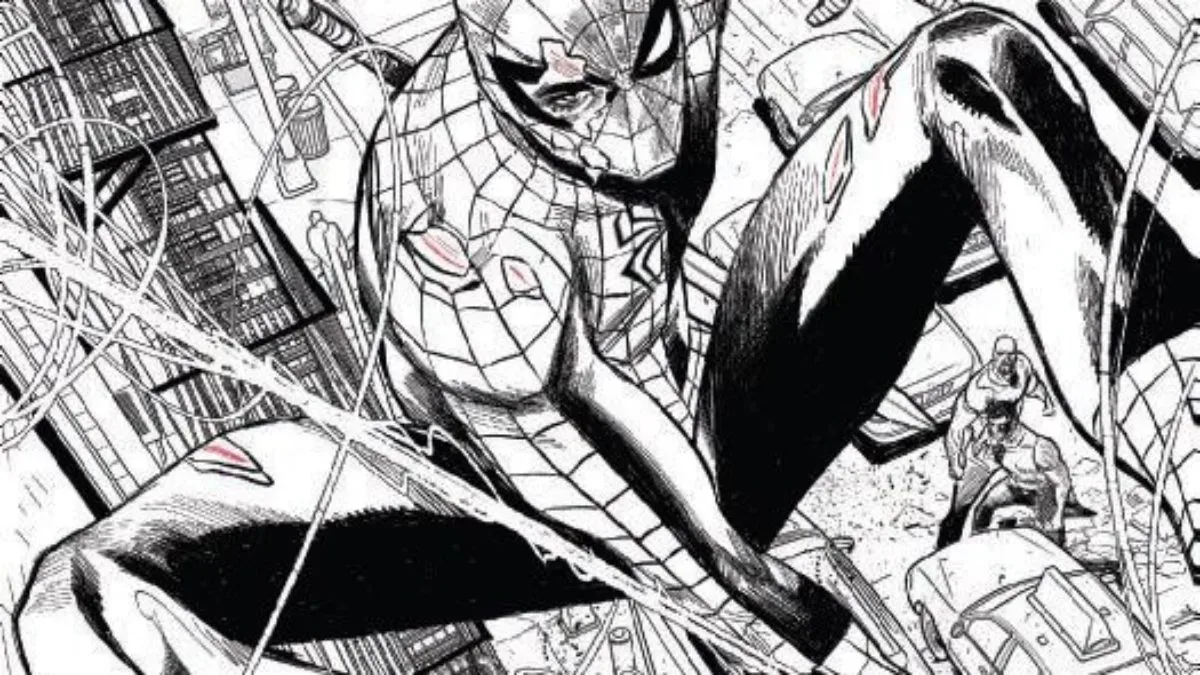
At No. 6, the Steve Ditko black-and-white 1:50 variant had the week’s highest reported sale among the ten: $116 for a raw NM copy, with a current raw NM FMV of $87. Its 1:50 incentive structure helps explain why it operates differently from a regular-cover release. Scarcity alone is not a measure of long-term value, but a lower-distribution format paired with a high-profile anniversary issue and Ditko cover art is a clear recipe for collector attention.
The practical lesson is to identify the precise edition before comparing listings. “Amazing Spider-Man #1000” may refer to multiple products with different distribution methods, cover designs and prices. The same caution applies to condition: comparing one seller’s raw copy with another seller’s graded copy, or NM with VF, can create a misleading sense of a book’s going rate.
Freddie the Fix shows the power—and risk—of adaptation attention
Freddie the Fix #1, published by Image in December 2024, takes No. 2 in its Mike Perkins main-cover form and No. 4 as the Marcelo Frusin 1:10 variant. The premise concerns a fixer handling problems caused by monsters after Hollywood goes dark. The property is being developed by Amazon as a live-action movie, and that reported development has pushed collectors toward both versions.
The main cover reached a reported high sale of $28 in raw NM, with a current raw NM FMV of $23. The Frusin retailer-incentive cover reached $35, with a current raw NM FMV of $27. The premium for the 1:10 edition makes intuitive sense: retailers had to meet an order threshold to obtain it, creating a narrower supply than a main cover.
Yet “in development” is the operative phrase. Development is not the same as a completed production, release date or even a greenlit project. Adaptation-driven buying often moves quickly because collectors are responding to attention and possibility, not necessarily to a finished show or film. Anyone assessing the books as physical collectibles should distinguish an observed weekly spike from a settled market price.
VisionQuest attention reaches two Avengers back issues
The recent VisionQuest trailer has sent collectors toward two older Marvel comics. West Coast Avengers #45, the June 1989 direct edition, ranks No. 5 after the trailer highlighted White Vision and included the line, “I have all of his memories but not his virtue.” It recorded a high sale of $20 for a raw VF copy and a current raw VF FMV of $18.
At No. 8, Avengers #162, an August 1977 newsstand edition, recorded a high sale of $25 for a raw VF copy and a current raw FN FMV of $9. The trailer has brought Jocasta into the conversation as a character expected in the Marvel Cinematic Universe.
These entries are a useful reminder that screen-related market interest can land on material with different collecting profiles. A direct edition and a newsstand edition are distinct distribution versions, and their relative supply can vary. The supplied figures also use different stated conditions, making the sales especially poor candidates for simplistic one-to-one comparison. A $25 VF high sale and a $9 FN FMV are not contradictory; they refer to different condition benchmarks.
Clone Saga speculation and Miracleman’s return broaden the chart
No. 7 is Web of Spider-Man #118, a November 1994 direct edition. It is being chased amid reports of a possible Amazon and Sony live-action Clone Saga adaptation, with Kaine and Ben Reilly said to be likely leads. Crucially, the series has not been greenlit. The book’s reported high sale was $66 for raw VF, while the current raw NM FMV was $67.
That unusual-looking comparison again underlines the limits of quick price snapshots. The high sale is attached to one condition, while FMV is stated for another. The two numbers should be read as individual reference points, not proof that every copy is worth roughly the same amount.
Finally, No. 9 belongs to Miracleman #1 with an Alan Davis main cover, published by Eclipse in August 1985. Marvel has been teasing the character’s return, and Miracleman has now made an official debut in Avengers Armageddon #4. The older issue posted a high sale of $30 in raw NM, with a current raw VF FMV of $14.
Miracleman’s route through different publishers has long made the character’s publication history a point of interest. The current attention is tied directly to a new Marvel appearance, giving collectors a concrete modern event behind the renewed activity rather than mere rumor.
What this week’s list actually says
The ten entries do not point to one universal buying trend. Instead, they map four overlapping collector impulses: artist-driven modern variants, numbered-event issues, adaptation speculation and renewed relevance for older character appearances. Venom supplies the artist market; Amazing Spider-Man #1000 combines anniversary appeal with different kinds of variant scarcity; Freddie the Fix and Web of Spider-Man #118 reflect screen-project interest; and West Coast Avengers #45, Avengers #162 and Miracleman #1 show media and publishing developments reaching backward into comic bins.
For anyone tracking these books, the soundest approach is also the least glamorous: verify the exact printing, check the stated condition, separate sale highs from listed or calculated FMV, and remember that a weekly trend measures what buyers did during a limited period. In this week’s market, the web-slingers and symbiotes have clearly supplied plenty of movement—but the details around each individual copy remain the real collectible story.