Marvel’s next Avengers #1 is positioned as a new beginning after Avengers: Armageddon, with a freshly assembled roster and a stated mandate to put the team back at the center of its universe. The 40-page, T+-rated issue is scheduled to go on sale on November 4, 2026 for $5.99.
Chip Zdarsky and Marco Checchetto reunite for the series, with Checchetto also credited for the main cover. The announced core lineup combines some of Marvel’s most recognizable heroes—Spider-Man, Wolverine, Captain Marvel, Daredevil and Luke Cage—with Miracleman, an addition that immediately distinguishes this team from a more conventional Avengers relaunch.
The solicitation frames the book around a changed global status quo. Its central promise is not simply another roster shuffle: the world order has been rewritten in the aftermath of Armageddon, and the Avengers must form within that altered setting. That leaves the exact scale and nature of the event to the comic itself, but the stated premise makes the aftermath, rather than the catastrophe alone, the launch point.
A new Avengers team, with a deliberately unusual mix
The listed heroes offer a broad spread of Marvel’s street-level, mutant, cosmic and flagship superhero corners. Spider-Man and Wolverine bring two of the publisher’s most familiar figures into the team; Captain Marvel carries the clearest association with large-scale superhero action; and Daredevil and Luke Cage add heroes whose identities are closely tied to city life, communities and personal stakes.
Miracleman is the element that changes the equation most sharply. The promotional description initially keeps one member redacted, while the published team information identifies Miracleman as part of the group. That reveal turns the question from “who fills the last seat?” into “what does an Avengers book become with Miracleman on its roster?”
It is a notable choice because the character’s presence signals that this is not being sold purely as an all-star arrangement of the usual Avengers regulars. The book’s setup pairs the familiar appeal of Spider-Man and Wolverine with a figure whose inclusion invites readers to pay close attention to the series’ revised world order and its broader implications.
Marvel’s pitch calls this “a day unlike any other” for the team, a phrase that underscores the intended fresh-start function of a new #1. In comics publishing, a relaunch is a new issue-one starting point for an ongoing series. It can be an accessible entry for readers who have not followed every preceding chapter, while still allowing a creative team to build on major continuity developments. Here, Avengers: Armageddon is explicitly identified as the event readers will need to understand as the immediate backdrop.
What the solicitation confirms—and what it leaves open
There are a few firm details in the current announcement:
- Creative team: Chip Zdarsky writes and Marco Checchetto provides interior art, with Checchetto on the main cover.
- Team members named: Spider-Man, Wolverine, Captain Marvel, Daredevil, Luke Cage and Miracleman.
- Premise: A rewritten world order follows Avengers: Armageddon, leading to a newly united Avengers lineup.
- Format: 40 pages, rated T+, priced at $5.99 in the US and $7.50 in Canada.
- Release date: November 4, 2026.
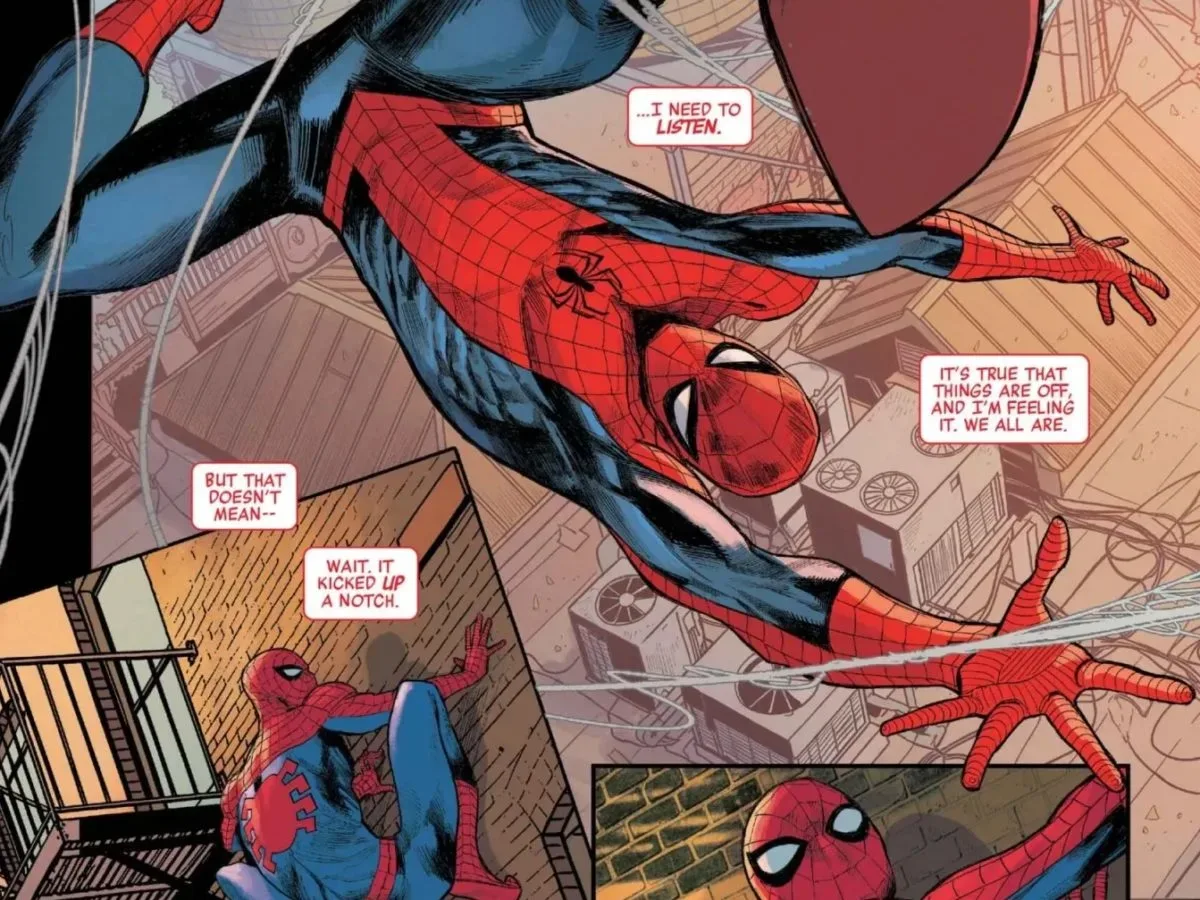
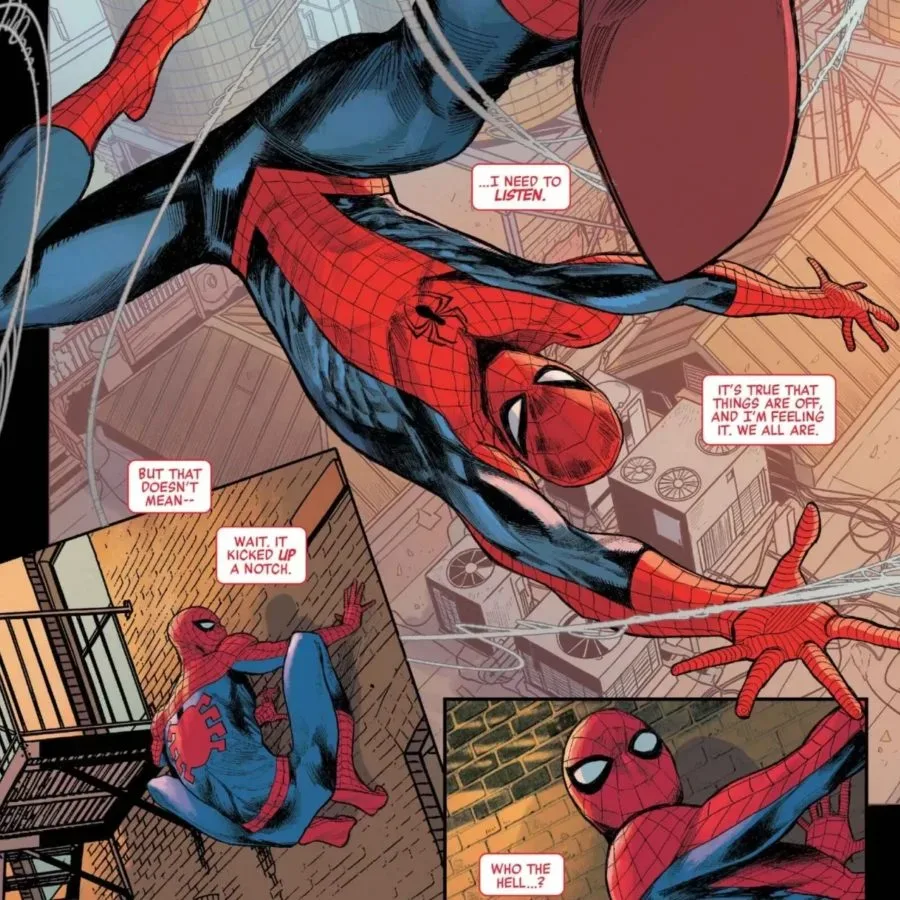
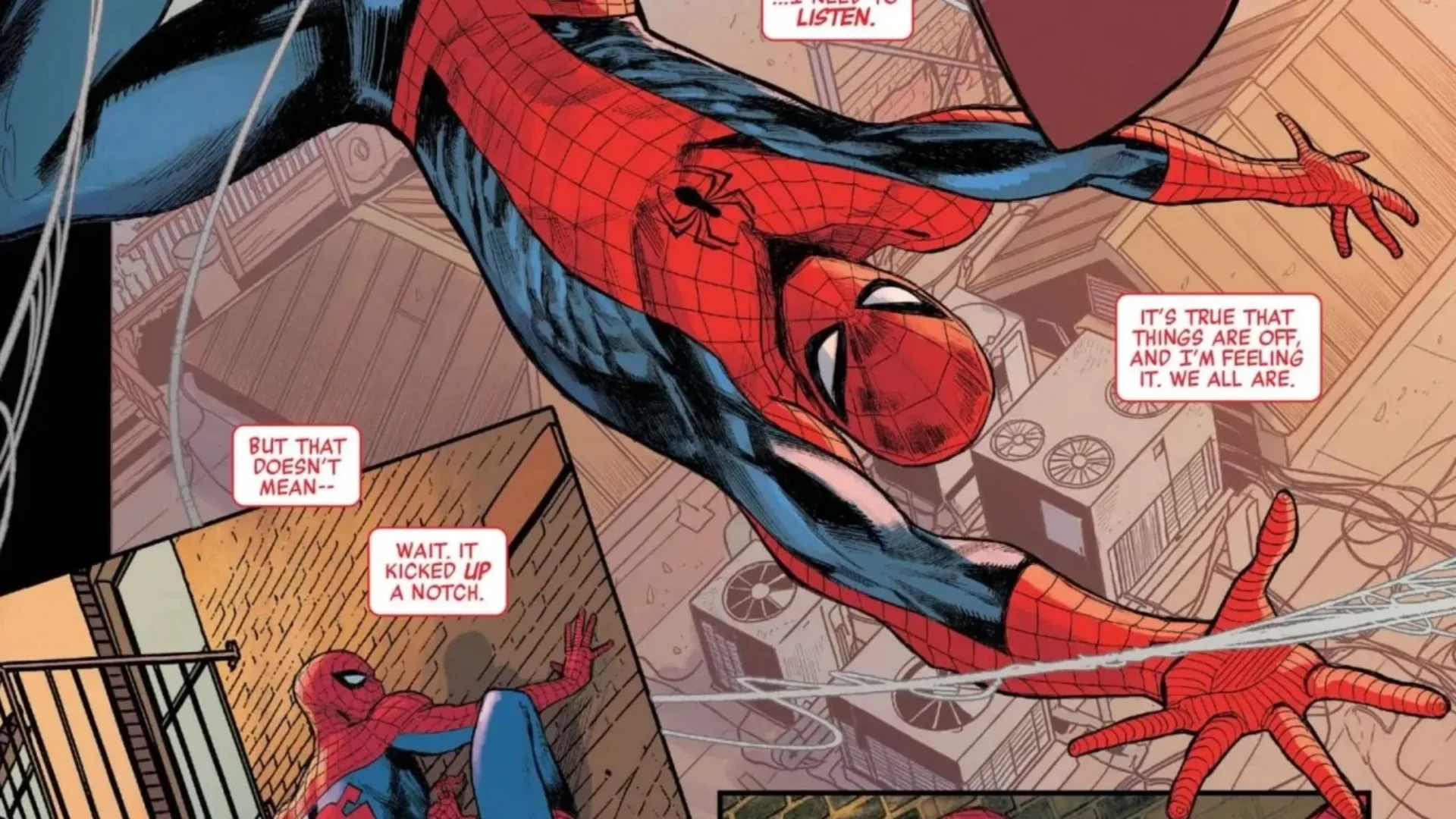
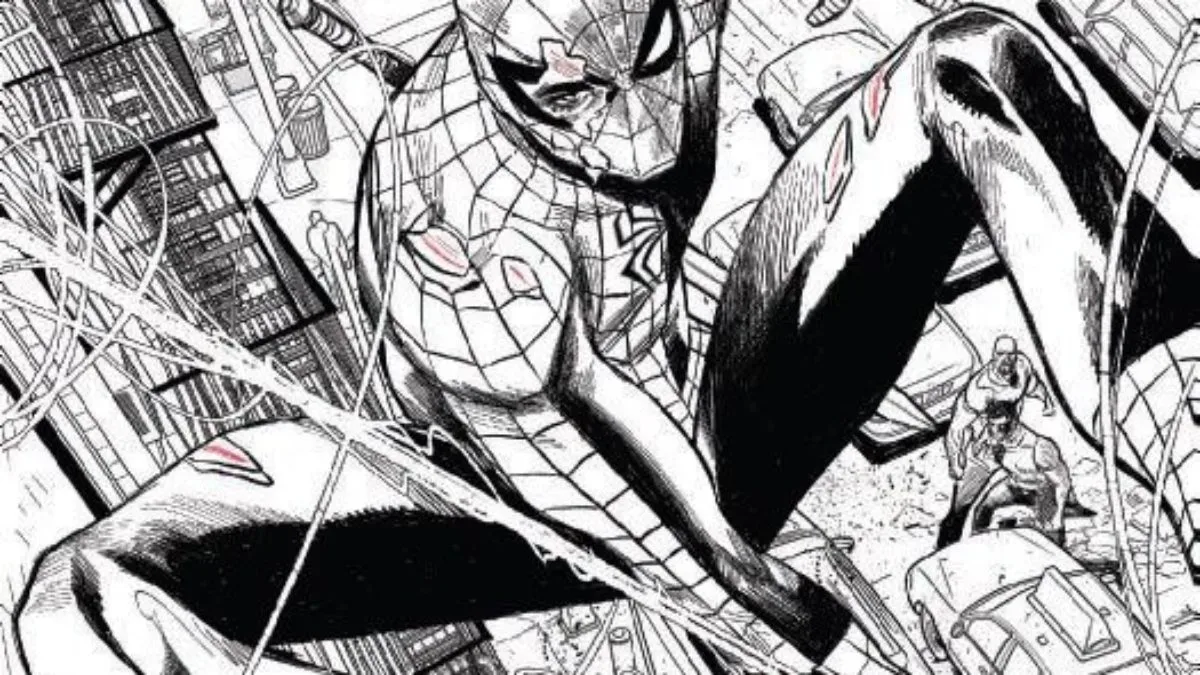
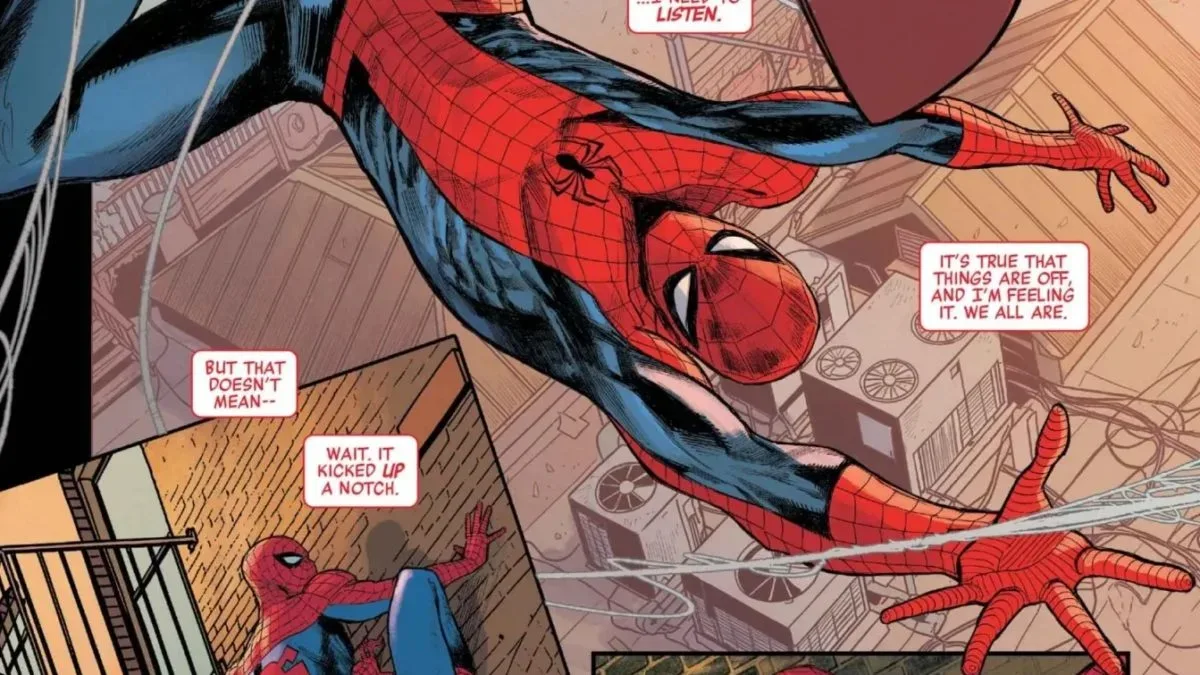
Much remains intentionally under wraps. The announcement does not specify which versions of the named characters appear, the exact cause of the rewritten world order, the Avengers’ operating base, the team’s mission structure or how Miracleman’s role will work issue to issue. Preview material reportedly depicts Spider-Man in distress, but the available information does not establish why he is in that situation or how it connects to the new team.
That restraint is useful context for readers considering a jump-in. The issue is clearly designed as the beginning of a new run, but it is not yet possible to say whether it will function as a fully self-contained introduction to the post-Armageddon setting. Anyone hoping to follow every continuity beat may want to keep Avengers: Armageddon in mind; anyone mainly interested in the new creative team and roster has a clearly marked issue-one entry point.
Zdarsky and Checchetto take on Marvel’s flagship team
A new Avengers creative pairing matters because the team title has to balance several kinds of story at once. The roster’s names carry their own histories and expectations, while the Avengers label implies a shared mission and threats too big for a single hero. Marvel’s description leans into that scale by making the world order itself part of the hook.
Checchetto’s dual credit as artist and main-cover artist also gives the debut a coherent visual point of reference in the solicitation. A cover is not a promise of every plot detail, but it is often the first image readers use to identify a new era, particularly when a series launches beside a wide variant program.
For Marvel readers, this is also one more example of superhero comics operating as a connected media ecosystem: a new series needs a welcoming first issue, a high-concept premise and a visually distinct presentation while carrying consequences from another title. That push and pull—between continuity and accessibility—is relevant beyond comics, as reflected in discussions around companies extending major properties across formats, including Capcom’s wider movie-and-media strategy.
In this case, Marvel is using the aftermath of a universe-altering event to establish a new status quo rather than treating the change as background decoration. The practical question for the series will be how much that altered setting affects its individual heroes, not just the size of the conflicts they face together.
Variants give #1 collectors a large menu
Avengers #1 will launch with a substantial set of listed cover options. In addition to Checchetto’s main cover, the announced variants include work attributed to Jim Cheung, Ryan Stegman, Chip Zdarsky, Rose Besch, David Nakayama, Skottie Young, Mr. Garcin, Kaare Andrews, Julian Totino Tedesco and Artgerm.
The list also includes a blank-cover variant, a David Nakayama Color Block Red Wraparound variant, a Kaare Andrews Wraparound variant, and a True Believers Blind Bag edition. “Wraparound” refers to artwork that continues across the front and back of the comic’s exterior. A blank cover, as its name indicates, is presented without the usual finished cover illustration and can appeal to readers who want a clean surface for original sketches or signatures. The listing does not provide further contents information for the blind-bag edition.
Several covers carry ratio labels: Jim Cheung’s is marked 1:50, Ryan Stegman’s 1:25, Rose Besch’s 1:100, and Chip Zdarsky’s 1:200. Those labels identify distinct incentive-cover offerings in the solicitation. Their presence means buyers should check with their preferred comic shop about which editions it expects to stock, rather than assuming every listed cover will be equally easy to find on release week.
All listed editions carry the same stated US cover price of $5.99 and Canadian price of $7.50 in the available product information. Availability at individual stores, however, is not detailed in the announcement.
Why Miracleman is the headline-grabber
The Avengers have always been a concept flexible enough to accommodate radically different hero types, but Miracleman’s announced role gives this launch a particular identity. Marvel is not only presenting a lineup of popular characters; it is foregrounding a team member whose addition is framed as a reveal and whose place alongside Daredevil, Luke Cage, Spider-Man, Wolverine and Captain Marvel is inherently unexpected.
That combination creates several questions the first issue can answer: Is Miracleman a full operational member, a catalyst for the team’s creation, or a figure whose presence reflects the altered status quo? Is the rewritten world order something the Avengers are trying to restore, defend or redefine? And what kind of group can unite heroes with such different everyday responsibilities and scales of power?
The solicitation does not answer those questions yet, and it should not be read as confirmation of plot outcomes beyond the team’s formation. What it does make clear is that Marvel wants the debut to feel consequential: a major event has happened, a familiar institution has been rebuilt around a distinct group of heroes, and issue #1 is the point where that new direction begins.
Avengers #1 goes on sale November 4, 2026. Readers who want the standard edition can look for Marco Checchetto’s cover, while variant-focused buyers have a long list of announced alternatives to discuss with their local comic shop.