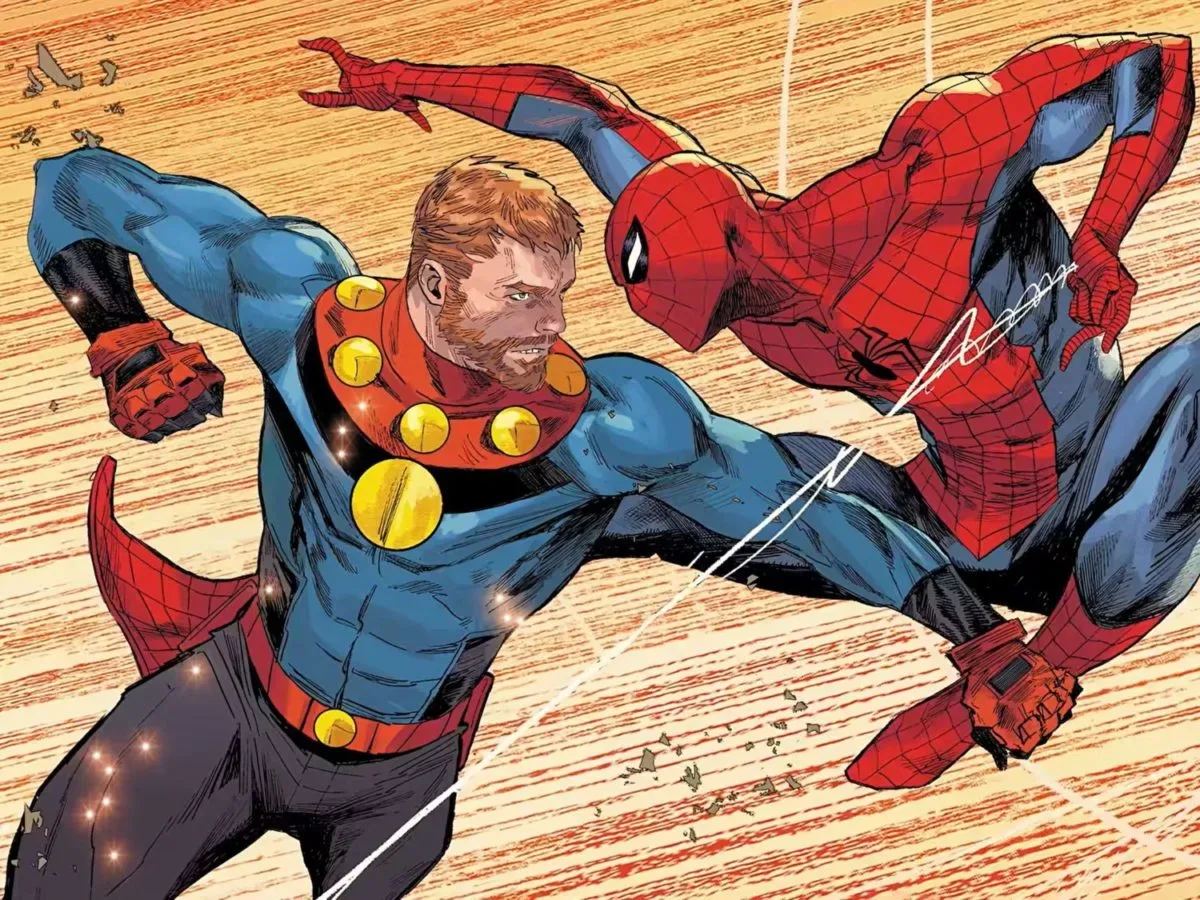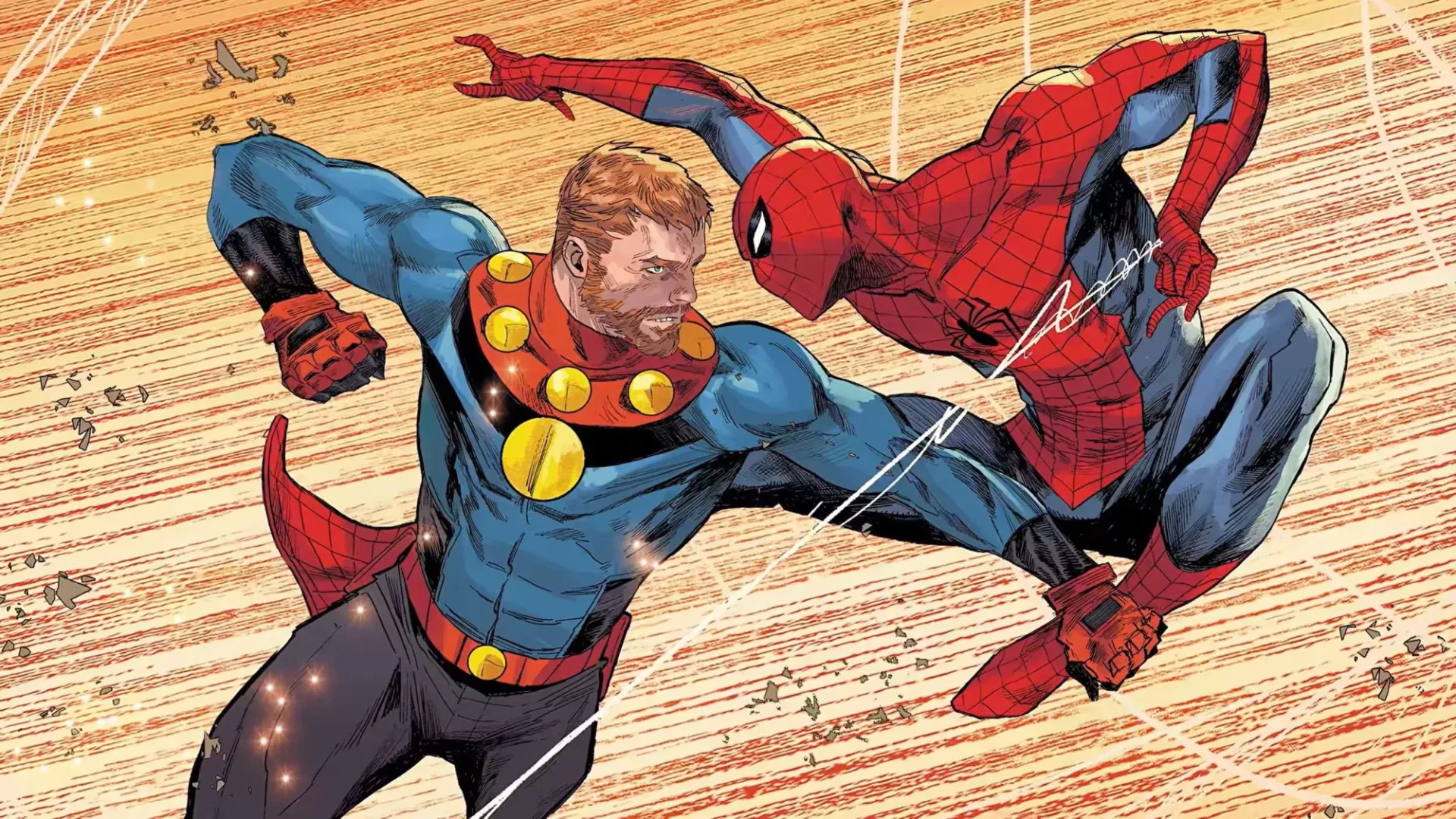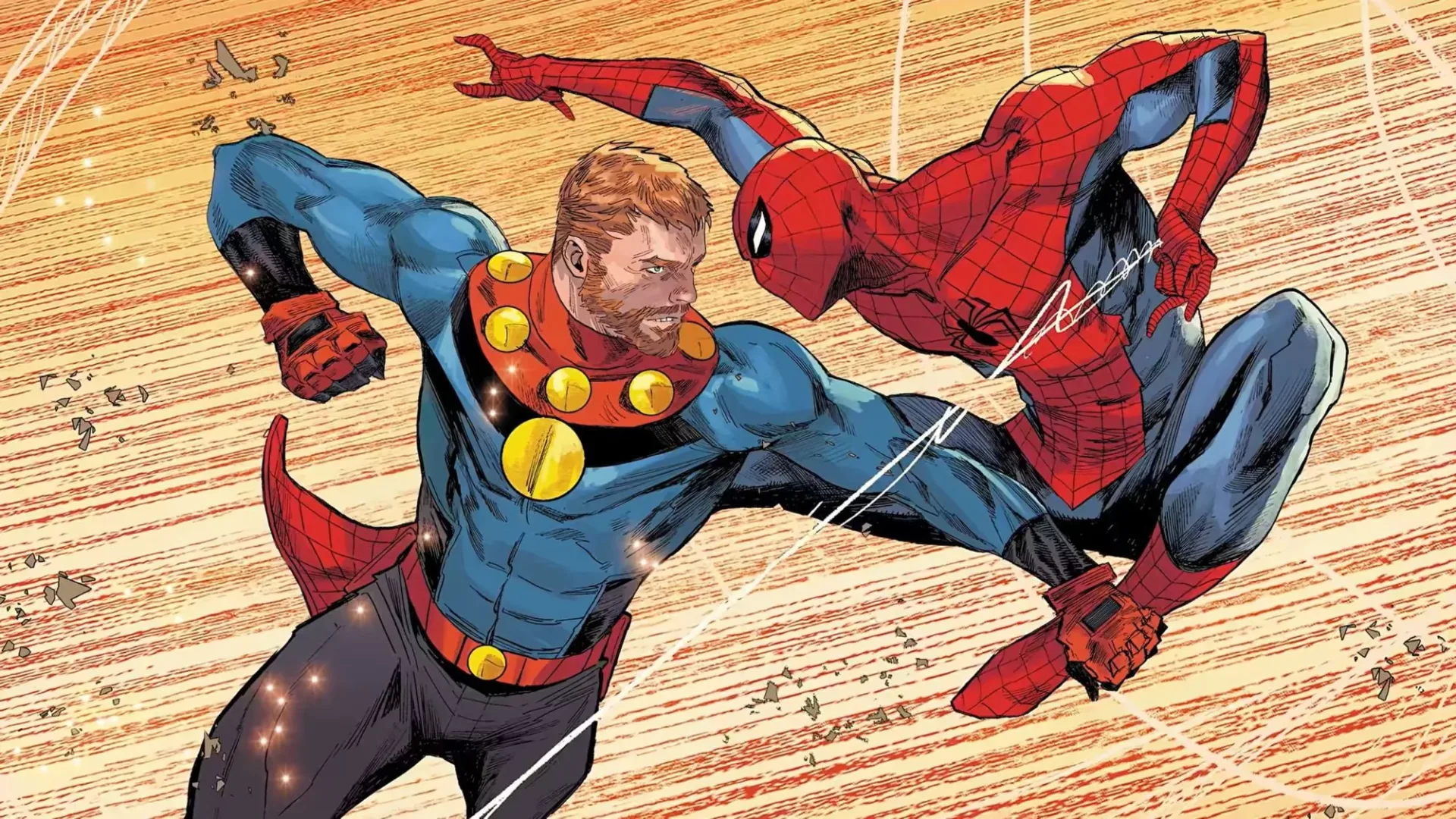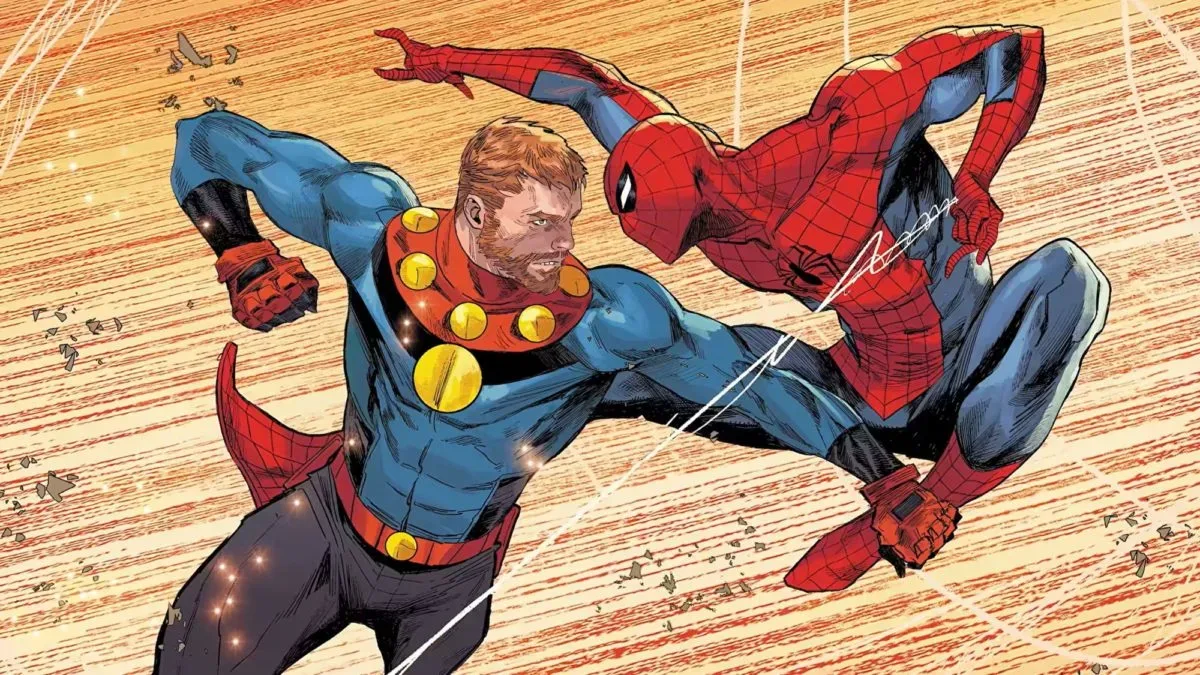
Marvel’s incoming Avengers run is putting an unusually complicated kind of power on the team: not merely someone strong enough to solve a crisis, but someone whose idea of solving one could become the crisis. Writer Chip Zdarsky has said David Colton, the new Miracleman introduced through Avengers: Armageddon, is not headed toward fascism. Instead, the new series is designed to place him among heroes—especially Spider-Man—who can steer him away from that direction.
It is an important clarification because Miracleman’s history carries considerable political and moral weight. The character’s earlier stories explore a world transformed by superhuman power, including a reshaping of society imposed from above. That tension matters when a new figure with the Miracleman name is shown taking sweeping action, including throwing the world’s nuclear weapons into the sun. It is easy to see why readers would question whether David Colton is becoming another version of a superpowered ruler who believes the ends excuse the method.
Zdarsky’s answer is that this is the danger in Colton’s arc, not its destination. The fallout of Armageddon has brought Colton back to Earth and into the Avengers’ orbit. The team setting is therefore more than a convenient way to add Miracleman to a marquee lineup. It is a narrative pressure chamber: a place where Colton’s instincts, isolation and certainty can be challenged by heroes with very different ideas about responsibility.
A Miracleman story built around a course correction
In superhero comics, authoritarianism is often a core storytelling concern: the belief that one person or institution should impose order through concentrated, unaccountable power. Stories may present that authority as efficient or even initially benevolent, but the dramatic question is who gets to decide what is best for everyone else—and what happens to people who do not agree.
The original Miracleman material is deeply connected to those questions. The emergence of superhuman power leads to a radical reconstruction of human society, rejecting capitalism in favor of a highly funded communism and extreme libertarianism. Yet the change is not a collective democratic choice. It is brought to Earth by alien overlords. Even characters close to Miracleman, including Mike Moran’s wife Linda, do not simply accept the new order, which highlights the personal cost hidden inside an allegedly perfect system.
That legacy makes Colton’s conduct in recent Marvel stories more charged than a standard display of overwhelming strength. General Ross sought to impose global democracy in Avengers: Armageddon, while Doctor Doom attempted a bountiful dictatorship in One World Under Doom. In that context, a powerful new hero acting decisively on a planetary scale naturally invites readers to ask whether he is joining a crowded line of characters who want to fix the world without its permission.
Zdarsky’s stated plan is to have the Avengers interrupt that trajectory. It does not erase the discomfort of Colton’s choices, nor should it. The unease is part of what gives the character an immediate role on the team. But the writer has positioned the series as an examination of whether Colton can recover his humanity rather than a celebration of unilateral power.
Why Spider-Man is the crucial counterweight
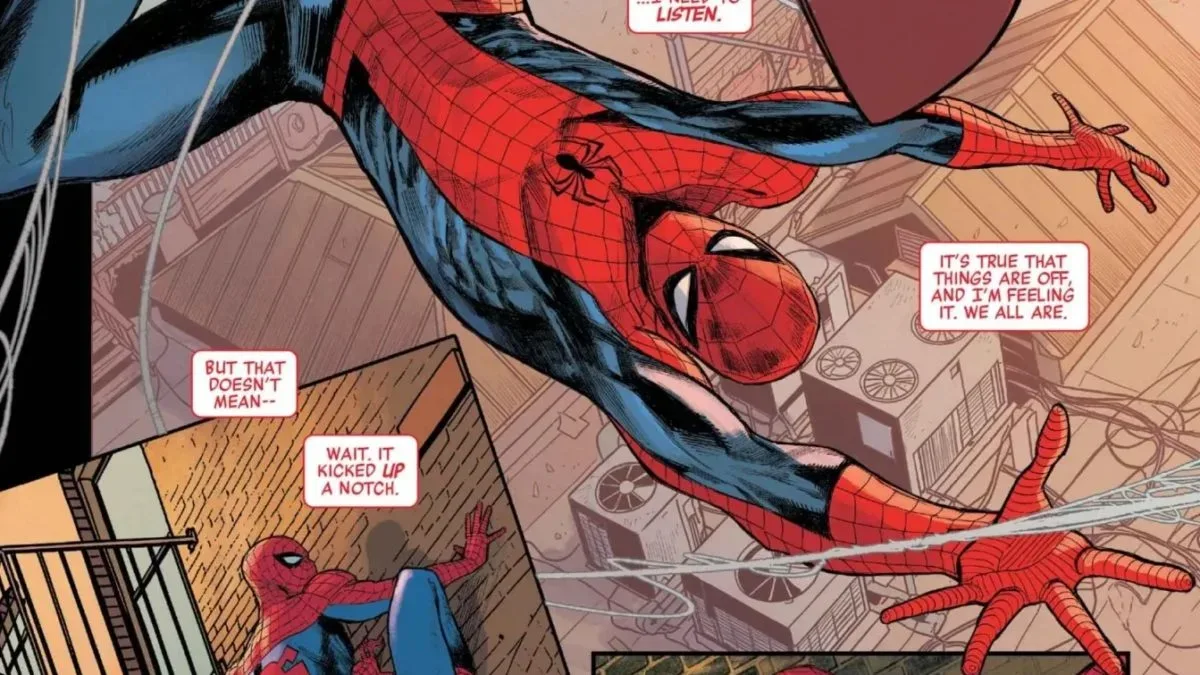
Spider-Man’s place in this lineup is especially significant. Colton is someone shaped by grand gestures and an impulse to act like a hammer seeking the next nail. Spider-Man is an effective counterpoint because his heroism is commonly rooted in personal responsibility, restraint and attention to the human consequence of a decision. He is not simply there to lecture the strongest person in the room; he represents a different definition of what strength is for.
Zdarsky has already written a Spider-Man speech for Avengers #7 that he describes as the message David Colton needs to hear. The issue is expected six months after the debut, so readers should not expect the first chapter to immediately resolve Colton’s ideological and emotional conflict. Instead, the series appears to be laying the groundwork for an earned confrontation between two heroes whose relationship to power could scarcely be more different.
That planned exchange also indicates that Spider-Man’s involvement is structural, not a passing team-up beat. A character like Colton needs someone who can contest him without simply trying to overpower him. The point of a Spider-Man speech in this setting is not that words magically defeat a cosmic-level problem. It is that a team can offer moral resistance as well as physical assistance, and that Colton may need to understand the people affected by his choices before he can become a better hero.
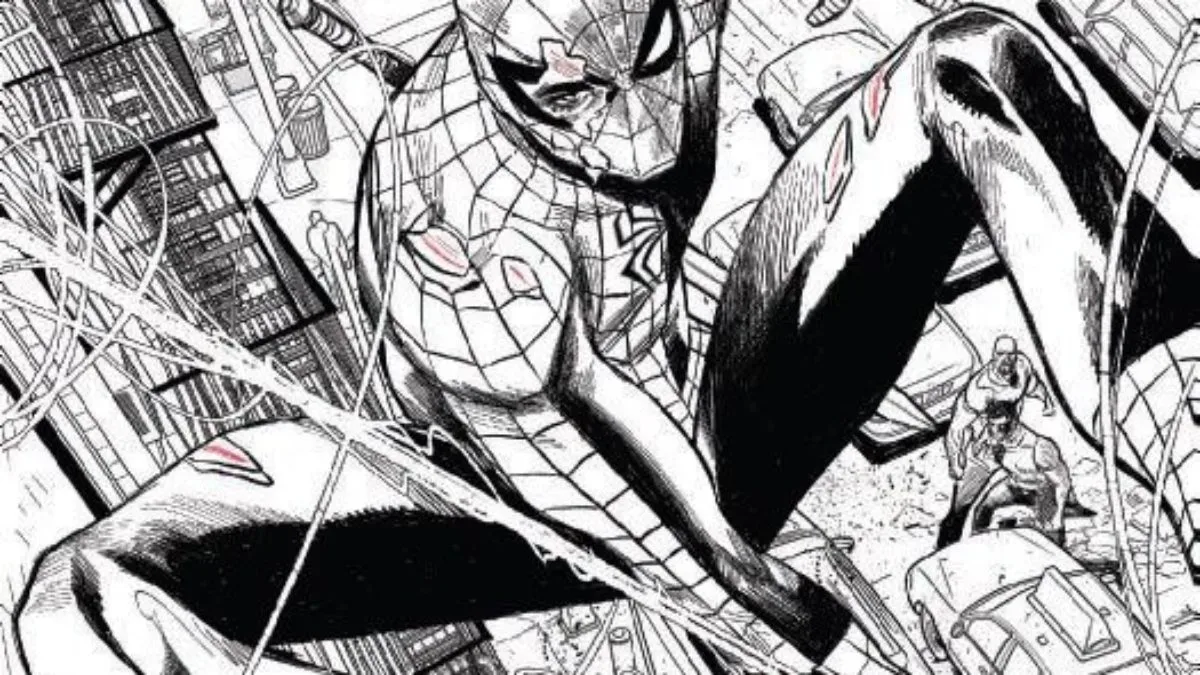
Spider-Man’s troubles will not be limited to Colton, either. The announced material for Avengers #2 says that his past puts Aunt May in danger as demons flood New York City. It also points toward Mephisto, a mysterious young woman carrying a prophetic book and the Adjudicator. Avengers #3 begins “Chase the Devil,” with the team confronting Mephisto after he unleashes Hell on Earth. For more on the personal Spider-Man thread entering the series, see the developing story around Aunt May and the Mephisto bargain.
David Colton’s value as an unfamiliar voice
Zdarsky has also emphasized a more practical creative reason for putting Colton on the Avengers: he is comparatively new. Long-running Marvel heroes arrive with decades of adventures, recurring mannerisms, well-established relationships and lessons they have ostensibly learned many times over. A writer can revisit those ideas, of course, but doing so requires care. Push an established hero too far backward and it can feel like regression rather than development.
Colton does not carry the same volume of accumulated expectations. He can encounter the Avengers as an outsider, assess their habits from a fresh angle and make mistakes that do not simply repeat a familiar character beat. That makes him a useful source of internal tension. “Internal tension” here means conflict within a character—the clash between what a person believes, what they want and what their actions reveal—not just a fight with a villain.
One example came in Avengers: Armageddon #2. During the broad, multi-country confrontation with Ross, Colton is largely silent. Zdarsky deliberately withheld his dialogue until late in the issue, when Colton finally tells the other heroes that they talk too much. The moment works because silence itself becomes characterization. It lets readers see Colton observing the team’s banter, arguments and routines before he steps in with a blunt verdict.
That device would land differently with someone like Daredevil, whose established voice and conversational rhythms are central to how readers know him. Colton has no such settled pattern. His silence can be ominous, funny, impatient or revealing. His lack of a fully fixed place in the Marvel Universe is not a gap to be hastily filled; it is the engine of the experiment.
The post-Armageddon team
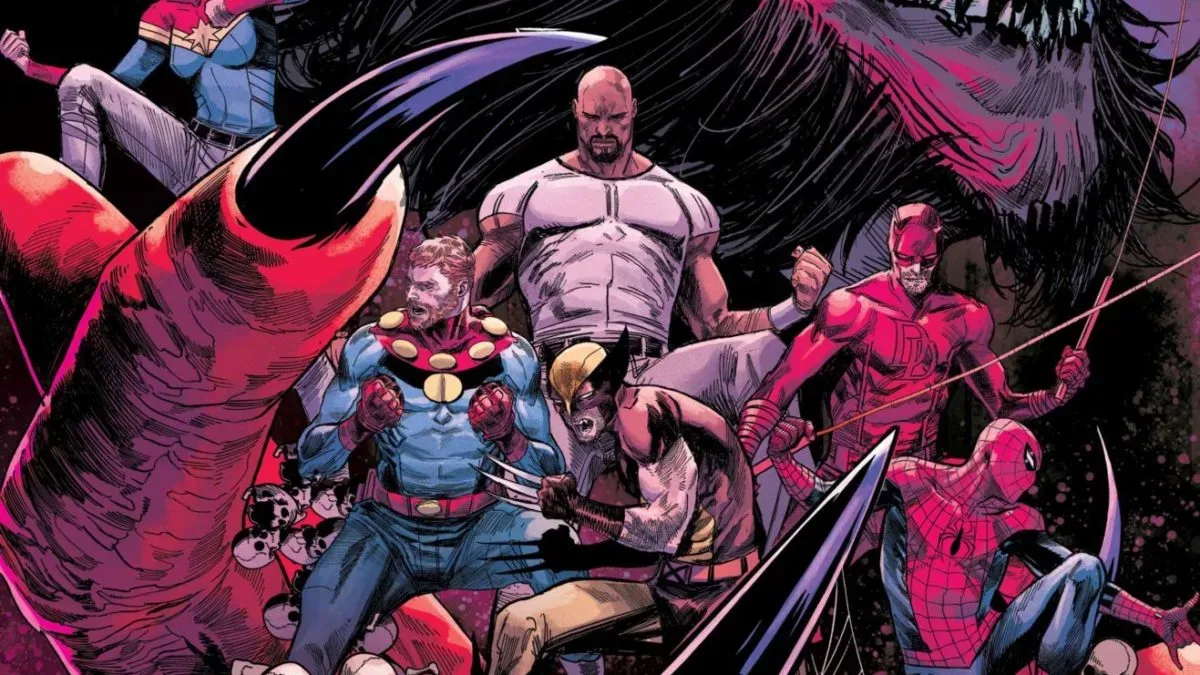
Avengers #1, by Zdarsky and artist Marco Checchetto, is scheduled for November 4, 2026, at $5.99. Marvel’s announced roster brings together Spider-Man, Wolverine, Captain Marvel, Daredevil, Luke Cage and Miracleman after the world order is rewritten by Avengers: Armageddon. It is a lineup built less around a single obvious theme than around competing instincts: street-level responsibility, military experience, cosmic capability, stubborn independence and immense raw power.
That mix could give Colton the variety of relationships his story needs. Spider-Man has been identified as central to his development, but the other Avengers matter because a team is a continuing argument about what heroism looks like. A character who has spent time as a self-appointed Captain America figure, then off the grid, and then acting with narrow certainty will face a fundamentally different challenge when every decision involves colleagues who can object, negotiate or refuse.
Checchetto’s presence also reunites him with Zdarsky for a new phase of the Avengers. The supplied publishing details identify Avengers #2 as arriving December 16, 2026 for $4.99, followed by Avengers #3 on January 27, 2027 for $4.99. Those solicitation descriptions establish the first major external threat—Mephisto and a demonic crisis in New York—while Colton’s internal story supplies an additional source of uncertainty within the group.
Reading the older Miracleman material
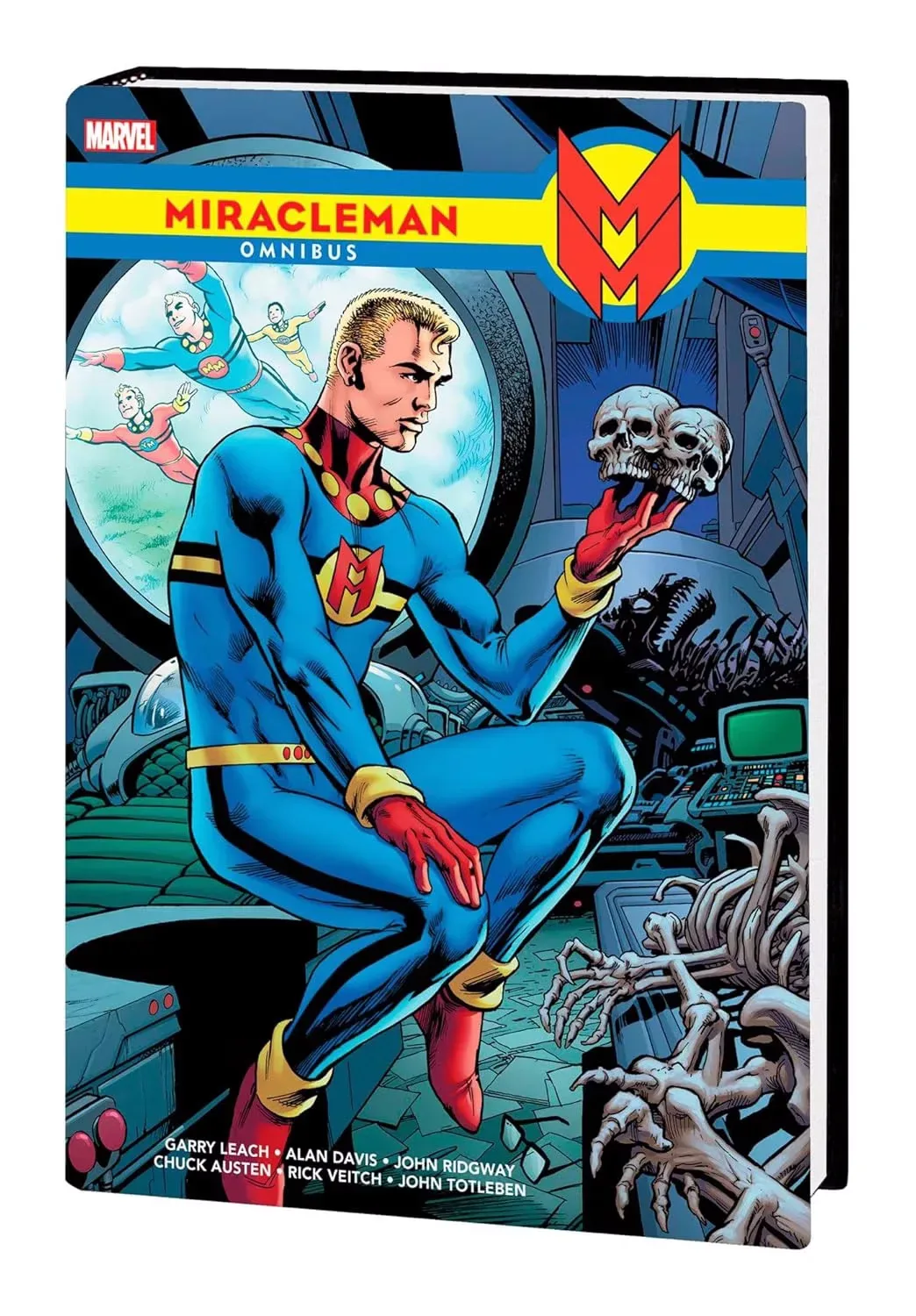
Readers interested in the political questions surrounding the new character can find substantial background in the Miracleman Omnibus, released October 25, 2022. The $99.99 volume collects material presented in Miracleman (2014) #1-16, including stories originally published in Warrior, Miracleman, Marvelman Special, A1 and the All-New Miracleman Annual.
The credited creators include Alan Moore, Garry Leach, Alan Davis, Chuck Austen, Rick Veitch, John Ridgeway, John Totleben, Cat Yronwode, Grant Morrison, Joe Quesada, Peter Milligan and Mike Allred. Its central premise follows middle-aged reporter Michael Moran as he reclaims a destiny that disrupts his ordinary life and exposes connections to Dr. Emil Gargunza and Project Zarathustra.
That background is useful, but it is not a requirement for approaching the new Avengers book. Colton’s relative newness is precisely what Zdarsky is using to create an accessible entry point. The more pertinent question for the opening issues is whether this Miracleman can learn that heroism involves more than having the power to make a decision—and whether the Avengers can help him before certainty hardens into something much worse.
Shop the products
Check current price, model and availability at the retailer.