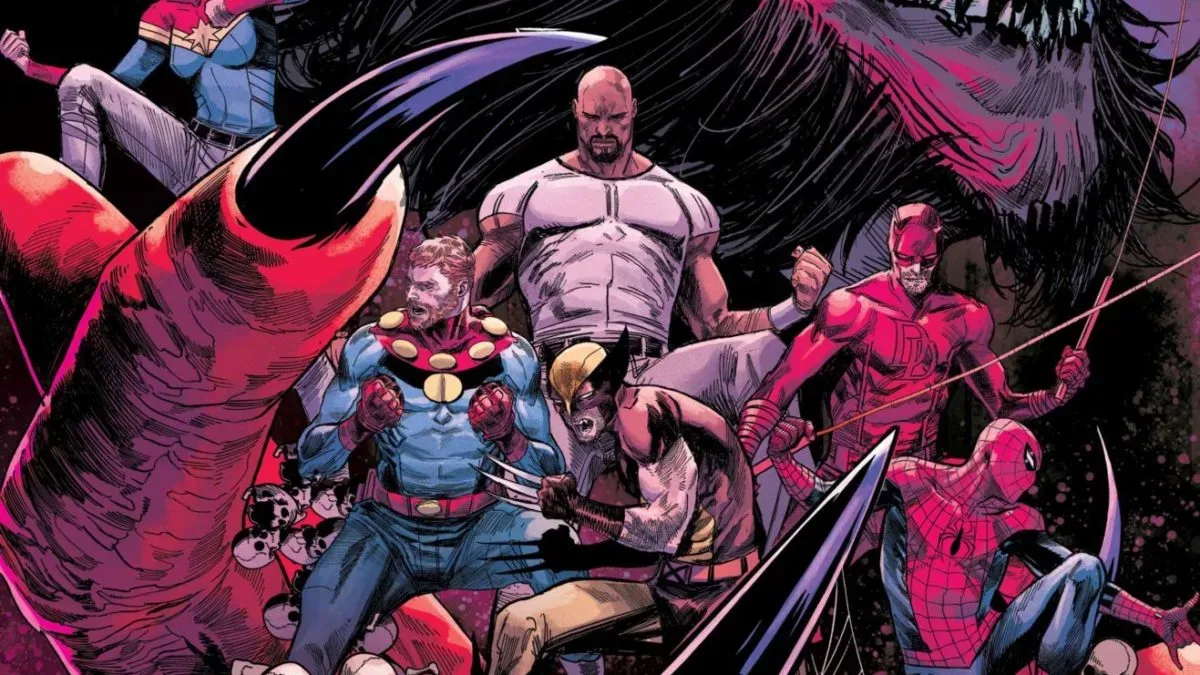
Spoiler warning: This article discusses story material and solicitations for Avengers #1, including its setup for Spider-Man, Aunt May and the fallout from the Mephisto bargain commonly associated with One More Day.
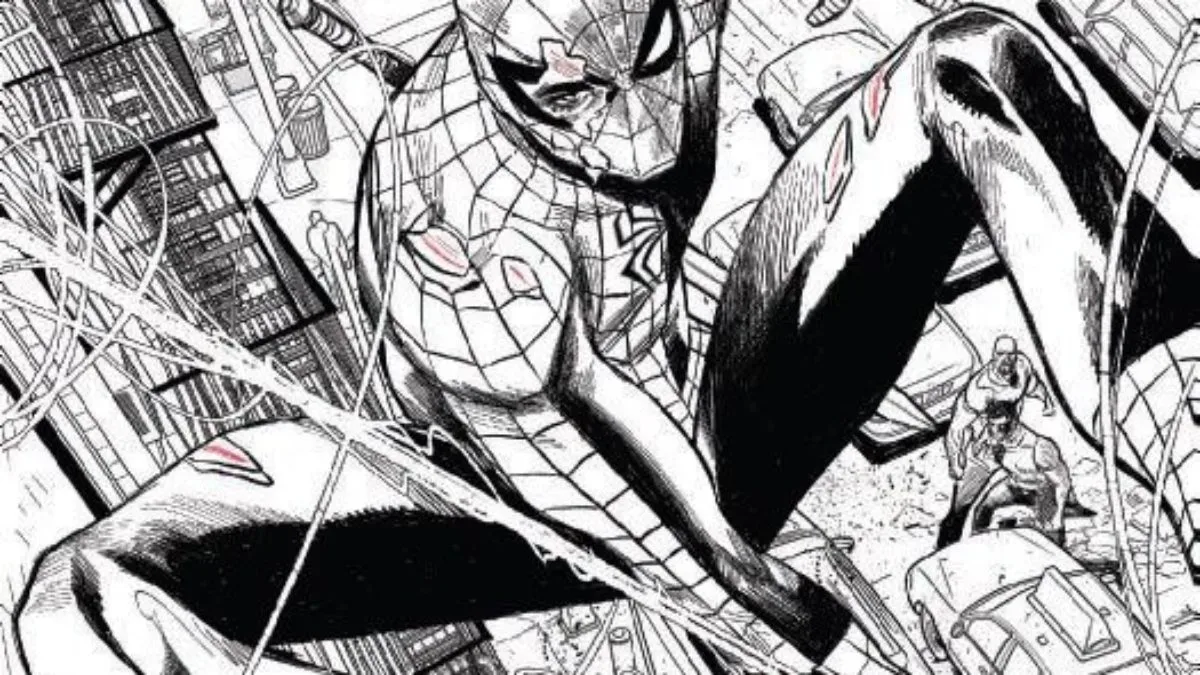
Avengers #1, from writer Chip Zdarsky and artist Marco Checchetto, arrives November 4, 2026 with a new roster and a very old Spider-Man problem. The issue follows Avengers: Armageddon and Captain America, in a Marvel universe whose order has been badly disrupted: Doctor Doom has taken control of Hell, Mephisto has been deposed, and Hell’s contracts have been declared void.
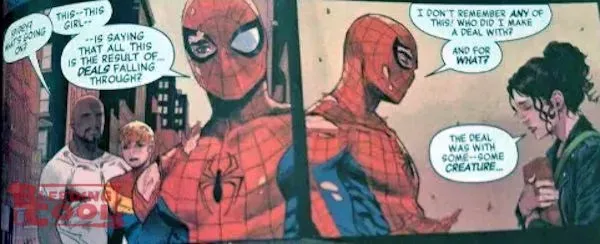
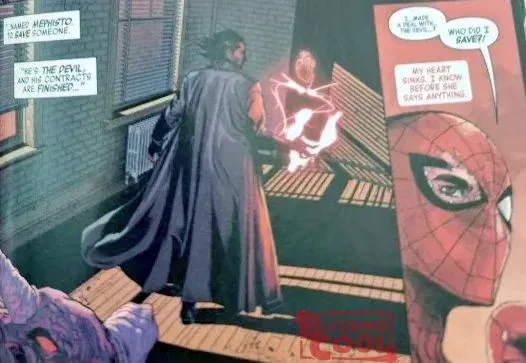
That broad supernatural change has immediate, personal stakes for Peter Parker. Story material for the issue points back to the deal Peter made with Mephisto to save Aunt May’s life and restore the secrecy of his Spider-Man identity. The cost was Peter’s marriage to Mary Jane Watson, along with the existence of their yet-to-be-conceived child. With contracts no longer holding, the comic appears ready to ask a thorny question: if a magical bargain is cancelled, does the universe simply restore what was traded away—or does it seek payment in a far uglier fashion?
A cosmic reset with a very human target
The apparent threat is not just another demon attack. Previewed material frames Aunt May as someone who survived a fate that, under the bargain’s original terms, should have happened. Angelic and demonic-looking figures are presented as agents attempting to correct that imbalance. In plain terms, the danger is that the cancellation of Mephisto’s agreement may leave Aunt May exposed to the death Peter prevented.
That premise has a deliberately unsettling logic. A contract is normally an agreement with enforceable obligations. In superhero fiction, a supernatural contract often does even more: it can rewrite history, alter memories, remove a person from existence, or exchange one outcome for another. Declaring such an agreement null and void does not necessarily tell readers what happens next. Does everything reverse at once? Are its consequences retained while its protections disappear? Or does some higher force decide that the ledger must be balanced?
Avengers #1 seems interested in the last possibility. Rather than treating the contract’s end as a clean continuity reset, it reportedly positions it as a crisis that can chase down those who benefited from Mephisto’s bargain. That gives Spider-Man’s history a role in the opening of the new Avengers era without making the launch solely a Spider-Man story.
Why “One More Day” remains such a loaded phrase
For readers coming to this through the new Avengers book, the key background is straightforward. Peter’s agreement with Mephisto saved May and returned his secret identity to secrecy. In exchange, his marriage to Mary Jane was removed, and their potential future child was lost as part of the price.
It is a bargain built on irreversible choices: a nephew refuses to lose the woman who raised him; a devil offers salvation; the payment is a relationship and a future. As a story device, that gives the current Avengers plot several live wires at once. Aunt May is not merely a supporting character in danger. Her survival is connected to Peter’s agency, to Mary Jane’s life, to the public’s knowledge of Spider-Man, and to the moral price of accepting a deal from Mephisto.
It also means that any attempt to “put things right” could be deeply ambiguous. Restoring the marriage would not automatically be a happy resolution if it occurs through coercion, cosmic manipulation or the death of Aunt May. Likewise, restoring Peter’s public identity as Spider-Man would not be a neutral correction. Secrecy can be a burden, but it can also protect friends and family. The story’s tension comes from the possibility that a universal accounting system does not care about consent, grief, love or practical consequences.
That distinction matters when interpreting the preview material. It suggests that Peter and Mary Jane could be pushed toward a version of their prior status quo, but it does not confirm that they will remarry or that Peter’s identity will be revealed worldwide. Those are plausible implications of the setup, not established outcomes. The same caution applies to Aunt May: the material makes her jeopardy central, while the eventual resolution remains unknown.
The new Avengers are entering a broken world
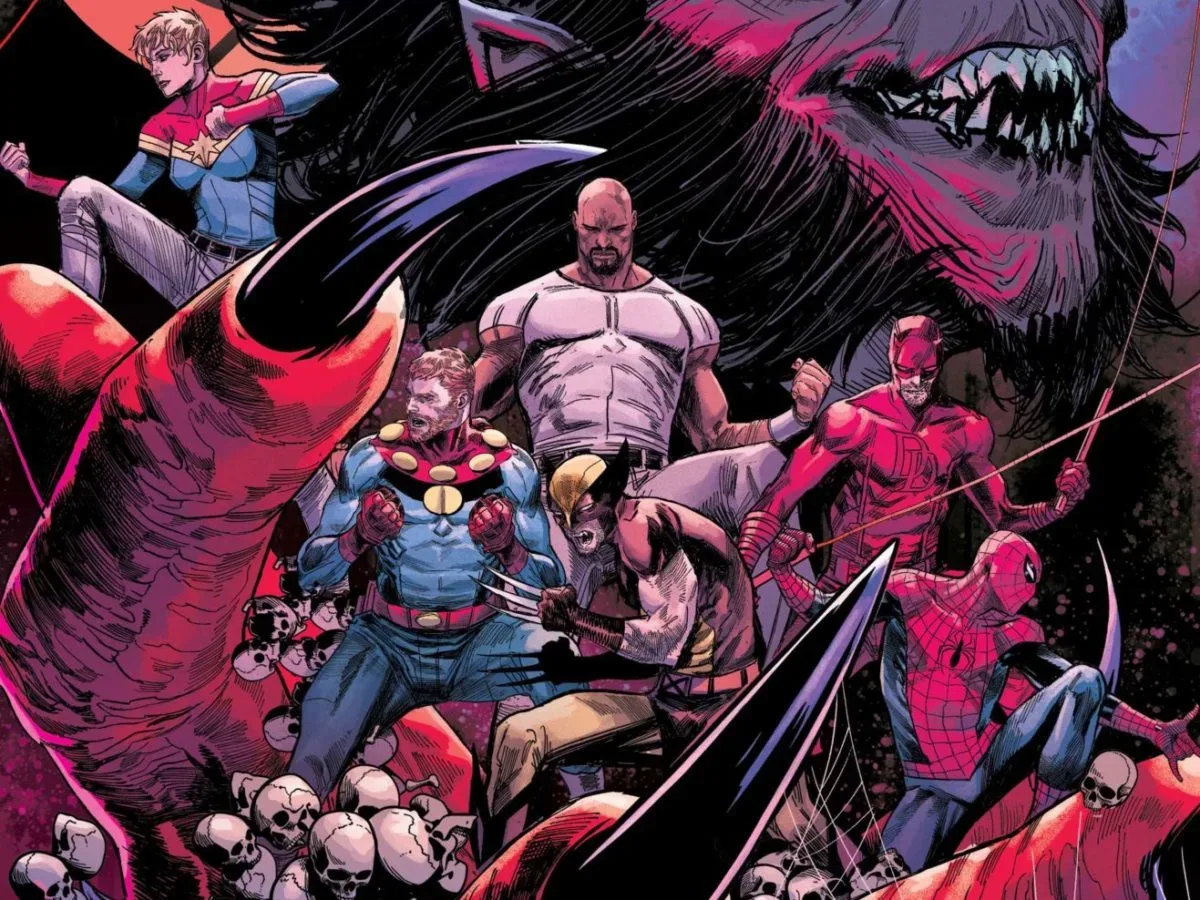
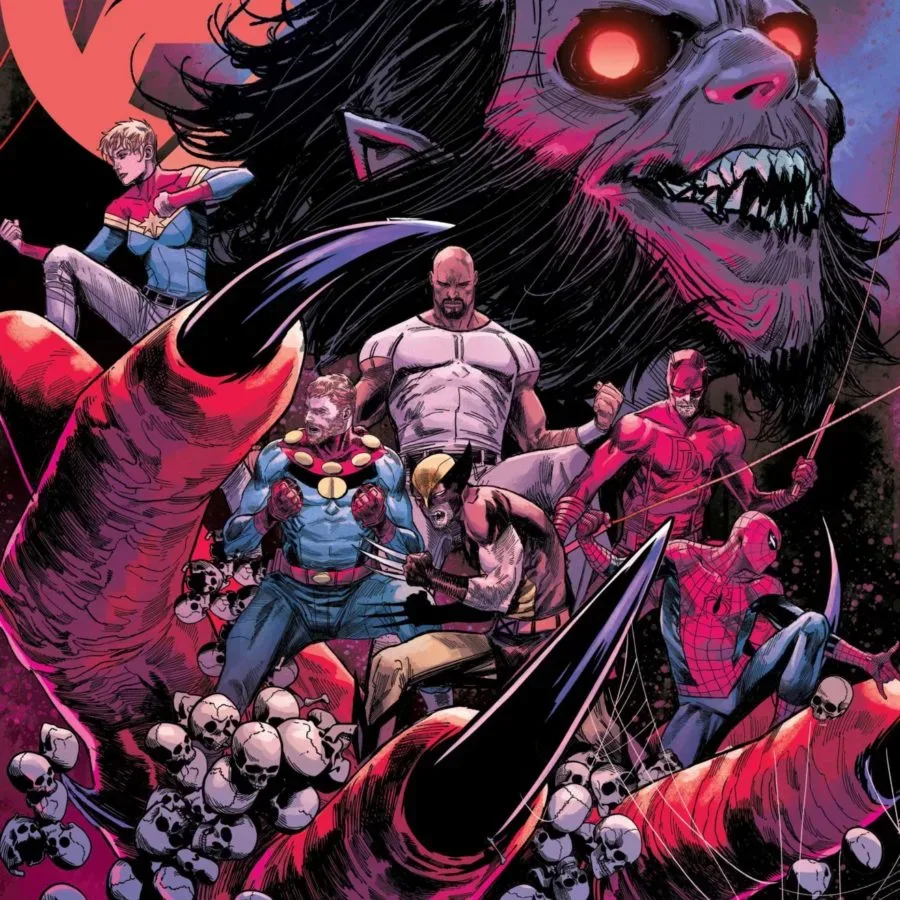
The launch is bigger than one Mephisto-related reckoning. Marvel’s description identifies Spider-Man, Wolverine, Captain Marvel, Daredevil, Luke Cage and Miracleman as the heroes uniting for the new Avengers team. Meanwhile, Captain America, Thor and Iron Man are described as being elsewhere after the Avengers’ previous configuration has broken apart.
That lineup makes the first arc’s structure especially notable. Spider-Man’s past places him near the centre of the immediate danger, but the series is also assembling heroes with very different relationships to cities, institutions and the supernatural. Daredevil and Luke Cage are strongly tied to New York’s street-level stakes; Captain Marvel and Miracleman add a far broader power scale; Wolverine brings a history of surviving conflicts that rarely stay simple.
The series is therefore using an intimate emotional threat as the entry point to a world-level collapse. Hell’s contracts being voided is not just a legal technicality in mystical language. It is the explanation for why old bargains, promises and punishments can suddenly become unstable. A demon outbreak is one obvious consequence, but the more interesting one is narrative: any character touched by a supernatural deal may now face consequences they believed were settled.
For fans who enjoy comics as physical releases as well as ongoing stories, this kind of launch issue is also the sort of event that attracts attention beyond the monthly plot. Another recent comic-focused release, the ThunderCats #1 blind bag with a surprise comic, shows how publishers continue to package new issue launches with collector-oriented hooks. No equivalent packaging detail is established here; the point is simply that a high-profile #1, particularly one involving Spider-Man and the Avengers, arrives in a market where first issues are closely watched.
The horror comparison is about inevitability, not a crossover
The setup naturally evokes the kind of horror story in which someone averts a disaster, only to find that fate keeps arranging new paths toward the same outcome. The comparison is useful because the threat is less about a single identifiable villain swinging a fist and more about an impersonal corrective force.
In that model, danger can emerge from coincidence, cascading mishaps and an apparent pattern no one knows how to defeat. It makes Aunt May’s peril more unnerving than a standard hostage situation. Spider-Man can often identify the villain, devise a rescue and stop the immediate threat. A cosmic judgment that regards her life as an error is harder to punch, web up or reason with.
However, the resemblance should not be read as confirmation of a direct connection to any other franchise. What is supported is a shared storytelling shape: survival is treated as a disruption, and a force seeks to restore the expected result. The actual antagonistic machinery in Avengers #1 is rooted in Marvel’s own Hell, its voided contracts and the mysterious figures appearing around the story.
What the next issues say about the direction
The first three solicited issues establish a fairly clear escalation. Avengers #1 costs $5.99 and is dated November 4, 2026. It introduces the team against the reordered world following Avengers: Armageddon.
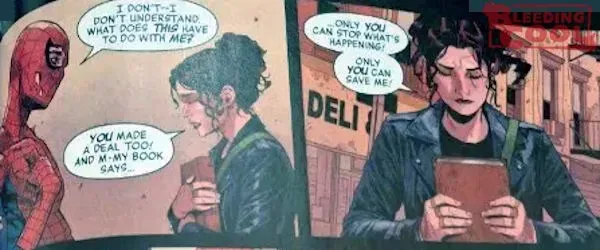
Avengers #2, priced at $4.99 and dated December 16, 2026, explicitly says Spider-Man must move quickly when his past again places Aunt May in jeopardy. It also has demons flooding New York City and poses questions around Mephisto’s aims, a mysterious young woman with a prophetic book, and the Adjudicator.
That word, Adjudicator, is worth separating from assumptions. An adjudicator is, broadly, an entity that judges or decides a dispute. In this context, the name strongly fits the theme of bargains being reviewed and consequences being assessed. Yet the solicitation does not define the character’s identity, powers, allegiance or judgment. Readers should treat it as a signal that the contract-and-reckoning plot remains active, rather than proof of who will be condemned or saved.
Avengers #3, also $4.99 and dated January 27, 2027, begins “Chase the Devil.” Its description says that Mephisto has unleashed Hell on Earth, prompting Spider-Man’s Avengers to seek retribution, while Mephisto gains unexpected allies. This moves the arc from the consequences of Doom’s disruption toward an active conflict with Mephisto himself.
The schedule suggests that Aunt May’s danger is not a one-issue fake-out. It remains a stated concern in the second issue, while the third broadens the team’s mission to pursuing Mephisto amid a full-scale supernatural crisis. That gives the opening arc room to explore the personal cost of Peter’s bargain before—or while—the Avengers confront the larger catastrophe.
What readers can reasonably expect, and what remains speculation
The confirmed core is substantial: Doom’s takeover has invalidated Hell’s contracts; Spider-Man’s bargain is being revisited; Aunt May is endangered; demons will flood New York; and a new Avengers lineup will take on Mephisto-related fallout. That is enough to make the book a consequential starting point for readers following either Avengers or Spider-Man.
Several bigger possibilities remain unconfirmed. There is no firm confirmation that Aunt May will die, that Peter’s identity will become public again, or that Peter and Mary Jane will be forced back into marriage. Those outcomes fit the underlying logic of undoing or adjudicating Mephisto’s deal, but the story may take a different route entirely. A comic built around contracts, devils and cosmic correction is likely to make the meaning of “void” more complicated than a simple rewind button.
That uncertainty is the hook. The new Avengers have not simply inherited a villain to fight; they have entered a universe where past compromises can become present emergencies. For Peter Parker, the danger is especially sharp because the bargain was never only about him. It concerns the life of Aunt May, the life he shared with Mary Jane, and the safety that came with a secret identity. The new series begins by making all three feel negotiable again—and by asking what happens when the supernatural fine print finally catches up.
Shop the products
Check current price, model and availability at the retailer.