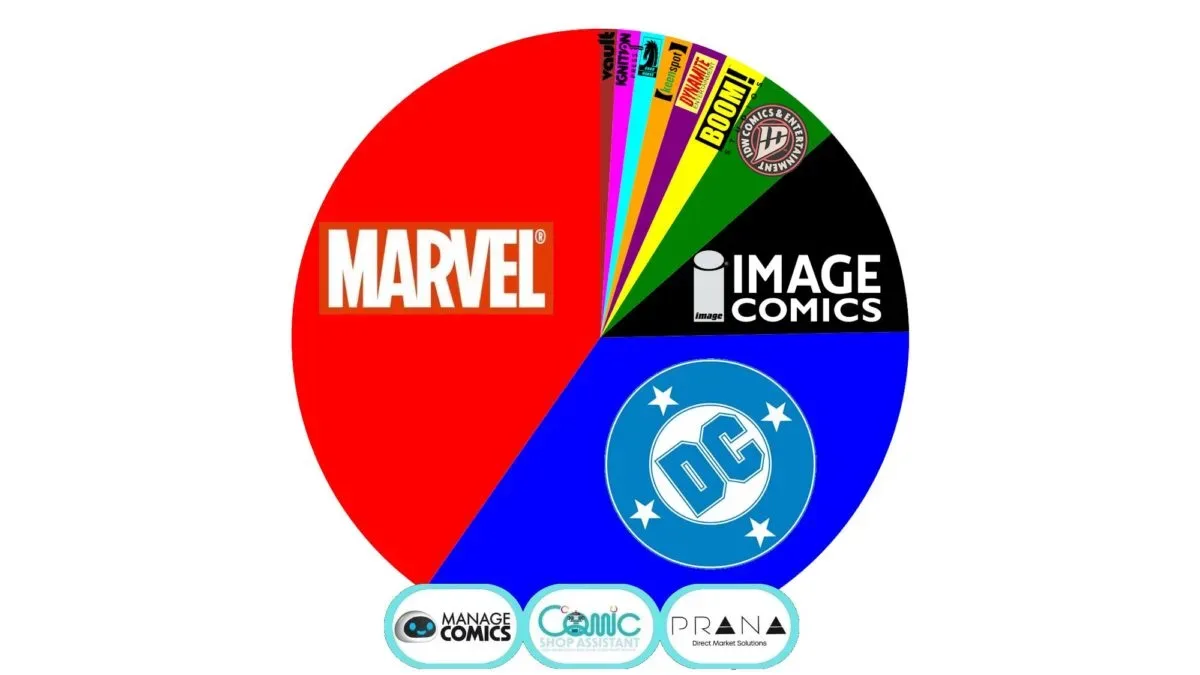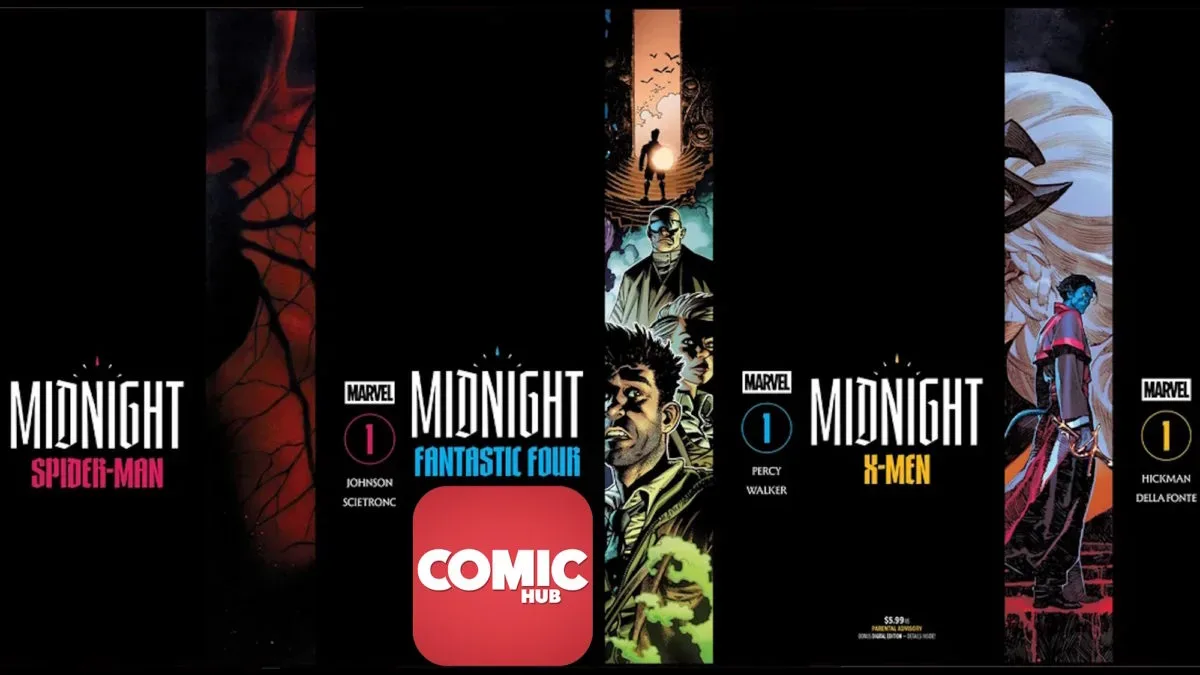
Midnight Spider-Man #1 was the leading title in a comic-shop sales snapshot covering October 13 through 19, topping a chart assembled from point-of-sale records at more than 600 stores using the Manage Comics and Comic Shop Assistant systems. Its index was set at 100%, with Midnight X-Men #1 next at 93.67% and Amazing Spider-Man #1001 at 89.15%.
The result makes for a distinctly Marvel-fronted opening to the week’s list. Venom #1, Doom All-On-One #1, DNX #3, and Midnight Fantastic Four #1 all appear among the first 10 entries, alongside the two Midnight launches and Amazing Spider-Man. DC’s Teen Titans #2, Doom Patrol #2, and Legion Of Super-Heroes #2 are the principal DC titles in that leading group.
The larger Top 400 is not just a contest between the two superhero giants, though. It includes Image’s Transformers #37, IDW’s Teenage Mutant Ninja Turtles #23 and Sonic The Hedgehog X Godzilla #3, Boom’s Something Is Killing The Children #50, Dynamite’s Archie Vs The Terminator #1, and Dark Horse’s Magic The Gathering Untold Stories–Liliana #1. In a weekly chart overwhelmingly packed with familiar capes and long-running franchises, that range is an important part of the story.
What the leading numbers mean
The percentages attached to the first 10 entries should be read carefully. Midnight Spider-Man #1’s 100% functions as the chart’s reference point; the other displayed percentages show each listed book relative to that benchmark in this dataset. Midnight X-Men #1 at 93.67%, for example, is close to the leader in the index. That number is not presented as a share of every comic sold, nor does it establish an industry-wide unit total.
That distinction matters. Point-of-sale, or POS, data records transactions through participating retailers’ sales systems. It is useful because it reflects sales activity at the shops represented in the sample rather than merely a publisher’s shipment figure. But it is still a defined sample: more than 600 comic shops contributing through two named systems. The results therefore describe performance within that participating retail set for this specific seven-day period, not a complete census of all comics sold everywhere.
The first several positions also illustrate why a relative index is more informative than a simplistic “winner versus everyone else” reading. A 93.67% result for Midnight X-Men #1 and an 89.15% result for Amazing Spider-Man #1001 indicate that the gap within the very top tier was comparatively narrow. Venom #1, indexed at 84.91%, likewise remained within sight of the lead. The chart supports the conclusion that Marvel had a powerful week at the front; it does not, on its own, prove how many copies each title sold or why individual readers picked them up.
Marvel’s Midnight books hold the spotlight
The leading result follows an earlier strong showing for Marvel’s Midnight line. This time, Midnight Spider-Man #1 is first and Midnight X-Men #1 is second, while Midnight Fantastic Four #1 is also in the top 10 at 75.77%. That makes three Midnight-branded launches a prominent part of the week’s most visible sales cluster.
For readers navigating a crowded new-release shelf, the practical takeaway is straightforward: the Midnight books were not isolated curiosities in this sample. Spider-Man and X-Men led the entire chart, and Fantastic Four also placed alongside the week’s biggest books. Anyone considering which new Marvel titles had the most immediate retail traction has a clear short list from the data.
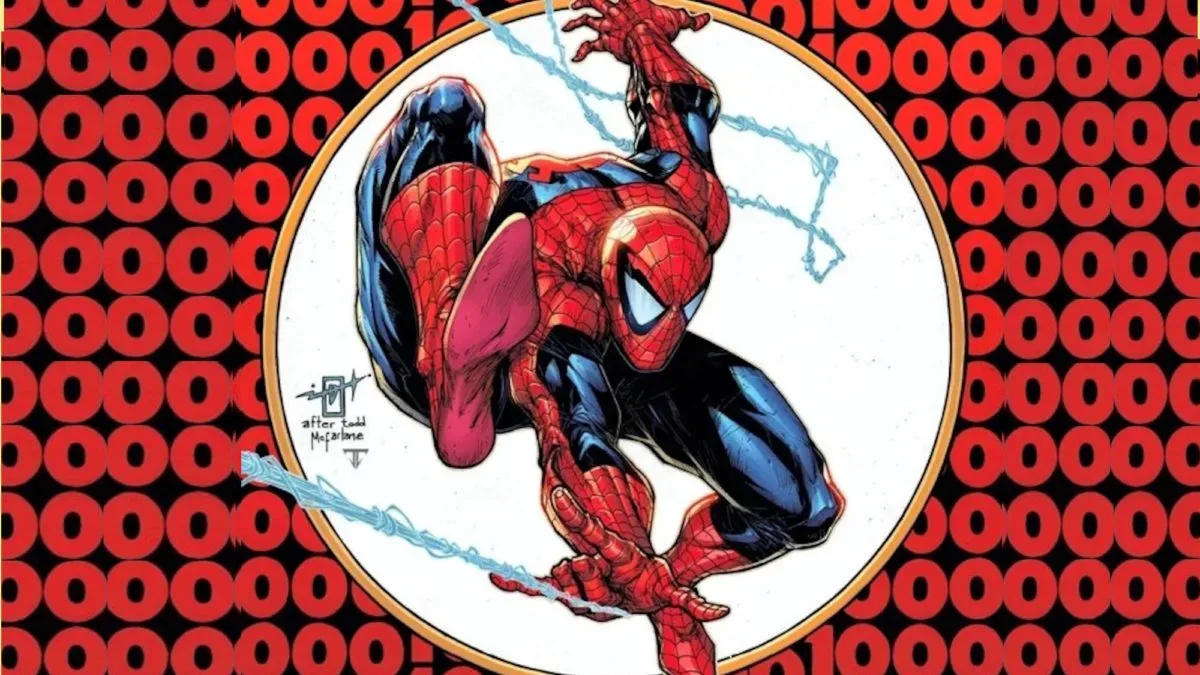
Marvel’s presence extends beyond Midnight. Amazing Spider-Man #1001 came in third, and Venom #1 was fourth. Doom All-On-One #1 and DNX #3 were also listed before the first DC entry. Further down the chart, Marvel had a deep bench of recognizable names and event-style combinations: Infernal Hulk Vs Fantastic Four #1, Alien Vs X-Men #1, Star Wars Rogue One – Chirrut And Baze #1, Captain Britain 50th Anniversary Special #1, Nova Return Of The Rings #1, and Muppets Take The Marvel Universe #1.
Several older-numbered issues also appear, including Amazing Spider-Man #1000, Venom #262, Thor #801, and Uncanny X-Men #159. A comic’s issue number is not a measure of its actual age or a guarantee of chronological simplicity; publishers frequently relaunch, renumber, commemorate milestones, or run parallel series. For a shopper, the chart is best used as a map of what was moving through participating stores that week, not as a recommended reading order.
The same applies to Gambit Gone #2, which is related to a Marvel title family also represented in the week’s broader list by Gambit Gone #1 and Gambit Wanted #3. A chart placement can signal visibility, but it cannot substitute for checking an individual book’s premise, creative team, or intended entry point.
DC’s answer: teams, characters, and a huge backlist footprint
DC did not take the first spot, but it entered the top group quickly. Teen Titans #2 was listed with a 70.99% index, Doom Patrol #2 with 71.16%, and Legion Of Super-Heroes #2 with 68.37%. The supplied chart presents those entries in that sequence despite the displayed Doom Patrol index being slightly higher than Teen Titans, so the safest reading is that all three formed a close DC cluster near the top rather than treating the printed order as a precise ranking by percentage.
DC’s breadth becomes more apparent after the opening 10. The list includes Batman Bad Seeds Streets Of Gotham #1, Batman Bad Seeds Gotham Central #2, Batman & Robin Year One Dynamic Duos #3, Barbara Gordon Breakout #6, Clayface Celebrity Dirt #4, and Clayface #1. That is a substantial Gotham-oriented showing even before reaching the many additional Batman, Batgirl, Nightwing, Catwoman, Harley Quinn, and Detective Comics issues scattered through the 400 entries.
The publisher’s “Absolute” branded books also recur throughout the list. Absolute Superman #24, Absolute Batman #24, Absolute Green Lantern #19, and Absolute Wonder Woman #24 are all present in the upper portion, with numerous earlier Absolute Batman, Absolute Superman, Absolute Green Arrow, Absolute Flash, and Absolute Catwoman issues elsewhere in the chart. That is not enough evidence to calculate a line-wide total or rank one title family against another. It does show the strength of a wide slate: shoppers were encountering many DC character lanes in the same weekly sample.
There is also an instructive mix of debut issues and established issue numbers. DC books such as Demon #1, Jonah Hex And The Shadow Of Death #1, Swamp Thing #1, and Superman The Stranger #2 share space with titles numbered Batman #227, Detective Comics #880, and Action Comics #1102. In a direct-market environment, a list like this can encompass new starts, continuing installments, special editions, bundles, and facsimile-style releases. It should not be assumed that every item has the same format, print history, or reader audience.
The rest of the Top 400 is not background noise
Marvel and DC dominate the headlines because the upper positions are dense with their books, but the long chart points to a broader comics retail ecosystem. Image had Transformers #37 at 13, followed by a wide range that includes Spawn titles, G.I. Joe, Geiger, Void Rivals, Radiant Black, Karman Blade, The Walking Dead Deluxe, and Universal Monsters projects. Its presence reaches from serialized superhero-adjacent material to horror and creator-led work.
IDW is notably represented by Teenage Mutant Ninja Turtles, Sonic, Godzilla, Star Trek, and Hello Kitty. The chart features Sonic The Hedgehog X Godzilla issues one through three, Godzilla Kai-Sei Era #13, Starship Godzilla Invasion X Kai-Sei Era #1, and The Horror Of Godzilla Kai-Sei Era #1. These placements do not reveal a single unified sales trend by themselves, but they demonstrate how franchise comics can occupy several niches at once: core ongoing runs, crossover miniseries, specials, and side stories.
Boom had a particularly visible entry in Something Is Killing The Children #50, while Dark Horse appears with Dungeons & Dragons, Hellboy, Conan-related material, Magic: The Gathering, and other series. Dynamite’s entries include Archie Vs The Terminator, Supernatural, Fire And Ice, Red Sonja, and Space Ghost Vs The Herculoids. Oni, Vault, Mad Cave, Ignition Press, Titan, Tokyopop, and smaller publishers are present too.
For retailers and readers alike, this variety is a reminder that a Top 400 list measures more than just the two biggest publishers’ launch power. It captures shelves where licensed properties, crossovers, horror, all-ages material, revivals, specials, anniversary releases, and ongoing books all compete for attention. A lower position is not a verdict on a title’s quality or long-term readership; it is only a placement within this one weekly POS-based sample.
How to use a weekly sales chart without overreading it
Weekly bestseller data are valuable as a snapshot. They can identify which launches created immediate interest, show which franchises repeatedly appear, and provide a sense of the range being purchased at participating comic shops. They are especially useful for spotting clusters: Marvel’s Midnight books at the very top, DC’s team books near the leaders, and the persistent presence of Batman, Spider-Man, X-Men, Transformers, Turtles, Sonic, Godzilla, and Spawn-related titles.
They cannot settle questions the dataset does not include. There are no copy totals here, no cover-by-cover breakdowns, no information about reorders, and no sales history for individual stores. There is also no proof that one issue’s result will predict how a series performs after its launch window. A #1 can generate a different level of immediate attention than a later issue, while a long-running title can have a stable audience that a single weekly index does not fully explain.
That is why the strongest conclusion is also the most grounded one: during October 13-19, Midnight Spider-Man #1 led this participating comic-shop sales chart, Midnight X-Men #1 and Amazing Spider-Man #1001 followed closely, and Marvel held the majority of the first 10 listed slots. DC’s Teen Titans, Doom Patrol, and Legion Of Super-Heroes supplied the closest early competition, while publishers across the market filled out a remarkably varied Top 400.