Gambit Gone #2 is set to arrive on October 28, 2026, continuing the story after X-Men of Apocalypse with a premise that makes the stakes personal before it makes them world-threatening. Gambit has a new scheme, he needs Rogue’s help, and Rogue is decidedly not pleased by the request. The complication is that innocent lives are at risk, while an emerging enemy has an even broader objective: ending mutant lives altogether.
That is a compact setup, but it gives the issue a potentially strong tension point. The central question is not merely whether Gambit can outmaneuver a hostile force. It is whether he can ask the person closest to him to trust a plan that appears to carry serious danger—and whether Rogue has any reason to accept that risk.
The issue is written by Steve Orlando and Edoardo Audino, with art by Gerardo Sandoval and a cover by Simone Di Meo. It is a 32-page, Rated T+ Marvel release priced at $4.99 in the U.S. A Pere Pérez variant, an AKA variant, and a Rod Reis variant are also listed at the same U.S. price.
A Gambit story where the plan is the problem
Gambit is bringing Rogue into what is described as his most dangerous scheme yet. That phrasing matters because a “scheme” is different from a straightforward mission. A mission implies an agreed objective and an established chain of trust. A scheme suggests uncertainty: concealed details, unconventional tactics, or a gamble whose fallout may be hard to control.
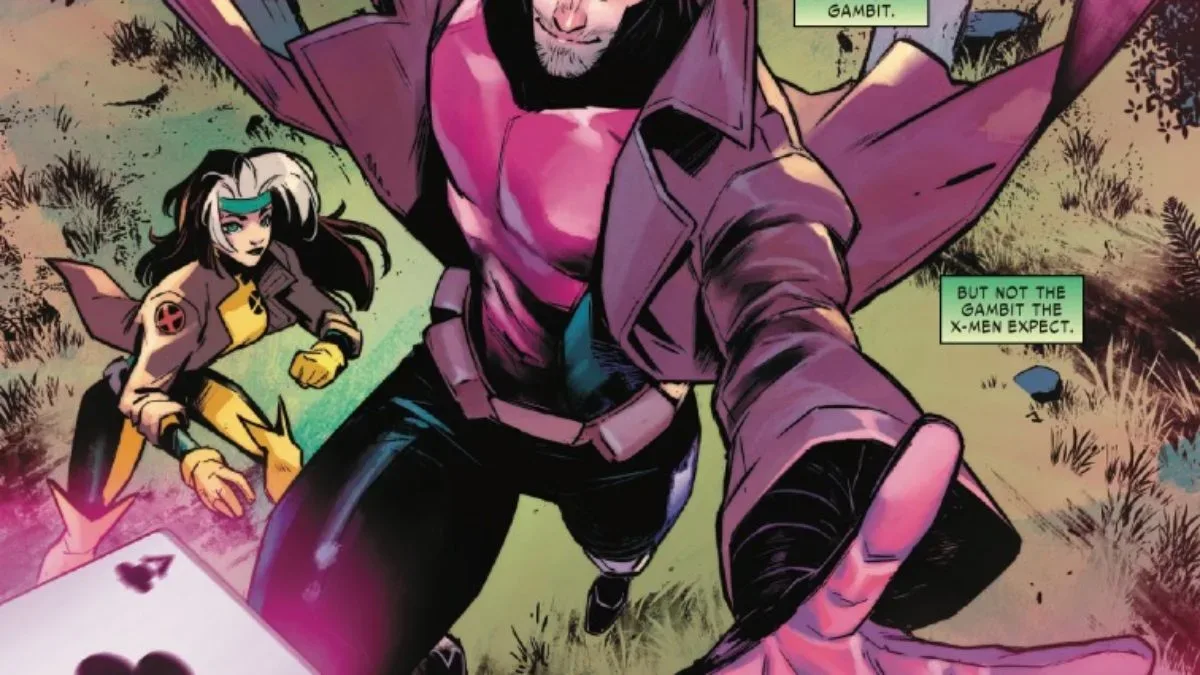
For a character associated with charged objects and high-risk improvisation, that is an appropriate framing. In the supplied setup, Gambit’s abilities are tied to kinetic charging—the process of imbuing an object with explosive kinetic energy. It is the kind of power that can turn ordinary items into immediate hazards, making it a natural fit for daring, fast-moving action. But the story’s setup focuses less on the spectacle of that ability than on its emotional cost. Gambit’s decision has consequences for Rogue, and she is not approaching it as an automatic yes.
That distinction can make a superhero conflict more immediate. The external threat is enormous: an antagonist who wants every mutant life ended. Yet the hook starts with a familiar human problem, even in an X-Men context. One partner has committed to a dangerous course. The other has to decide whether the urgency of the situation outweighs the frustration, fear, and possible lack of transparency behind that decision.
Gambit turns to Rogue for help with a dangerous plan, but the request lands amid a crisis where innocent lives and mutant lives are on the line.
Rogue is not just backup
The solicitation makes Rogue’s reaction essential rather than incidental. She is not simply introduced as a teammate who will add power to Gambit’s operation. Her unhappiness is part of the story engine. That gives the issue room to examine how a couple functions when one person’s instincts pull toward a high-risk solution and the other is asked to bear the consequences.
The premise says that Rogue and Gambit’s relationship has had many ups and downs, while their married life has recently been in a good place. The dangerous scheme therefore threatens more than a battlefield outcome. It can test the stability they have built together. A disagreement is not automatically a sign that the relationship is failing; it can instead reveal how the characters communicate, what boundaries they draw, and whether urgency is being used as a reason to avoid a difficult conversation.
There is also a meaningful difference between helping someone because they are right and helping them because time has run out. With innocent lives in danger, Rogue may be forced to weigh both. The available details do not reveal the particulars of Gambit’s plan, so it would be premature to assume he is acting recklessly or that Rogue will reject him outright. What is clear is that the issue positions their disagreement as a major part of the conflict, not a disposable bit of bickering between action scenes.
The Morlocks shadow Gambit’s decision
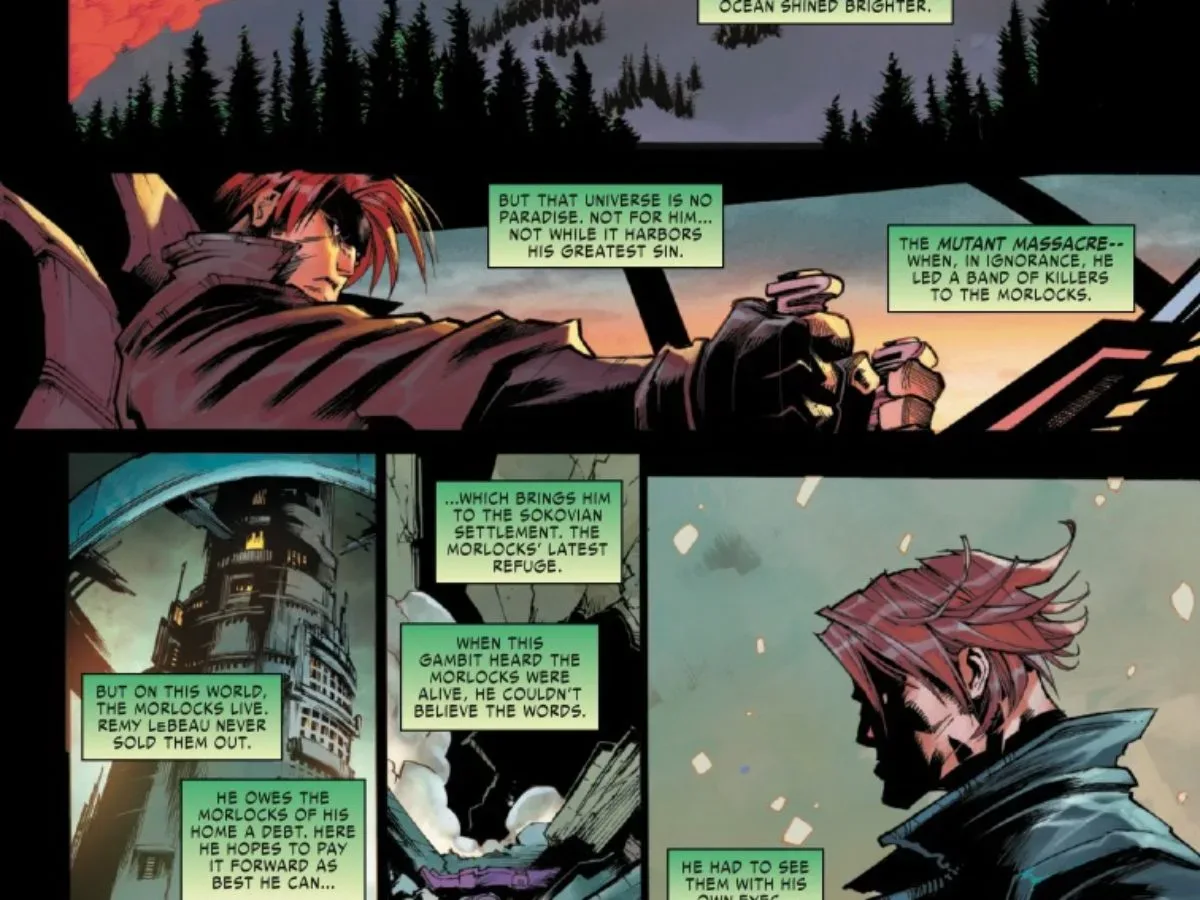
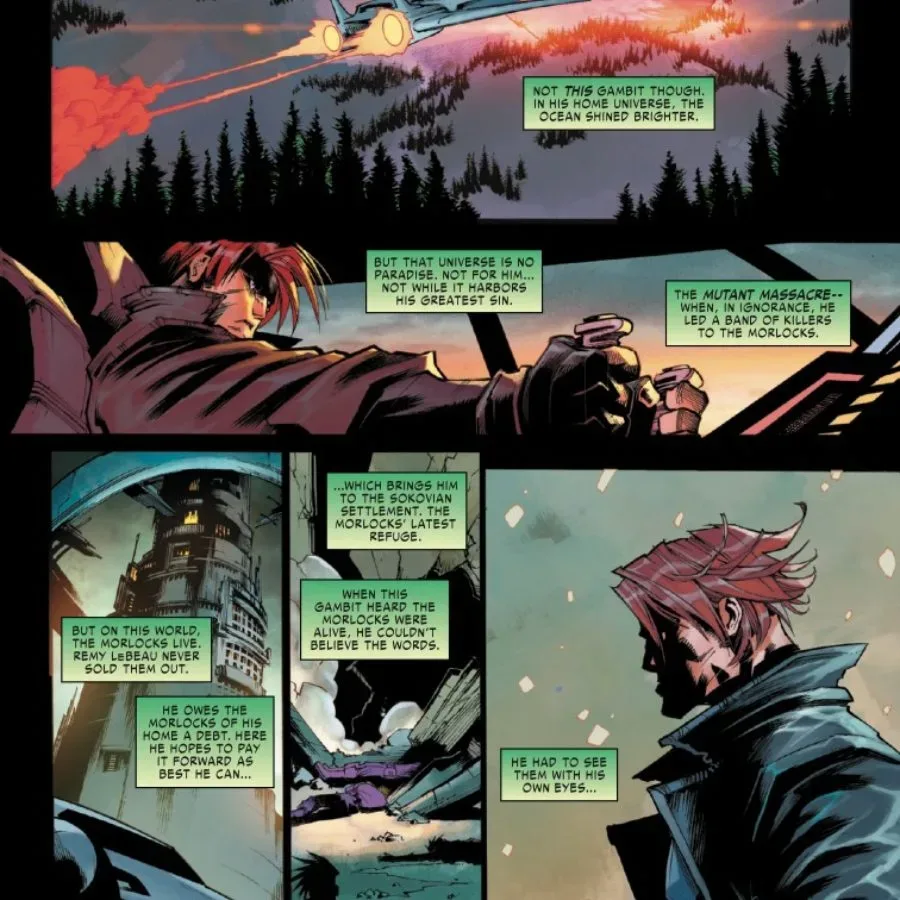
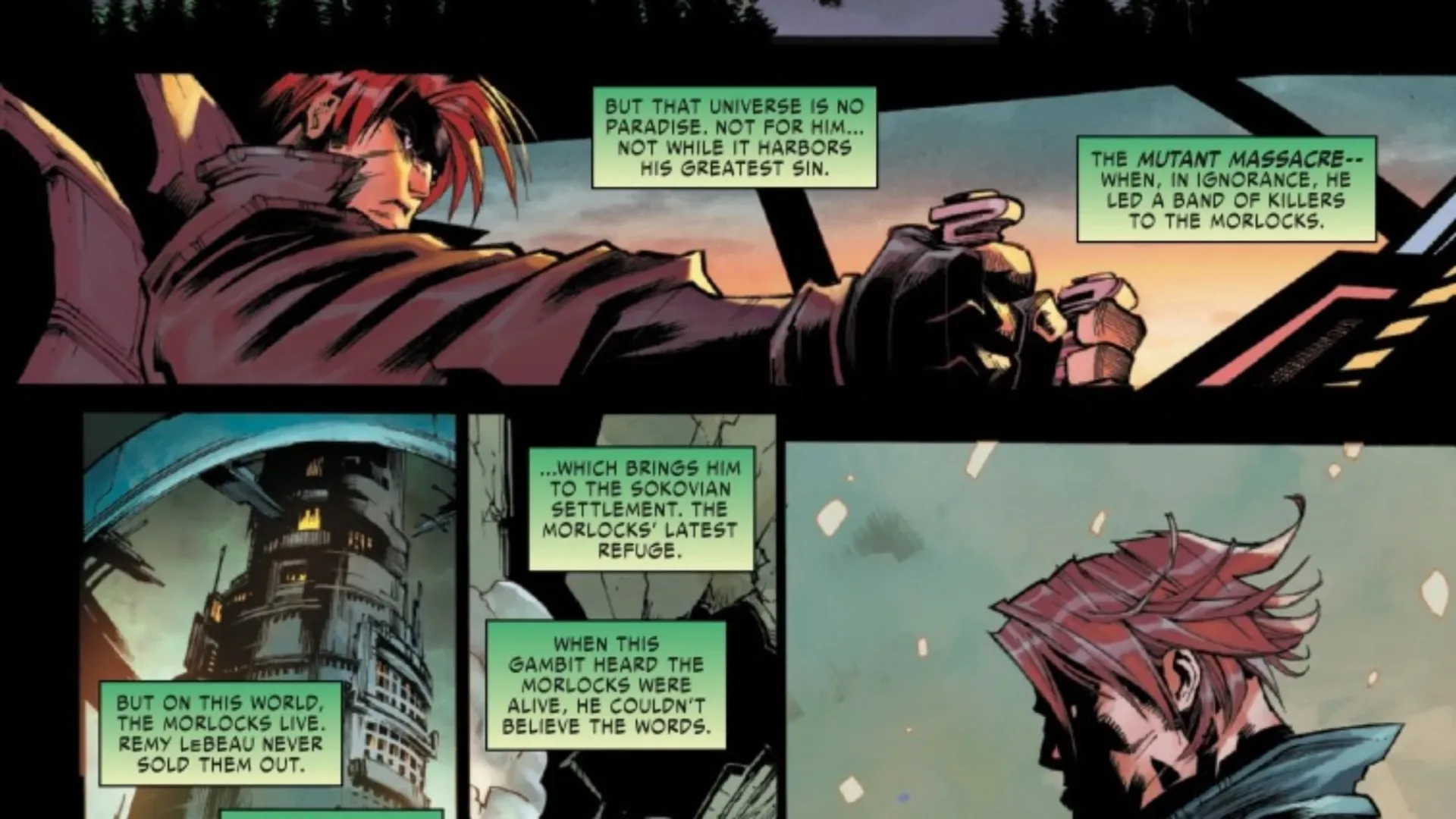
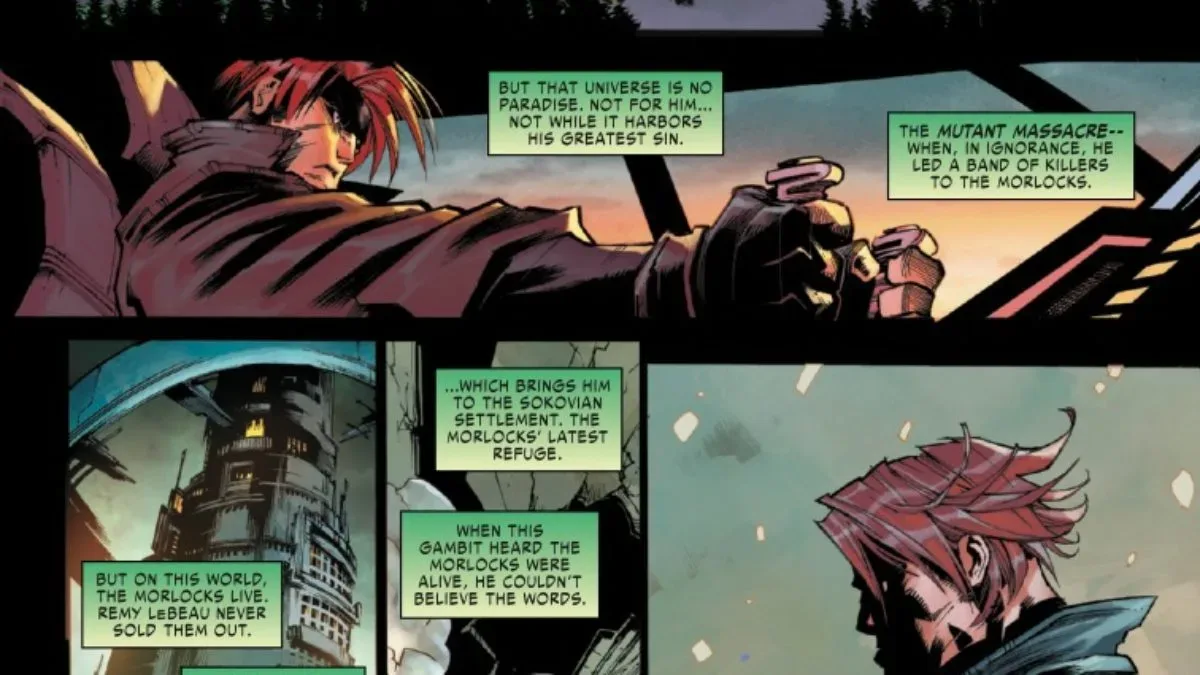
The preview material also points to Gambit brooding over past failures involving the Morlocks. That detail adds an important layer to the new operation. Regret can be a powerful motive in superhero stories, but it is not always a reliable guide. It can inspire someone to act decisively when they see another chance to protect people; it can also drive them to overcorrect, take excessive responsibility, or treat a new crisis as an opportunity to settle an old emotional debt.
That makes Gambit’s state of mind as important as the logistics of the scheme. If he is responding to an unresolved failure, the story can ask whether his current plan is truly the best response to the threat or whether he is trying to outrun guilt. Rogue’s resistance may be practical, emotional, or both. Either way, she is in a position to challenge the assumptions behind his decision.
The result is a setup with two overlapping pressures. One is the immediate danger to innocents and mutants. The other is the private burden Gambit carries from the past. Those pressures may point in the same direction—toward action—but they do not necessarily produce wise action. That is where Rogue’s role could become especially consequential.
An enemy aimed at mutant survival
The new threat is defined in direct, chilling terms: it wants every mutant life ended. In an X-Men story, that kind of target turns a personal dispute into a community-scale emergency. It means the danger cannot be neatly separated from the identity of the people being threatened. The conflict is not described as an isolated robbery, territorial fight, or single-person vendetta. Its stated objective is eradication.
Still, the available information does not identify the antagonist, explain its methods, or establish the scope of its resources. Readers should not fill those gaps with assumptions. The confirmed point is the threat’s anti-mutant purpose and the fact that it places Gambit’s plan under extraordinary pressure. When the alternative to acting may be mass harm, characters can be tempted to accept options they would otherwise reject. That is exactly why Rogue’s skepticism has dramatic value: it ensures the issue’s crisis is not treated as a blank check for any tactic.
The story is billed as a follow-up to X-Men of Apocalypse, which establishes its immediate narrative connection. For readers arriving from that storyline, the issue should provide the next chapter for these versions of Rogue and Gambit. For readers primarily drawn by the couple, the solicitation indicates that their relationship remains the central lens through which the larger mutant crisis will be felt.
What readers can expect from the format
At 32 pages, Gambit Gone #2 has limited room to develop its setup, which puts a premium on focus. The clearest expectations are a dangerous operation, conflict between Rogue and Gambit, Gambit’s reflections on the Morlocks, and a newly introduced anti-mutant danger. The creative team has several threads to balance, but they all connect through the same question: can Gambit persuade Rogue that his plan is necessary before the situation worsens?
Readers looking for a clean continuation point should note that the book is explicitly framed as following X-Men of Apocalypse. The provided details do not say how much prior reading is required, so newcomers should treat it as a continuation rather than presume it is a fully standalone entry. The central emotional premise, however, is easy to grasp from the issue’s setup: a married pair of X-Men must confront a dangerous plan, a disagreement over trust, and a threat directed at mutant survival.
The wider Marvel slate continues to put team-scale jeopardy alongside character-specific pressures, as seen in the Avengers: Doomsday trailer’s emphasis on assembling heroes. Gambit Gone #2 takes a more intimate route in its stated premise. The fate of many may be at stake, but the immediate drama begins with one difficult request between two people who know each other well enough to understand the risks.
Release details
- Title: Gambit Gone #2
- On sale: October 28, 2026
- Publisher: Marvel
- Writers: Steve Orlando and Edoardo Audino
- Artist: Gerardo Sandoval
- Cover artist: Simone Di Meo
- Format: 32 pages, Rated T+
- U.S. price: $4.99
- Listed variants: Pere Pérez, AKA, and Rod Reis