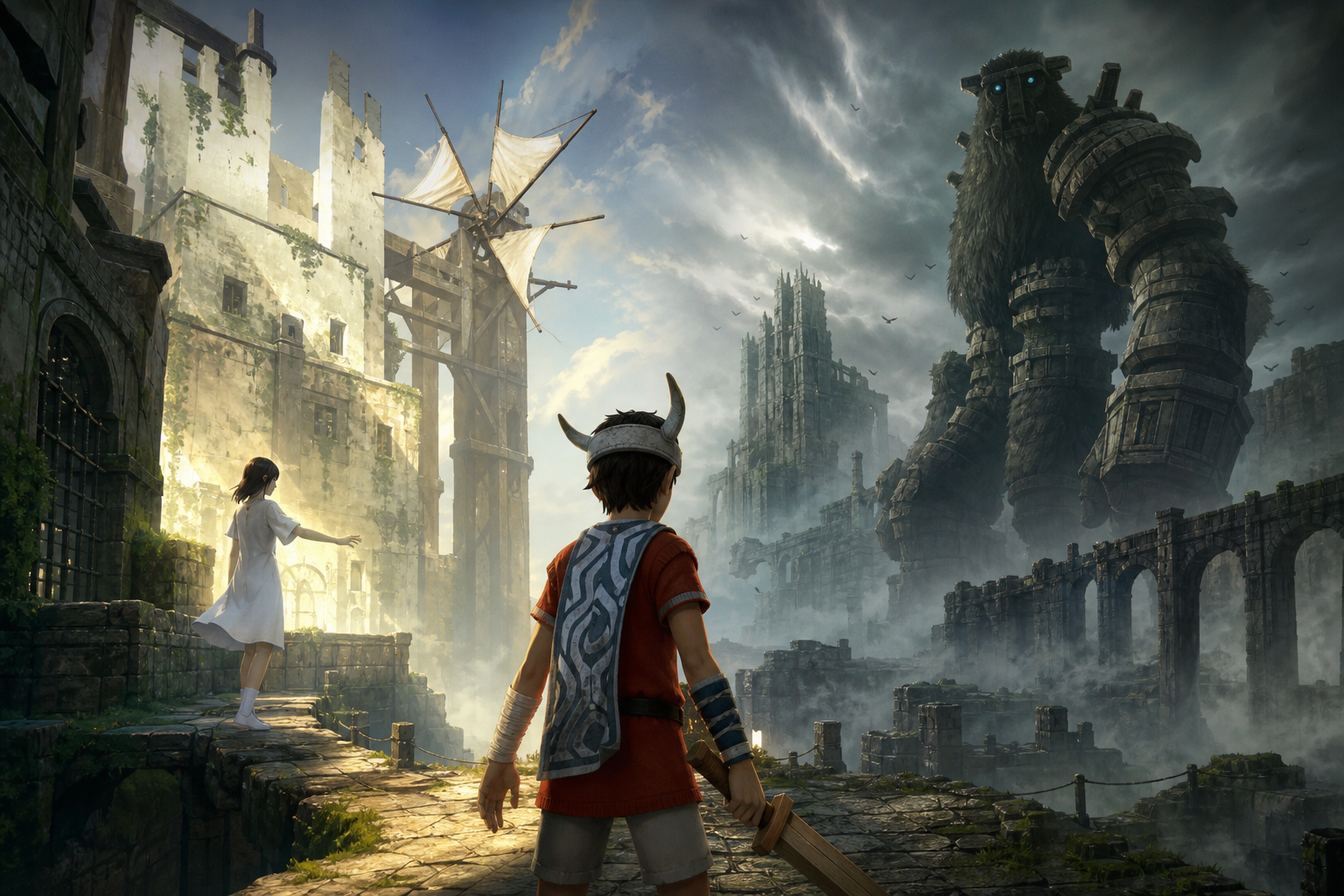
ICO and Shadow of the Colossus are often discussed together because both came from Sony Computer Entertainment Japan’s Team Ico under Fumito Ueda. They also share a quiet visual style, sparse exposition and a strong interest in making the player feel physically small inside an imposing world. That resemblance can hide an important difference: these are not interchangeable versions of the same adventure, and Shadow of the Colossus is better understood as a spiritual successor than as a direct story sequel.
The useful question is not which game is universally better. It is whether you want companionship to be a constant responsibility or a means of crossing a vast landscape; whether you prefer rooms that communicate through architecture or encounters that communicate through scale; and how much older control friction you are willing to accommodate. The comparison below focuses on the original PlayStation 2 editions and avoids major story revelations.
The central choice: responsibility or travel
ICO places companionship at the center of ordinary movement. Ico spends much of the adventure guiding Yorda through a large castle, calling her across gaps, holding her hand and positioning her so that the pair can progress. Her presence is not merely a narrative detail that follows the hero from one cutscene to the next. It changes how rooms are read, how quickly you move and what risks you are willing to take.
That relationship creates a steady form of pressure. A route that would be simple for Ico alone may require a switch, a platform or a safe position for Yorda. Shadow of the Colossus gives Wander a different kind of companion in Agro. The horse supports long-distance travel and contributes to the game’s sense of movement, but the player is not managing a companion in nearly every small space. Agro belongs to the rhythm of crossing the Forbidden Lands, while Yorda belongs to the rhythm of solving the castle.
Choose ICO if you want another character’s position to affect nearly every stretch of progress. Choose Shadow of the Colossus if you want companionship to make a broad world feel traversable without turning every room into an escort problem.
- Choose ICO for constant companion involvement and close cooperation.
- Choose Shadow of the Colossus for horseback travel and a larger sense of expedition.
- Do not treat the two games’ companion systems as variations of the same mechanic.
Navigation: reading a building versus reading a horizon
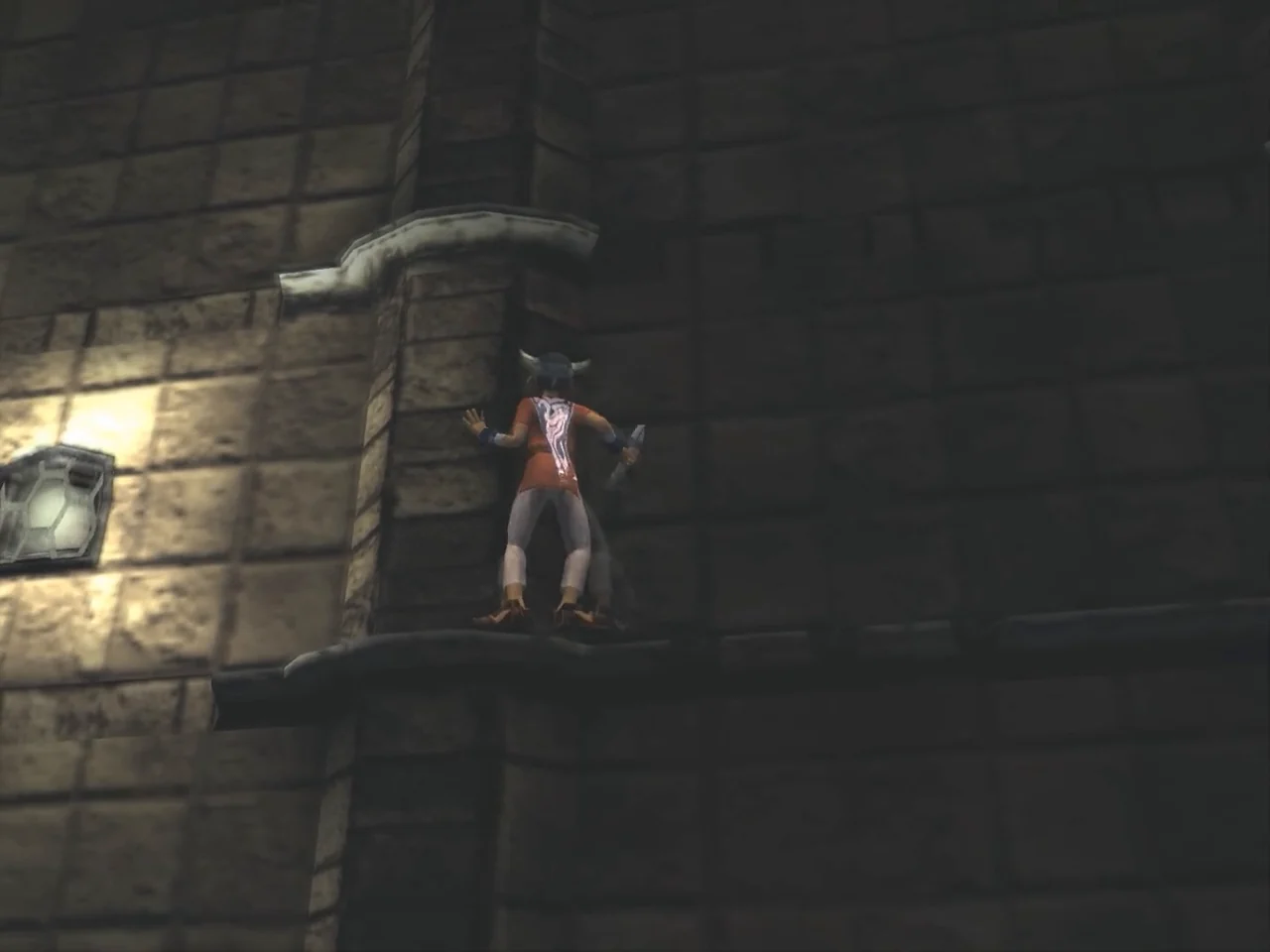
ICO gives you a dense, continuous location to understand. Its rooms, courtyards, towers and passages connect through visible architectural logic. Doors, ladders, chains, ledges, windows and movable objects often suggest possible routes without a conventional map or quest log. The challenge is less about choosing between dozens of marked objectives and more about noticing how the current space might connect to the next one.
This approach rewards players who enjoy stopping to inspect a room. A raised platform may matter because it reveals a climbable ledge. A switch may matter because it changes access somewhere else. Yorda’s position can also determine whether a route is useful, so navigation is never entirely separate from companionship. The castle gradually becomes legible through repeated observation rather than through explicit instructions.
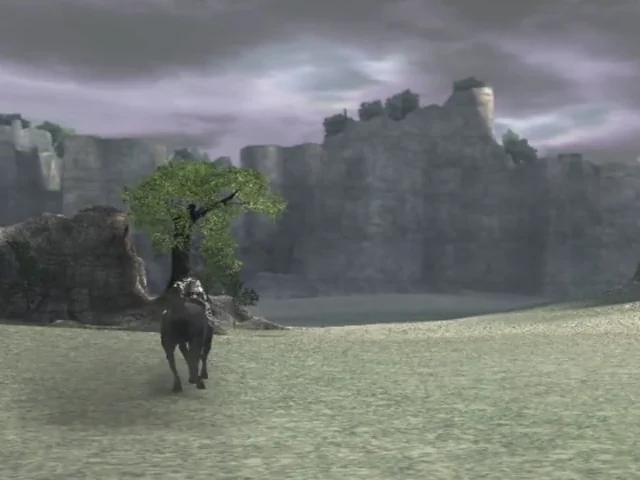
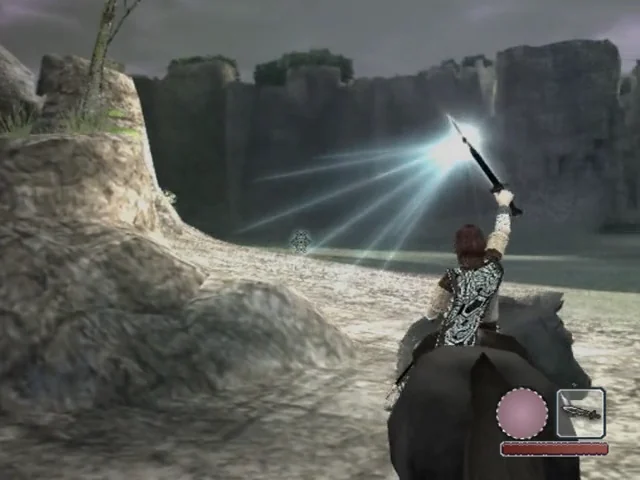
Shadow of the Colossus offers more geographical freedom, although its main progression remains ordered around the next colossus. Wander returns to the Shrine of Worship, travels through the Forbidden Lands and uses the sword’s reflected beam in sunlight as a directional aid. The beam is a deliberately limited substitute for a minimap: it points toward the next destination while leaving the route, obstacles and detours for the player to negotiate.
The sword does not simply provide a glowing route line. On foot, Wander must stop to use it, and while riding Agro, focusing the blade limits steering. The system therefore gives direction without removing uncertainty. Forests, canyons, ruins and terrain can still obscure the most convenient path.
ICO is the better fit for readers who want a place to memorize. Shadow of the Colossus is the better fit for readers who want to cross open ground, orient themselves by landmarks and accept stretches of travel between major events.
- Pick ICO if rooms and visible architecture are more appealing than open terrain.
- Pick Shadow of the Colossus if a directional hint is welcome but a detailed map would feel intrusive.
- Expect both games to provide less explicit guidance than a modern objective-driven adventure.
Puzzle language: architectural connections versus encounter solutions
ICO’s puzzles are generally built from relationships between objects and spaces. Doors, switches, movable blocks, ladders, hanging chains and platforms form a visual vocabulary. The intended question is often, “What can connect these two parts of the room?” Yorda’s location adds another layer: the solution may involve opening a route for her, arranging a safe crossing or using Ico’s movement to create an opportunity for both characters.
The game’s instruction manual separates puzzles, protecting the princess, climbing, moving objects, doors, switches, fighting and saving into recognizable areas of play. That organization reflects how closely ICO’s challenges are tied to basic interaction. The stone benches used as save points also reinforce the connection between progress and companionship, since Ico and Yorda sit together at these spaces.
Shadow of the Colossus uses a different puzzle language. Each major encounter asks the player to read an arena, observe a creature’s movement, identify a way upward and manage the risks of climbing. Terrain, water, walls, platforms and the colossus’s body all become parts of a temporary puzzle space. The answer is not simply to reduce a health bar through repeated attacks; movement and environmental understanding are central to progress.
If you like compact problems that emerge from rooms, ICO is the natural choice. If you prefer a dramatic problem that unfolds across a moving environment, Shadow of the Colossus offers the stronger match. Readers who want individual encounter solutions should use the existing Shadow of the Colossus walkthrough rather than expecting this comparison to provide a boss route.
- ICO emphasizes doors, switches, objects, platforms and companion positioning.
- Shadow of the Colossus emphasizes terrain, climbing, movement patterns and environmental openings.
- Neither game depends on a conventional quest-log puzzle structure.
How each game makes the player feel small
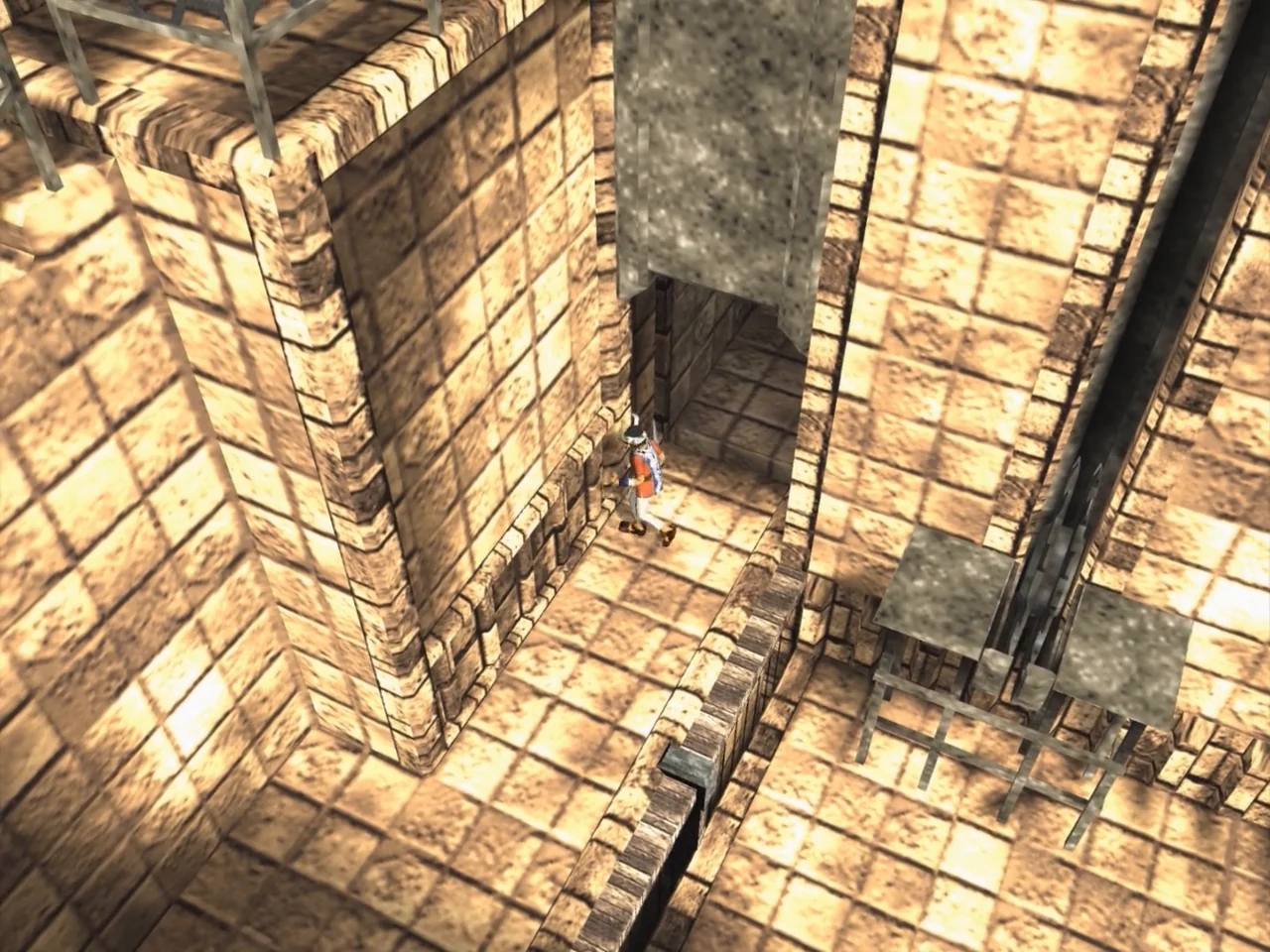
ICO creates smallness through enclosure. The castle’s walls, vertical spaces and long corridors make Ico appear vulnerable even when a route is visible. Sightlines are often controlled by architecture, so the player discovers the character’s relationship to the building one section at a time. The emotional effect comes from closeness: a companion is nearby, a threat can interrupt movement and the next doorway may be more important than the distant landscape.
Shadow of the Colossus creates smallness through distance and scale. The Forbidden Lands leave more space around Wander, Agro and the ruins they pass. The colossi transform that scale into a direct gameplay problem: the player must approach something enormous, find a route across it and remain attached while it moves. The game’s major spaces are therefore not only places to cross but stages for comparing a human body with a living monument.
This distinction matters if you are choosing by mood. ICO is intimate, enclosed and cooperative. Shadow of the Colossus is solitary in its landscapes but spectacular in its encounters. Both games use silence and restrained exposition, yet one concentrates attention on the next room while the other repeatedly pulls it toward the far horizon.
- Choose ICO for enclosed spaces, short-range cooperation and architectural intimacy.
- Choose Shadow of the Colossus for ruins, open views and dramatic differences in scale.
- Both games rely on visual composition and movement more than on heavy exposition.
Pacing: one continuous escape or a repeated expedition
ICO’s structure feels like a connected escape. Even when the player pauses to solve a room, the castle remains the dominant context, and progress tends to carry the pair into another connected section. That continuity suits players who prefer an adventure with a strong sense of place and a relatively unified objective. The rhythm is shaped by exploration, puzzle solving, companion management and occasional danger rather than by a long sequence of separately announced missions.
Shadow of the Colossus follows a more deliberate cycle. Wander returns to the Shrine of Worship, travels outward, locates a colossus, resolves that encounter and returns before the next journey begins. This gives the game a clear cadence and makes every major confrontation feel like a destination. It also means that quiet movement through the Forbidden Lands is part of the design rather than a short transition between combat arenas.
The cycle will appeal to players who like anticipation, travel and a reset between set pieces. It may be less appealing to anyone who wants every minute to involve a puzzle or a close-range objective. Conversely, ICO’s continuous setting can feel more demanding for players who want a broad change of scenery after each challenge.
For a contained adventure with fewer structural resets, choose ICO. For a sequence of monumental objectives separated by travel and reflection, choose Shadow of the Colossus.
- ICO suits players who want a continuous location and connected escape rhythm.
- Shadow of the Colossus suits players who enjoy travel before a clearly defined major encounter.
- Quiet traversal is a meaningful part of Shadow of the Colossus, not merely unused space.
Control friction and recovery on the original PS2
Neither original PS2 game should be approached as though it were built around modern camera assistance, abundant prompts or frictionless movement. ICO asks the player to manage camera positioning, jumping, climbing, combat and hand-holding while keeping Yorda nearby. The exact feel also depends on the regional release: the North American version uses a press-to-toggle hand-holding behavior by default, while the PAL version uses a hold-to-maintain behavior by default. The PAL version can be changed to the alternative setting through its options menu, so a guide written for one edition may describe inputs differently from the copy in front of you.
Shadow of the Colossus concentrates its control demands in traversal and encounters. Wander must manage movement on foot, horse steering, climbing and grip while reading a large moving target. A route that is conceptually clear can still require careful positioning and stamina awareness. This is not a reason to dismiss the game, but it is an important part of deciding whether the original edition suits your patience.
The practical difference is where awkwardness appears. ICO’s friction is close and repetitive: companion commands, camera adjustment and movement through constrained spaces. Shadow of the Colossus’s friction is more situational: horse movement, long travel, camera management and maintaining a climb during a major encounter. Neither description should be turned into an unsupported claim about frame rate or controller responsiveness.
If you want the gentler control burden, ICO is not automatically the answer; its companion handling can be demanding. Instead, choose based on which kind of friction you tolerate better: repeated cooperation in tight spaces or traversal and grip management across large encounters.
- Check the regional edition before following an ICO control guide.
- Expect the original PS2 controls to require camera and movement management.
- Do not use PS3 or PS4 control descriptions as though they automatically apply to the PS2 releases.
Combat and danger: pressure around a companion or the main event
ICO includes combat, but fighting is closely tied to movement through the castle and the responsibility of keeping Yorda safe. Encounters interrupt routes and create urgency around where the pair is standing. The game’s danger is therefore social as well as physical: an enemy can make a familiar room feel unsafe because Yorda’s position matters to the immediate situation.
In Shadow of the Colossus, the major encounters are the main progression events. They combine combat, platforming and environmental problem-solving rather than functioning as ordinary battles against enemies with a simple exchange of attacks. The player studies movement, searches for a way to climb and manages position while the encounter changes around them. The game’s combat identity is consequently much stronger, even though each confrontation is also a navigation puzzle.
This makes the choice straightforward for many readers. ICO is for players who want combat to support an escape and complicate companion movement. Shadow of the Colossus is for players who want each major objective to be a large, physical problem that demands observation and execution.
For spoiler-free help with individual colossi, consult the supplied game guide separately. A comparison can explain the structure without reproducing weak-point locations or complete solutions.
- Choose ICO if combat should remain secondary to movement and companionship.
- Choose Shadow of the Colossus if monumental encounters are your primary reason to play.
- Use a dedicated walkthrough for encounter solutions rather than spoiling the comparison.
Original PS2 edition notes before you choose a copy
Regional differences matter especially for ICO. The original North American PS2 release does not contain every post-completion feature found in the Japanese and PAL editions. Those versions include a second-playthrough mode with additional features, including local two-player support in which a second player controls Yorda. The Japanese and PAL releases also provide translated subtitles for Yorda’s fictional speech after the relevant completion condition, while the North American release retains the more limited version.
These differences can explain why an old guide, listing or video seems to describe content that is absent from a North American copy. They also mean that “the PS2 version of ICO” is not a sufficiently precise description when bonus modes, dialogue or controls are being discussed. Check the region on the case, disc and supporting documentation before assuming that a feature should be present.
There are also gameplay differences beyond the bonus material. The PAL edition changes some control behavior and includes alterations to certain areas and enemy behavior compared with the North American release. That makes matching a walkthrough to the exact regional edition more important than relying on a generic ICO label.
Shadow of the Colossus should likewise be kept separate from the later PlayStation 3 collection and PlayStation 4 remake. Later versions can change presentation, controls and other edition-specific details. The comparison here concerns the original PS2 release identified in the catalog, not a recommendation to substitute a later port or remake.
For collectors, regional specificity is part of the buying decision. For players choosing an adventure, it is mainly a guide-matching issue: use documentation that names the same platform and region as your copy.
- North American, Japanese and PAL ICO releases are not identical in bonus content.
- Match control references and guides to your actual ICO region.
- Do not merge PS2 behavior with the PS3 collection or PS4 remake.
Who should choose ICO?
ICO is the stronger choice for a reader who wants a concentrated adventure built around a single location. Its castle gives the journey a strong spatial identity, while Yorda’s presence keeps companionship active instead of decorative. Players who enjoy examining rooms, spotting architectural clues and solving problems through doors, switches, platforms and object placement will find the game’s priorities easy to understand even when an individual route is not immediately obvious.
It also suits readers with a low appetite for open-world travel. The game does not ask you to cross a huge landscape between every major challenge. Its pressure is more immediate: keep the pair together, understand the room and move forward. That can be appealing after large objective-driven adventures, especially if you prefer atmosphere created through space and movement rather than frequent dialogue.
ICO is not the safest choice for someone who dislikes escort-style responsibility or older camera and companion controls. Yorda affects the pace and the solution to many situations, so players wanting a fully independent action hero may find the relationship demanding. Still, if your ideal PS2 adventure is intimate, architectural and focused on cooperation, ICO is the clearer fit.
- Pick ICO for a contained setting and a continuous escape.
- Pick ICO for room-based puzzles and companion positioning.
- Avoid ICO if escort responsibility is your least favorite adventure-game pressure.
Who should choose Shadow of the Colossus?
Shadow of the Colossus is the stronger choice for a reader drawn to scale, travel and clearly separated set pieces. The sixteen-colossus structure provides an obvious overall rhythm without turning the Forbidden Lands into a checklist of unrelated side objectives. Agro gives the journey a distinctive movement layer, while Wander’s climbing and grip management make the central encounters feel unlike conventional combat.
The game is also a good fit for players who enjoy sparse worlds. The Forbidden Lands are not designed to constantly fill the screen with tasks, characters or rewards. Their quiet stretches prepare the player for the next destination and make ruins, cliffs, water and open fields part of the adventure’s mood. If you enjoy orienting yourself with landmarks and accepting a slower approach to a major encounter, this structure may be more satisfying than ICO’s concentrated rooms.
The tradeoff is that Shadow of the Colossus asks for patience with travel, camera handling, horse movement and climbing. Its spectacle does not remove control friction; it places that friction inside the game’s defining encounters. Choose it when the promise of approaching and climbing enormous creatures matters more to you than a tightly connected architectural puzzle journey.
- Pick Shadow of the Colossus for sixteen major encounters and a broad landscape.
- Pick it for horseback travel, climbing and environmental combat problems.
- Avoid it if long traversal between objectives feels like wasted time.
The practical verdict by priority
If companionship is your deciding factor, ICO is the clear choice because Yorda’s position, safety and movement shape ordinary progress. If companionship means crossing a world with a trusted travel partner, Shadow of the Colossus offers that through Agro instead. The games use the idea of a companion to create opposite rhythms: close cooperation in one, expansive movement in the other.
For puzzles, choose ICO when you want architecture to explain the problem. Choose Shadow of the Colossus when you want each encounter to become a temporary climbing and terrain puzzle. For navigation, ICO rewards learning a building while Shadow of the Colossus gives you a directional beam and asks you to work out the route. For spectacle, Shadow of the Colossus is the obvious match; for intimacy and continuity, ICO has the stronger case.
The control decision is more personal. ICO asks you to tolerate repeated companion handling and enclosed camera work. Shadow of the Colossus asks you to tolerate travel, horse steering, climbing and grip management. Neither original PS2 adventure eliminates friction, but each places it in a different part of the experience.
Choose ICO for a close, room-based escape where companionship is a responsibility. Choose Shadow of the Colossus for a quiet expedition whose main milestones are colossal encounters. That is the useful decision: not which game wins, but which kind of smallness, scale and cooperation you want from the PS2.
- Best for constant companionship: ICO.
- Best for open travel and monumental encounters: Shadow of the Colossus.
- Best for architectural puzzles: ICO.
- Best for climbing and spectacle: Shadow of the Colossus.
- Best for a contained setting: ICO.
- Best for a larger journey: Shadow of the Colossus.
- Best choice for either game: the original regional edition that matches your guide and expectations.
ICO and Shadow of the Colossus remain companion pieces because they ask similar questions through different structures. ICO makes the player responsible for staying connected to another person inside a difficult building. Shadow of the Colossus makes the player cross a quiet land and solve enormous encounters through movement, scale and observation.
Start with ICO if you want intimacy, architecture and a companion who affects nearly every room. Start with Shadow of the Colossus if you want distance, travel and sixteen defining encounters. Whichever you choose, verify the original PS2 region before relying on control notes or expecting features from another edition.