Star Wars: Galactic Racer is being designed to make players work for the result rather than showering them with constant rewards. Fuse Games CEO Matt Webster says the team’s guiding principle is straightforward: games should challenge players, because a steady stream of rewards can eventually lose its impact.
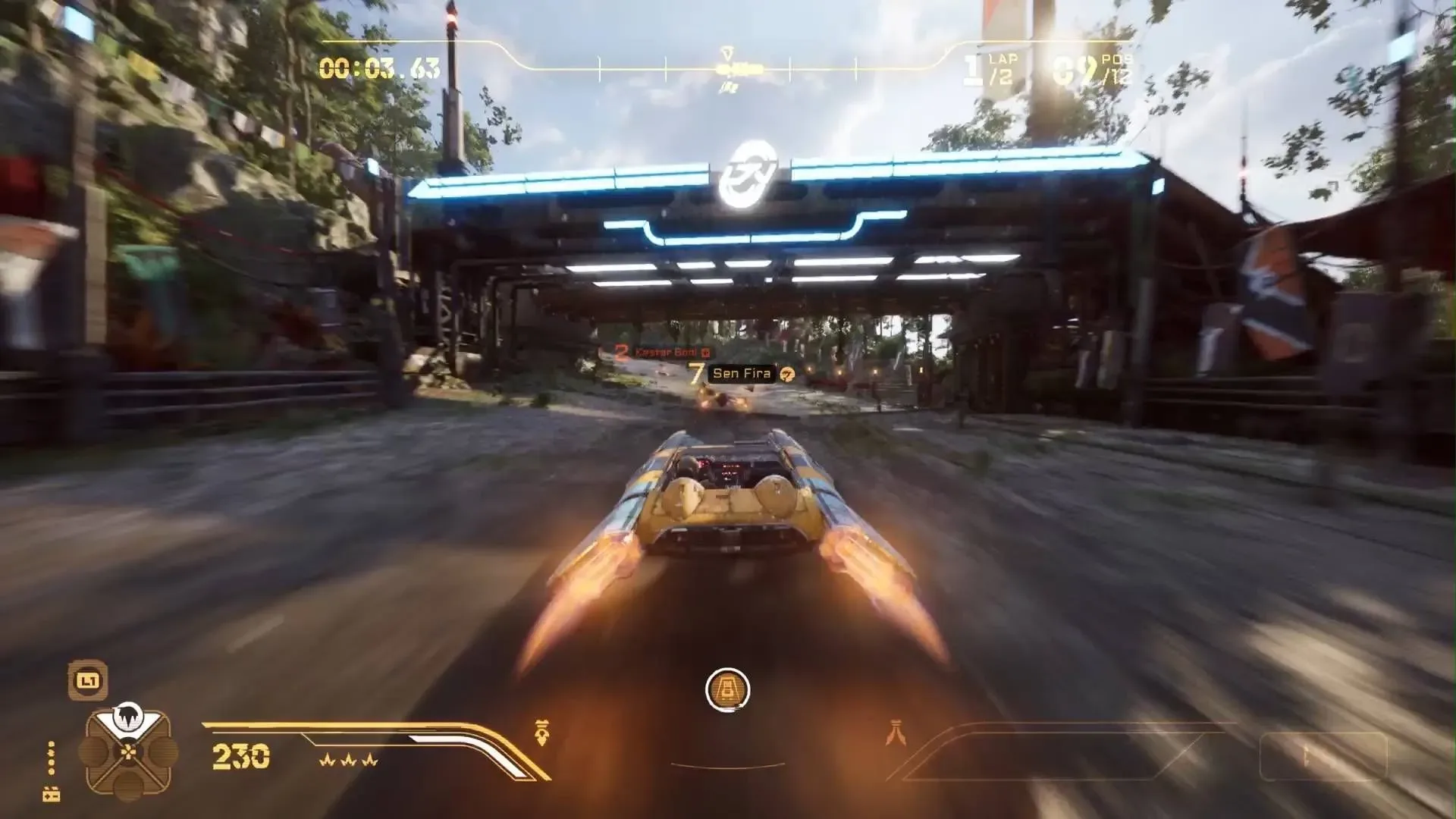
That philosophy appears to run through the racer’s basic structure. Races are described as extremely fast, with hostile competitors attempting to force rivals off course. Small mistakes in a turn can send a vehicle into a corner and cause it to explode, while a finite crash allowance means repeated errors can end a run in a forfeit. The intended payoff is not necessarily a podium sweep. Webster’s example is a fifth-place finish that feels genuinely earned.
A racer built around pressure, not automatic celebration
Webster says Galactic Racer asks substantially more of players than the Burnout games made by many members of the team earlier in their careers. His reasoning is that modern players can handle a greater cognitive load—the amount of information, decision-making and attention a game expects someone to process at one time.
In a racing game, that load can come from multiple directions at once: monitoring the course, committing to turns at speed, reacting to rivals, avoiding collisions and managing the consequences of limited crashes. Galactic Racer’s described systems suggest that these demands are meant to overlap rather than arrive one at a time. A player is not simply trying to drive quickly; they are doing so while other racers can physically disrupt their line and while a single moment of hesitation can carry a steep cost.
That is a meaningful contrast with an experience built primarily around forward momentum and frequent positive reinforcement. Webster reflects on the older approach in terms of repeated “dopamine hits”: reward after reward, including a succession of cars. The point is not that rewards themselves are unwelcome. It is that rewards with no variation can become background noise. If every moment says “well done” at the same volume, the player may stop hearing it.
Galactic Racer’s answer is to introduce friction. Failure has teeth, racing positions matter even outside first place, and progress may require persistence. The studio is effectively betting that stakes will make the successes more memorable.
What a finite crash limit changes
A finite crash count is more than a visual punishment for hitting a wall. It establishes a resource that the player must preserve. With unlimited retries inside a race, a collision can be a brief interruption. With a limit, each crash also changes the remaining margin for error.
That structure can make a race progressively tenser. An early mistake does not only cost time; it can alter how cautiously a player approaches later corners, how much they risk in traffic and whether they attempt a more aggressive recovery. Since the game can force a forfeit once the allowable crashes are spent, completing an event becomes a separate achievement from merely posting the fastest possible run.
Related coverage includes Star Wars: Galactic Racer's Former Burnout Developers Want Every Finish to Feel Earned.
The available details also indicate that Galactic Racer may demand patience from the outset. Reaching its second act could take some players a significant amount of time. That does not establish an exact progression length or difficulty curve, but it does make the game’s priorities clear: advancement is not being framed as a guaranteed march through a sequence of easily cleared races.
For players, the practical implication is simple. A fifth-place result may represent a strong performance if the alternative is overdriving into a forfeit. The game’s design appears intended to expand what counts as success, making survival, consistency and measured improvement part of the reward loop alongside outright victory.
“Arcade” does not have to mean shallow
Galactic Racer’s approach challenges a common shorthand around arcade racing. “Arcade” often evokes immediate controls, speed and spectacle, but none of those qualities inherently prevent a game from asking for concentration or mastery. Webster’s position is that arcade design is not the absence of depth.
That distinction is useful because accessibility and simplicity are not identical. An arcade racer can communicate its action quickly while still creating difficult choices through speed, track knowledge, opponent behavior and consequences for mistakes. The supplied description of Galactic Racer points toward that latter model: its premise may be easy to understand—race fast in Star Wars vehicles—but succeeding is meant to require more than holding the accelerator and waiting for prizes.
The former Burnout developers are therefore not rejecting their past outright. Instead, Webster’s comments identify a different target for this project. Burnout’s reward-heavy cadence is presented as a reference point for why the new game should pursue stronger contrast and a more demanding sense of achievement. The team wants players to value the result because it was contested.
Why quieter Star Wars segments matter
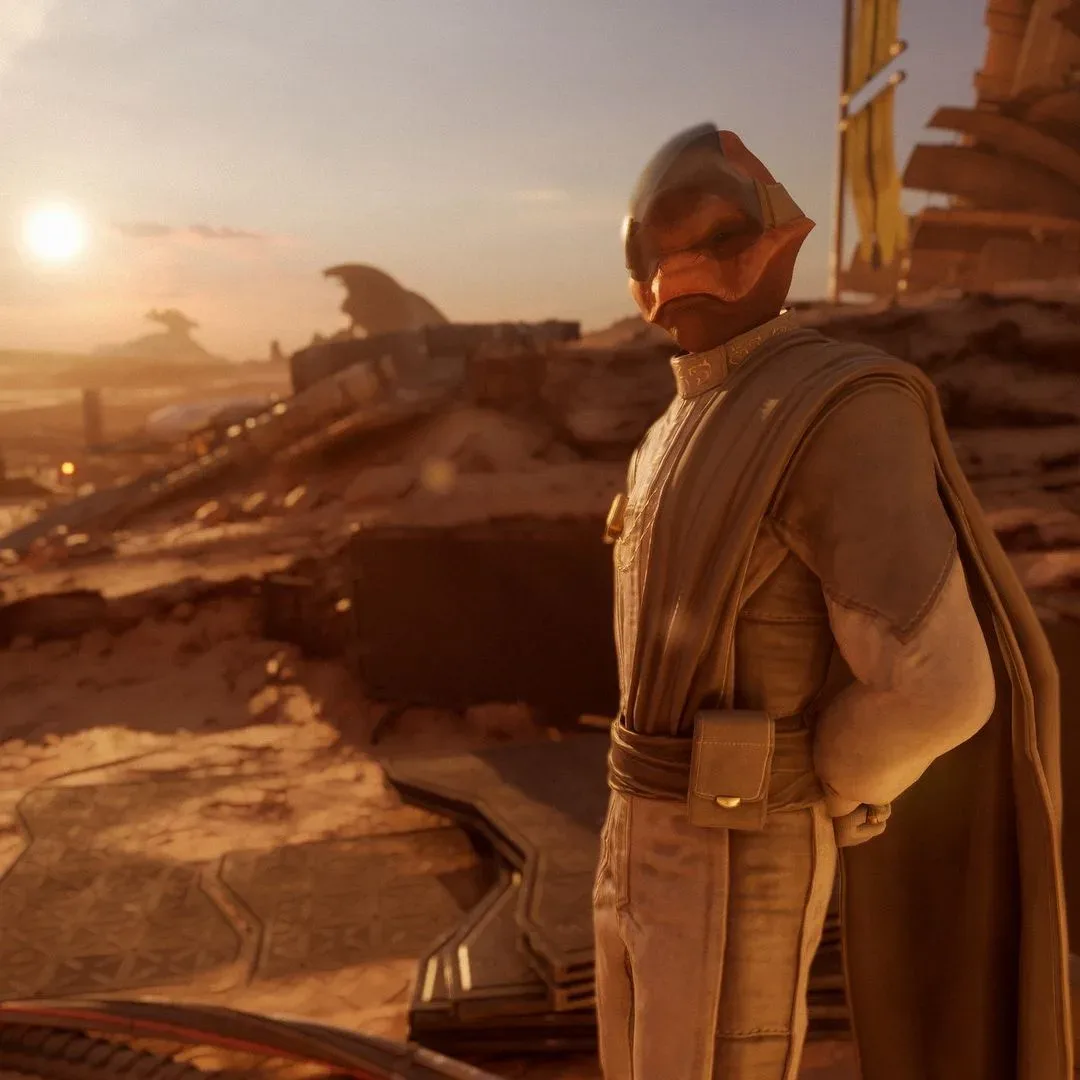
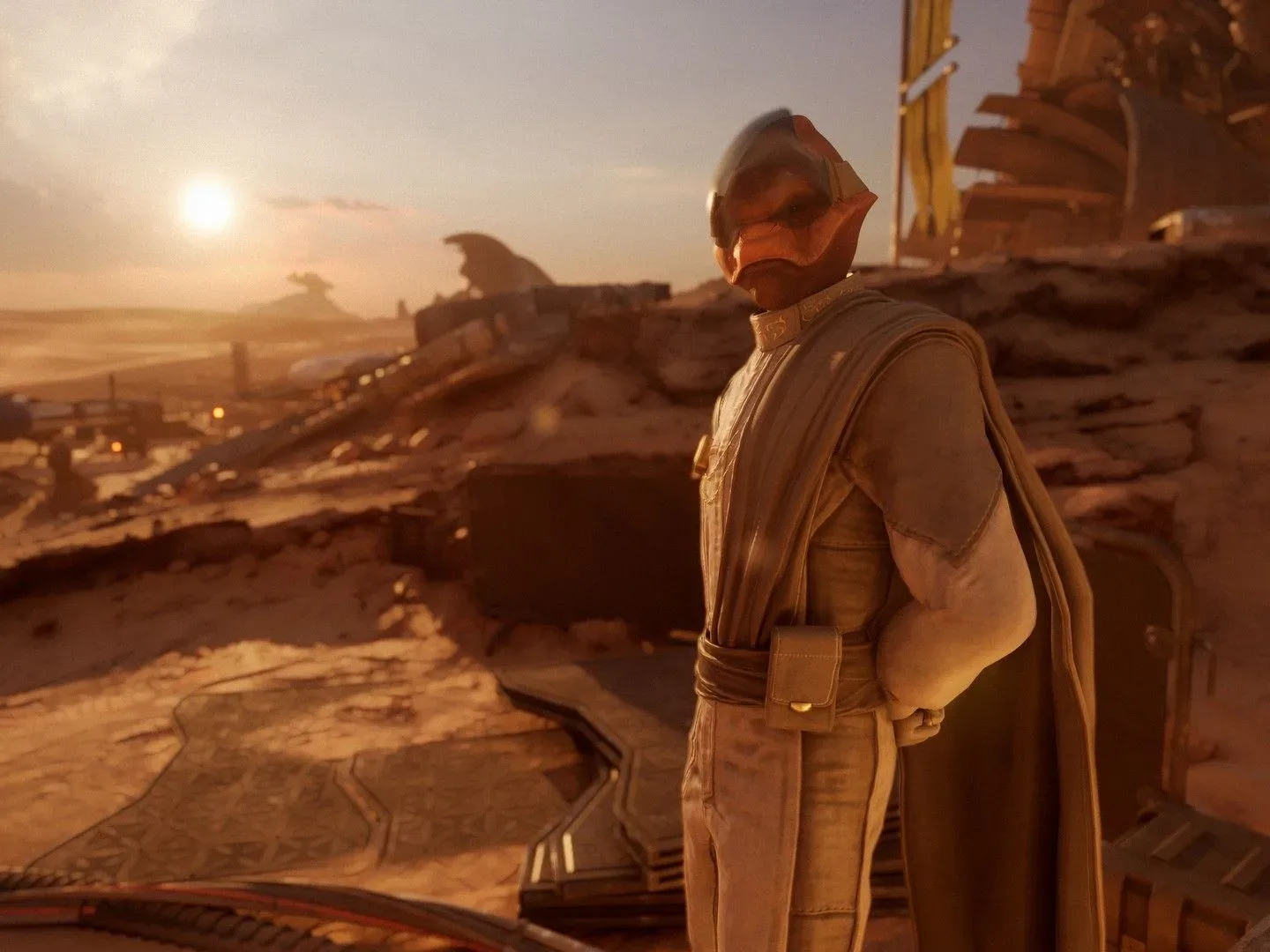
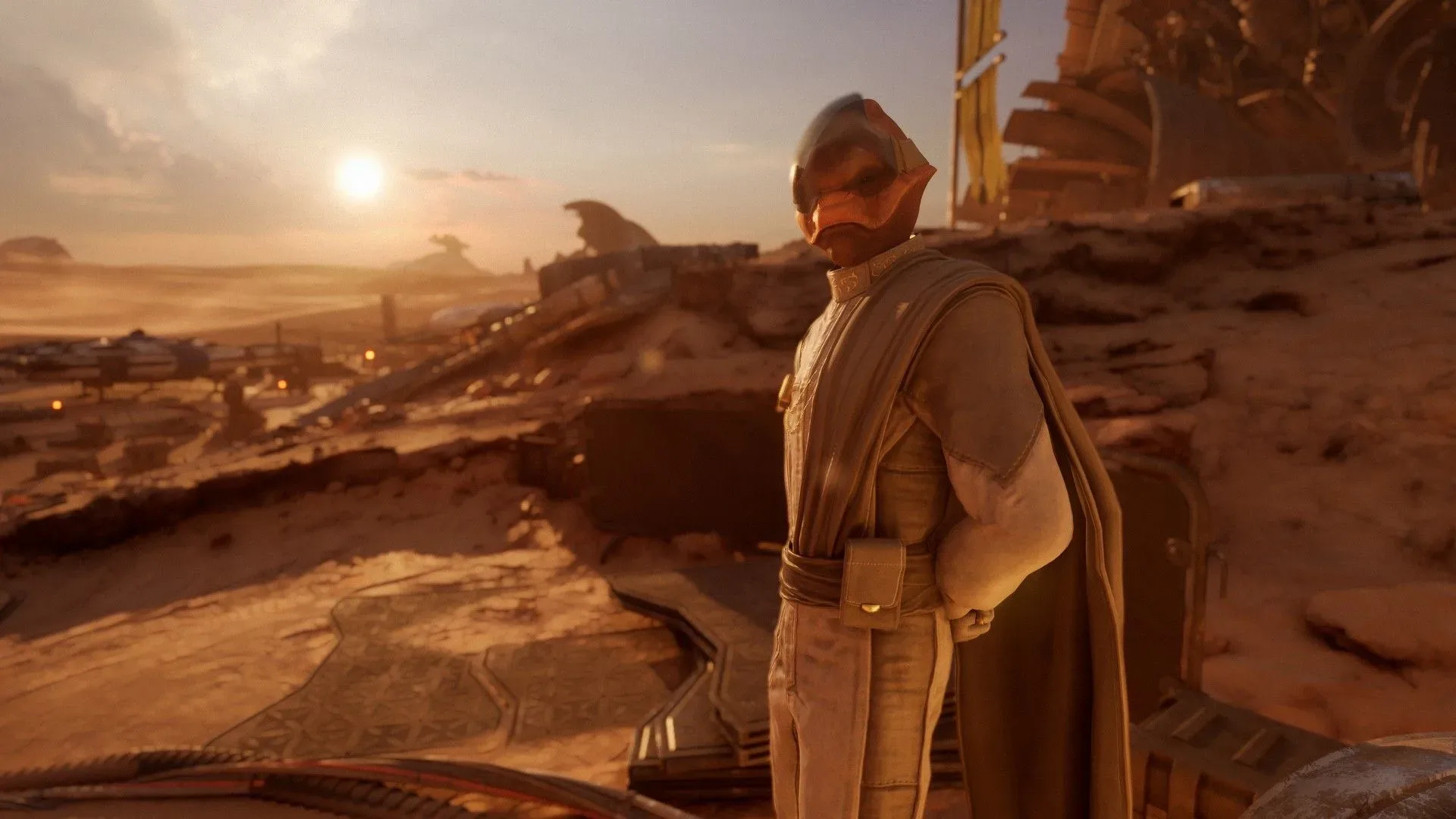
Not every part of Galactic Racer is intended to operate at maximum intensity. Webster describes a need for “light and shade,” using the phrase to explain the contrast between the high-pressure races and lower-intensity sequences in which players control Shade after reaching a new planet.
Here, light and shade means variation in emotional and mechanical intensity. The “light” is not necessarily easy, and the “shade” is not necessarily dark; the expression refers to contrast. In this case, the team sees value in alternating frenetic racing with more immersive Star Wars moments.
That pacing has a practical design purpose. High-speed competition becomes more exhausting—and potentially less distinctive—if it never releases the player’s attention. Lower-intensity planet segments can give the player room to absorb the setting before the next demanding event. Conversely, returning to a race after a calmer stretch can make the acceleration, collision threat and aggressive opposition feel sharper.
It also suggests that Galactic Racer is seeking a broader Star Wars atmosphere around its racing rather than treating every stop as a menu between events. Only the existence of Shade-focused segments on arriving at a planet has been specified, so their mechanics and scale remain unclear. Still, Webster identifies them as important specifically because they provide immersion and contrast.
An earned finish is the central promise
The clearest takeaway from Webster’s comments is that Galactic Racer wants to reshape the emotional hierarchy of racing results. First place remains an obvious goal, but it is not the only result the game wants players to respect. A hard-earned fifth can be satisfying when the course, competitors and crash limit have made simply staying competitive a challenge.
That is a more demanding proposition than a reward-first design, and it will naturally appeal most to players who enjoy learning under pressure. It may also require players to recalibrate their expectations. A result that looks ordinary on a leaderboard can still mark progress if it reflects cleaner turns, better survival or a successful adjustment to aggressive rivals.
There is a useful wider design question underneath it all: how should a game make improvement feel visible without turning every small action into a prize? Galactic Racer’s stated answer is to let difficult play create its own reward. Stakes make placement meaningful; variation keeps the intensity from becoming numb; and the Star Wars downtime gives the competition room to breathe.
That emphasis on careful pacing also appears in other genres, where designers weigh pressure against quieter spaces for planning or atmosphere. For another perspective on how a game’s core systems can turn familiar action into a more deliberate expedition, see this Deep Dish Dungeon design feature.
For Galactic Racer, the test will be whether the difficult moments feel demanding in a motivating way rather than merely punishing. Fuse Games’ intention, however, is unambiguous: constant rewards are not the destination. The studio wants a finish line crossed after a fight to carry more weight than another automatic unlock.