Star Wars: Galactic Racer is built around a demanding idea: a racing game can ask players to process more inputs, more decisions and more risk than the genre traditionally has—without slowing down to explain itself in the middle of a 700 km/h sprint.
Fuse Games CEO Matt Webster has described the new roguelite racer as substantially more complex than the studio’s earlier racers. The argument is not simply that Galactic Racer is fast. Racing games have always valued speed. The distinction is that players are expected to manage several systems at once while avoiding the kind of contact that can instantly destroy their vehicle.
That is a tall order in a game where even brushing a wall can blow up a speeder. In the campaign, players receive only three such destructions before elimination forces a run to restart. The result is a design where driving cleanly is not merely the ideal racing line; it is a survival requirement.
More than steering, braking and boosting
Webster’s central point is that modern players can deal with a greater cognitive load. In game-design terms, cognitive load is the amount of information, timing and decision-making a player must keep track of at any one moment. It can include controller inputs, track hazards, opponents, available abilities, resource management and the consequences of a mistake.
Galactic Racer appears to put many of those demands into the same instant. Webster pointed to multiple boost mechanics, simultaneous face-button presses, ability switching, and strategic and tactical thinking while travelling at exceptional speeds.
Those elements matter because they change what mastery means. A more conventional arcade racer may ask a player to read the track, preserve momentum and choose when to boost. Galactic Racer’s structure adds layers on top of that baseline: which boost option to use, whether an ability is worth activating now, what threats are coming next, and whether taking a risky line is sensible when a small collision can end the vehicle.
None of that guarantees that more buttons automatically make a racer better. Extra systems can be exciting when they give players meaningful choices, but they can also become noise if they are not legible at speed. The notable thing about Webster’s description is the confidence behind it: the team is deliberately asking players to perform several actions and make several judgments in parallel, rather than treating high-speed racing as a reason to simplify the controls.
“We are asking way more out of players in this game than I think we’ve ever done in a racing game,” Webster said, citing boosts, multiple simultaneous inputs, abilities and tactical decisions.
Related coverage includes Star Wars: Galactic Racer Demands More From Players, Says Fuse Games CEO.
The three-destruction rule gives every mistake weight
The campaign’s three-destruction limit is crucial context for that ambition. A crash in many racing games costs time, position or perhaps a rewind opportunity. Here, destruction is tied to the life of the run itself. Spend all three chances and the run ends, requiring a restart.
That is where Galactic Racer’s roguelite label becomes useful shorthand. The term is commonly used for games organized around repeatable runs where failure sends the player back to begin again. Galactic Racer’s campaign uses that run-based pressure directly: an unsuccessful attempt is not only a disappointing finish but a reset condition.
For players, the practical implication is that consistency should be as important as raw pace. A reckless route might create a short-term advantage, but the punishment for clipping a wall is unusually severe. Conversely, a slower but safer approach could preserve a precious destruction chance and keep a run alive. That tension can make each choice feel important, particularly when the player is also deciding how to deploy boosts and abilities.
It also explains why the game’s reported complexity is not abstract. A complicated control scheme can be learned gradually. A complicated control scheme attached to very high speed and a limited failure budget creates pressure immediately. Players need to recognize what the game wants from them, execute it under stress and recover before a small error becomes a restart.
A Star Wars racer with arcade-racing roots
Galactic Racer arrives after a long absence for Star Wars racing games. It is described as the series’ return to the discipline following a 24-year gap since the PlayStation 2’s Racer Revenge.
The studio’s makeup makes the project especially interesting. Fuse Games includes multiple members who came from Criterion Games, and the new game is framed as a tribute both to Star Wars: Episode 1 Racer and to Burnout 3 and Burnout Revenge. Those reference points suggest two distinct but compatible priorities: Star Wars machinery moving at impossible speed, and arcade-racing intensity where vehicle handling and collisions are part of the spectacle.
Galactic Racer’s wall-contact danger makes that lineage feel particularly relevant. The game is not presented as a relaxed lap around familiar science-fiction scenery. It uses the fantasy of extremely fast speeders to create a volatile environment where precise control has immediate stakes.
At the same time, the game is not positioned as a direct recreation of any one predecessor. The emphasis on boosts, abilities and run-based campaign elimination points toward a structure designed to combine racing execution with moment-to-moment systems management. Its nostalgic reference points are therefore a foundation, not a ceiling.
Why “modern players” is an interesting claim
Webster’s observation about modern players is a statement about learned habits as much as reaction time. Players now routinely encounter games that layer movement, cooldowns, resources, builds, objectives and rapid input combinations into the same encounter. Galactic Racer applies a similar expectation to a racing format.
That does not mean every player will want the same level of intensity, or that accessibility is unimportant. It means Fuse Games sees an audience prepared to learn a dense set of interactions if those interactions create worthwhile control and expression. The studio is betting that players will appreciate having more agency than simply holding acceleration and waiting for an ideal boost window.
There is a related question for game design: how much information can be offered without distracting from the track? Racing is unusually sensitive to visual attention. Every glance away from the road can be costly, and in Galactic Racer that cost may be a destroyed speeder. If ability choices, boost states and tactical opportunities are to work, players need a way to understand them while still reading corners and obstacles at extreme speed.
The stated design therefore depends on clarity as much as depth. More systems only become satisfying if players can build instincts around them—recognizing an option, making a decision and acting on it with little conscious delay. The best outcome is not that players constantly feel overloaded, but that what initially seems demanding becomes part of the rhythm of driving.
That balance is relevant beyond racing. As games put more pressure on repeatable runs and limited-failure formats, designers have to make difficulty feel informative rather than arbitrary. A run ending after three destructions will be easier to accept when players can identify the mistake, understand the available tools and see how a different decision could have changed the outcome. Similar concerns around persistent game demands and player time are also visible in ongoing discussion of weekly tasks in competitive games.
A demanding tone under a familiar banner
Star Wars is widely recognizable and often treated as approachable, but Galactic Racer is not described as a softened or consequence-free adaptation. Its campaign asks players to live with a strict destruction limit, while its races demand management of speed, multiple boosts, abilities and rapid controller inputs.
That contrast may be part of its appeal. The Star Wars setting supplies recognizable racing fantasy, while Fuse Games’ racing pedigree supports a harsher arcade sensibility. The combination gives the project room to be accessible in premise—pilot a speeder and go very fast—while remaining demanding in execution.
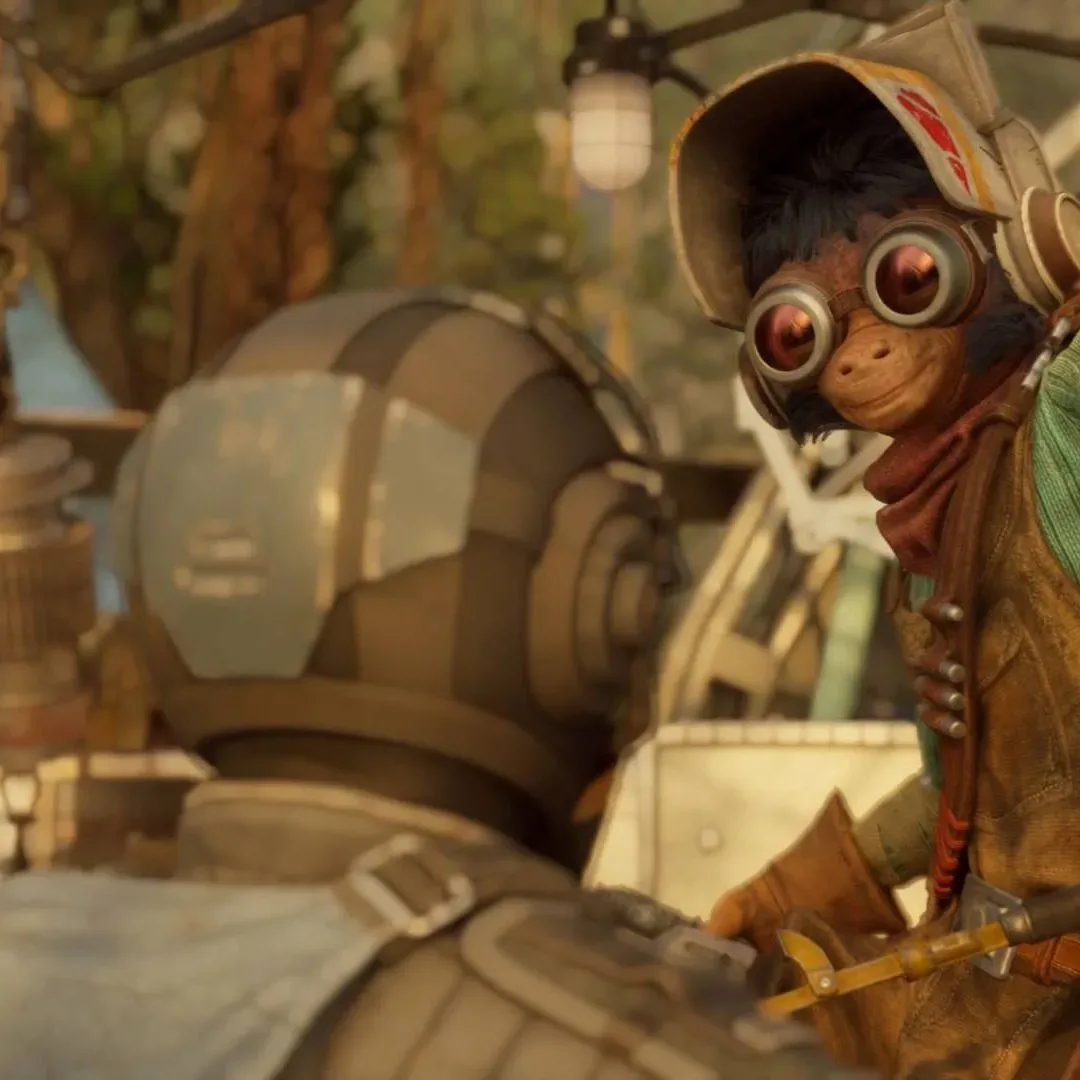
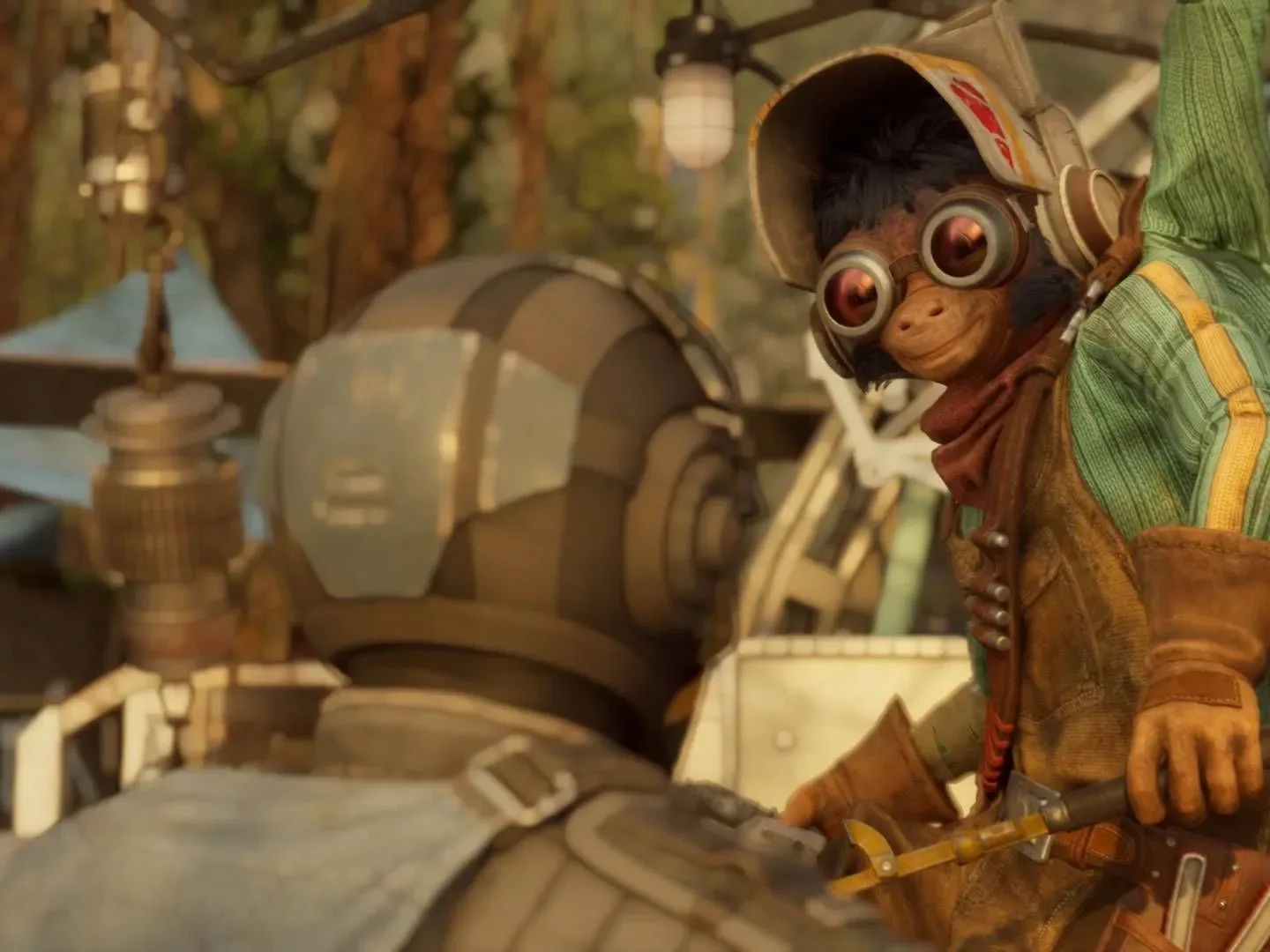
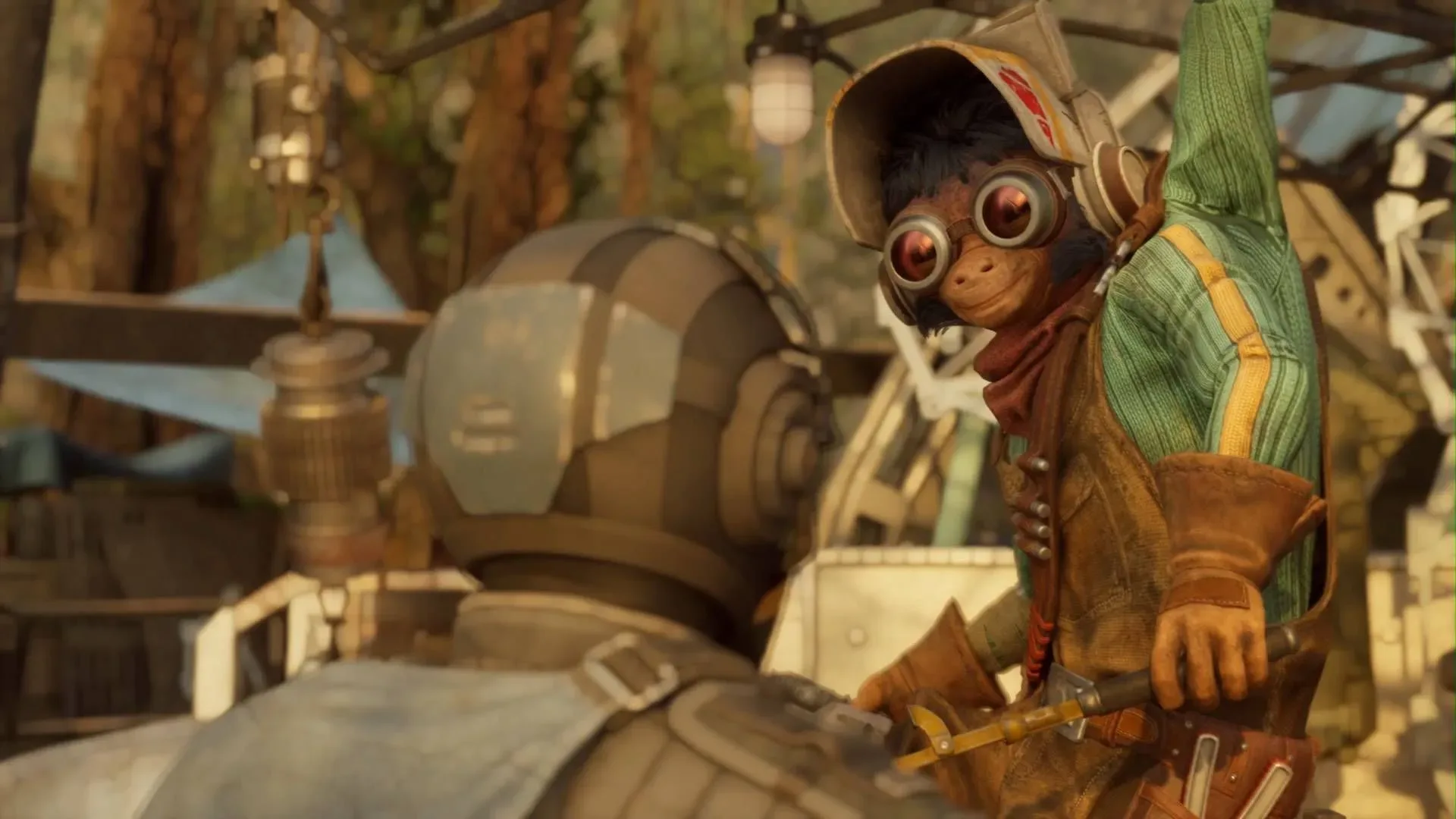
The game also includes Ben Quadinaros, described in the material as an aggravating small character who may destroy the player’s vehicle for amusement. That detail fits the broader tone: Galactic Racer seems willing to make failure part of the joke as well as the challenge.
Reports characterize the game as one of the highest-rated Star Wars titles, though ratings are only one measure of whether its intensity will suit an individual player. The more useful expectation is clear from Webster’s comments: this is a racer for people ready to think, react and make decisions continuously, with very little margin for error.
For anyone coming in expecting only a straightforward nostalgia lap, that may be the most important warning. Galactic Racer’s speed is not just visual spectacle. It is the pressure cooker in which all of its overlapping mechanics have to work.