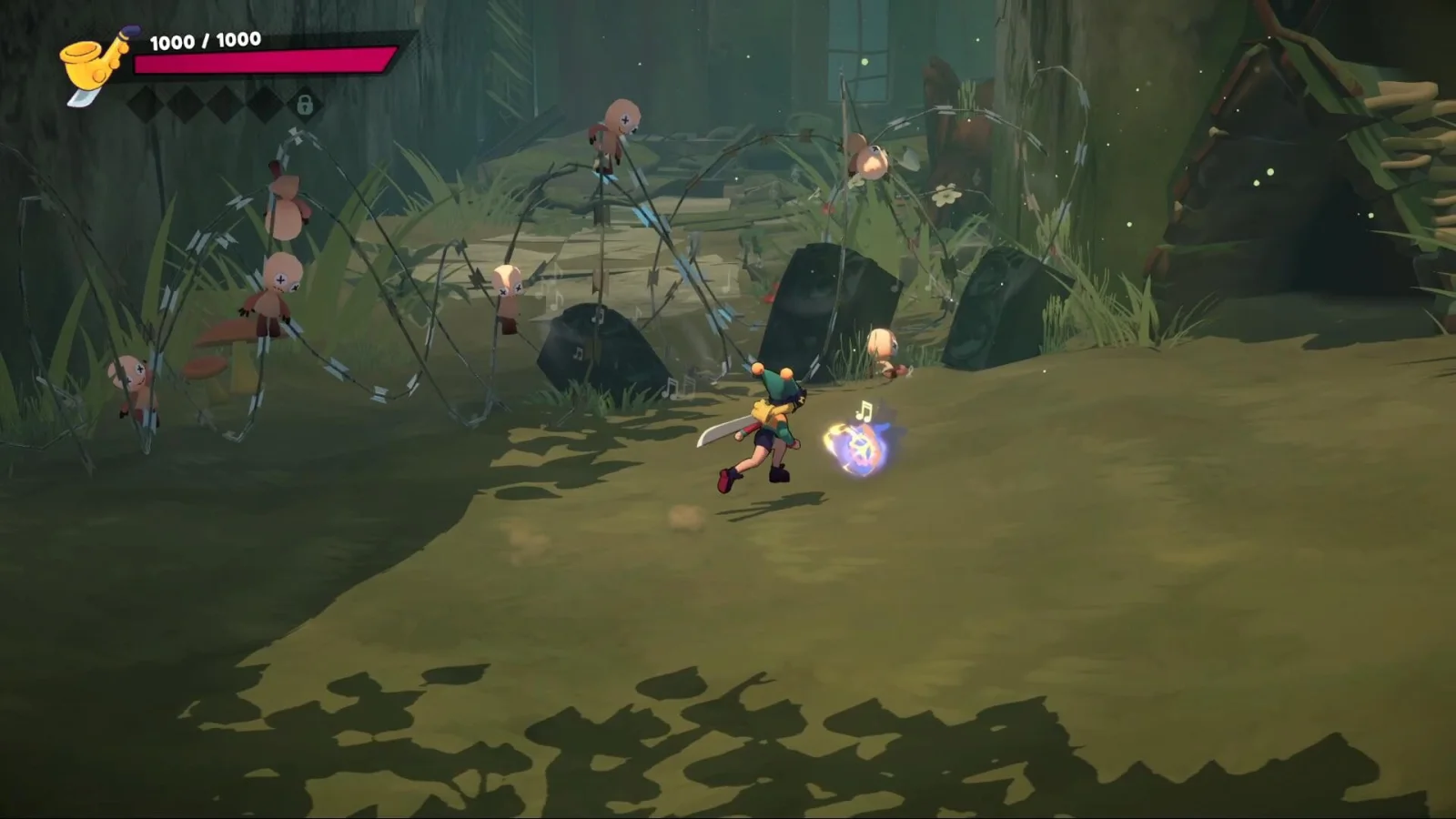
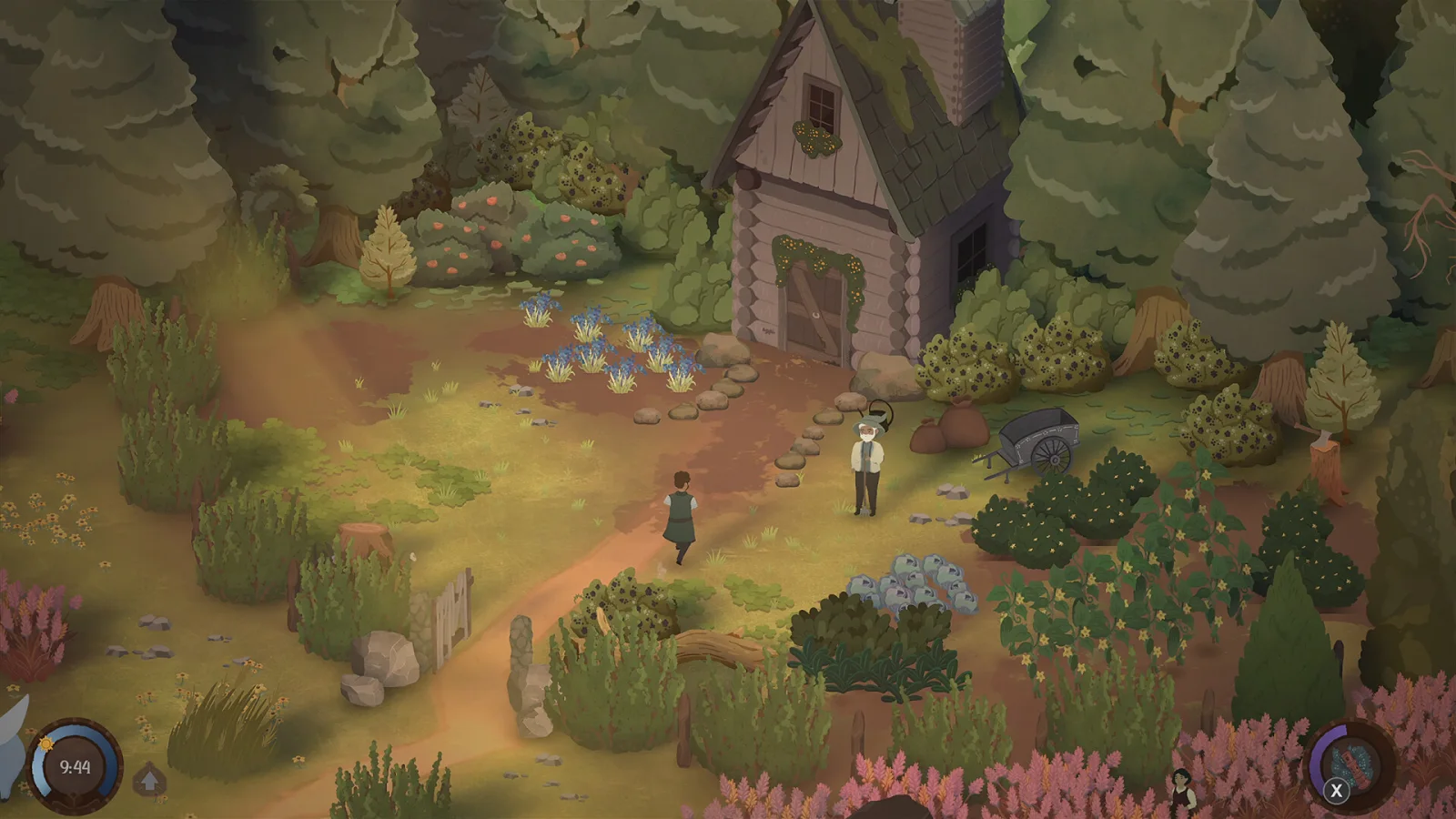
Deep Dish Dungeon is an upcoming Action and Strategy game from Behold Studios, published by Raw Fury. The Steam listing currently gives it an October 13, 2026 release date for Windows and macOS. Its announced premise puts a particular emphasis on the connective tissue around dungeon exploration: players are meant to venture into corridors, rooms, and passageways; gather useful materials; return to a campsite; then make tools and meals before heading out again. The game is also planned to support solo play or co-op with up to two friends.
That outline places Deep Dish Dungeon in familiar dungeon-crawling territory, but its stated priorities are worth separating from a generic promise of combat and loot. The public description repeatedly returns to curiosity, resourcefulness, food, and planning. It frames the camp as a place to prepare for the next journey rather than merely a decorative hub, and it describes meals as part of progression, with recipes that unlock over time and affect player stats. If those elements are closely connected in the final game, the dungeon may be less about rushing from encounter to encounter and more about deciding what a group can afford to investigate, carry, make, and consume.
An announced loop built around returning to camp
The clearest announced structure is an expedition loop. Players forage and scavenge in the dungeon, bring resources back to camp, craft tools, cook meals, and plan another trip. The campsite is also said to be improvable. These are concrete design goals, but the listing does not yet specify the shape of an individual journey, the limits on inventory or supplies, the number of camp upgrades, or the circumstances that send players back to the fire. Those unanswered details will determine whether the loop feels like a set of mutually reinforcing decisions or simply a sequence of separate activity stations.
There is a useful design opportunity in treating camp preparation as consequential rather than automatic. A tool can matter when it expands what players can safely investigate, makes a particular obstacle manageable, or changes the value of resources already collected. Cooking can matter when choosing a meal means giving up another possible use for ingredients, or when a recipe’s stat effect answers a known challenge. Camp improvement can matter when it changes the kinds of expeditions worth attempting. None of those relationships is confirmed by the announced materials, but they are the standard Deep Dish Dungeon’s stated focus will need to meet if its preparation layer is to have real weight.
The phrase “food is progress” is the most distinctive announced idea. The listing says that recipes unlock over time and have different effects on stats. That gives cooking a potentially broader role than a simple recovery system. Rather than presenting meals only as a pause between dangers, the design could ask players to consider which effects fit the next trip and whether ingredients are better spent now or saved for a later recipe. A system built this way can make a resource-gathering loop legible: exploration produces ingredients, ingredients make meals, meals alter preparedness, and that preparedness changes what the next exploration attempt can accomplish.
However, the public description does not identify the relevant stats, recipe effects, ingredient categories, or unlock conditions. It also does not say whether cooking choices are permanent, temporary, shared across a co-op group, or tied to particular types of challenge. These are not minor implementation details. They will decide whether recipes encourage adaptable planning or reduce to a settled best option. The announced concept is promising precisely because it positions food as a decision-making layer; its eventual value will depend on how often players have a meaningful reason to choose one meal over another.
Curiosity needs a practical reward
Deep Dish Dungeon describes an atmospheric dungeon of corridors, rooms, and passageways, and asks players to investigate shadows, solve puzzles, and open doors. It also says that treasures and secrets await patient, persistent exploration. The intended tone is clear: this is not being presented solely as a direct route through a succession of enemy spaces. The game wants attention, experimentation, and observation to be part of the expedition.
For that approach to work, curiosity needs rewards that are understandable without becoming routine. A hidden passage can offer resources, a tool-related discovery, a puzzle, treasure, a safer route, or information that changes a later choice. Yet mystery can lose force if every suspicious detail is resolved in the same way. Conversely, an exploratory dungeon can become frustrating if players cannot distinguish a solvable clue from indistinct scenery or a route that is simply unavailable. Deep Dish Dungeon’s public description establishes an ambition toward secrets and puzzles, while leaving open how the game will communicate its clues and how it will balance discovery against forward momentum.
The statement that players should “never take a hint for granted” suggests a world meant to reward close reading of its spaces. Conditional on the final implementation, that could make environmental observation a valuable skill alongside combat. It could also support the camp loop: a group that notices an obstruction on one outing may return with a newly crafted tool or a different preparation plan. That is an appealing possible rhythm because it gives a failed or incomplete route a purpose beyond simply retrying it. Still, the available description does not confirm that puzzles, doors, tools, resources, and camp upgrades interact in this exact manner. It is best understood as a design question raised by the premise, not an established feature relationship.
Combat is announced, but its role remains undefined
The Steam description says players will learn to defeat enemies with diverse behaviors. That confirms enemies and combat are part of the announced dungeon experience, but it does not establish a combat model, character abilities, weapon types, encounter scale, death rules, or difficulty structure. There is no basis yet to claim that Deep Dish Dungeon is action-heavy, tactical in a particular mechanical sense, or built around any specific style of fighting.
What can be said is that diverse enemy behavior, if expressed clearly, could complement the game’s broader emphasis on caution and preparation. Distinct behaviors may ask players to observe before acting, bring appropriate resources, or coordinate with teammates. They could make a meal’s stat effect more than abstract arithmetic if preparations affect a recognizable expedition problem. On the other hand, that connection remains conditional. The final game will need to show whether combat, gathering, puzzles, and cooking speak to one another or merely coexist under the same dungeon roof.
This is an important distinction for an announced Action and Strategy title. “Strategy” can mean route planning, resource allocation, cooperation, combat positioning, long-term upgrade decisions, or several of these at once. Deep Dish Dungeon’s public materials point most strongly toward preparation and exploration, not toward a defined tactical ruleset. Until more detail is available, the most accurate expectation is a dungeon crawler that intends for resourcefulness to matter, rather than a precise claim about how its strategic layer operates.
Co-op’s stated goal is care rather than competition
Deep Dish Dungeon is planned for solo play or groups of up to three players total. Its description characterizes co-op as connecting, sharing knowledge, and taking care of each other rather than competing. That is a useful articulation of social intent. Many games can technically support several players while leaving little reason to communicate beyond moving in the same direction. Here, the announced focus on gathering, planning, meals, puzzles, and enemy behaviors gives the developers several possible ways to make mutual attention valuable.
A cooperative expedition could be strengthened if players need to share discoveries, discuss which resources to use, or coordinate around different threats. Puzzle-solving can naturally create moments for collective observation. Resource management can invite discussion about immediate needs versus the next outing. Preparing food at camp could become a group decision if ingredients and benefits are meaningfully connected to the party’s plans. Those are possibilities implied by the design vocabulary, not confirmed descriptions of the co-op rules.
There are equally important questions the listing does not answer. It does not say how resources are distributed in co-op, whether progress is shared, how players join a session, what happens when a party member is defeated, or whether solo and group play are tuned differently. It does not specify online functionality, local functionality, cross-platform play, communication tools, or controller support. Those omissions should not be treated as evidence that any of those features are absent. They simply remain unannounced in the provided material.
The stated care-oriented goal will be most persuasive if helping another player is connected to the game’s actual decisions instead of existing only as theme. A cooperative system becomes more interesting when knowledge is worth sharing, supplies have opportunity costs, and a teammate’s problem can reshape the party’s route or preparation. The appeal of Deep Dish Dungeon’s pitch lies in that potential for an expedition to feel jointly managed rather than merely jointly occupied.
Questions for the journey ahead
Deep Dish Dungeon’s public pitch has a coherent center: explore a dungeon, bring back what is useful, and convert what was found into better preparation. It pairs that loop with patient investigation, puzzles, enemy encounters, camp development, and co-op designed around mutual support. The combination could give the game a distinct identity if meals, tools, discoveries, and expeditions consistently influence one another.
The open questions are consequently specific. How does a journey end or transition back to camp? What makes one recipe preferable to another? How do tools change exploration? What is improved at the campsite, and how does that improvement alter future choices? What kinds of puzzle clues are available? How are different enemy behaviors communicated and answered? In co-op, what systems turn care and knowledge-sharing into gameplay rather than aspiration? These are the details that will show whether the announced loop can sustain curiosity over time.
For readers interested in another upcoming design built around expedition decisions and limited space, see this design preview of Medium Rare. Deep Dish Dungeon’s announced direction is different: its defining promise is not merely descending farther, but turning each return to camp into a chance to prepare more thoughtfully for what still waits below.
As it stands, the confirmed picture is an upcoming Windows and macOS dungeon crawler from Behold Studios and Raw Fury, scheduled for October 13, 2026, with solo play and planned co-op for up to two friends. The announced systems suggest a game that wants resource gathering and cooking to matter as much as the act of finding another door. Whether that intention becomes a satisfying web of exploration, preparation, and collaboration is a question for the finished release.