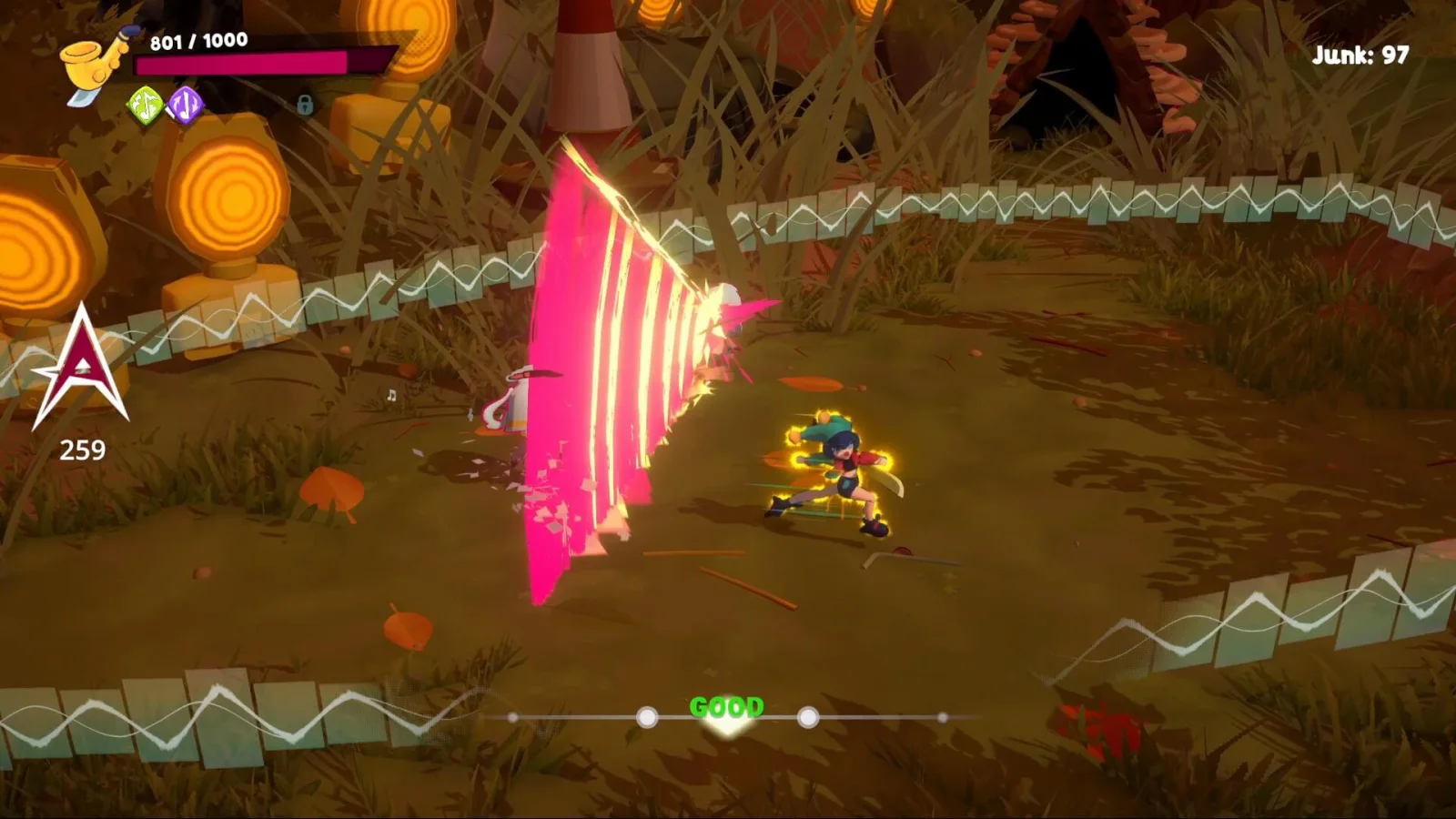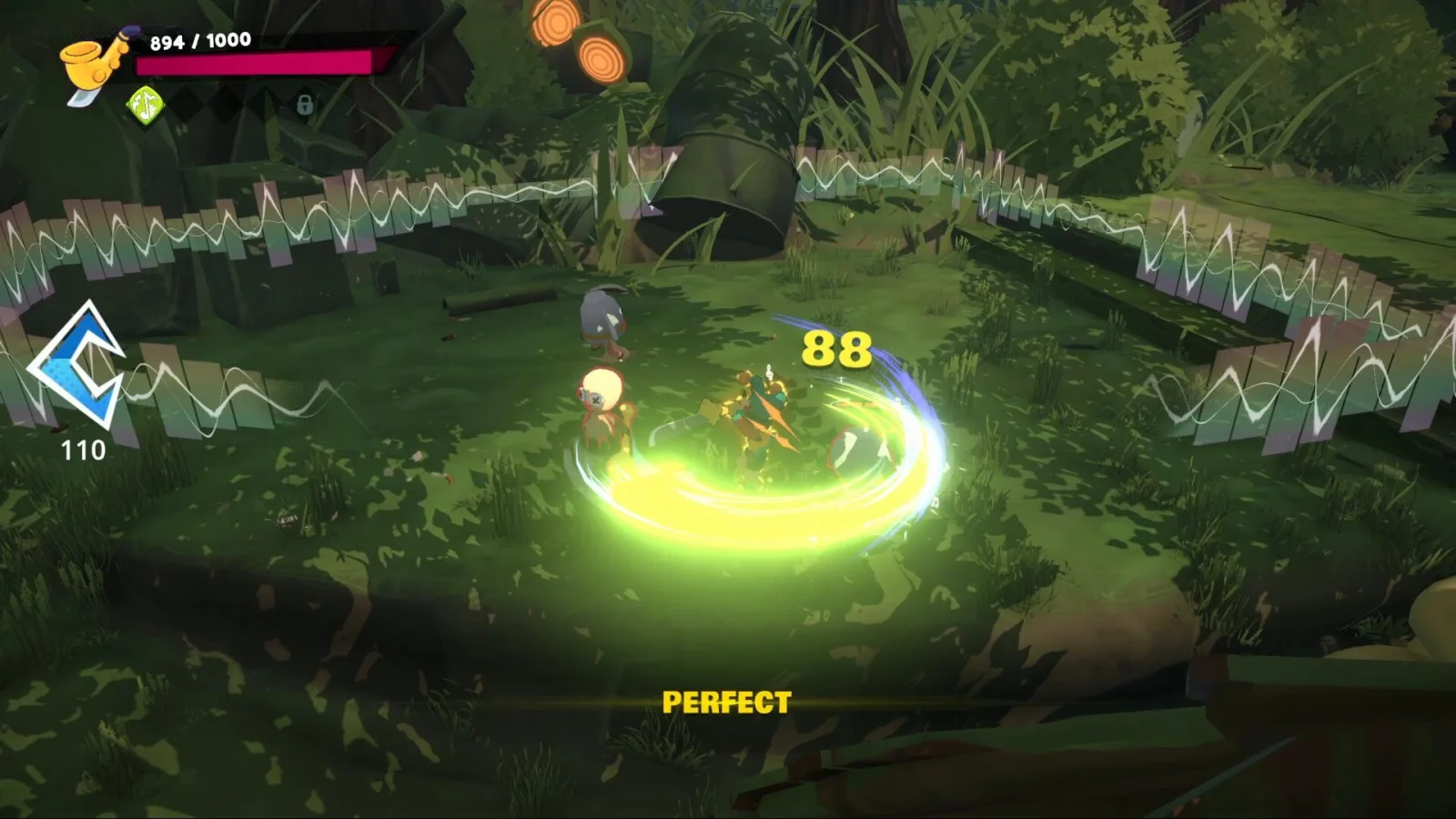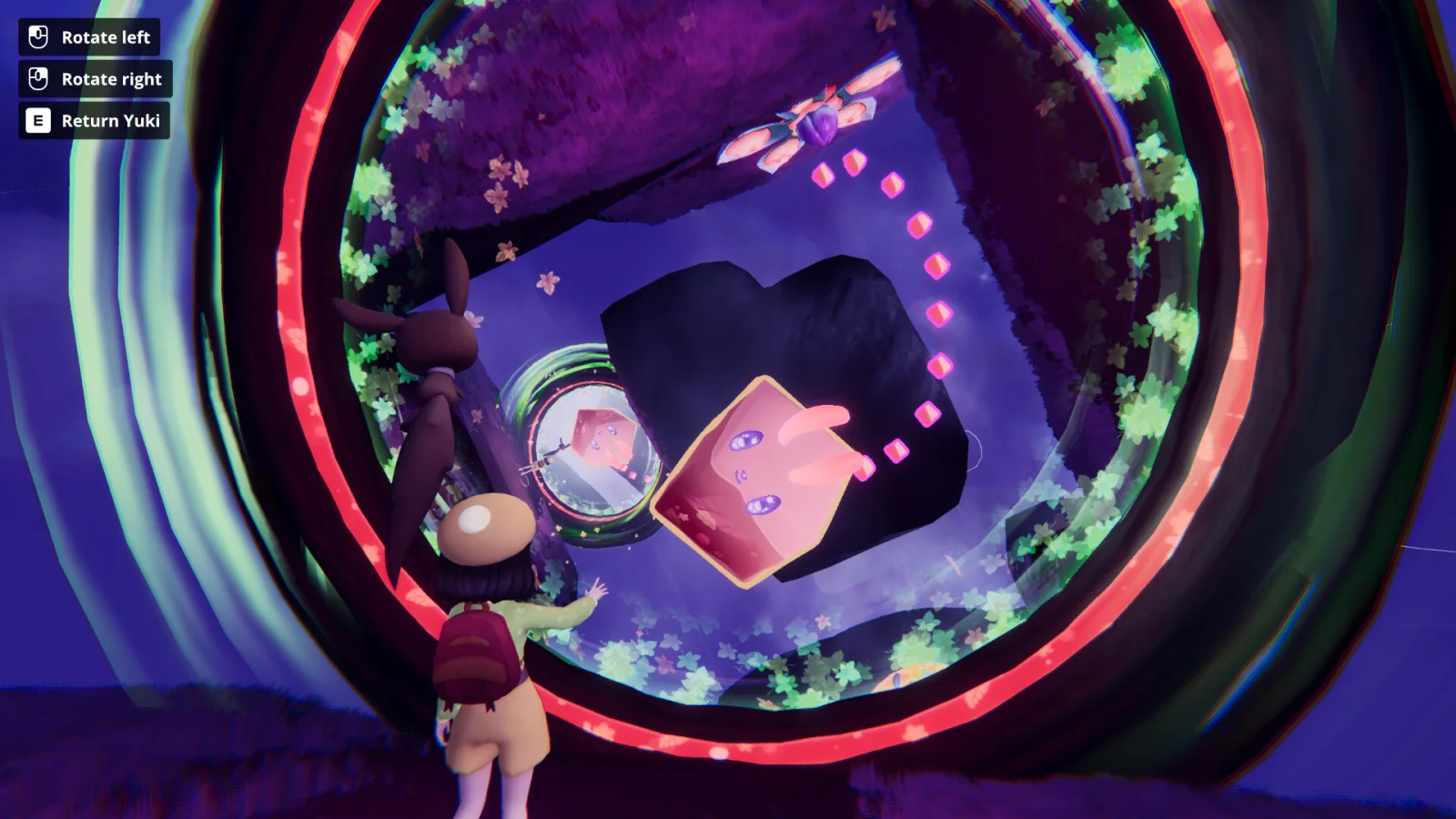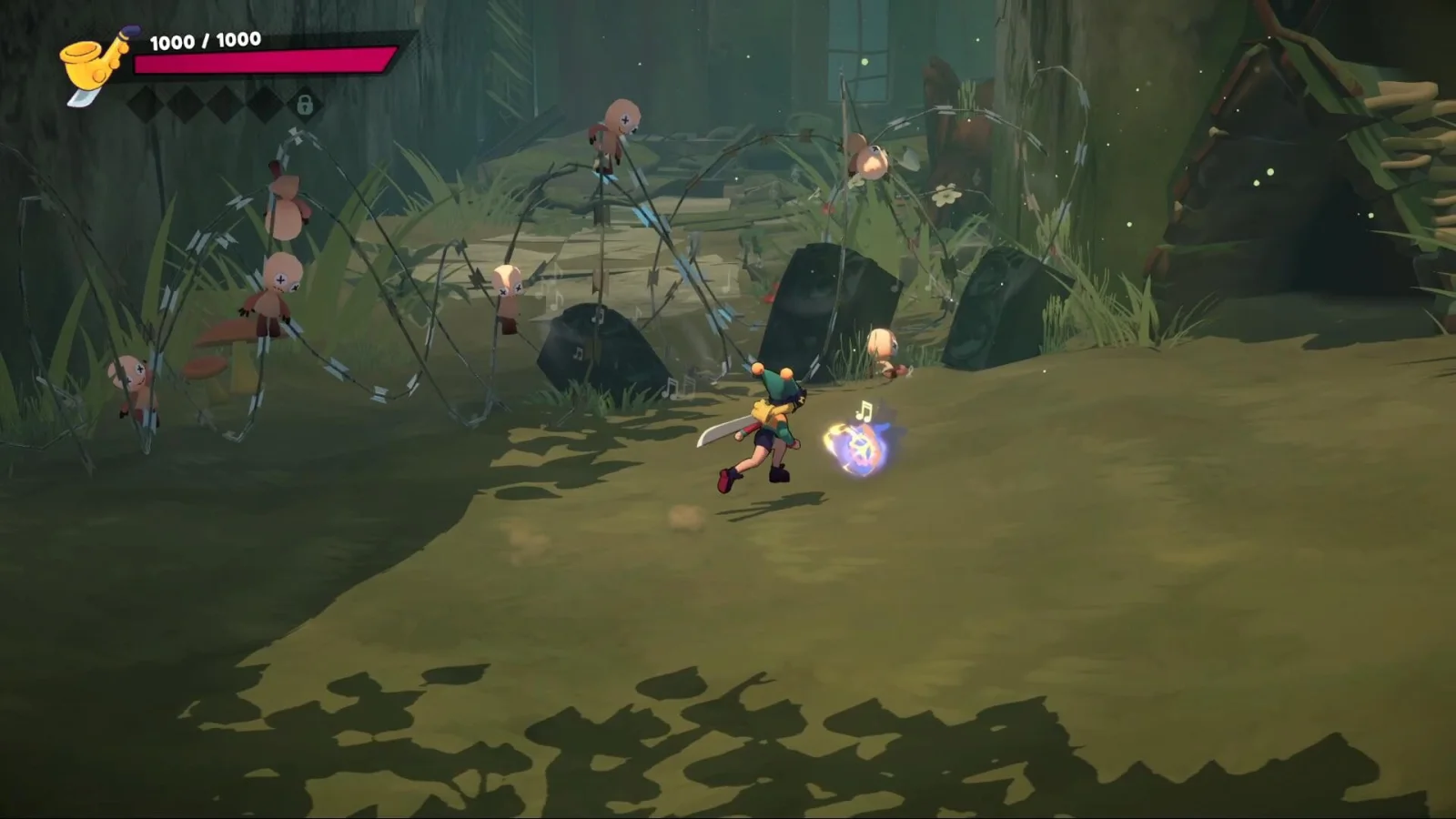
Alpha Nomos is an announced, unscored design feature, not a review. RibCage Games has announced the game for PC, with an October 12, 2026 release date listed. The available description presents an action-adventure in which Cello and her companions confront murderous puppets in a ruined world, pursue answers about a force called music, and seek the meaning of Alpha Nomos itself. It also makes a fairly specific mechanical promise: combat is intended to reward attacks timed to music, while musical upgrades alter both combat behavior and the resulting sound.
That is a compelling foundation because Alpha Nomos does not frame music as surface decoration alone. Its announced design places rhythm at the center of offense, treats effects as collectible power-ups, and says the world will react to what the player creates musically. Those are three connected ambitions: a timing language for moment-to-moment action, a build language for changing that action, and an environmental language for showing its consequences. The opportunity is not simply to put a beat behind fighting. It is to make a player understand the game’s world, combat, and identity through the same musical decisions.
None of that establishes how well the systems work in practice. There are no Joking Joystick hands-on notes to draw on, and an announcement cannot demonstrate input responsiveness, readability, encounter design, accessibility, upgrade balance, or the scale of environmental reaction. Still, the disclosed concepts make it possible to identify what Alpha Nomos needs to accomplish if it is to turn an attractive pitch into a cohesive action game.
Established: the combat pitch is about more than downbeats
According to the announced design, players will time attacks to the beat, earn rewards for striking in time, and craft combos with the music. The description is notably more detailed than a generic promise of rhythm action. It says players should not only hit downbeats, but also weave quick eighth notes and rests between strikes for stronger combinations. That suggests Alpha Nomos wants rhythmic variety to matter, rather than treating every correct input as interchangeable.
This distinction could be important. A beat-matching combat system can become repetitive when its ideal solution is always the same evenly spaced attack. By naming quick notes and rests, the design points toward phrasing: players may be asked to think about a sequence as a small musical statement rather than a string of isolated button presses. If the implementation provides clear ways to recognize those opportunities, then a simple fight could potentially support different rhythms without abandoning the need for precision.
The word could matters here. The announcement does not define how a combo is recognized, how strict timing is, whether different enemies favor different patterns, or what a rest requires from the player. A rest might be a deliberate pause, an absence of input in a specific window, or something else entirely. Likewise, “rewarded” does not specify whether accuracy changes damage, resources, defensive options, combo state, audiovisual feedback, or another outcome. Those details will determine whether rhythmic variation is a genuine tactical choice or an appealing label for a more conventional timing bonus.
There is also a design challenge in asking players to treat silence as meaningful. Fast notes are naturally legible as active inputs. A purposeful gap is harder to communicate because the player must know when restraint is correct and must trust that doing nothing is not merely lost momentum. Strong feedback could make that legible: not necessarily through any particular interface, but through an understandable relationship between the music, the character’s actions, and the game’s response. Without that clarity, the system may risk turning an expressive idea into timing rules that players cannot comfortably read.
Musical power-ups could connect build choices to sound
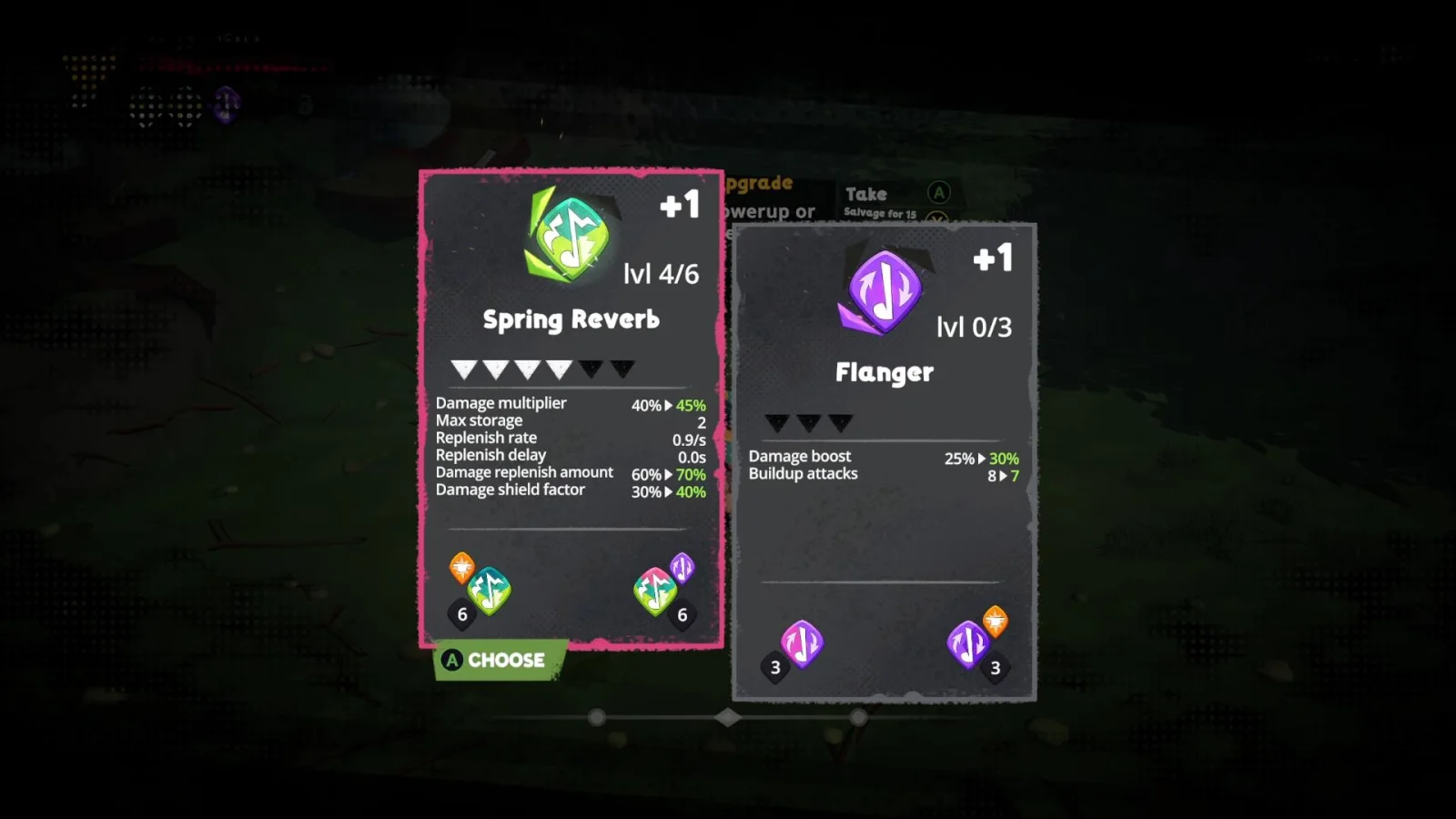
Alpha Nomos also announces power-ups inspired by real-world musical effects. These are intended to change how players fight and how they sound, with different combinations available from run to run. This is the game’s most distinctive stated structural idea. Rather than presenting audio as a fixed accompaniment to combat upgrades, it proposes that a player’s chosen tools can reshape the soundtrack or sonic character alongside their mechanical properties.
That proposal has considerable design potential. A power-up system is often strongest when its differences can be felt quickly. If a musical effect has a recognizable audible identity and a corresponding combat implication, then a new selection may communicate its role through more than text or numbers. Players could potentially learn their build by listening as well as by observing what occurs on screen. That would make the audio functional information, not simply a reward for selecting an upgrade.
It could also give combinations personality. Many action games ask players to assemble effects, but Alpha Nomos’s announced pitch suggests that assembly will create a changing musical result. The desirable outcome would be a meaningful conversation between function and expression: an upgrade should not merely make a track busier, nor should it alter combat in a way the player cannot connect to the sound. The game’s stated interest in “funky fresh tunes” implies a playful tonal aim, while the devastated setting and violent puppet enemies imply that the music may carry narrative atmosphere as well. Whether those tones coexist naturally is an implementation question, not an established result.
The phrase “each run” supports the idea that upgrade combinations are meant to vary across repeated attempts, but it does not explain the overall structure surrounding those runs. It does not establish run length, failure conditions, persistence, selection methods, or the number of available power-ups. It would be premature to assign Alpha Nomos to a more specific subgenre on that basis. What can be said is narrower: the announced design intends repeated play to offer differing combinations of musical combat modifications.
The central test for that system will be whether effects remain understandable once combinations accumulate. A musical mix can be rich without being useful, and a combat build can be powerful without being interesting. Alpha Nomos has the opportunity to make sonic complexity legible, but it will need to ensure that the player can identify what an upgrade changed, hear when a combination matters, and make choices with enough information to express a preferred approach. Those are conditional standards, not claims about the released game.
A world that reacts to music needs consequences players can perceive
The announced world is devastated, and Alpha Nomos says players will explore new environments, uncover mysteries, push back against the force that shattered the world, and breathe life into surroundings through the music they make. This environmental premise is valuable because it attempts to extend music beyond combat. If the world changes in response to player-created sound, then the game has a chance to make restoration feel like an authored consequence of play rather than a disconnected narrative objective.
However, the exact nature of those reactions is unspecified. The description does not say whether changes are visual, sonic, navigational, narrative, mechanical, temporary, permanent, local, or broad. It does not establish what triggers them or how frequently they occur. The most responsible reading is simply that environmental response is a stated goal of the design.
For the idea to have dramatic weight, players would ideally be able to recognize a relationship between their musical actions and the state of a place. That does not require every action to transform the environment. In fact, a game could preserve mystery by making some reactions gradual or contextual. But the connection needs to be communicable enough that restoration feels earned. If the player cannot tell what changed, why it changed, or how their actions contributed, then the world-reactivity claim risks becoming background flavor rather than a central play experience.
The ruined setting also raises an intriguing tonal possibility. Music is presented as a powerful force whose meaning is itself part of the mystery, while the game’s world has been shattered and Cello’s friends have been taken. That creates room for music to be both generative and dangerous in the fiction. Yet the announced material does not define the narrative structure, the role of individual companions, or the specific causes behind the world’s ruin. Those questions should remain questions. The game’s premise is clear enough to establish stakes; it is not clear enough to forecast the shape or quality of its storytelling.
Rhythm action lives or dies by communication
Alpha Nomos’s stated mechanics place unusual pressure on communication. An action game can sometimes tolerate a player missing the intended depth of a weapon system because basic movement and attacks still carry them forward. A rhythm-action game asking for eighth notes, rests, and combo construction may need its timing language to be immediately interpretable. Players should be able to tell not only that a beat exists, but why one attack sequence is better than another and what happens when the beat is missed.
The announcement confirms full controller support on PC, which is relevant to a timing-focused action design, but it does not establish control layout, remapping, latency options, calibration, visual rhythm aids, or other accessibility provisions. Those omissions are not evidence that such features will be absent. They are simply areas where the public outline is silent. They are also areas that deserve attention once more concrete information or a playable build is available, because timing systems can be affected by hardware, personal perception, and individual preference.
Enemy design is another unanswered factor. The game identifies murderous puppets as opponents, but provides no information on enemy behavior, boss encounters, attack patterns, or how hostile actions interact with the rhythm system. Combat may become especially satisfying if enemies create meaningful decisions about whether to maintain a phrase, interrupt it, reposition, or change the pace. Conversely, if timing instructions and survival demands conflict without a readable resolution, the musical core could feel restrictive. At present, either outcome is speculation; the announced material provides the premise, not the proof.
What to watch before Alpha Nomos reaches PC
Alpha Nomos has a coherent announced identity: a ruined-world action-adventure where rhythmic attacks, effect-inspired power-ups, and environmental restoration are supposed to speak the same musical language. Its strongest promise is the possibility that player expression will operate on several levels at once. A chosen upgrade might affect fighting, reshape the sound, and contribute to the feeling of reviving a broken place. That is a more ambitious proposition than using music as a timing track alone.
Before judging that proposition, several practical questions remain. How does the game teach and display its rhythm vocabulary? What tangible rewards follow varied timing patterns? How do power-ups differ mechanically, and how clearly can their combined sound be understood? What does it mean for an environment to react to music? How much agency does the player have in choosing musical direction across repeated runs? And how does the story’s mystery of music relate to the systems used in play?
For readers interested in another announced game examined through the lens of its stated systems rather than presumed results, see our Medium Rare PC design preview.
RibCage Games has outlined an unusual and potentially unified set of ideas for Alpha Nomos. The available information supports interest in its design direction, particularly its attempt to fuse combat customization and sound. It does not yet support conclusions about execution. Until the game is playable, the right stance is anticipation tempered by specific questions about clarity, responsiveness, variety, and the real reach of its music-reactive world.