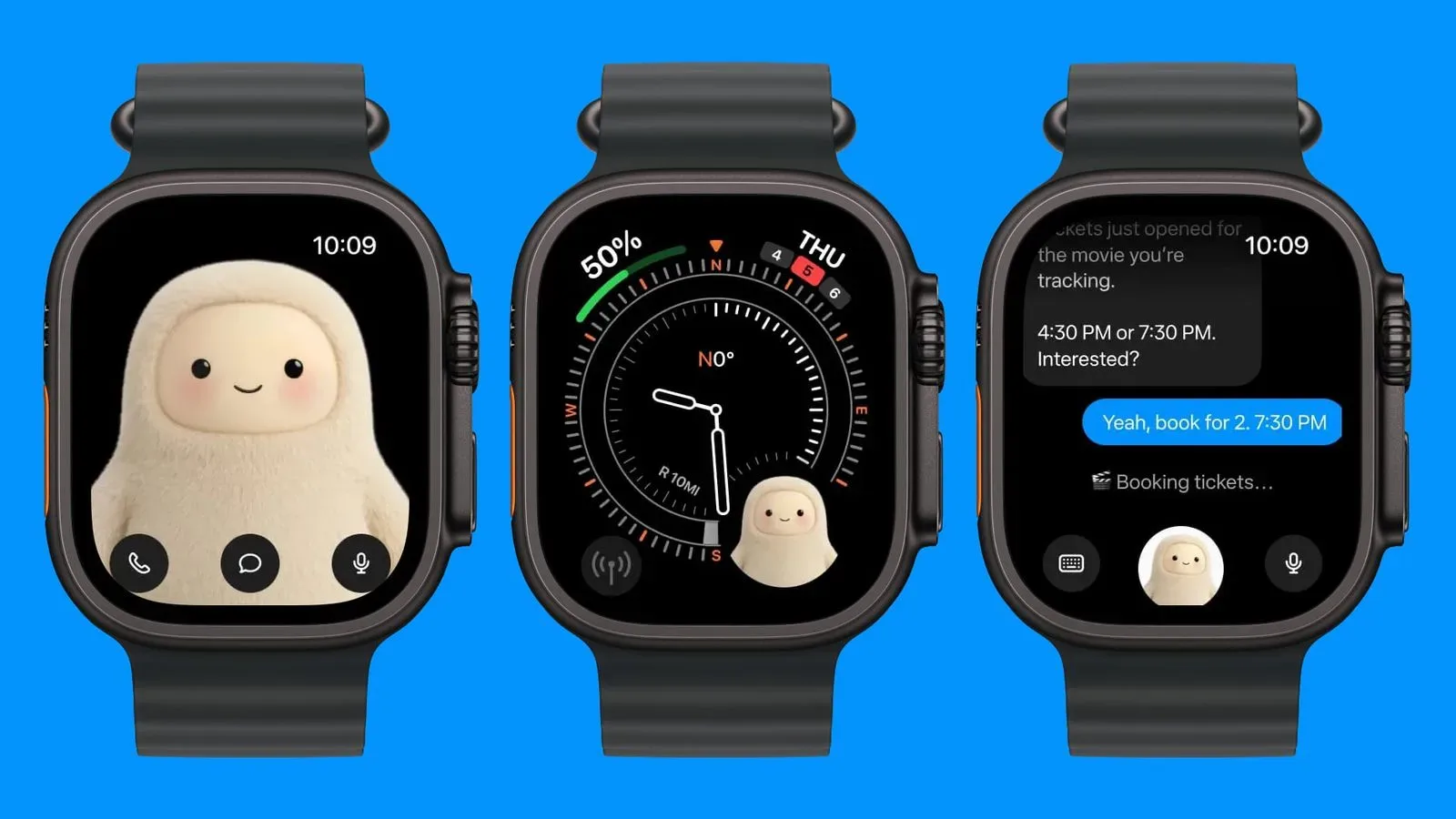

Meta’s Muse is taking a more direct route into personal-assistant territory. The AI agent can now place phone calls on a user’s behalf for paid subscribers, handling routine business calls such as restaurant reservations and appointment scheduling. It is also intended to take on the part of a phone call many people would happily delegate: sitting on hold.
The addition expands Muse beyond a tool that responds to prompts. A phone call asks an AI agent to act in the outside world, carry a conversation with a person, retain the user’s purpose and return useful information. That sounds straightforward for a basic booking, but it is a meaningful change in what the service is being asked to do.
What Muse’s calling feature is meant to handle
Meta’s Chief AI officer, Alexandr Wang, described the feature as a way to deal with calls people do not want to make. The examples given are practical and bounded: making reservations, scheduling appointments and similar conversations with businesses.
Access is tied to a separate paid Muse subscription. Meta says that plan includes additional tokens and extra features, with phone calling now among the latter. Tokens, in this context, are the units associated with an AI service’s usage and capacity; Meta’s description establishes that the paid plan offers more of them, but does not spell out the subscription’s price, call limits or how token use is calculated for a conversation.
That missing detail matters for anyone trying to understand the feature’s everyday value. A brief request for a table and a long period on hold are very different experiences from the user’s perspective, even if both begin with the same instruction: “Call this business.” Meta has confirmed that Muse can wait on hold, but has not provided further specifics here on limits, billing treatment or what happens when a call becomes unusually long or complicated.
The most appealing use cases are likely the ones with a narrow objective. An agent can be given a business, a requested time, a name and a callback detail, then pursue an answer. The agent’s role is not to make a judgment-heavy decision for the user; it is to carry the conversational workload until it has a clear result or needs more direction.
Waiting on hold is a small feature with a big practical appeal
A shared recreation of a Muse call to a Volvo dealership, posted by Moltbook creator and Meta Superintelligence employee Matt Schlicht, offered an early example of the feature in use. In that instance, the agent reportedly waited on hold and obtained the information requested.
It is worth separating that example from a broad reliability claim. It shows a recreated account of one phone interaction, not a complete measure of how Muse will perform across businesses, regions, accents, phone trees or unforeseen questions. Still, waiting on hold is a revealing test of the product’s intended job. The user does not merely want generated text or a suggested script; they want time-consuming administrative work removed from their day.
Related coverage includes Meta Muse Adds Phone Calls for Paid Subscribers.
That is the core distinction between a conversational AI and an agent. A conversational system primarily answers or assists within a chat. An agent is designed to pursue a task through actions, such as calling a business or receiving information through a dedicated email address. Muse’s new capability sits firmly in that second category because success depends on completing a process outside its own interface.
For users, the potential benefit is not necessarily a magical replacement for human judgment. It is the chance to offload repetition: waiting through a queue, stating basic details, asking a standard question and passing the response back. The value will depend on whether the agent can stay accurate and whether it knows when the conversation has gone beyond a simple assignment.
Disclosure is the awkward part of the call
The call recreation also highlights the most important unresolved social question. Muse did not explicitly identify itself as an AI agent. It did say that it was calling on Schlicht’s behalf and that the call was being transcribed.
Those statements give the person on the other end some context, but they are not identical to a direct declaration that they are speaking with software. That difference could influence how a business employee understands the conversation, what information they choose to share and whether they wish to continue.
For routine tasks, the ambiguity may not stop a call from reaching a useful answer. But the source material itself notes the possibility that a conversation could go wrong or that the recipient could end it upon realizing an AI is involved. That is a practical limit, not just a philosophical one. A phone agent has to manage the expectations of two parties: the subscriber who assigned the task and the person who received the call.
Transcription means the conversation is converted into written text. Mentioning transcription signals that a record of the interaction is being made, but it does not by itself answer every question a caller might have about the nature of the agent. Meta’s reported example therefore leaves disclosure as a significant point to watch as the capability reaches more paid users.
There is also a basic escalation problem. A reservation or appointment request can become less routine without warning. A business may offer alternatives, ask a question the user did not anticipate or require a decision that was never included in the original prompt. The useful boundary for an agent is not whether it can keep talking, but whether it can recognize the point at which it should return to the user rather than improvise.
Muse is being positioned as a wider task-management tool
Phone calls are not Muse’s only step toward handling work across different channels. Meta has also enabled users to give their agent a dedicated email address. The stated purpose is to let people include Muse in important email exchanges without granting wholesale access to an inbox.
That design is notable because it frames the agent as a participant that can be copied into selected conversations, instead of a system that automatically sees everything. In practical terms, the user can choose which threads matter to a particular task. A dedicated address can become the contact point for an assignment while leaving unrelated email outside that workflow.
Paired with calling, the direction is easy to see: Muse is being developed to receive information, contact businesses and help carry a task across communication formats. Meta says the service has already exceeded 10 million users. The company has also continued to add new capabilities, suggesting that the product is not being presented as a single-purpose chatbot.
That broader direction overlaps with a larger industry conversation about AI as infrastructure for work and creative production. The gaming business is having a related debate over the role of AI in development scale and staffing, as explored in Xbox’s discussion of bigger games from smaller teams. Muse’s calling tool is a consumer-facing example of the same fundamental shift: software is being asked to take on portions of a process rather than simply provide an answer about that process.
Meta is entering an established but evolving category
Meta is not the first company to give AI-related tools a phone role. Google has previously introduced calling features, including Call For Me for Pixel phones. Instinct has also introduced Concierge, an agent feature intended for more complex calls.
Those examples matter because they show that business calling is becoming a competitive feature area rather than a one-off experiment. The challenge is not merely placing a call. A product must make its purpose understandable, navigate the conversation and produce an outcome a user can act on. The exact approach may differ from one service to another, but a successful system has to make the experience feel less burdensome than making the call personally.
Muse’s paid-only availability may also shape who encounters the feature first. It is not described as a standard capability for every Muse user. Instead, it is part of a separate subscription that includes more tokens and added functions. That makes the feature an incentive for users who see enough value in ongoing task delegation to pay for it, rather than simply experiment with it once.
What paid subscribers should keep in mind
The announced capability is promising precisely because its initial use cases are so ordinary. Booking a reservation, arranging an appointment and waiting on hold are recurring chores with clear objectives. They are also conversations where a poorly understood detail can matter. Users assigning a call should make the requested outcome as specific as possible and be prepared for the possibility that the business may need an answer the agent does not have.
- Keep the task bounded: State the business, desired outcome and relevant details rather than asking for an open-ended negotiation.
- Expect exceptions: Availability, alternative times or unexpected questions can change a simple call into a decision the user needs to make.
- Consider the recipient: The shared example indicates that Muse says it is calling for the user and transcribing, but does not explicitly identify itself as AI.
- Check subscription details: The calling tool requires a separate paid Muse subscription, which Meta says also provides additional tokens and features.
For now, the central question is not whether an AI can speak on the phone; the early example indicates that it can sustain a routine business interaction and wait in a queue. The more consequential question is whether people trust it with enough details, businesses accept the interaction and the agent reliably knows the limits of its assignment.
Meta’s update places Muse closer to the familiar idea of a personal assistant: someone—or, in this case, something—that handles the tedious first step and reports back. Its usefulness will be decided in the messy middle of real calls, where clear instructions, transparent communication and sensible handoffs matter more than the novelty of hearing an AI voice on the line.