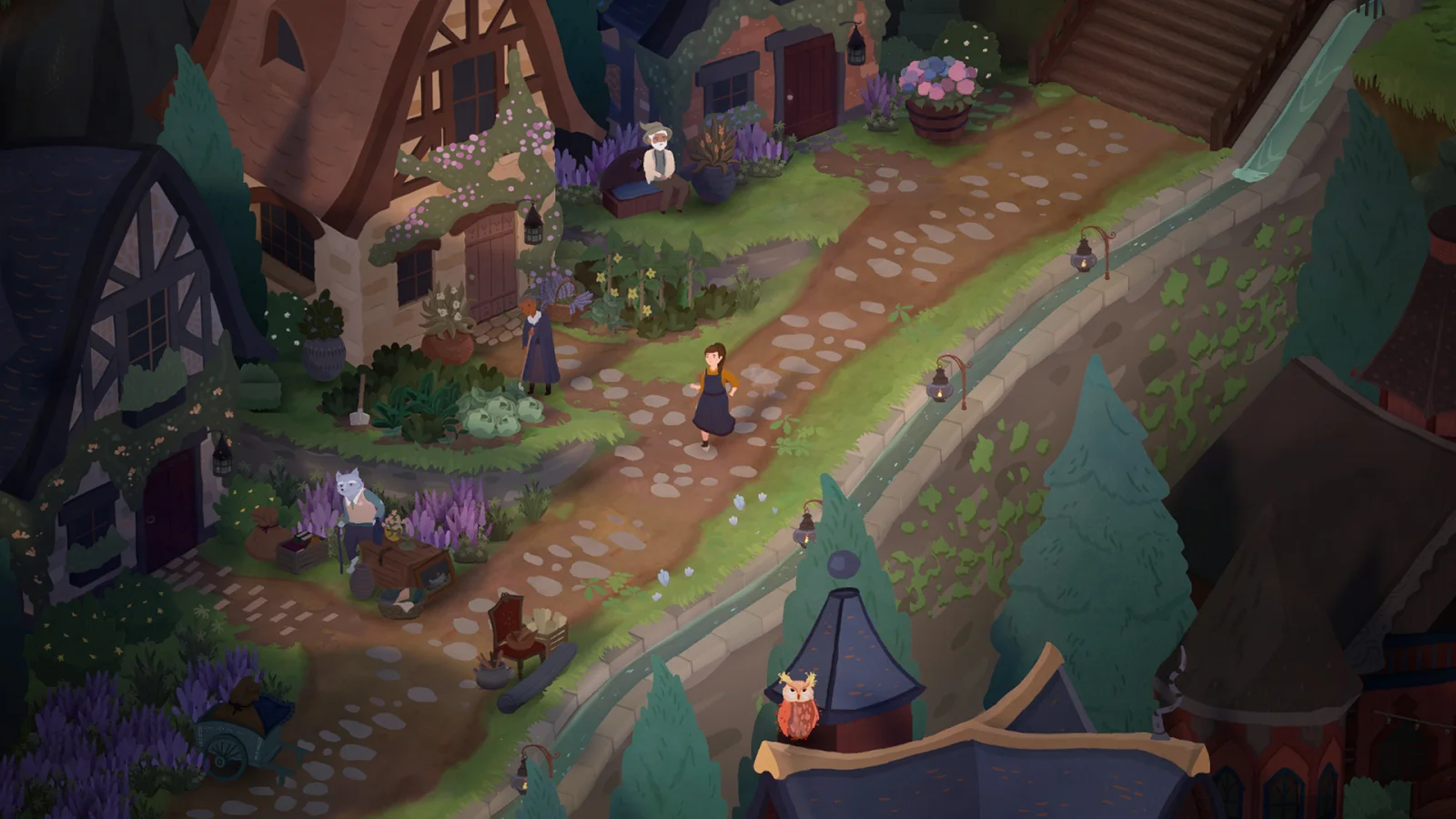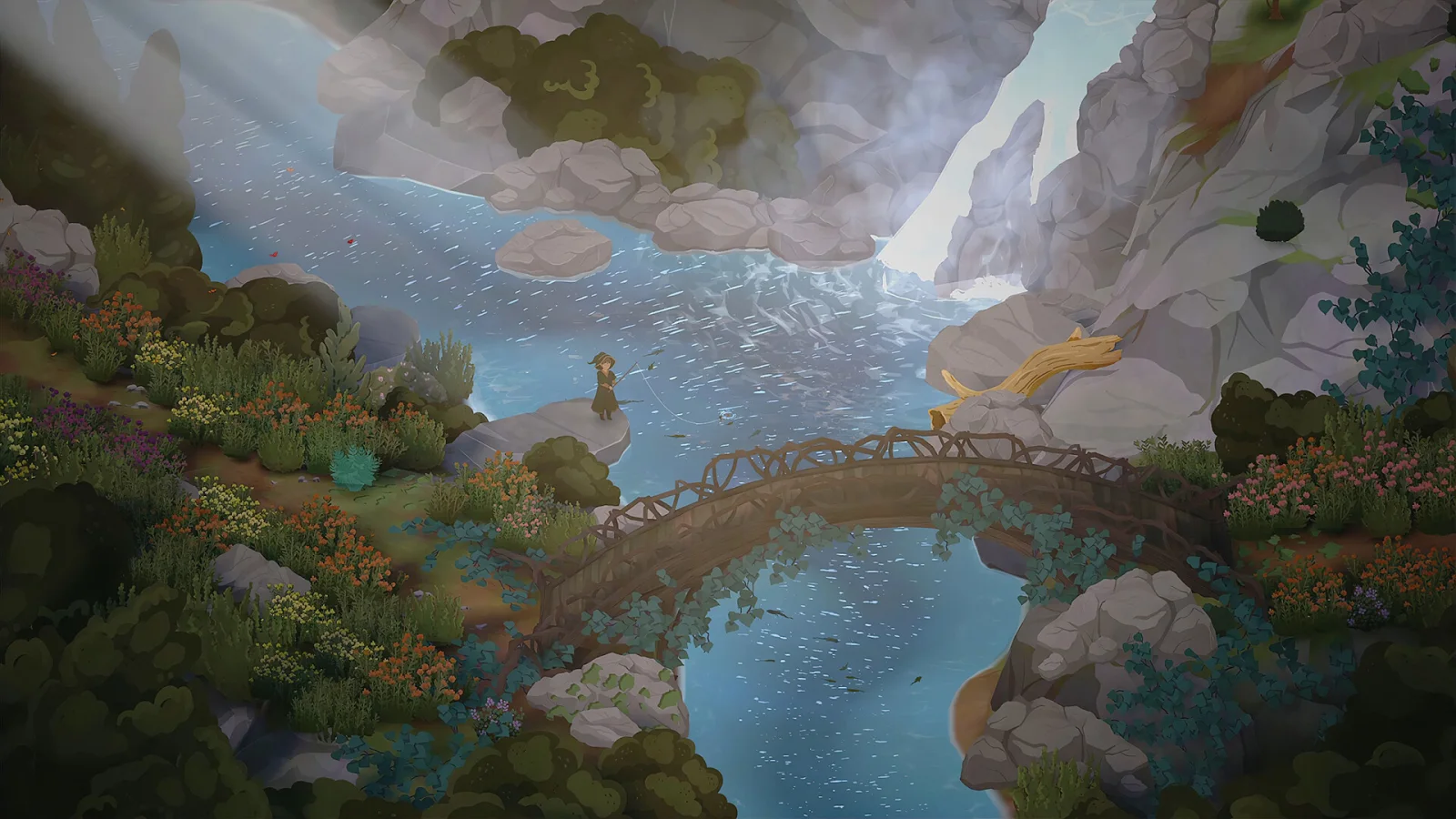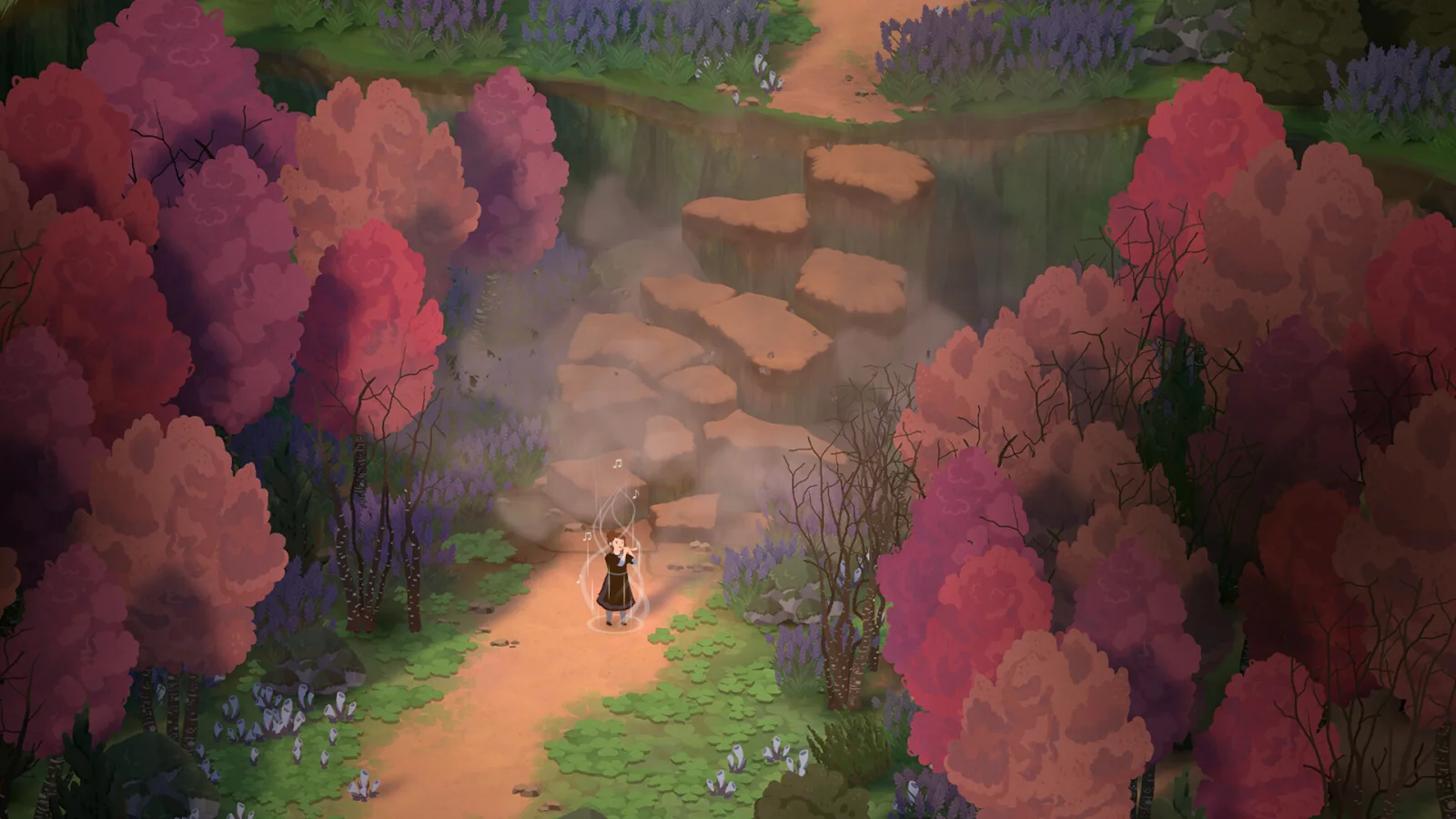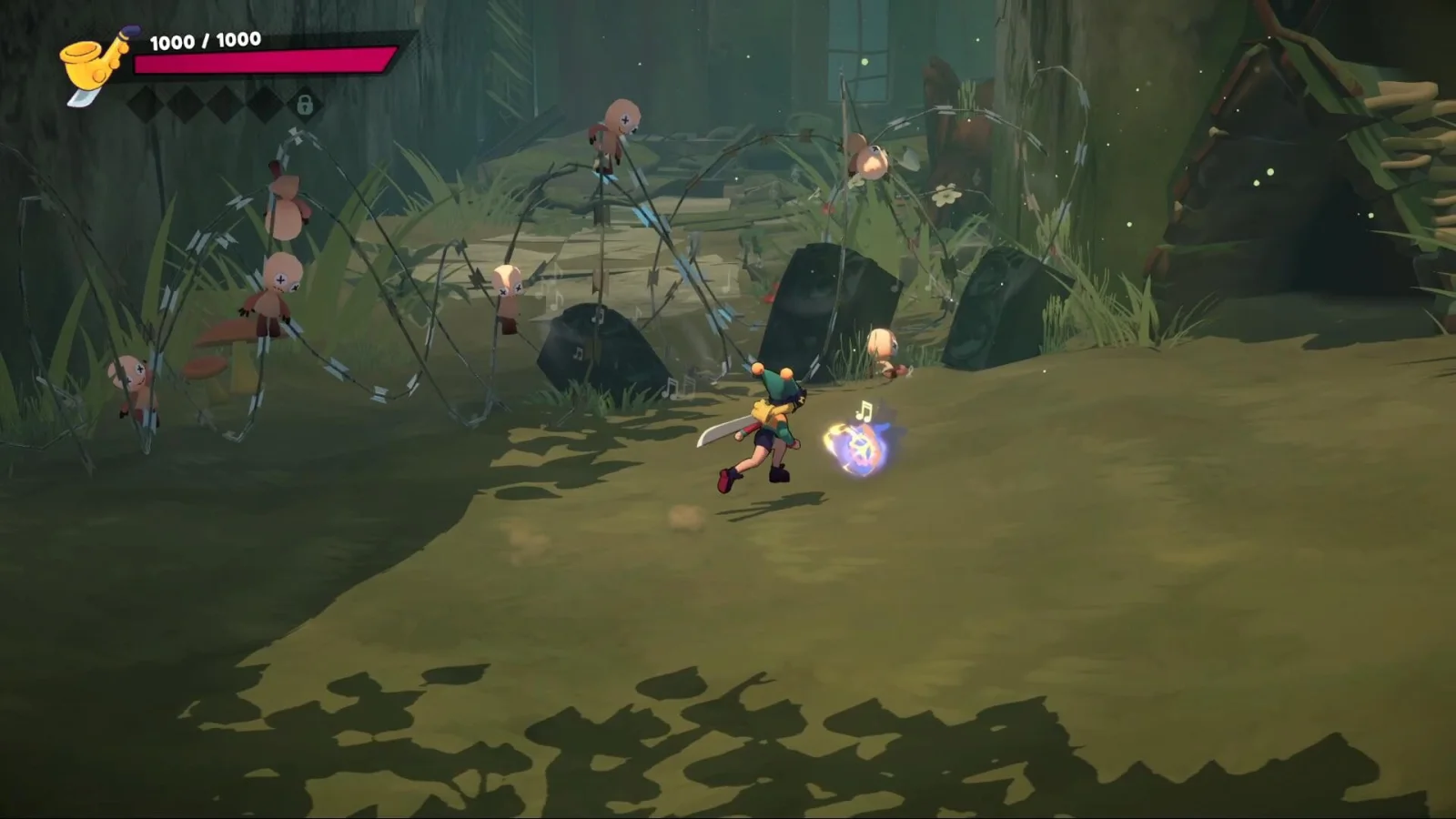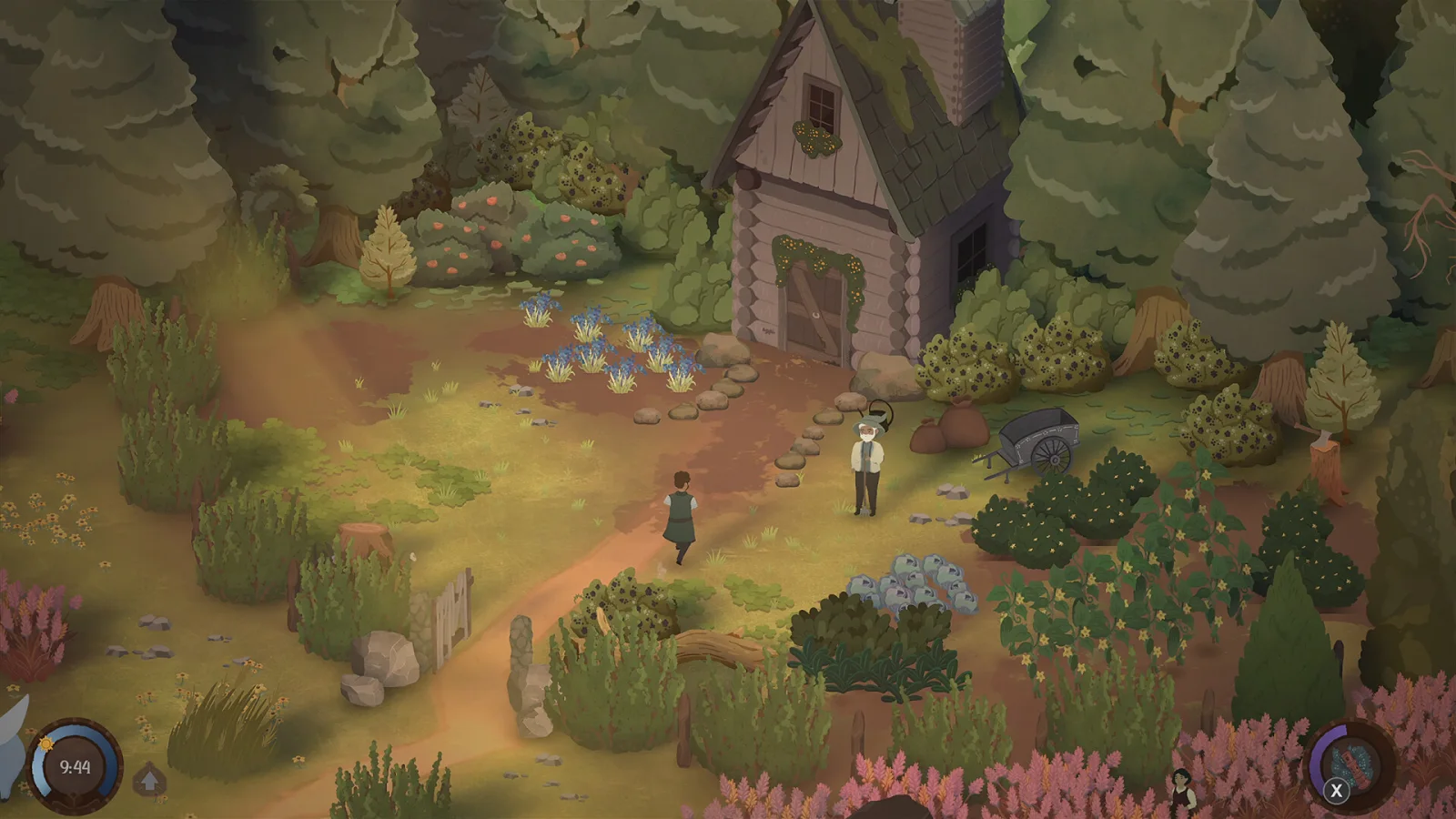
Songs of Glimmerwick is now listed for PC as a released game, but this is not a review based on Joking Joystick hands-on play. There are no gameplay notes, performance observations, completion details, or independently tested impressions available for this assessment. What follows is an unscored examination of the game’s publicly announced design: a peaceful, story-driven fantasy RPG set around a university of magic, where playing music is described as the basis of spellcasting.
That premise gives the project a clear question to answer. Plenty of games use magic as a menu category, a combat resource, or a button that changes an obstacle into a reward. Songs of Glimmerwick instead proposes that songs themselves are the connective tissue between exploration, gardening, tools, social life, and supernatural discovery. If the final implementation makes those uses legible, expressive, and meaningfully distinct, music could become more than a decorative theme. It could become the player’s primary way of understanding Glimmerwick.
The announced setup places the player at a magical university on a woodland island. A flute and songbook are named as key companions, while classes, after-school clubs, classmates, townsfolk, seasonal events, curses, festivals, and local mysteries form the broader frame. This is a generous set of ingredients, but ingredients alone do not establish a satisfying routine. The central design opportunity lies in how consistently the game connects its activities. A class should ideally matter beyond its immediate scene; a song learned for one purpose could potentially alter how the player reads a garden, a path, or a conversation; an island rumor might gain weight if the player has a reason to revisit it with new musical knowledge.
Music is the announced system with the most responsibility
The developer describes music as the secret to casting spells. Specific announced examples include speaking with trees, enchanting tools to work by themselves, raising earth to overcome natural barriers, and summoning clouds for rain. Those examples imply a wide utility spectrum: dialogue or environmental communication, automation, traversal, and cultivation. That breadth is promising in concept because it gives the same core activity a chance to mean different things in different contexts.
However, the effectiveness of that idea remains an open design question rather than an established result. It is not yet clear how songs are played, selected, discovered, remembered, or combined. A songbook could be a straightforward ability list, a collection tool, an in-world reference, or something more interpretive; the announced material does not settle that. Likewise, there is no basis here to claim that music involves timing challenges, free performance, note matching, puzzle-solving, or any particular input method. The only supported point is that songs are presented as spells.
That uncertainty matters because the feel of a magic system depends greatly on its interface. If the act of using a song is quick and readable, then a broad set of small magical interactions may support a relaxed rhythm of observation and response. If songs require more deliberate performance, they could make each use feel ceremonial and draw attention to the fictional importance of music. Neither approach is automatically better. The strongest fit would depend on whether the game wants its island exploration to flow at a brisk pace, invite close attention, or alternate between the two.
The announced songs also suggest a useful possibility: magic that changes the player’s relationship to ordinary tasks rather than merely adding spectacle. Speaking to trees could make the landscape feel socially alive. Enchanting a tool could shift a chore from direct labor to preparation. Raising earth could turn traversal into a question of what the player has learned rather than what route is visibly open. Rain could make gardening a system with a magical layer rather than a separate minigame. These are conditional advantages, not confirmed outcomes, but they identify why the music premise has more potential than a simple elemental-spell list.
A university setting needs consequences beyond scenery
Glimmerwick’s magical university is not only its setting but apparently one of its routine structures. The announced design includes classes and extracurricular activities alongside quests, island exploration, friendships, gardening, fishing, diving for seashells, band participation, and expeditions with the Green Sprites. This combination positions school life as one part of a broader fantasy community instead of isolating the player in a campus-only simulation.
The substantial unanswered question is how these parts relate. Classes could provide songs, skills, story context, social opportunities, or access to new places. Clubs could introduce characters, offer distinct activities, or simply serve as optional flavor. Festivals could mark seasonal movement, reshape the island’s social atmosphere, or function as self-contained events. The available details do not specify which of those roles applies, and there is no evidence for a calendar structure, attendance requirements, relationship mechanics, or deadlines.
That restraint is important when considering a game that describes a “year of seasons, festivals, curses, and witchy hijinks.” The phrase establishes that seasons and festivals are part of the intended experience, but it does not prove a particular time model. Players should not assume real-time days, strict schedules, missable content, or a school-term progression loop from the announcement alone. Still, the premise naturally invites a design question: can each part of the year change the meaning of familiar places? A garden, a club meeting, or a town square becomes more memorable when it has a different social or practical purpose across the game’s announced seasonal span.
The cast is also positioned as important. The description promises narrative quests focused on characters and story, with students, staff, townsfolk, and “spritely creatures” said to have their own stories and lives. It additionally announces fully voiced dialogue for characters both major and minor. Voice work can support a place-based RPG by giving small interactions a sense of personality, but the presence of voiced dialogue alone cannot establish the depth, frequency, branching, or responsiveness of those interactions. The key unanswered issue is whether the game’s many named social categories lead to overlapping relationships and recurring concerns, or simply populate separate activity lanes.
Gardening could provide the practical anchor
Gardening is one of the clearest announced activity pillars. The player is expected to tend the university garden, plant both mundane and arcane growth, and use musical magic to bring rain. In a game framed around lessons, island exploration, and narrative quests, a garden could offer a useful home base: somewhere the player returns to, sees change over time, and applies discoveries earned elsewhere.
There is no announced information on crop cycles, resources, recipes, selling, crafting, plot sizes, failure states, or the degree of customization involved. Those omissions mean it would be inaccurate to characterize Songs of Glimmerwick as a farming game or to describe an economy it has not detailed. Yet the garden still matters as a design signal. It is one of the announced places where the project’s magic is expected to serve an ordinary need. That overlap is potentially valuable because it can make fantastical abilities feel integrated into daily life.
The phrase “enchant tools to work all by themselves” points toward another possible tension. Automation can be satisfying when it reflects earned understanding, allowing a player to redirect attention toward exploration, stories, or a different project. It can be less satisfying if it removes the most engaging decisions before new ones take their place. The announcement does not explain what can be automated, when it becomes available, or what trade-offs might govern it. Any judgment about balance would therefore be premature. What can be said is that the design appears interested in magic as convenience as well as access, a choice that fits its peaceful stated tone.
Progression needs to keep utility choices interesting
Songs of Glimmerwick announces character progression through experience and skill choices. The cited areas include gardening, trading, and special abilities such as speaking to frogs. That is enough to establish that progression is intended to affect more than a single combat-oriented role. It is not enough to establish how many choices there are, whether skills exclude one another, how often they are earned, or whether they substantially change quest solutions.
Nevertheless, the inclusion of gardening, trading, and frog speech makes the design direction easy to identify. The game appears to frame advancement as an expansion of practical and social possibilities, not solely an increase in numerical power. A skill that enables conversation with frogs is especially illustrative: it suggests that some abilities may change who or what can participate in the player’s understanding of the island. If such abilities create new information, routes, or interactions, they could reinforce the game’s broader interest in magical communication. If they amount only to isolated gates, their role would be narrower. The available material does not determine which is true.
Customizable appearance is also announced. This establishes that players can choose how their character looks, but not the range of options, whether those choices extend beyond the opening, or whether clothing and accessories have any mechanical connection. It should be treated as a stated personalization feature, not evidence of a deep character-creation system.
The island’s activities need a shared purpose
Beyond classes and gardening, the announced extracurricular list includes exploring the island, joining a band, fishing, diving for seashells, and forest expeditions with the Green Sprites. It is a broad range for a story-driven RPG, and it could allow players to alternate between directed narrative play and lower-pressure pastimes. This breadth may be particularly appropriate for a setting that wants its magical school to exist inside a lived-in community rather than above it.
But variety is most effective when activities illuminate one another. Fishing and shell diving could contribute to gathering, character stories, collection goals, or simple relaxation; no particular connection is confirmed. Joining a band could foreground the music theme, but the announcement does not explain whether band participation uses the same musical-spell system as exploration. Forest expeditions could expand the island’s environmental mysteries, though their structure and rewards are unspecified. These are not deficiencies established by the available facts. They are the practical questions that will determine whether the activity list feels like a unified life on an island or a set of separate diversions.
For readers interested in another article that examines how a central interface can shape a game’s larger design, see this PC design feature about language and a radio terminal. It is not a claim that the two games share mechanics; it is simply a related design lens.
What can and cannot be concluded
Established details paint Songs of Glimmerwick as a PC Adventure and RPG from Eastshade Studios, with full controller support announced for its Windows release. Its stated design includes a magical university, an island setting, musical spellcasting, narrative quests, gardening, social activities, character progression, voiced dialogue, and appearance customization. Those are concrete claims about the game’s intended feature set.
What remains unproven here is execution: how songs control, how exploration is structured, how quests branch or resolve, how substantial the garden is, how progression choices operate, how voice work serves the writing, how activities connect, and how the game performs on PC. There is likewise no basis in the available information to make claims about length, difficulty, replayability, technical stability, accessibility options, or the quality of any narrative arc.
The announced concept is strongest where it asks music to be useful in several kinds of play. A flute that can communicate, cultivate, automate, and clear paths has the potential to make a fantasy world feel responsive in a coherent way. Whether that potential is realized depends on the details still not established by this design overview: the clarity of the song system, the consequences of learned abilities, and the extent to which school life, gardening, island exploration, and character stories are allowed to inform each other.