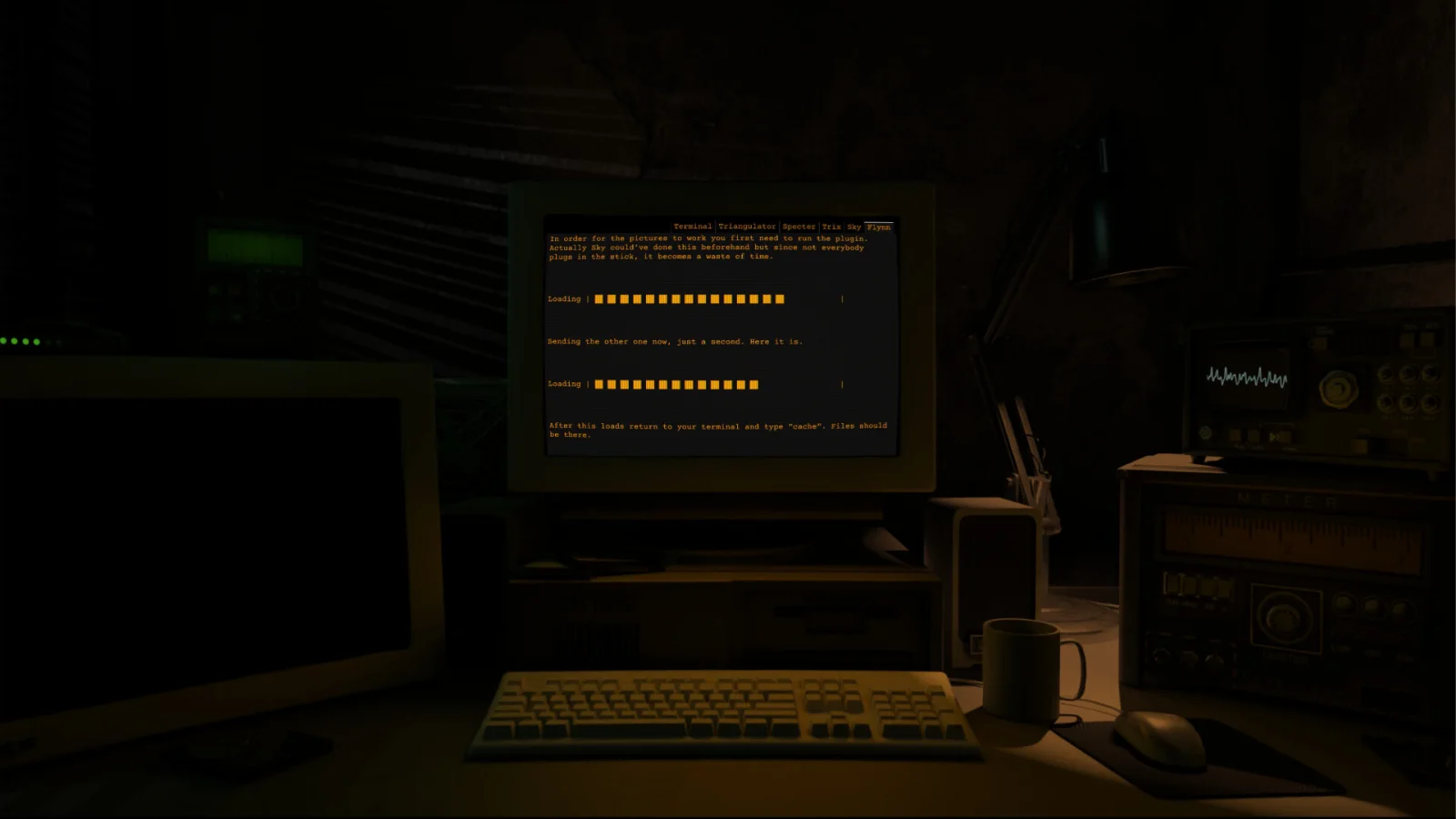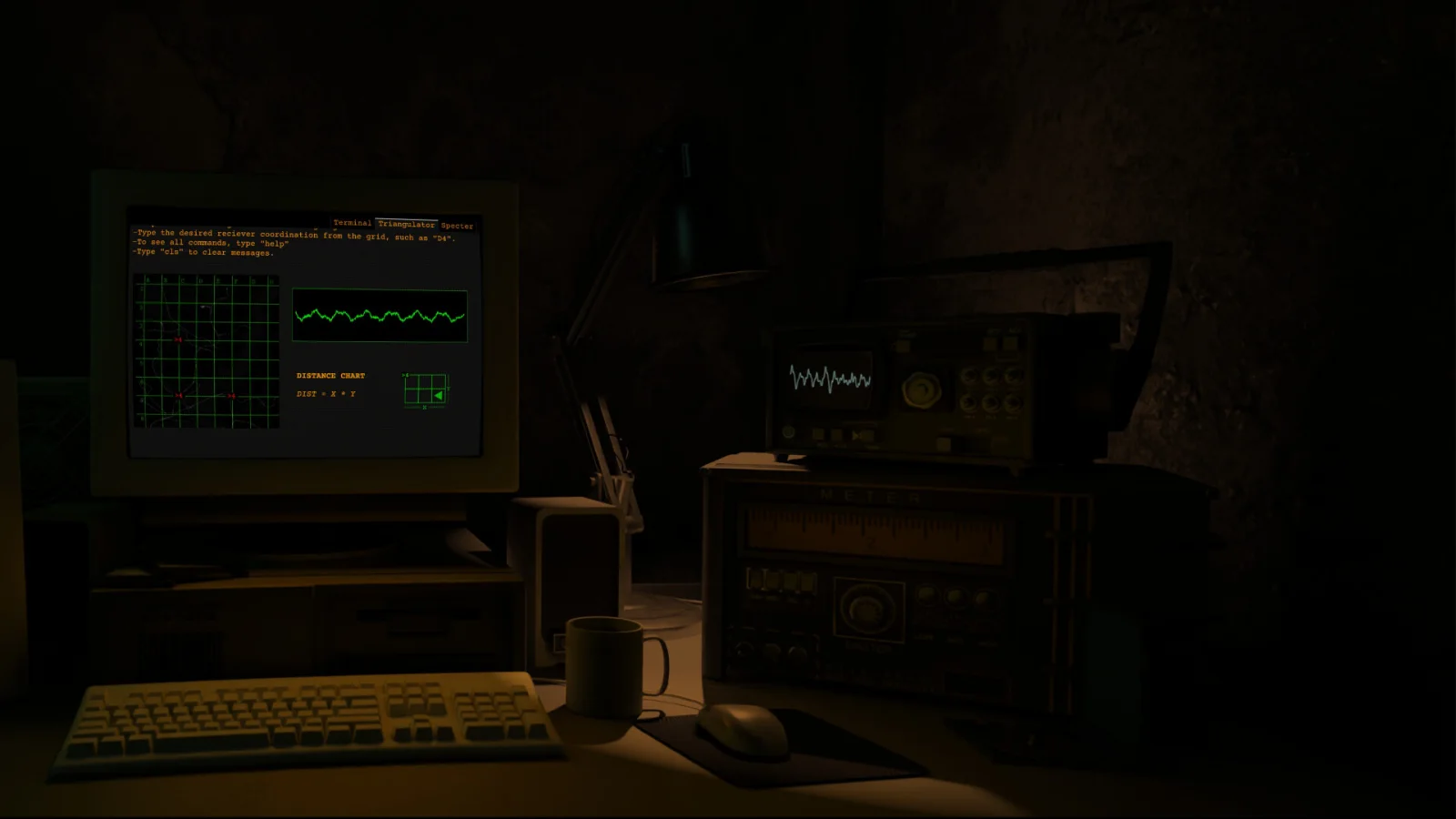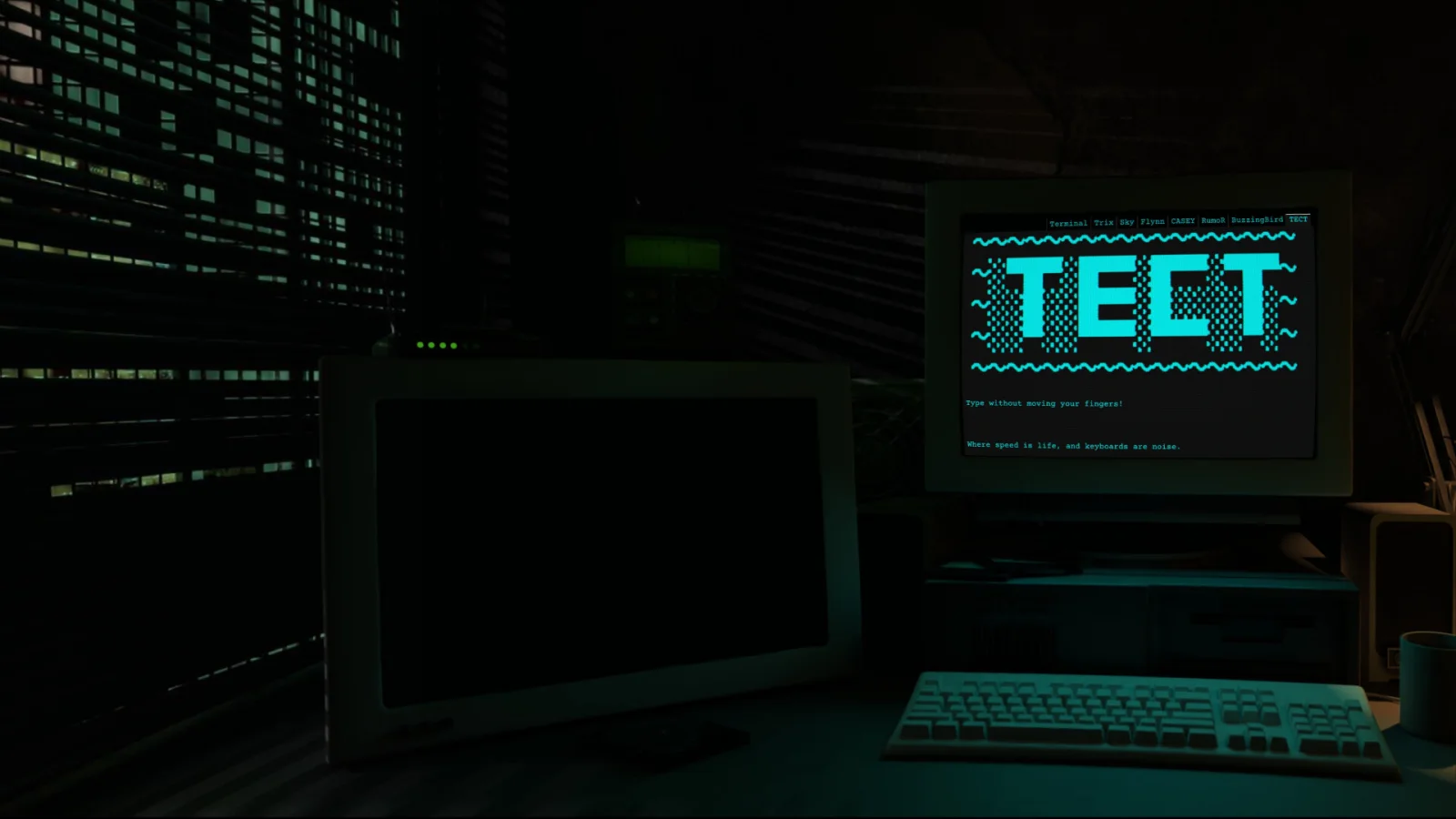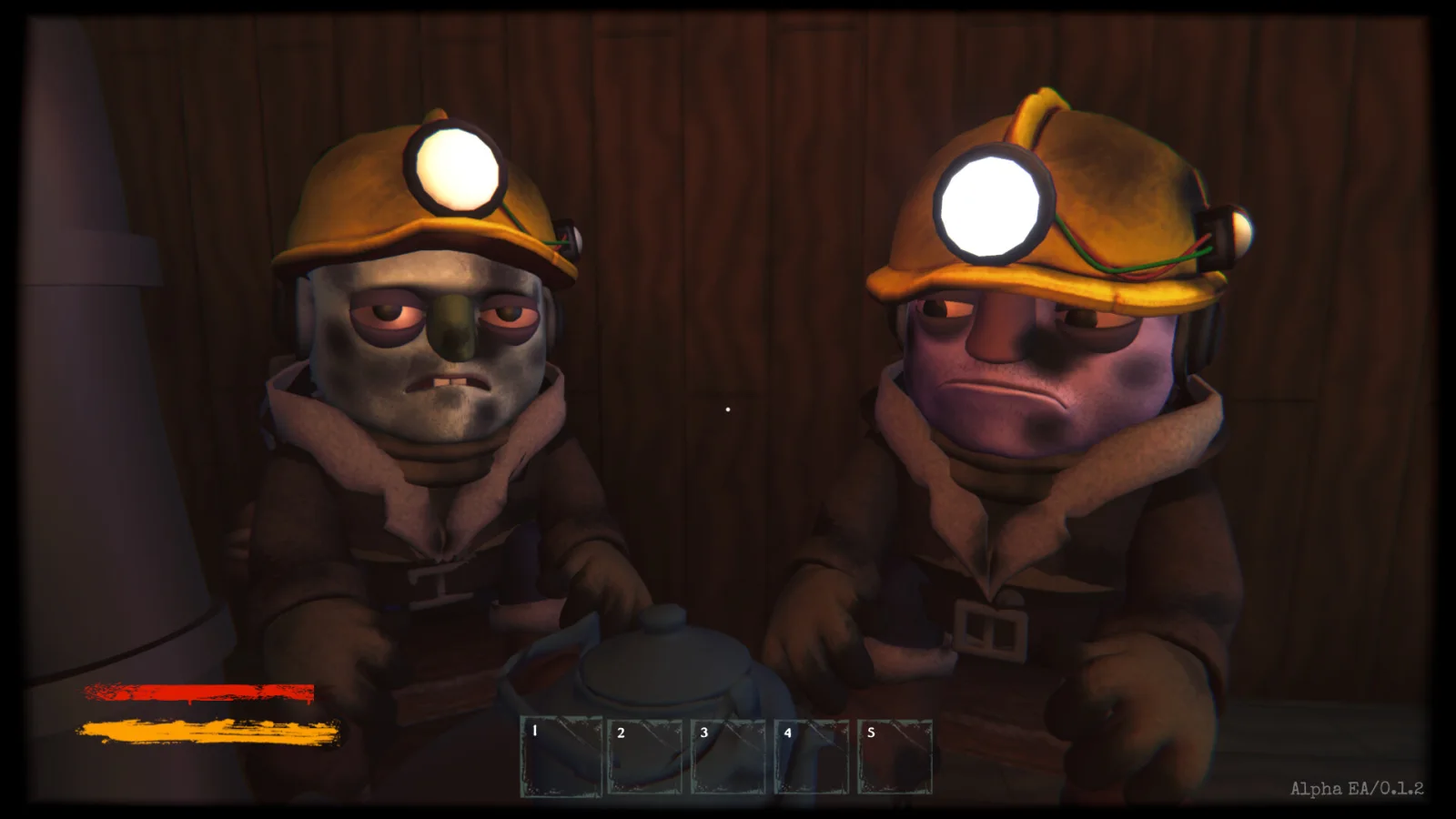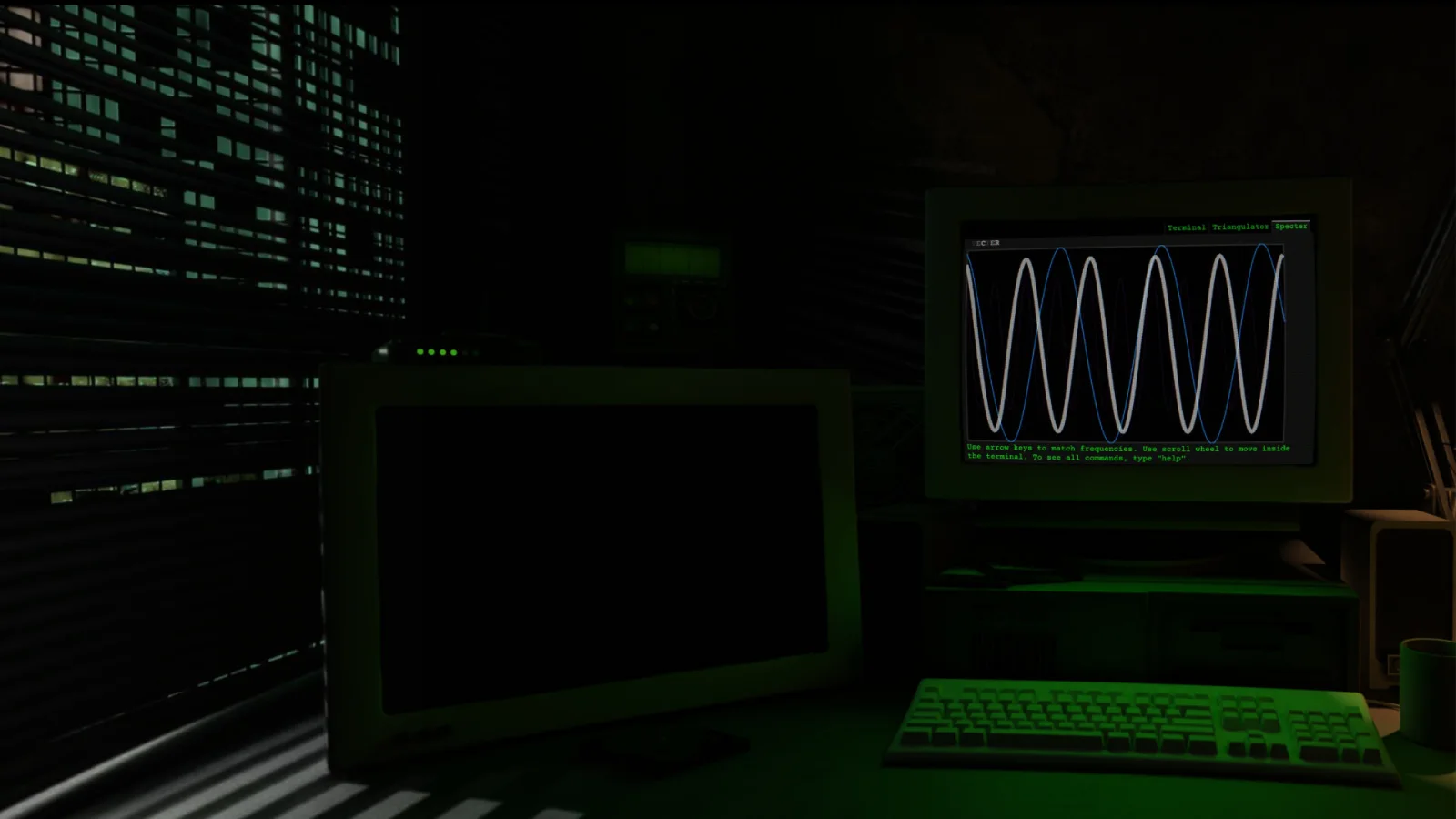
Radiotext arrived on Steam for PC on September 28, 2026 with a premise that puts an unusually specific object at the centre of its interactive-fiction design: an old radio network. Developer and publisher Alp Arslan describes the game as a cyberpunk, text-terminal mystery in which typed communication, choices, and hidden words are fundamental ingredients. That is enough to make Radiotext interesting as a design proposition even before declaring whether the finished game delivers on every implication. A terminal is not merely a retro-looking menu when a game asks players to use it as the main route into a mystery. It can make interpretation, attention, and the decision to reach out to somebody feel like actions rather than background reading.
The immediate factual outline is clear. Radiotext is a released PC game built around text-terminal interaction and an old radio network. Its Steam page lists more than 12 characters, a customizable interface, and Steam Workshop support. The developer estimates a first run at three to four hours, which is useful as an intended scale rather than a measured promise of every player’s experience. Following launch, version 1.0.1 addressed a late-scene crash and stuck loading. That hotfix establishes that those issues were targeted after release; it does not, by itself, settle broader questions about the game’s technical state or experience.
For the basic announcement details, see our Radiotext launch news. The more lasting question is what the game’s chosen interface can accomplish once the launch date has passed: whether a radio terminal can make the player feel less like a reader being handed answers and more like an operator trying to understand what a damaged, coded, or incomplete channel is willing to reveal.
A terminal can turn reading into procedure
Text-heavy games often live or die on a basic tension. Reading creates room for imagination, nuance, and interpretation, but it can also become passive if player input only advances paragraphs. Radiotext’s announced emphasis on typed communication and commands potentially changes that relationship. The player is not simply being presented with a conversation; the interface suggests that they may need to decide what language to use, what signal to pursue, and which fragments deserve a second look.
That distinction matters because mystery design is often about controlling access to meaning. In a conventional dialogue wheel, the game may place several clearly phrased intentions in front of the player. A command-oriented terminal can instead make phrasing, discovery, and recall part of the encounter. If a word is hidden in a transmission, a label, or a prior exchange, recognizing it may become a small act of deduction. If that word has a useful connection to a command or contact, language stops being decoration around the puzzle and becomes part of the puzzle’s machinery.
There are productive risks in this approach. A terminal interface can establish a satisfying fiction of expertise: players are not just told that they are investigating an obscure network, but are asked to operate within its vocabulary. The best-case version is a loop in which the player notices an unusual term, tests an inference, receives a response, and revises their understanding. Each successful connection can make the radio network feel less like a themed backdrop and more like a system with its own history and rules.
Yet the same design depends on clarity at the moments that matter. Command-driven interaction asks players to distinguish between a problem that needs thought and a problem that needs a particular input. Those are not the same thing. A strong deduction challenge lets the player understand why an answer works after finding it. An opaque interface can instead leave them wondering whether they missed a clue, guessed the wrong wording, or simply did not know the accepted syntax. Radiotext’s premise makes that boundary one of its most important design tests.
Hidden words need readable context
The official description’s mention of hidden words is especially suggestive. Hidden text can produce a welcome sense that an environment is richer than its surface: an overlooked phrase, odd spelling, repeated frequency, or conspicuous term might invite closer attention. In a game framed around radio communication, this idea fits naturally. Signals are often associated with distortion, partial reception, interference, and the possibility that something important is sitting inside material that initially looks routine.
But hidden has several possible meanings, and the quality of the experience will depend on how Radiotext handles that range. A word can be hidden because it is embedded in a clue chain the player can reasonably reconstruct. It can be hidden because the player is encouraged to revisit information after learning new context. Or it can be hidden so thoroughly that discovery becomes a matter of exhaustive searching. Only the first two reliably support the fantasy of deduction; the last risks reducing the radio desk to a scavenger hunt through text.
One useful design question, then, is whether clues appear to have a legible relationship to their uses. If a player identifies a word, does the game give enough contextual framing for them to form a theory about why it matters? If a command is worth trying, is there a reason to believe it belongs to the world rather than a reason to type every conceivable variation? These are questions of authored communication, not merely difficulty. A mystery can remain challenging while still helping players see the contours of its reasoning.
The customizable interface may matter here too. The store page confirms that customization is available, though it does not define every option or its practical effect. In a text-centred game, interface adjustment could potentially serve more than cosmetic preference. Depending on its implementation, it may help players shape the presentation around sustained reading and note-taking habits. The relevant question is not whether customization automatically makes a terminal accessible, but whether the available presentation choices support clear, comfortable engagement with the information the game asks players to parse.
Choosing a contact could make the network feel authored
Radiotext also foregrounds choices and lists more than 12 characters. That combination suggests a network whose social side may be as important as its technical one. Radio fiction has a natural advantage here: each contact can arrive as a voice, a source of information, a possible complication, or an unknown quantity situated somewhere beyond the player’s immediate reach. A terminal can make distance tangible. The player receives words and signals, but must judge intent without the usual visual reassurance of a face-to-face scene.
Choosing whom to contact is potentially more interesting than choosing a line from a menu because it can shape the order in which a player encounters information. One person may seem relevant to an unfamiliar phrase; another might offer context for a disputed transmission; a third might alter how an earlier message is interpreted. If paths through conversations meaningfully vary, replaying Radiotext could become an exercise in testing alternate lines of inquiry rather than simply selecting different colours of the same reply.
That possibility should remain conditional. The existence of choices and a cast of more than 12 characters does not independently demonstrate the scale, permanence, or narrative consequence of branching routes. It does, however, identify a promising question for this kind of interactive fiction: does selecting a contact feel like pursuing a lead? When a game asks players to navigate communications rather than a physical map, the contact list can become its own form of geography. The important design payoff would be a sense that attention has direction and that each conversation is part of an investigation, not just a queue of text to exhaust.
There is also a useful narrative tension in making people accessible through a network. Information can be personal without being complete. A contact may have motives, limits, or blind spots; a radio connection may create intimacy while preserving uncertainty. Radiotext’s cyberpunk framing gives that setup an appropriate atmosphere, but atmosphere alone is not the point. The question is whether the game’s writing and interaction can make uncertainty actionable: can a player use what they have learned to choose a next move with a reason, while still acknowledging that the available evidence may be incomplete?
Workshop support may extend the conversation
Steam Workshop support is one of Radiotext’s more consequential stated features because it opens a potential route beyond a fixed authored mystery. Community-made material can be particularly compatible with terminal puzzles and radio-fiction framing. The same language of frequencies, transmissions, commands, and coded messages that supports the core premise could give creators a shared vocabulary for making additional challenges or scenarios.
Potential is not a guarantee of a thriving library, reliable curation, or a particular kind of mod. Workshop support merely confirms that the game has a channel for Steam Workshop content. Still, it is worth treating that channel as more than a storefront bullet point. In puzzle-adjacent interactive fiction, community material can potentially encourage players to compare interpretations, make new mysteries, and test how flexible the underlying interaction model is. A good creator ecosystem could extend engagement through new authored signals; a limited one would not erase the value of the base premise, but it would narrow that particular possibility.
The key design question is whether the game’s tools and conventions make new material understandable to someone who did not create it. Terminal interfaces can be evocative, but they can also carry a learning cost. Workshop content is most inviting when creators and players share clear expectations about commands, clues, and feedback. If Radiotext’s language is legible enough to support that exchange, Workshop support could become a natural continuation of its central idea: a network that players do not only inspect, but contribute to.
Patience is part of the audience fit
Radiotext is unlikely to be defined by conventional action-game expectations, because its stated identity is built around text, typed communication, choices, and deciphering. That does not make it narrow in a negative sense. It makes the intended pleasure specific. Players who enjoy following leads, reading closely, identifying patterns, and working through an interface as part of the fiction may find the premise especially appealing. For them, slowness can be productive when each message potentially changes the meaning of the last one.
Players arriving chiefly for immediate visual spectacle, rapid mechanical escalation, or frictionless menu-driven dialogue may need a different relationship with the material. A command-oriented presentation can ask for patience before it returns confidence. That is not proof that Radiotext is inaccessible or demanding in practice; it is an honest consequence of the design language it advertises. The right onboarding would teach players how to think with the terminal without prematurely solving the mystery for them. It would establish what kinds of input the game recognizes, how useful information is signposted, and where experimentation is encouraged.
Accessibility questions belong in that discussion without assuming a shortcoming. For any text-focused, interface-led work, readers may reasonably want to know how presentation options, input demands, and information retention meet their individual needs. The confirmed customizable interface is relevant, but its presence alone cannot answer every accessibility question. The valuable standard is straightforward: the game’s mysteries should challenge interpretation and decision-making rather than require avoidable strain to read, navigate, or understand the basic rules of interaction.
Where the radio mystery goes next
Radiotext has a coherent announced identity: a cyberpunk interactive-fiction game that places an old radio network, typed communication, hidden words, and choices in the same design circuit. The September 28 PC release and the later 1.0.1 hotfix are established facts. The larger claims remain questions for the work itself. Can its command language feel investigative rather than arbitrary? Can contact choices produce satisfying alternate lines of inquiry? Can hidden words reward observation with reasoning rather than repetition? Can Steam Workshop support develop into a useful extension of its radio-network fiction?
Those questions are part of what makes Radiotext worth considering as a distinct design feature. Its most compelling possibility is not simply that it tells a mystery through a terminal. It is that the terminal may make communication—the words selected, the messages decoded, and the people contacted—the actual terrain of the mystery.