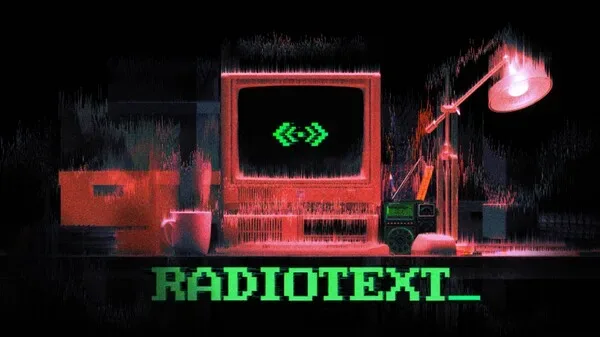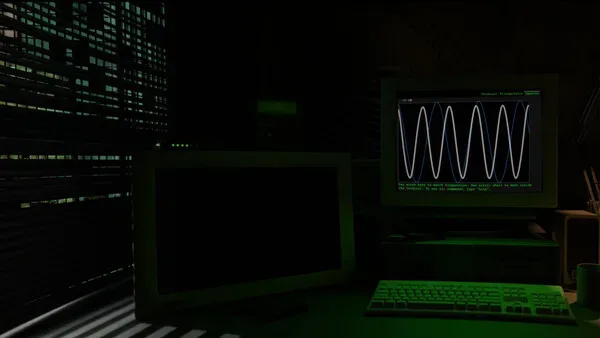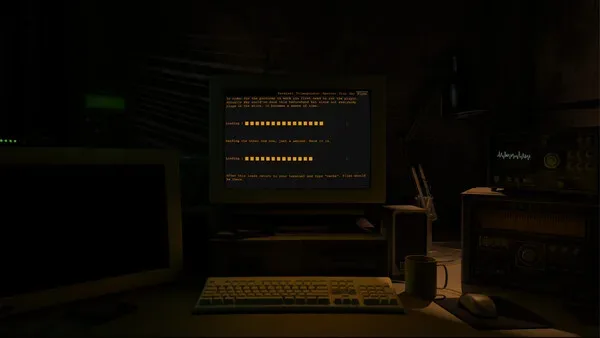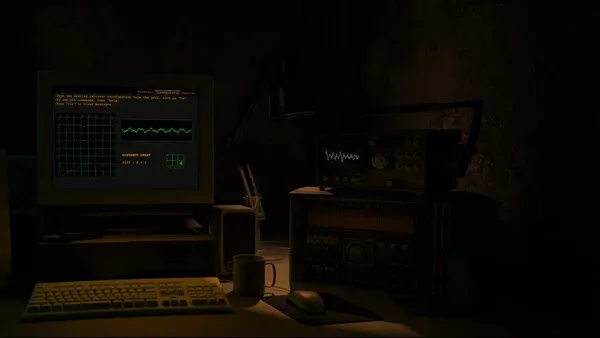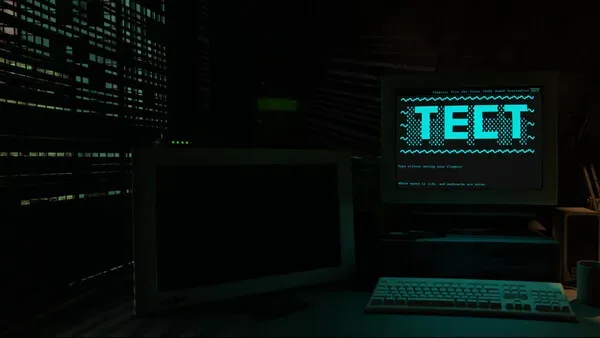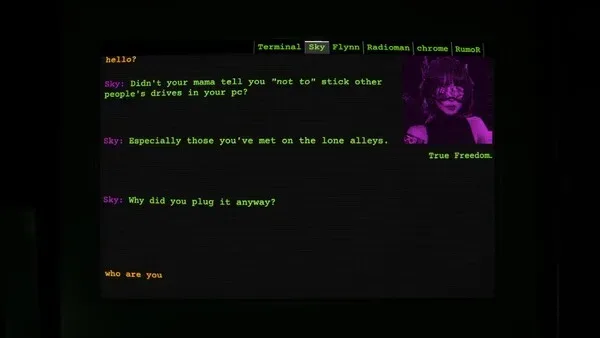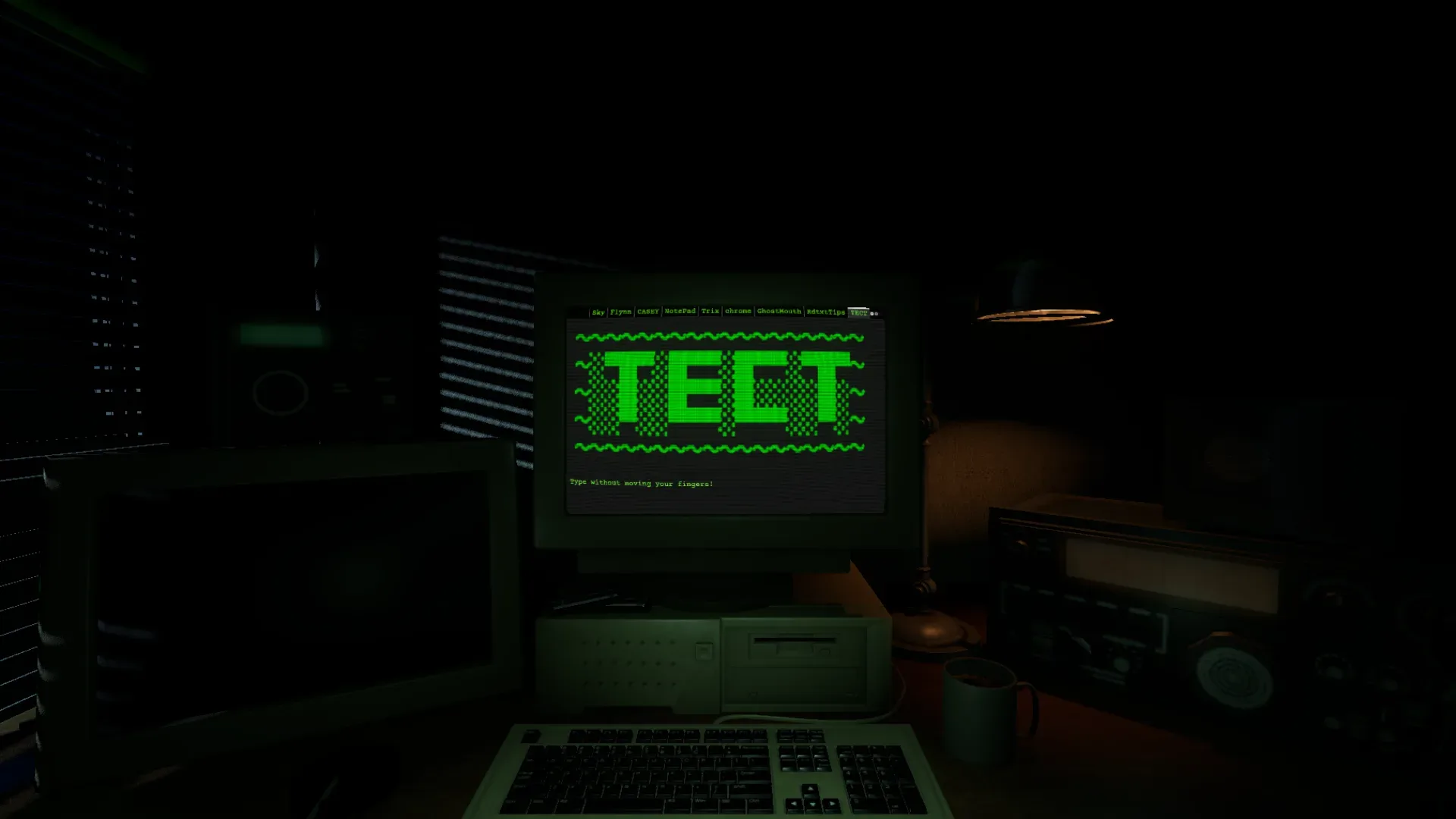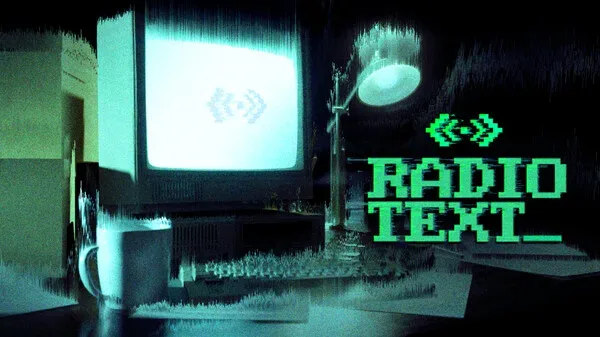
Radiotext, a cyberpunk hacking RPG built around an abandoned communications network, has launched on Steam. Its setup begins not with a world-ending explosion or an obligatory sewer tutorial, but with a stranger, a quiet alley and a USB stick: the sort of opening that tells a player they should probably not click anything without reading it first.
That USB stick contains access to a long-dormant communications network from the 1990s. From there, the player’s job is to investigate what has been left behind, communicate through its forgotten channels and gradually assemble an explanation for the mystery. The story leads toward the discovery of a cyber-activist uprising conducted entirely over those airwaves.
The premise positions language as more than decoration. Radiotext says players must choose their words carefully while talking their way through the network, indicating that communication itself is central to the RPG structure. In a genre often associated with numbers ticking upward and doors opening because someone found a keycard, that is a promisingly specific hook: the useful tool may be a carefully considered response rather than a bigger digital crowbar.
A hacking RPG where the network is the setting
“Cyberpunk hacking RPG” can cover an enormous amount of territory, so the details provided here matter. Radiotext’s hacking is tied to navigating an old communications system, rather than being described simply as a minigame or a combat ability. The dormant network appears to be both the route into the narrative and the space in which its characters and conflicts are encountered.
That makes the 1990s angle more than visual wallpaper. A legacy network can imply fragmented information, dead ends, old terminology, incomplete records and communities that once depended on narrower ways to connect. None of that guarantees a particular interface or mechanic, and Radiotext has not outlined those specifics here. But it does establish a compelling narrative constraint: players are entering a system that has been abandoned long enough for its original context to become part of the puzzle.
The USB stick is equally effective as an inciting object because it gives the player a concrete connection to a hidden past. Rather than beginning as an established hacker, operative or revolutionary, the character is handed an artifact and asked—implicitly—to decide what it means. That is a classic mystery-game setup, but Radiotext places it inside a communications medium where the available evidence may be conversations, signals and the gaps between them.
What “choosing your words carefully” can mean
The available description stops short of explaining Radiotext’s full dialogue system, so it would be premature to claim branching routes, relationship meters, multiple endings or specific failure states. Still, the emphasis on careful wording establishes a clear player-facing idea: messages are consequential.
In role-playing games, dialogue choice generally means that a player selects a response that expresses an attitude, pursues information or shapes a relationship. In Radiotext’s case, the wording suggests those choices are especially relevant because contact happens over communication channels embedded in the game’s central mystery. A response may therefore function as investigation as well as role-play—an attempt to earn trust, avoid suspicion or draw out someone who knows more than they initially reveal.
This is also where the game’s “hacking” identity could take on a more social meaning. Hacking in fiction is often reduced to an instant-access superpower: a few keystrokes, some green text, a dramatic progress bar, and suddenly every secret database develops an acute case of openness. Radiotext’s premise instead foregrounds communication. The challenge may be less about brute access than interpreting a network’s culture and speaking effectively within it. That is an analysis of the stated setup, not a confirmed feature list, but it is the distinction that makes the concept stand out.
The uprising is told through the airwaves
Radiotext ultimately leads players to uncover a cyber-activist uprising fought entirely over the network’s airwaves. That is a notably focused framing for the larger conflict. The uprising is not merely background lore attached to the system; it is conveyed through the same channels the player is using to investigate.
“Airwaves” here refers to communications transmitted through radio-frequency spectrum rather than physical wires. In the game’s narrative context, the term underscores the idea that the conflict existed in messages, broadcasts and connections that could persist as traces after the people behind them disappeared or moved on. A communication network can be both infrastructure and archive: it enables a movement to operate, then potentially becomes the record through which a later participant reconstructs what happened.
That premise creates useful tension between technology and testimony. A recovered message can appear authoritative simply because it is stored in a machine, but messages are still written by people with motives, incomplete knowledge and agendas. The game’s focus on piecing together “what’s really going on” suggests that access to data alone is not the same as understanding it. Players may need to assess who is speaking, why they are speaking and what has been omitted. Again, the exact systems behind that process have not been detailed, but the investigative direction is explicit.
Why the period network matters
By placing the mystery in a 1990s network, Radiotext draws a line between contemporary cyberpunk imagery and older forms of digital communication. The supplied information does not identify the network’s precise technology, its original operators or why it was abandoned. Those unanswered details are part of the setup, not blanks to be filled with assumptions.
What is clear is that the old network gives the story a defined technological boundary. A contemporary always-online setting can make information feel limitless; an abandoned system suggests the opposite. Its channels may be finite, neglected and difficult to interpret. For an investigation, that can be more interesting than an omniscient feed. Every recovered connection has the potential to feel intentional because it must be found and understood in relation to the larger web of communication.
It also places the player in a familiar modern dilemma: how much meaning can be recovered from obsolete or isolated systems? Current communication technology continues to change how people move between networks and services—an idea that also surfaces in a recent look at connectivity through browser-based travel eSIM access. Radiotext’s story approaches communication from a fictional, retrospective direction: not how to get online now, but what might still be waiting inside a connection everyone else stopped using.
What has and has not been confirmed
Radiotext is available on Steam, and its announced premise includes a stranger’s USB stick, a long-abandoned 1990s communication network, dialogue where word choice matters, and an eventual investigation into a cyber-activist uprising carried out over the airwaves. An official trailer and press materials are also available.
Beyond that, prospective players should keep their expectations tied to the information currently provided. There are no confirmed details here on price, supported operating systems, controller support, playtime, accessibility features, achievements, multiplayer, save systems or the precise nature of the hacking mechanics. There is likewise no basis to promise a particular branching structure or ending format.
What Radiotext does have is a sharply readable core idea. It treats an old communication network as a place to explore and a record to interrogate, then makes careful conversation part of the player’s route through it. For anyone drawn to cyberpunk mysteries with more interest in signals, secrets and suspiciously loaded messages than in shouting at a terminal until it gives up its passwords, that makes this Steam launch worth noting.