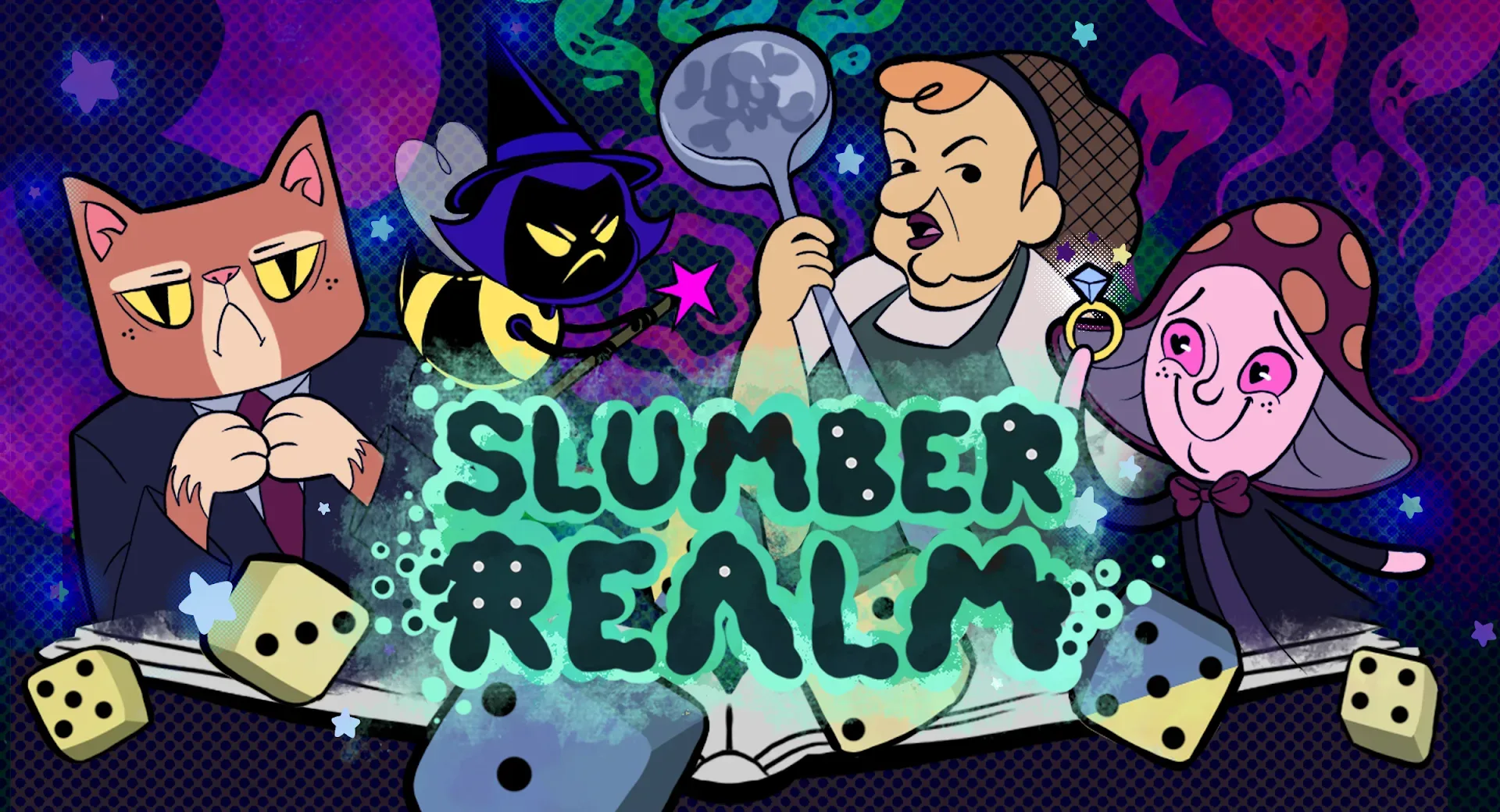
Slumber Realm is now available on Steam, bringing a compact dice-driven roguelike built around backpack card drafting, six-sided rolls and deliberately ordered card effects. Chugga Games’ game launched on November 4, 2026, at 10am PT / 1pm ET / 6pm GMT / 7pm CET, with a standard price of $11.99 / £10.75 / €12.25. A 10% launch discount runs for its first 10 days.
Its release plan is as notable as its premise. Every Wednesday across the next four weeks, owners will automatically receive a free mini-expansion. The first, Midnight Mix, arrives November 11 and carries a night-time theme. The remaining three additions have not yet been detailed, with their contents set to be announced one week at a time. A free Steam demo also remains available for anyone who would rather sample the game’s systems before committing.
A dice roguelike where sequence matters
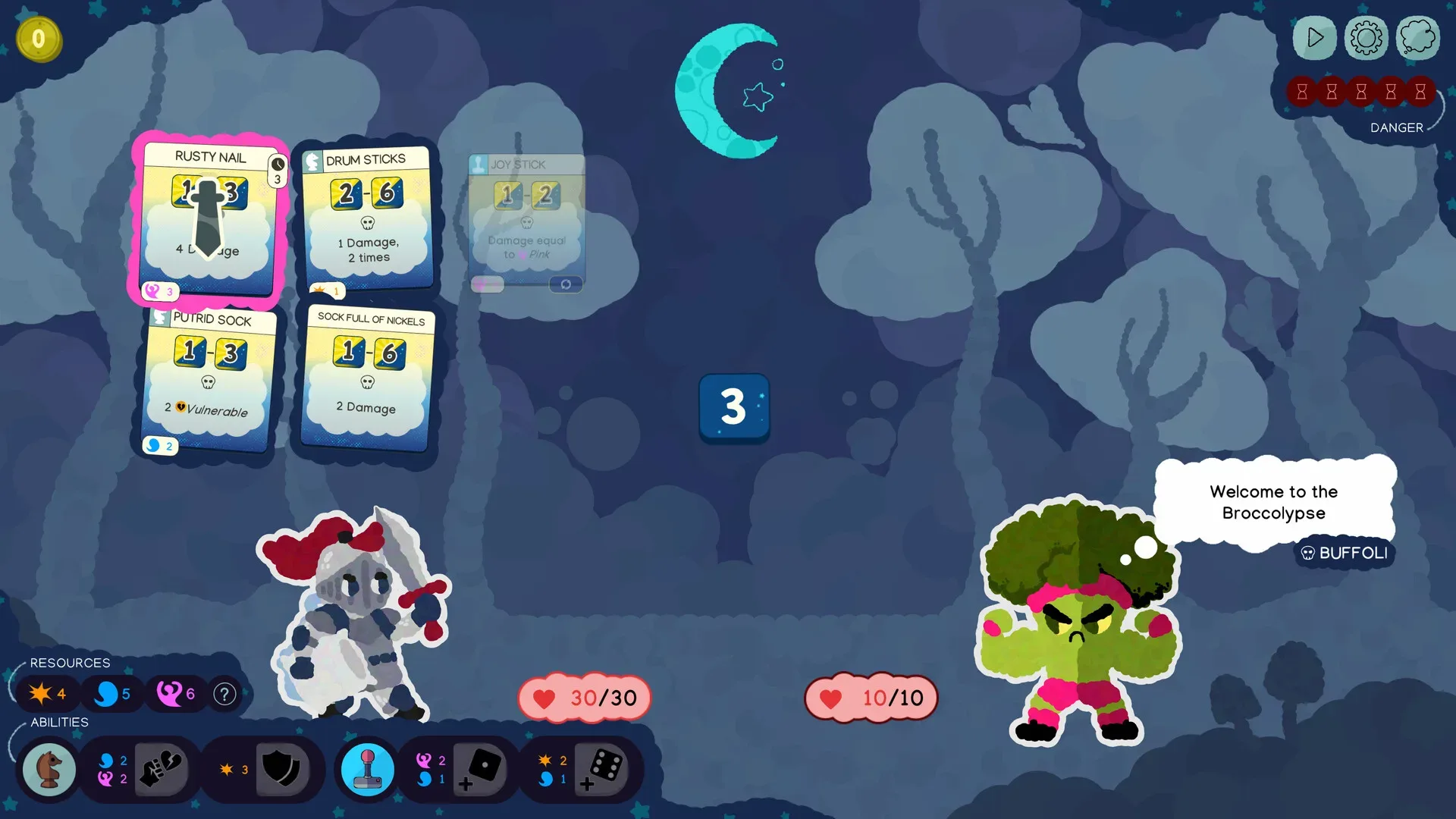
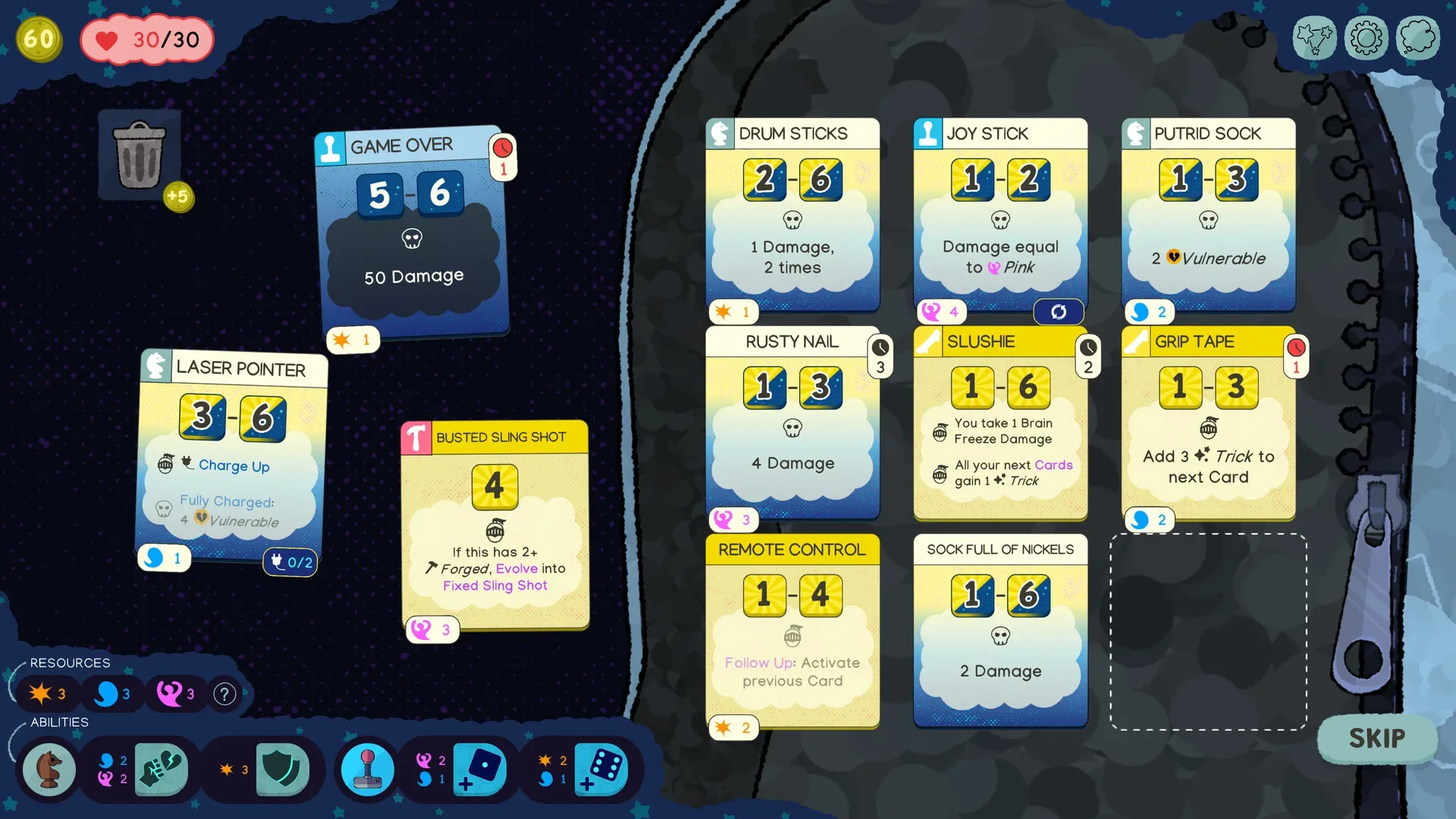
Slumber Realm frames its run-based strategy around a d6: a conventional six-sided die. At the start of a run, players draft Cards into a backpack, roll the die, and activate the cards whose die ranges match that result. Those cards are then triggered in sequence.
That final point is the key to understanding the pitch. The game is not simply asking players to gather individually powerful cards. A card’s placement and the order in which compatible effects fire can matter just as much as what the card does on its own. A setup effect that applies a status first, for example, can create the conditions for a later payoff card to do more work. With only six possible results on a d6, building around coverage—making sure useful cards can respond to several outcomes—also appears central to shaping a dependable backpack.
“Roguelike” here describes a format of repeatable runs in which players assemble a build over the course of an attempt rather than entering with a fixed, fully equipped character. Slumber Realm describes typical sessions as roughly 30 minutes long. That makes the structure a potentially good fit for players who want build-crafting and chance management without setting aside an entire evening for a single attempt.
The game leans hard into a ’90s-inspired dreamscape rather than a conventional fantasy setting. Its adversaries are called Knightmares, and the revealed examples turn familiar childhood annoyances into opponents: the Lunch Lady, Geology Homework and the Alarm Clock. It is a useful thematic match for a system about confronting unpredictable rolls. The nightly obstacle is not a dragon so much as tomorrow morning, schoolwork, or the unsettling authority of cafeteria administration.
What can be combined in a run
Slumber Realm launches with more than 150 Cards, more than 40 Memories and more than 35 Snacks. The announced totals point to several layers of choices rather than a single deckbuilding pool, although the precise mechanical role of every category has not been outlined.
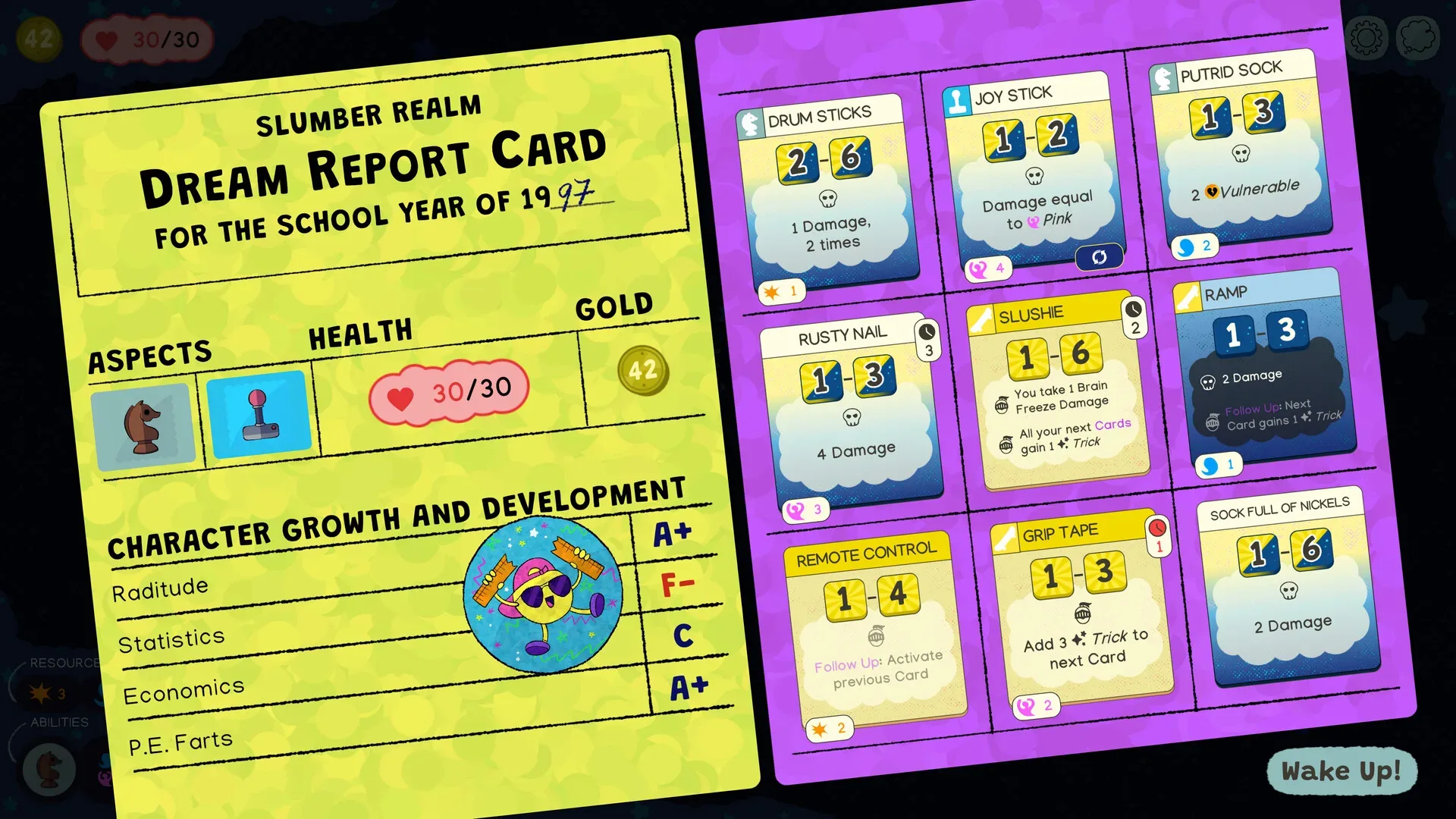
The most clearly defined build decision is the ability to mix two Aspects—the game’s classes—on each run. Combining classes is a common way for roguelikes to make separate attempts feel distinct: one pairing can emphasize repeatable effects, while another focuses on acquiring resources or improving the cards already in play. In Slumber Realm, the stated examples show that the class combinations are meant to create explicit synergies rather than merely alter a starting bonus.
- Tactical + Sk8er: stack Vulnerability, then repeatedly trigger Tricks.
- Gamer + Tinker: obtain extra dice while upgrading Cards.
For newcomers, terms such as Vulnerability and Tricks should be read as build-specific game effects. The available description establishes their relationship in the Tactical and Sk8er pairing—one is stacked and the other is repeatedly triggered—but does not define their exact numbers or rules. Likewise, “extra dice” in the Gamer and Tinker setup suggests more roll-related opportunities, but prospective players should avoid assuming details beyond that description until the game itself explains them.
The important practical takeaway is that Slumber Realm’s choice space begins before an individual card is drafted. Selecting two Aspects creates a direction for a run; cards, Memories and Snacks then appear to give that direction texture and opportunities to adapt. Players who enjoy recognizing an interaction and pursuing it may find the pairings particularly appealing. Players who favor a more flexible approach may instead value cards whose die ranges keep a backpack productive across more possible rolls.
Why the six-sided die changes deckbuilding priorities
A d6 gives Slumber Realm a small and readable range of random outcomes. Each roll lands on one of six faces, and cards activate when their listed ranges include the rolled result. This naturally turns a backpack into a probability puzzle.
In broad terms, a card that can trigger across more die faces should be more likely to activate than one restricted to a narrow part of the die. That does not automatically make broad coverage superior. A narrower trigger could be worth pursuing if its effect is particularly valuable, if another game system provides additional dice, or if the rest of the backpack makes that number especially rewarding. The Gamer + Tinker example is the clearest hint that builds may be able to alter how they engage with dice rather than merely accept a single roll.
Sequence adds a second puzzle on top of the probability. If a player knows their cards resolve in order, then a backpack can be arranged to establish a condition, capitalize on it, and possibly repeat a result. The Tactical + Sk8er pairing directly conveys that kind of loop: stack Vulnerability, then use repeatedly triggered Tricks. Whether a run succeeds may therefore depend less on finding one all-purpose card than on creating a chain whose parts are all able to come online from the same die result.
This is also why a 30-minute session estimate matters. Shorter roguelike runs can make experimentation less costly. A player can test an unusual Aspect pairing or draft direction, see whether its dice coverage holds together, and move to the next approach without a very long investment. The remaining demo offers a straightforward route for players to determine whether the rhythm of rolling, checking ranges and resolving a sequence is satisfying for them.
Unlocks extend beyond the individual run
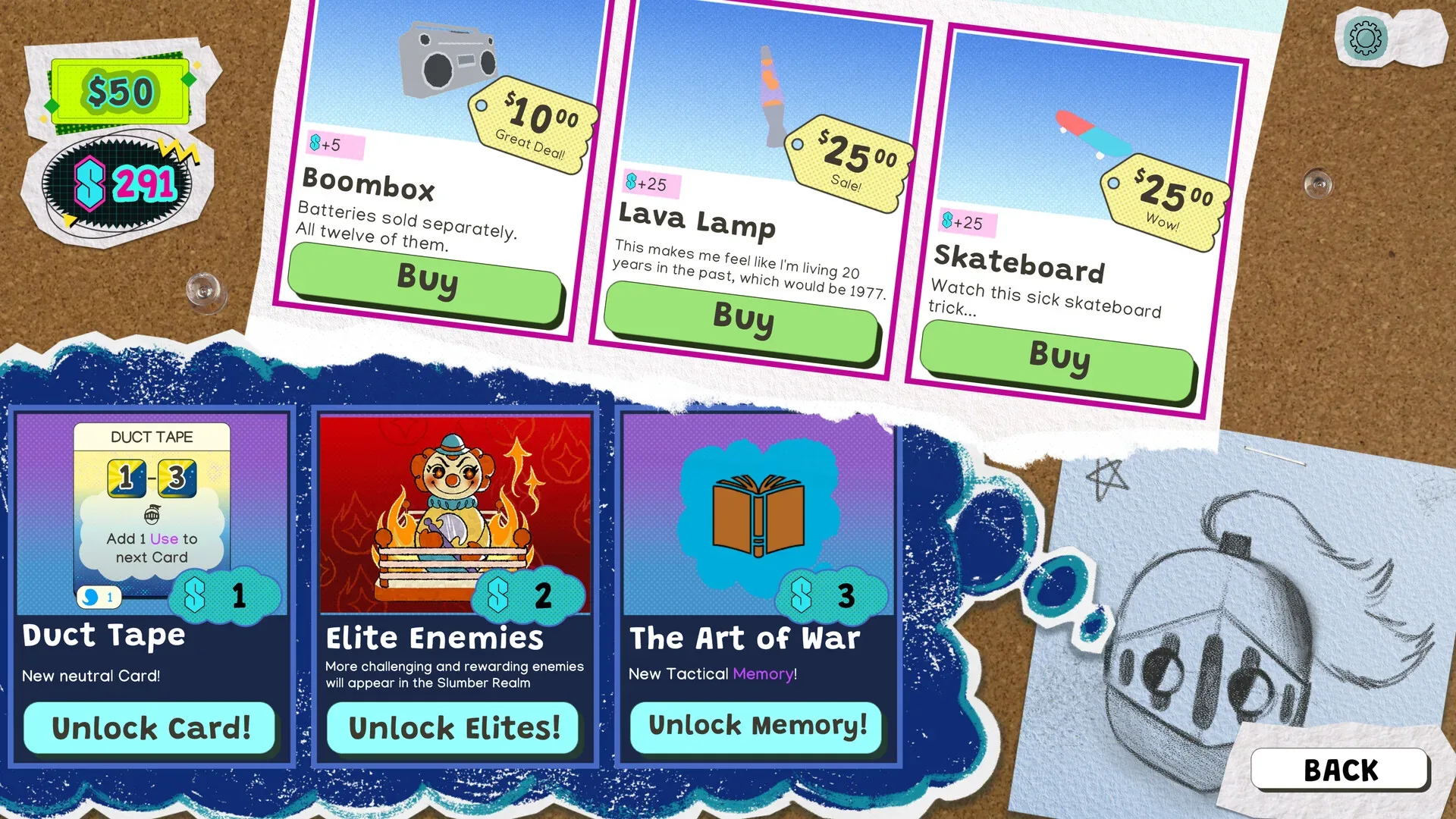
Alongside the immediate decisions of a run, Slumber Realm has a progression framework tied to waking up. Its Corkboard and Cool Points systems unlock Cards, Memories, Snacks, Aspects and new Knightmares. In plain language, Cool Points function as a long-term progression currency or measure: the more the player advances through the game’s wake-up loop, the more components become available for future attempts.
That structure gives the game two different kinds of discovery. One occurs inside a run as a player drafts cards and seeks a workable sequence. The other happens across many runs as new tools, classes and Knightmares enter the overall pool. Because the unlock categories include both build pieces and opponents, progression is not limited to adding more options on the player side; it also promises new obstacles to encounter.
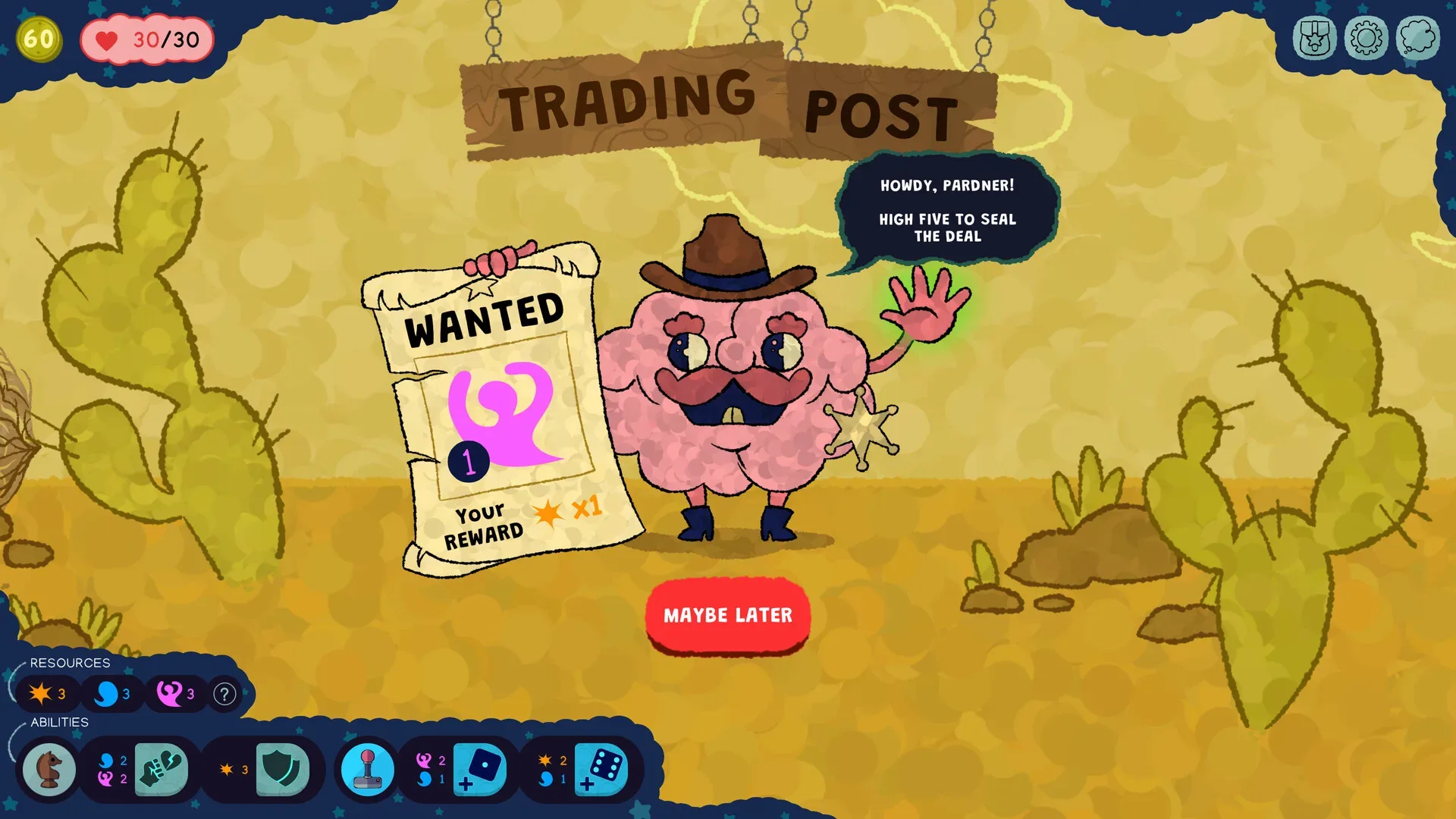
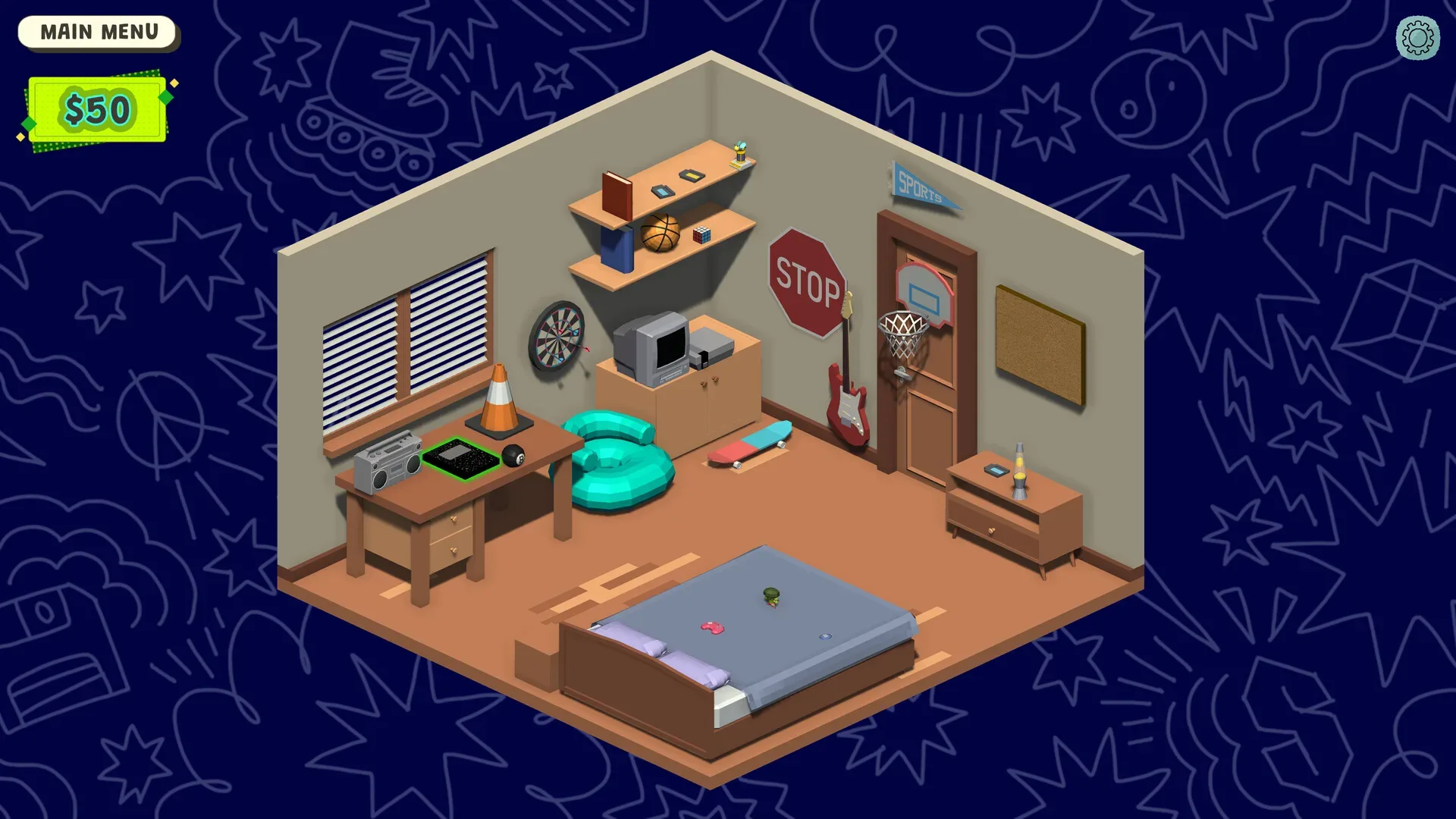
The launch version further includes a nostalgia shop where Allowance can be spent on retro decorations. The known items include retro video games, lava lamps, boomboxes, inflatable chairs and skateboards. This is separate from the combat-and-build loop, serving the game’s ’90s presentation and providing an outlet for Allowance. The description does not state whether those decorations affect gameplay, so it is safest to view them as cosmetic or collection-oriented until the game specifies otherwise.
Four weekly additions begin with Midnight Mix
The post-launch cadence is unusually immediate: four free mini-expansions in four consecutive weeks. Since they are added automatically for everyone who owns Slumber Realm, there is no separate claim process mentioned for the updates. Midnight Mix begins the series on November 11, and its night-focused label is the only confirmed thematic detail so far.
Staggering the other three reveals gives players a reason to revisit the game’s card pool, Aspect combinations and Knightmares as the month develops. Still, the contents, scale and exact release details of those later mini-expansions are not yet known. It would be premature to treat them as a guaranteed number of cards, enemies or modes. What is confirmed is their weekly Wednesday schedule and their free availability to owners.
Slumber Realm had already appeared at GDC 2026 and Tiny Teams 2025 before release, and it earned attention as a dice game to watch during 2026. Now that the full Steam version is live, its compact run length, accessible d6 foundation and emphasis on ordered card interactions are the clearest reasons to keep an eye on it. For another upcoming Steam release built around a very different kind of repeatable systems play, see Outcity’s farm automation and skeleton raids.
For Slumber Realm specifically, the immediate options are simple: try the demo, pick it up during the 10-day launch discount if the approach clicks, and watch for Midnight Mix on November 11. The larger question—how much the weekly mini-expansions reshape the available strategies—will be answered as the next four Wednesdays arrive.