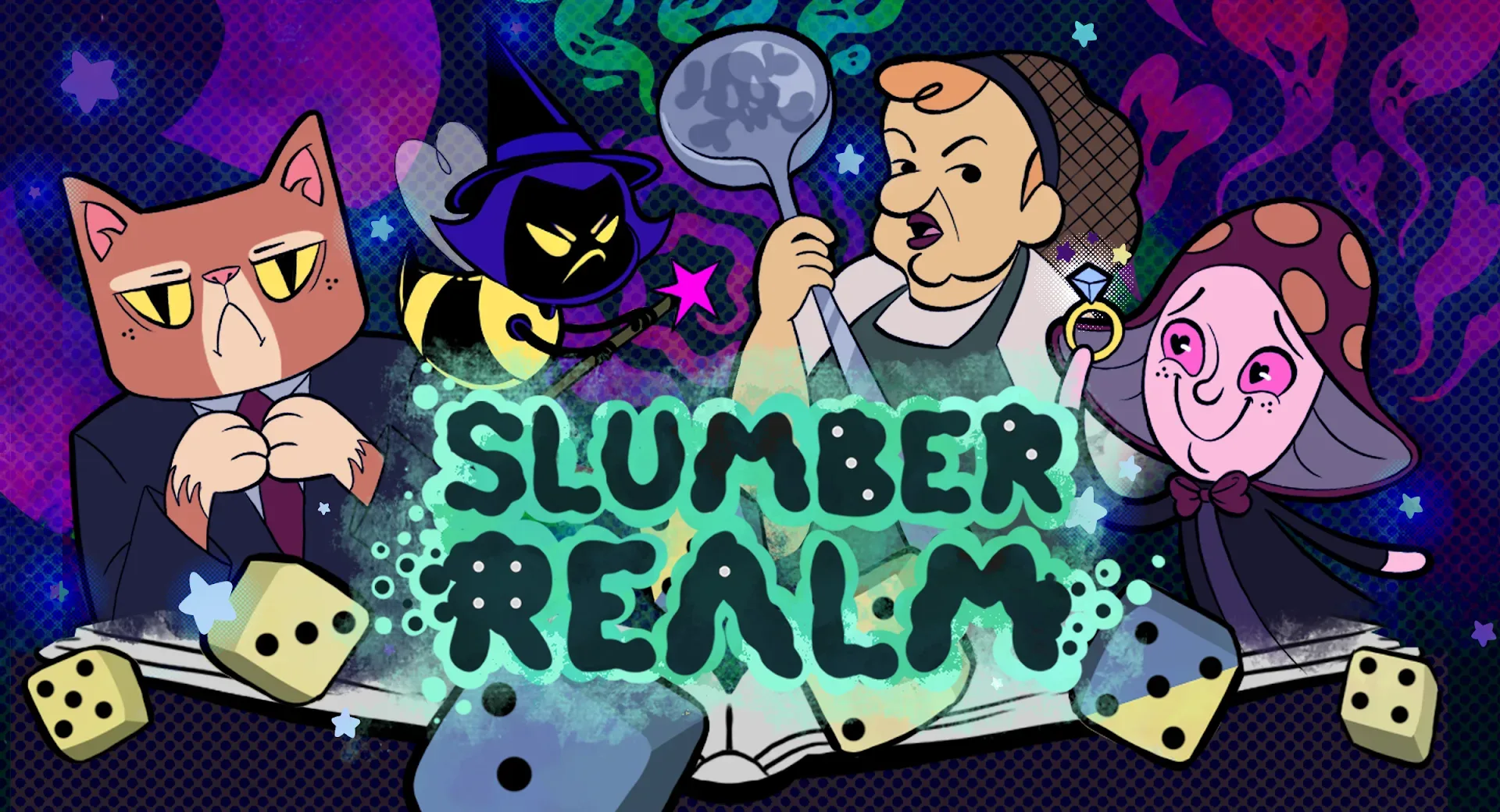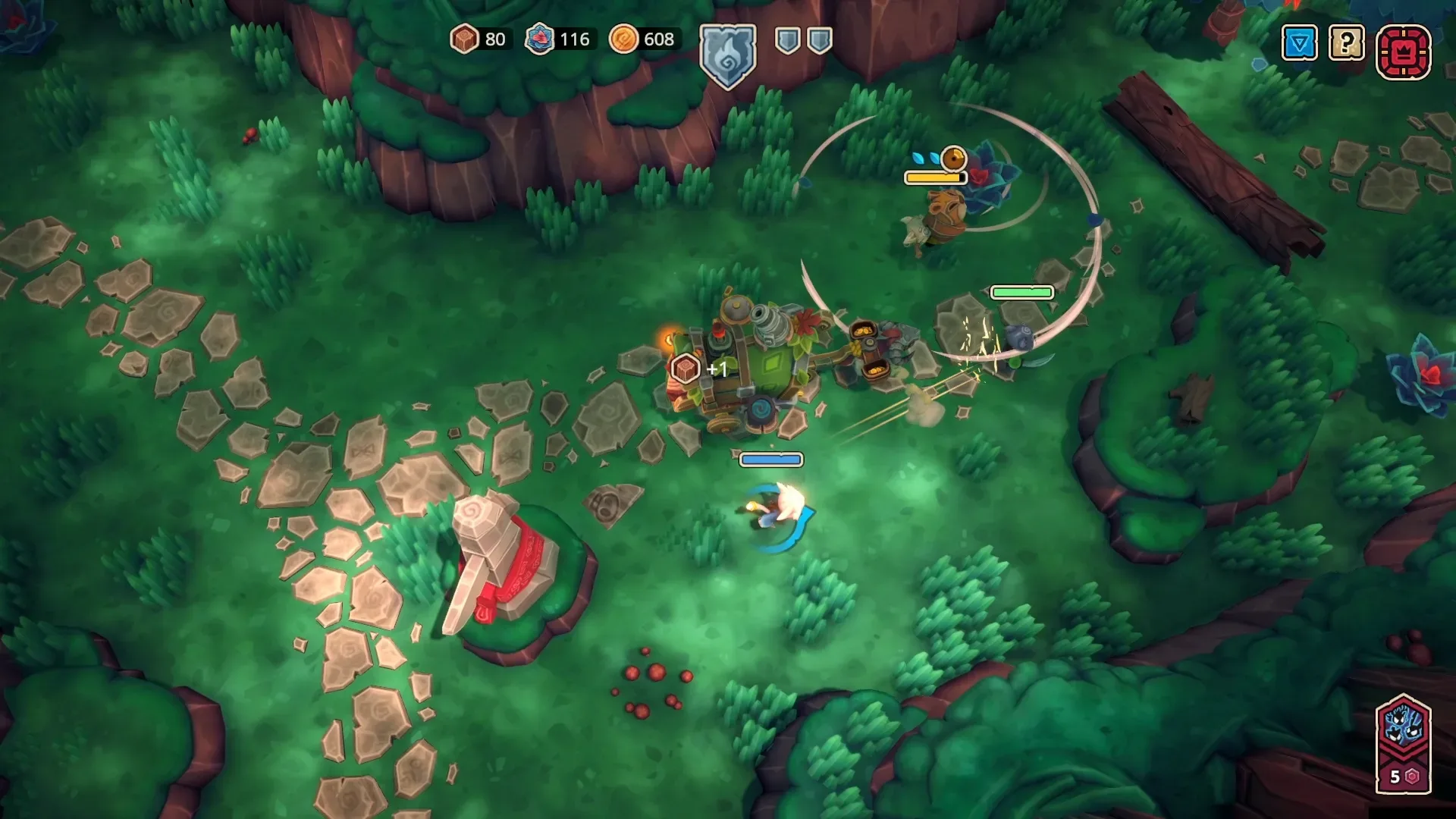
Slumber Realm, a dice-driven roguelike led by Brian Cronin of Monster Train and Inkbound credits, is scheduled to launch on Steam on November 4. Its central hook is admirably specific: rather than handing players a fistful of dice or a sprawling set of separate action rolls, the game says that one die roll triggers an entire build.
That premise puts the roll at the center of both the game’s strategy and its tension. Slumber Realm is framed as a ’90s-soaked trip through childhood fears, where players can assemble big combinations, confront unusual enemies including broccoli, and decorate a bedroom with nostalgic relics. The result is a setup that pairs roguelike escalation with a knowingly strange dream-world tone.
For a closer rundown of the announced Steam release and its bedroom-nostalgia angle, see Slumber Realm’s November 4 Steam plans.
One roll, an entire build
The most important phrase in Slumber Realm’s pitch is not simply “dice roguelike.” Dice appear across many games as a shorthand for chance, damage ranges, movement or a turn’s available actions. Here, the stated design is more focused: a single roll sets off the player’s full build.
In roguelike terms, a build is the connected set of effects, upgrades and synergies a player has accumulated during a run. A build may reward a particular numerical result, make an effect repeat, modify a trigger, or create a sequence in which one action activates another. The word chain matters for the same reason. A chain is an ordered cascade of effects rather than one isolated outcome.
Slumber Realm promises “wild combos,” so its appeal will likely rest on how clearly players can read and shape those cascades. The available information does not spell out the game’s individual upgrades, probabilities, encounter structure or failure conditions, and it is better not to assume them. But the basic pitch establishes a useful strategic question: how can a player make the result of one die meaningful enough to carry a whole turn or sequence?
That is a different emphasis from a system where more dice automatically means more options. A one-die foundation can make each result feel personal. If a run has been constructed around a number, a reroll-like effect, an ordering of triggers, or a relationship between several bonuses, the tension is concentrated into a moment that is easy to understand: the die lands, then the plan either starts humming or needs to adapt.
Roguelike chance is not the same as blind luck
A dice game naturally involves randomness, but randomness alone is not a strategy system. The more compelling version of a dice roguelike gives players ways to influence what a roll means. That influence can take many forms in the genre: building around outcomes, changing modifiers, deciding when an effect activates, or accepting trade-offs that make some results stronger than others. Slumber Realm’s public description confirms the combination-building ambition, even though it does not yet detail the tools used to achieve it.
That distinction is useful for prospective players. “One die roll triggers your entire build” could sound like a game that lives or dies on a single lucky number. The more promising reading is that the roll is the spark, while the build determines the fire. Whether Slumber Realm consistently delivers that balance will depend on the final game’s specific systems, but the premise is clear enough to explain why the demo has attracted attention.
Childhood fears, broccoli and a deliberately odd dream logic
Slumber Realm’s theme is not a generic dungeon crawl. Its setting is rooted in childhood fears and ’90s nostalgia, with broccoli called out as an enemy alongside the broader promise of battling things that once seemed frightening. That is a tone built on exaggeration: domestic or everyday anxieties become monsters, and an ordinary bedroom becomes part of the game’s identity rather than merely a menu backdrop.
The broccoli detail does real work in communicating that identity. It signals that the game is not presenting its fears with unbroken horror seriousness. Childhood imagination often turns mundane objects into looming problems; making a vegetable a combatant follows that logic. It also gives Slumber Realm a visual and tonal distinction from the more familiar roster of skeletons, demons and fantasy beasts associated with the genre.
The ’90s element is similarly best understood as a stated aesthetic direction, not a list of confirmed references or licensed objects. The supplied details do not identify particular toys, consoles, brands, music or television properties. What they do confirm is an emphasis on nostalgic relics and bedroom decoration. That gives the game a personal-space component to complement its run-based action.
Bedroom decoration appears to be part of the reward loop
Players will be able to decorate their bedroom with nostalgic relics. This is a notable part of the pitch because roguelikes are often associated with a repeating structure: a run ends, a player returns to a hub or starting point, and the next attempt begins with new knowledge or progression. Slumber Realm’s bedroom seems positioned as a more expressive version of that between-run space.
The confirmed information does not define how relics are obtained, whether decoration has gameplay effects, how many items are available, or whether customization is purely cosmetic. Those are meaningful unanswered questions. Still, the feature makes thematic sense. A bedroom is an especially direct symbol of childhood, privacy and imagination, so filling it with nostalgic objects can make player progression feel visible without requiring every reward to be an abstract stat increase.
It may also give a run-based game a broader sense of continuity. Roguelikes regularly ask players to begin again. A customizable room can record that the player has been somewhere, earned something, or developed an identity across attempts, even when an individual build disappears at the end of a run. That is analysis rather than a confirmed mechanical promise, but it explains why the feature fits Slumber Realm’s broader concept.
Why Cronin’s previous credits will draw attention
Brian Cronin is identified as the project’s lead and is associated with Monster Train and Inkbound. Those credits give genre-minded players a useful point of reference: this is a project led by someone with prior roguelike experience, rather than a game using the label only as a loose marketing term.
They should not, however, be treated as confirmation that Slumber Realm will reproduce the systems, structure or scale of those earlier games. The evidence supports the leadership credit and the new game’s own dice-and-combo premise; it does not establish a direct mechanical lineage. Slumber Realm’s single-die setup, childhood-fear framing and decorating feature are its own stated pillars.
The practical takeaway is straightforward. Players who value dense synergies and replayable build experimentation have a clear reason to watch the game, while players drawn to its stranger side have a clear tonal promise as well. It is attempting to make calculation, chaos and a particular nostalgic mood work together.
Demo attention and the release timetable
Slumber Realm’s demo has already received a strong piece of recognition: it was selected as one of the dice games to watch in 2026, and its demo was described as one of the strongest roguelite demos available on Steam. That is praise for the demo, not a guarantee of the full release, but it indicates that the game’s core loop has made an impression ahead of launch.
The Steam release is set for November 4. An embargo is scheduled to lift on Tuesday, November 3, at 09:00 PST, 12:00 EST, 17:00 GMT and 18:00 CET. An embargo is an agreement that limits publication of certain coverage until a specified time. Its presence does not establish the content or verdict of forthcoming coverage; it simply marks a point when additional material may become public.
For now, the most concrete reasons to keep Slumber Realm on the radar are its concise mechanical hook and unusually specific atmosphere. A solitary die is asked to launch a whole build. Childhood anxieties are the opposition. Broccoli is apparently fair game. And the space players return to can be filled with nostalgic relics. It is a compact pitch, but one with enough internal character to stand out in a crowded roguelike field.