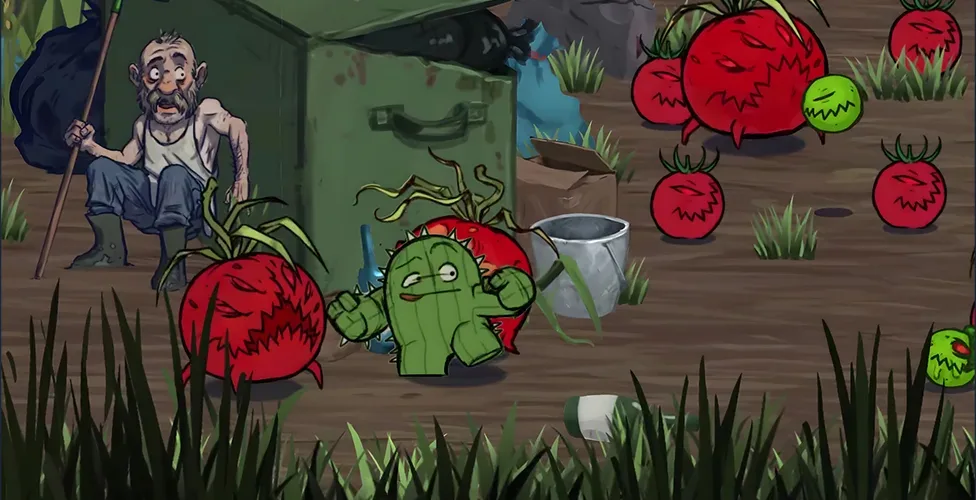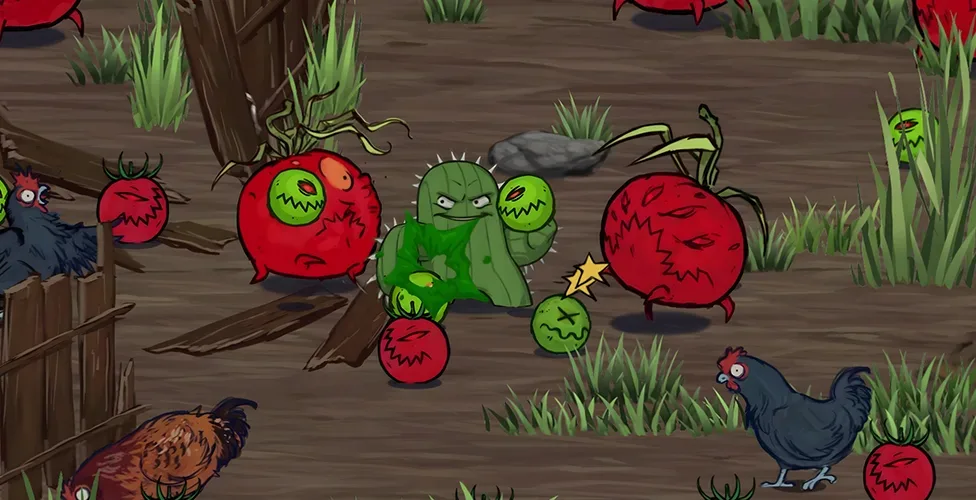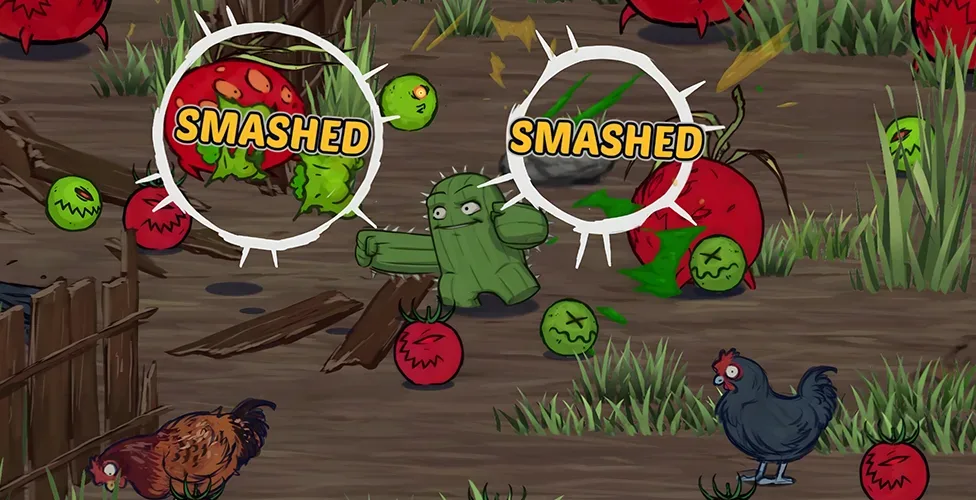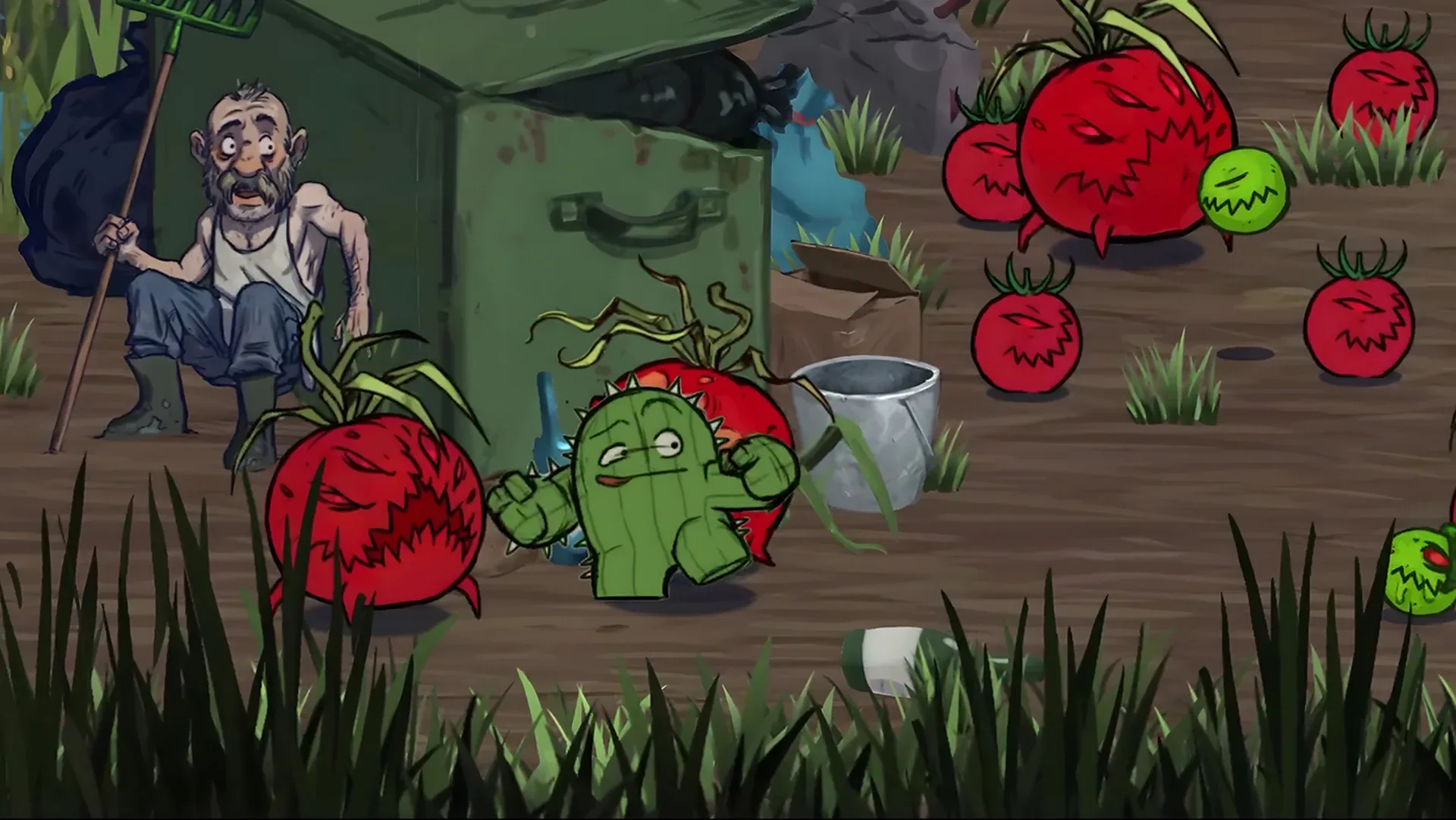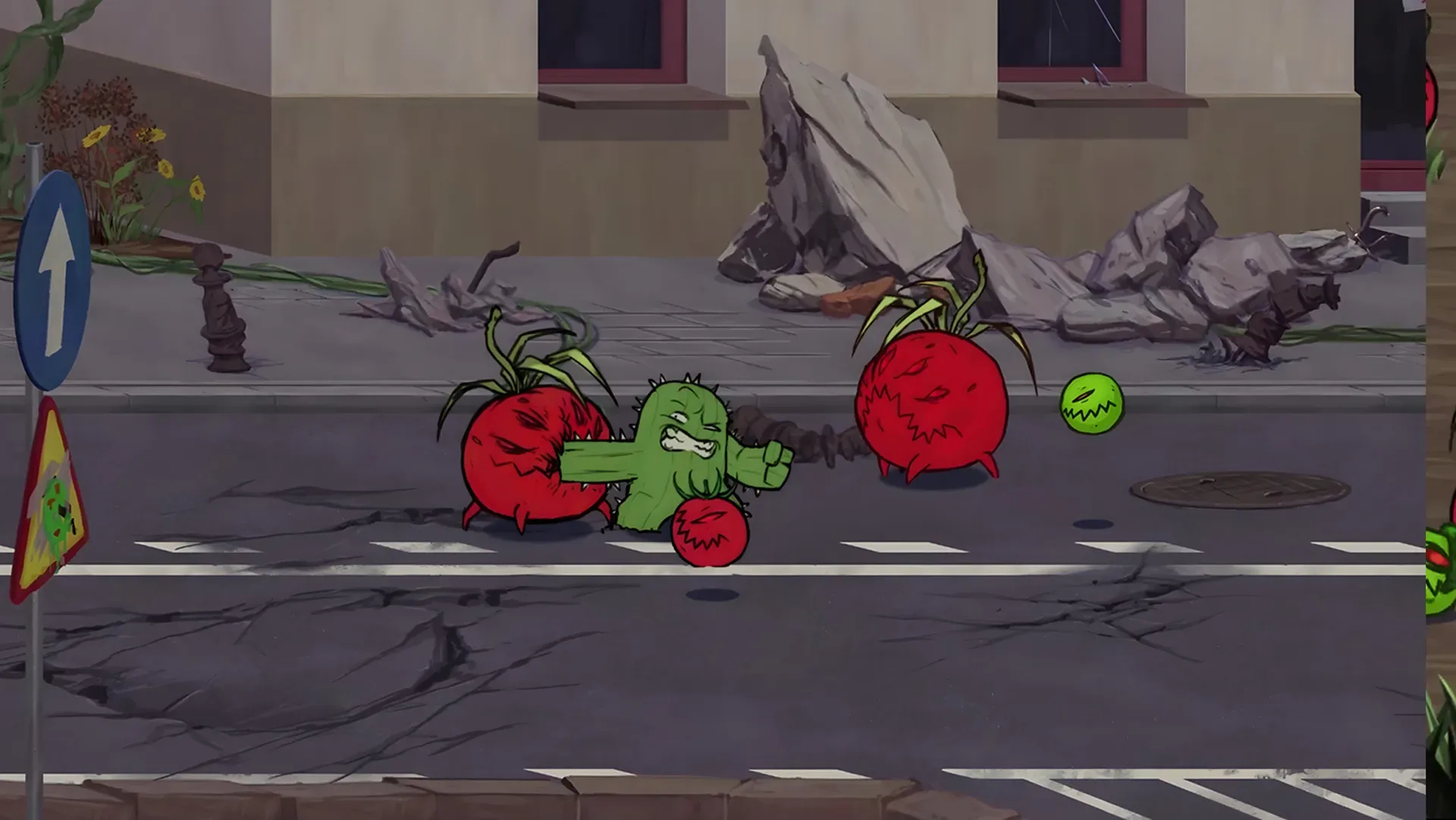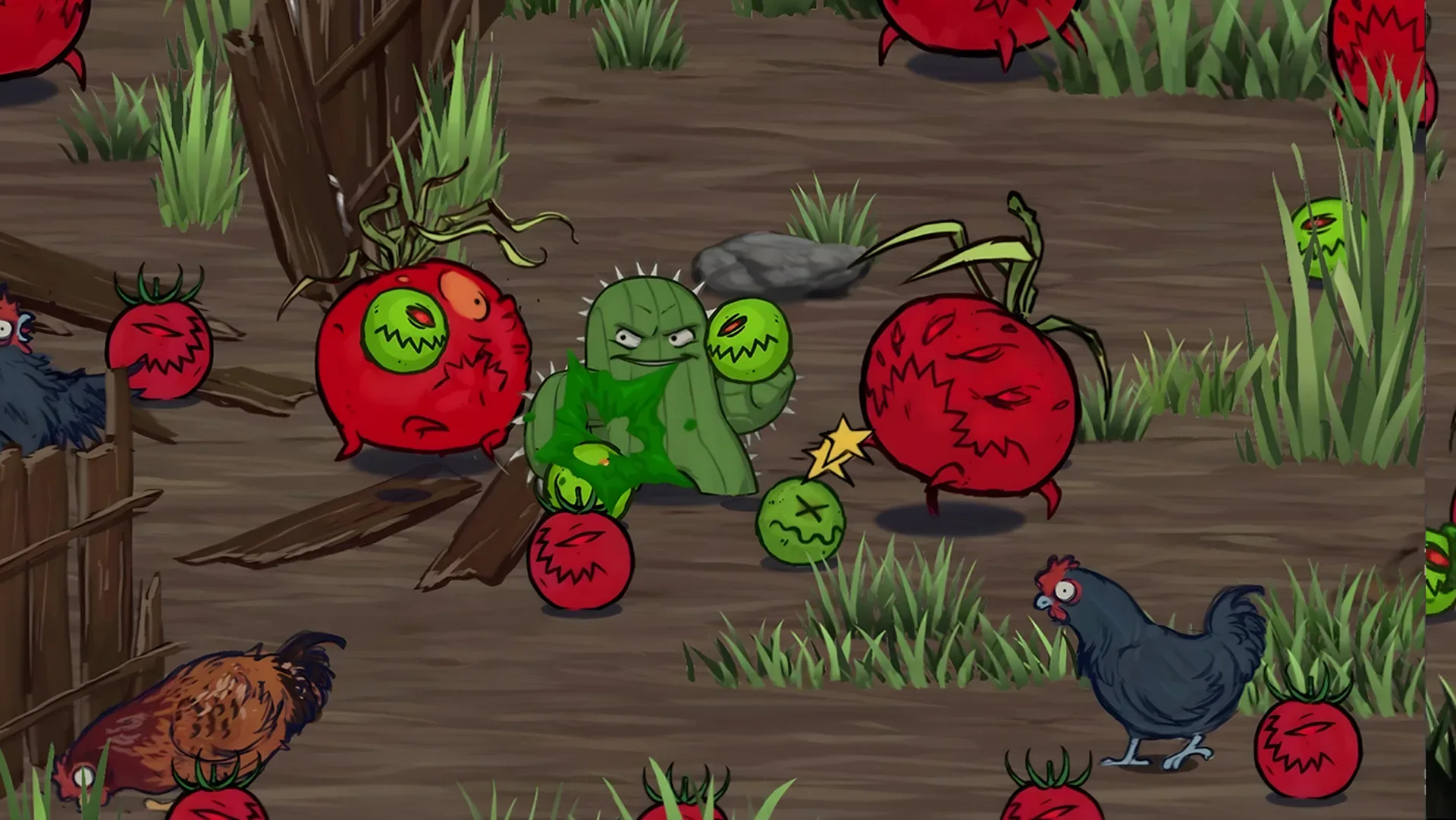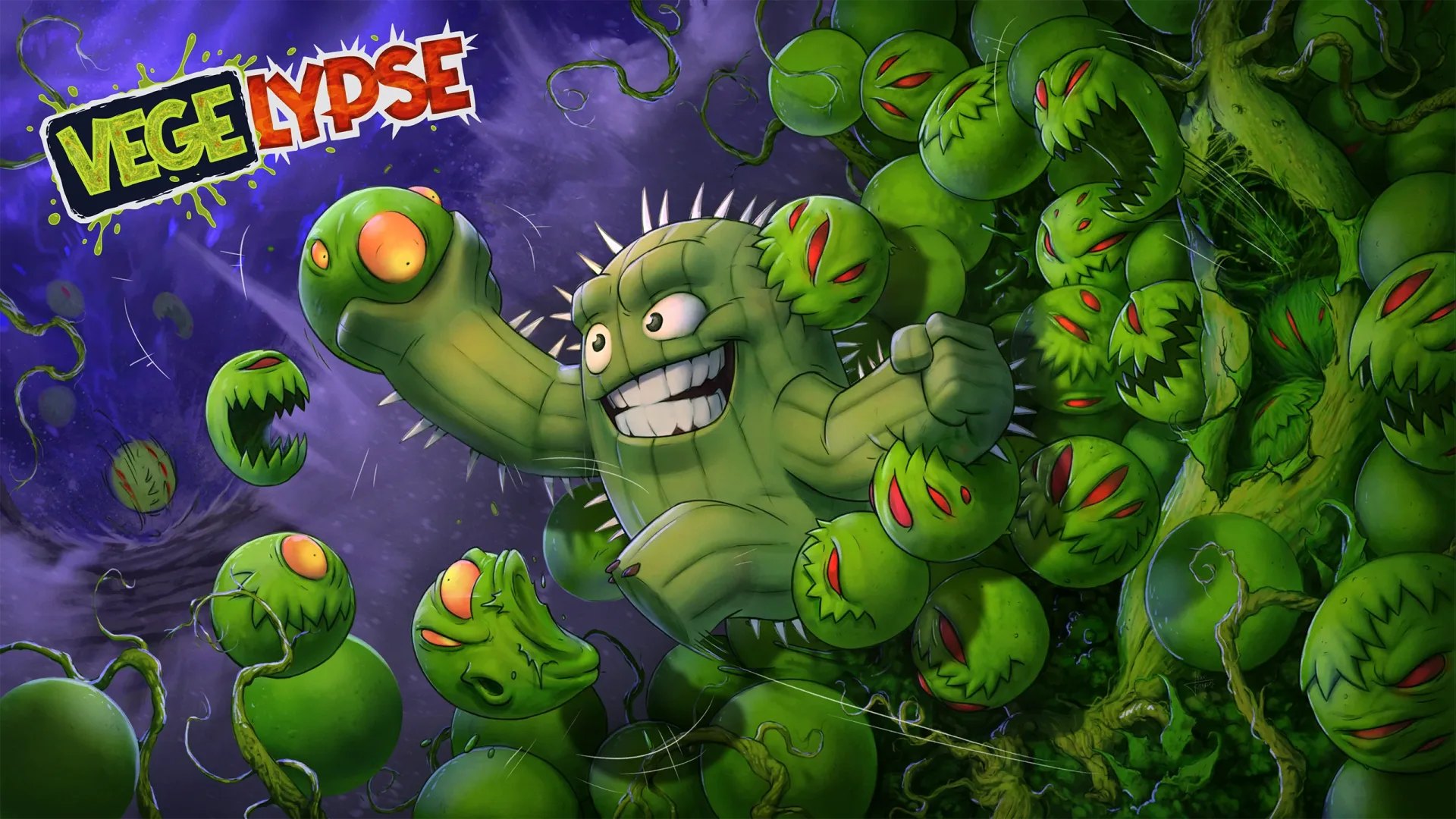
Vegelypse, a hand-painted 2.5D beat ’em up with roguelike elements from Jumble Cats Studios, is holding a Steam playtest from October 12 through October 25, 2026. It puts players in control of the Hard Rock Cacti Band, a group facing down armies of viciously mutated fruits and vegetables with a loud visual and musical identity to match its premise.
The test supports solo play as well as local co-op for two to four players. That makes it an opportunity not only to see how the game’s combat feels alone, but also how its run-altering systems hold together when multiple players are sharing the screen and fighting through the same hordes.
Vegelypse can be wishlisted on Steam, where the playtest is available during its stated October window.
What is included in the Vegelypse playtest?
The playtest has a substantial set of stated content for an early public build: 10 maps, three storyline quests, six enemy types, dozens of challenges and research objectives, more than 100 modifiers, and an Endless mode.
Those elements sit alongside the game’s advertised modes: Story, Arcade and Arena. The announcement does not define how each mode is structured or whether every listed map, objective and modifier appears in every mode, so players should regard the list as an overview of what the playtest contains rather than a detailed mode-by-mode breakdown.
- 10 maps
- Three storyline quests
- Six enemy types
- Dozens of challenges and research objectives
- More than 100 modifiers
- Endless mode
- Solo play and two-to-four-player local co-op
A beat ’em up built around changing runs
At its foundation, Vegelypse is presented as a classic beat ’em up. In practical terms, that means combat centered on directly confronting groups of enemies rather than distant, turn-based encounters. The 2.5D description indicates a game designed with dimensional-looking environments and presentation while retaining the focused action format associated with side-scrolling brawlers.
Its distinguishing wrinkle is the roguelike component. Here, that label is tied specifically to random modifiers, an evolution system and Perks. A modifier is a rule or effect that changes how a run plays. It may affect a character, combat conditions or another part of the action; the available information does not detail individual modifier effects. What matters is the intended structure: players are not simply repeating a fixed set of encounters with identical conditions every time.
The evolution system and Perks are likewise described as tools for creating variety between runs. “Runs” generally refers to individual attempts through a game’s action loop. Vegelypse’s use of that structure suggests that adapting to the selection of modifiers and character-building choices will be a central part of its replayability, rather than a side feature bolted onto traditional stage clearing.
Related coverage includes Vegelypse Steam Playtest Brings Cactus Band Brawling to October.
The scale of the modifier count is notable: the playtest lists more than 100. A big pool alone does not explain how frequently individual effects appear, whether they stack, or how much control players have over selecting them. Still, it establishes that changing conditions are meant to be a major pillar of the test. The research objectives and challenges add further goals beyond simply defeating enemies, though their exact requirements have not been outlined.
Local co-op is a key part of the test
Vegelypse’s local co-op option supports between two and four players. Local co-op means participants play together on the same system rather than through an online connection. The announcement does not list online multiplayer, cross-play or remote-play support, so those features should not be assumed from the inclusion of co-op.
For a brawler built around hordes, local multiplayer can change the practical rhythm of play. More players can mean more simultaneous attacks, more movement to track and more chances for a group to divide attention across enemies. It also creates an obvious question for the playtest: whether the systems based on Perks, evolution and random modifiers stay understandable when a full group is making choices and dealing with crowded combat. The test’s four-player ceiling gives groups a clear way to explore that side of the game.
Solo players are not left out of the structure. Vegelypse explicitly supports playing alone, allowing the same core mix of brawling, modifiers and objectives to be approached without a local group. The announcement does not provide balancing details for solo versus co-op sessions, so any differences in enemy density, difficulty or progression remain unspecified.
Hand-painted animation and hard-rock presentation
Vegelypse is also leaning into a particular audiovisual style. Its visuals are described as frame-by-frame hand-painted and inspired by classic cartoons. Frame-by-frame animation means individual frames are created to produce movement, rather than relying only on a small set of repeated poses or automated motion. The hand-painted description signals a deliberately illustrated approach to the characters and action.
That aesthetic supports the game’s absurd monster setup: a cactus band taking on corrupted produce. The result is a premise that is intentionally playful, but the stated combat package is conventional in the useful sense—hordes, maps, objectives, alternate modes and repeatable runs provide a recognizable framework for the strange cast.
The soundtrack is described as hard rock, with energetic riffs and driving drums. That is a natural fit for a game starring the Hard Rock Cacti Band, and it indicates that the music is intended to help sustain the pace of close-quarters fights. No track list, composers or audio settings have been announced as part of the supplied playtest details.
Story, Arcade, Arena and Endless: what is known
Vegelypse names Story, Arcade and Arena among its modes, while also calling out Endless mode in the playtest content. The three storyline quests give Story an obvious narrative-facing component, although the announcement does not reveal their plot, order or completion rules.
Arcade and Arena are named without further mechanical descriptions. They should therefore be treated as confirmed mode names, not as confirmation of specific score systems, survival rules, competitive options or match formats. Endless mode, meanwhile, is the one mode whose name plainly signals an extended repeatable format, though the announcement does not state what ends a session or how its difficulty progresses.
For players interested in other current PC test builds with a co-op angle, GRAVHOUNDS’ Steam demo also begins October 12, though its expedition and mod-deck approach is separate from Vegelypse’s cartoon-inspired brawling.
What players can reasonably look for during the test
The October playtest is an early chance to engage with the game’s combination of direct brawling and variable build systems. Based on the announced feature set, the most useful things to watch are how clearly modifiers communicate their effects, how Perks and evolution influence each attempt, and how naturally the system supports both a lone player and a local group.
The ten maps, enemy roster and objectives should also give participants multiple routes through the available build mechanics. With only six enemy types listed, the enemy count is more limited than the modifier pool; that makes the changing rules and player options especially important to the game’s promised variety. This is analysis of the announced structure, not a claim about the final balance or quality of the playtest.
Vegelypse’s premise is built for players who want a colorful, music-fueled brawler but also want their repeated sessions to change shape. Its playtest runs until October 25, 2026, on Steam.