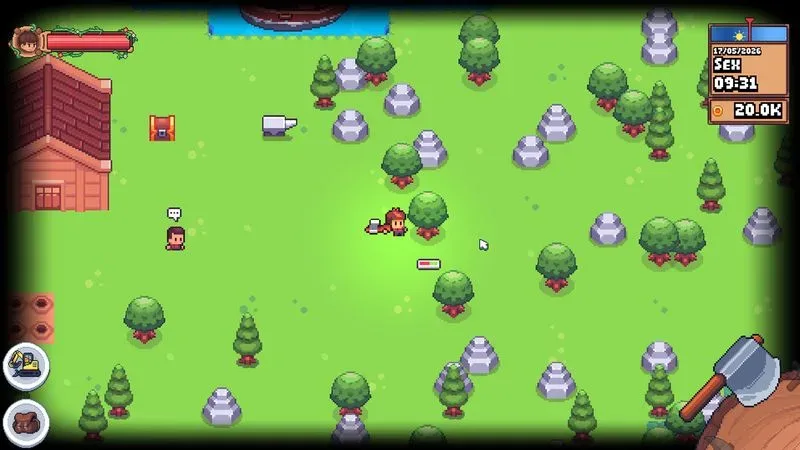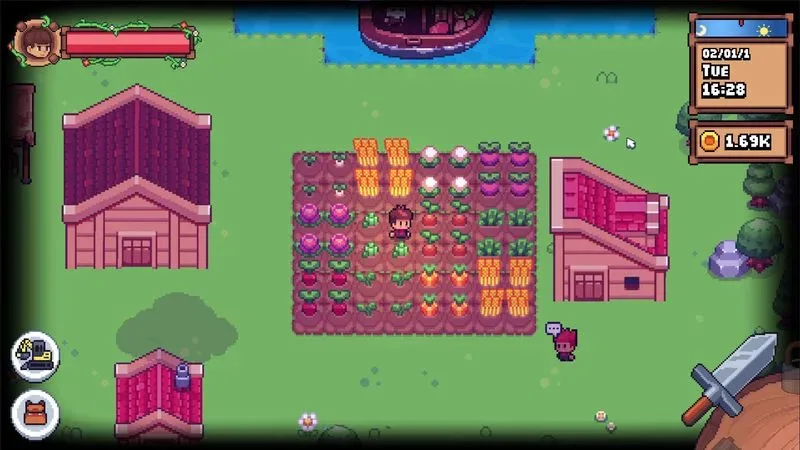
Outcity, the cozy farming sandbox from Brazilian developer Titan Games and publisher indie.io, is scheduled to reach Steam on December 10, 2026. Its central idea is straightforward but promising: build up an overgrown rural homestead, then gradually hand parts of its upkeep to villagers whose work is defined by the tools they carry.
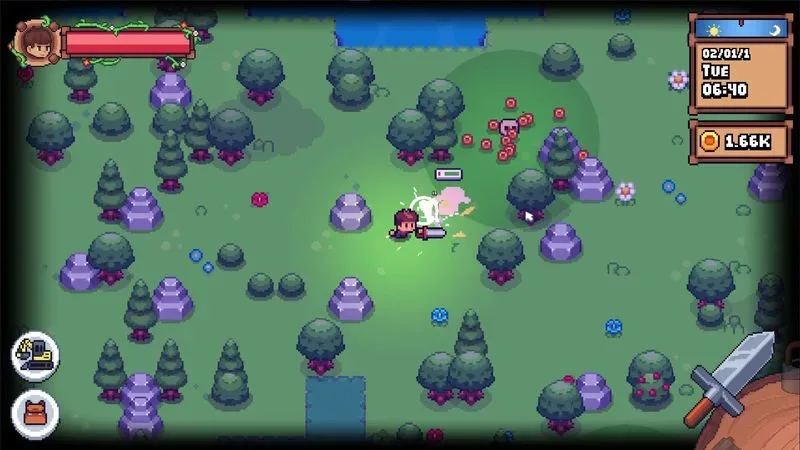
The game starts players in countryside that needs clearing and reshaping. From there, the settlement can grow through farming, irrigation, decoration, construction, fishing, cave exploration and expansion into additional biomes. The full release will also add NPC automation, allowing villagers to take on everyday jobs such as planting and harvesting, while a light combat layer asks the settlement to withstand skeleton raids at night.
That mix places Outcity between a hands-on homestead builder and a management game. The player is not simply making a farm attractive or producing crops; they are organizing labor, considering where villagers live and deciding which upgrades best support the settlement’s next stage.
Villager tools are the basis of automation
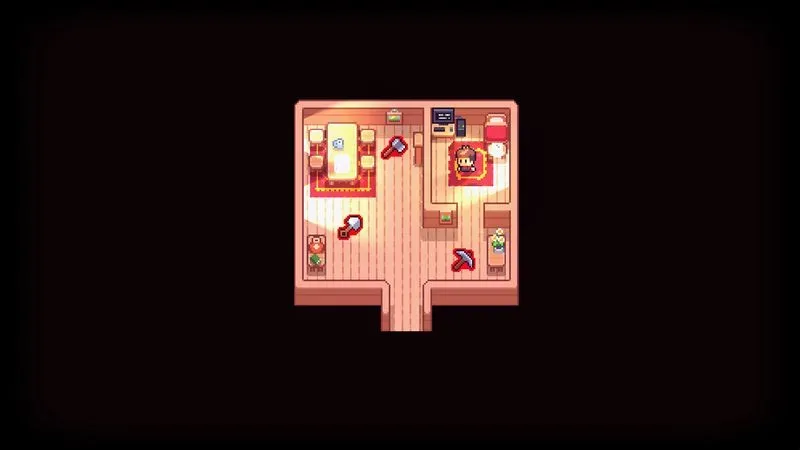
Outcity’s automation is built around equipment rather than an abstract job-menu system. A villager’s carried tool determines the job they perform. Give a villager the appropriate farming tool, for example, and that character can contribute to planting or harvesting. Equip one for combat and they can respond to nighttime threats.
That is a useful distinction for a farming sandbox. “Automation” can mean many things, from machines that process materials on their own to NPCs who repeat selected jobs. Here, it specifically means assigning members of a growing settlement to work. The stated loop connects character equipment directly to behavior: tools tell villagers what role to fill.
The villagers also gain experience through work. While the exact effects of that experience have not been detailed, the system establishes a longer-term reason to keep track of who does which job rather than treating every villager as interchangeable. Housing placement matters, too: villagers are more efficient when working closer to their homes.
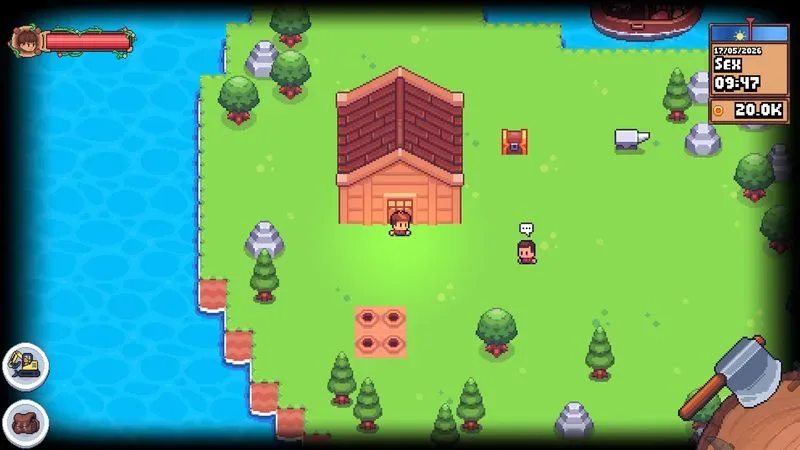
In practical terms, the layout of a settlement may be more than cosmetic. A player placing homes, fields and other work areas will be balancing a farm’s appearance with the travel distance villagers need to cover. A beautiful village spread across a large area could require different planning than a tighter, purpose-built work hub. The available details do not specify how efficiency is calculated, but they do make proximity a stated management consideration.
A farm built around gradual expansion
Before assigning workers, players will have land to reclaim. Outcity begins with an overgrown countryside, and clearing it is part of making the homestead usable. The player can shape that space, manage irrigation and decorate the property, suggesting that farming and construction sit alongside each other rather than being separate activities.
Irrigation generally refers to directing water to crops or cultivated areas. In Outcity, it is listed as a system players manage, but the specifics of water flow, costs or crop requirements have not been outlined. It is therefore best viewed as one of the game’s confirmed farm-planning mechanics, not a fully explained simulation feature.
The world extends beyond the starting property. New biomes bring their own resources, giving expansion a material purpose in addition to opening new scenery. Procedurally generated caves offer rare finds, while lakes create fishing opportunities. “Procedurally generated” means a game uses rules to create a space or its layout rather than relying on one fixed, hand-authored arrangement. For Outcity, the confirmed use is caves; no further claims about cave size, variation or the kinds of rare items available have been provided.
This gives the game several complementary activity loops:
- Homestead development: clear land, shape the countryside, irrigate fields and decorate.
- Settlement management: equip villagers, place homes thoughtfully and let workers gain experience.
- Exploration: travel into other biomes for their resources and search caves for rare finds.
- Fishing: use lakes as a separate gathering activity.
- Defense: prepare for nighttime skeleton raids without turning the whole game into a combat-first experience.
None of those loops needs to stand alone. Resources gained from new biomes may support construction or upgrades; a more developed settlement can make farm work easier to delegate; and combat-capable villagers can protect the homestead while other work continues. The exact economy and dependencies have not been detailed, but Outcity’s announced systems clearly point toward that kind of interconnected settlement-building rhythm.
More than 140 upgrades span five areas
Progression is another major part of the design. Outcity includes more than 140 upgrades across farming, fishing, construction, automation and combat. That is a broad spread for a game positioned around a cozy pace, and it suggests that players will have multiple paths for developing their settlement.
An upgrade system can serve very different roles in a sandbox: it might increase capacity, unlock new capabilities, improve efficiency or offer choices between play styles. Outcity has confirmed the number of upgrades and their categories, but not the exact effects, prerequisites or structure. It would be premature to assume a particular tech-tree format. What is clear is that automation is not an afterthought attached to farming; it is one of the game’s named development pillars, alongside combat and construction.
For players who enjoy optimizing a base, the combination of upgrades, worker experience and home proximity is likely to be the key area to watch. These elements can turn a simple task assignment into a planning problem: which jobs should be staffed first, how should the homestead be organized, and when is it worthwhile to improve automation instead of expanding the farm or pursuing resources elsewhere?
For players more interested in a relaxed building game, the same structure could support a slower approach. Decoration and homestead shaping are confirmed parts of the experience, while the raids are explicitly framed as light and playful. The game’s stated intent is to retain a cozy atmosphere instead of making combat an oppressive interruption.
Skeleton raids add pressure without changing the premise
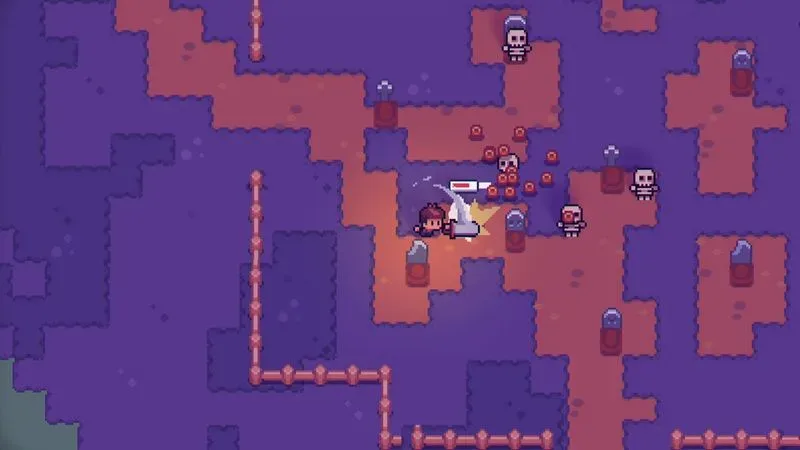
At night, skeletons raid the homestead. Villagers equipped for combat can chase the attackers away, bringing a defensive dimension to a farm that otherwise emphasizes cultivation and construction.
This is where the tool-based job system becomes especially meaningful. The same basic act—equipping a villager—can move a character between productive work and defense. During the day, villagers can help manage planting and harvesting. At night, combat-equipped residents provide protection. The available description does not say whether a villager can switch roles automatically, how raids scale or what happens if an attack succeeds, so those details remain unknown.
Still, the tone matters. The raids are described as deliberately light and playful, a qualification that sets expectations for the feature. They are an added point of activity and preparation, not evidence that Outcity is abandoning its farming-sandbox focus for survival horror or an action game structure.
That balance is potentially attractive to players who want a town to feel alive and occasionally vulnerable, but do not want every evening to become a major defensive event. It also gives combat upgrades and combat tools a concrete role within the settlement instead of isolating them from the main farming loop.
What is confirmed ahead of release
Outcity is coming to Steam on December 10, 2026. A free demo will be available before launch, and the game can be wishlisted on Steam now. The confirmed feature set includes villager automation, tool-defined roles, villager experience, efficiency tied to the distance between homes and work, over 140 upgrades, biome expansion, procedurally generated caves, lake fishing, irrigation, decoration and nighttime skeleton defense.
Several important details have not been specified. There is no confirmed price, no announced console version, and no detailed explanation of the upgrade interface, the cave-generation rules, resource lists, multiplayer, or how the game’s combat plays moment to moment. Players interested in those particulars should treat the demo as an opportunity to assess the game’s early systems rather than assume features beyond what has been announced.
Outcity’s appeal rests on its attempt to make a farm feel like a working settlement. Instead of stopping at sowing, gathering and decorating, it asks players to develop residents into a labor force and give their village a modest defensive role. The result, if its systems connect as described, could offer a cozy sandbox in which the most satisfying milestone is not just a larger field, but a homestead capable of looking after much of itself.
Players interested in other PC games built around traveling through distinct environments and developing a specialized gameplay loop can also read about The Legend of Khiimori’s newly detailed mountain and desert regions.