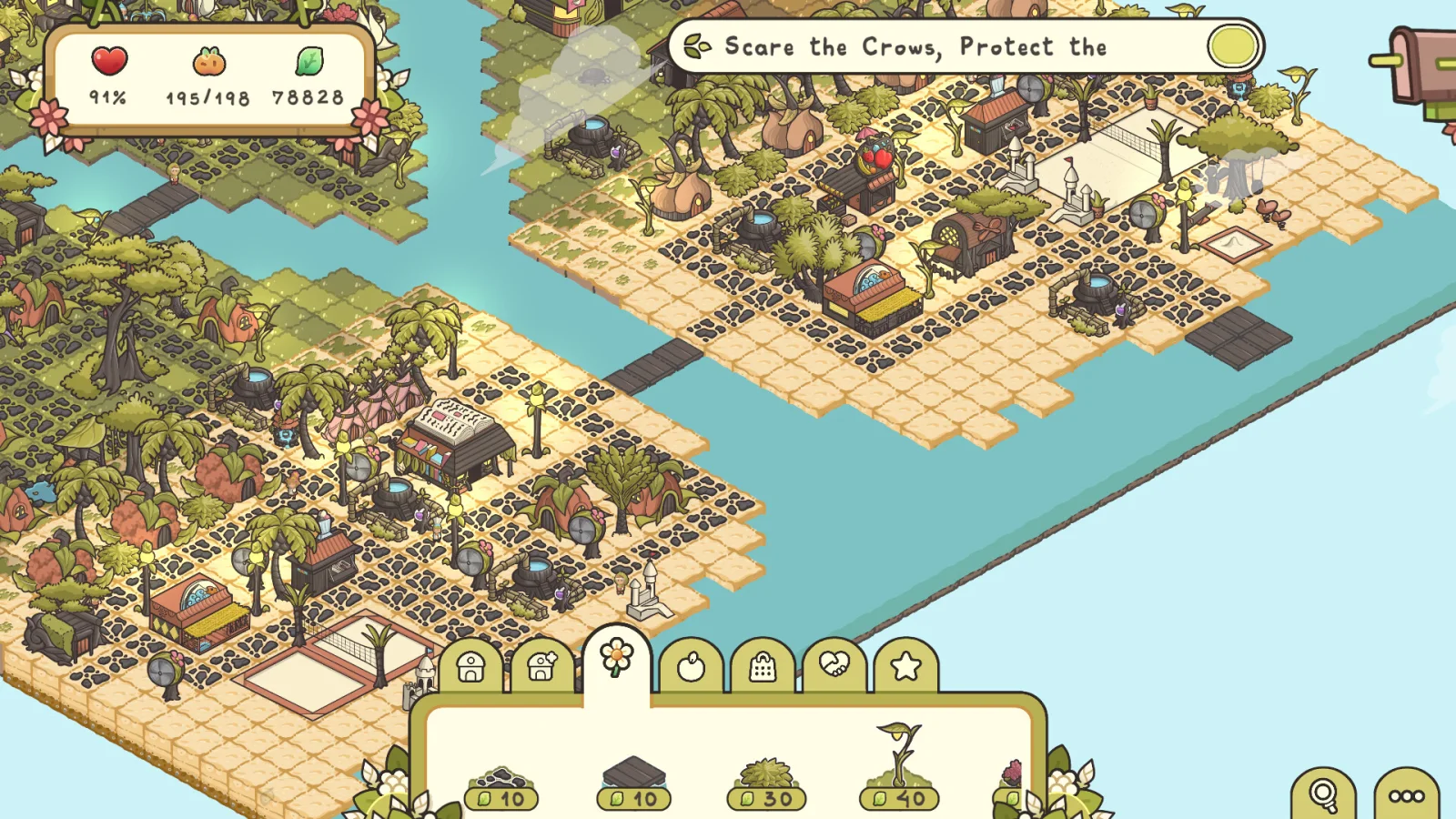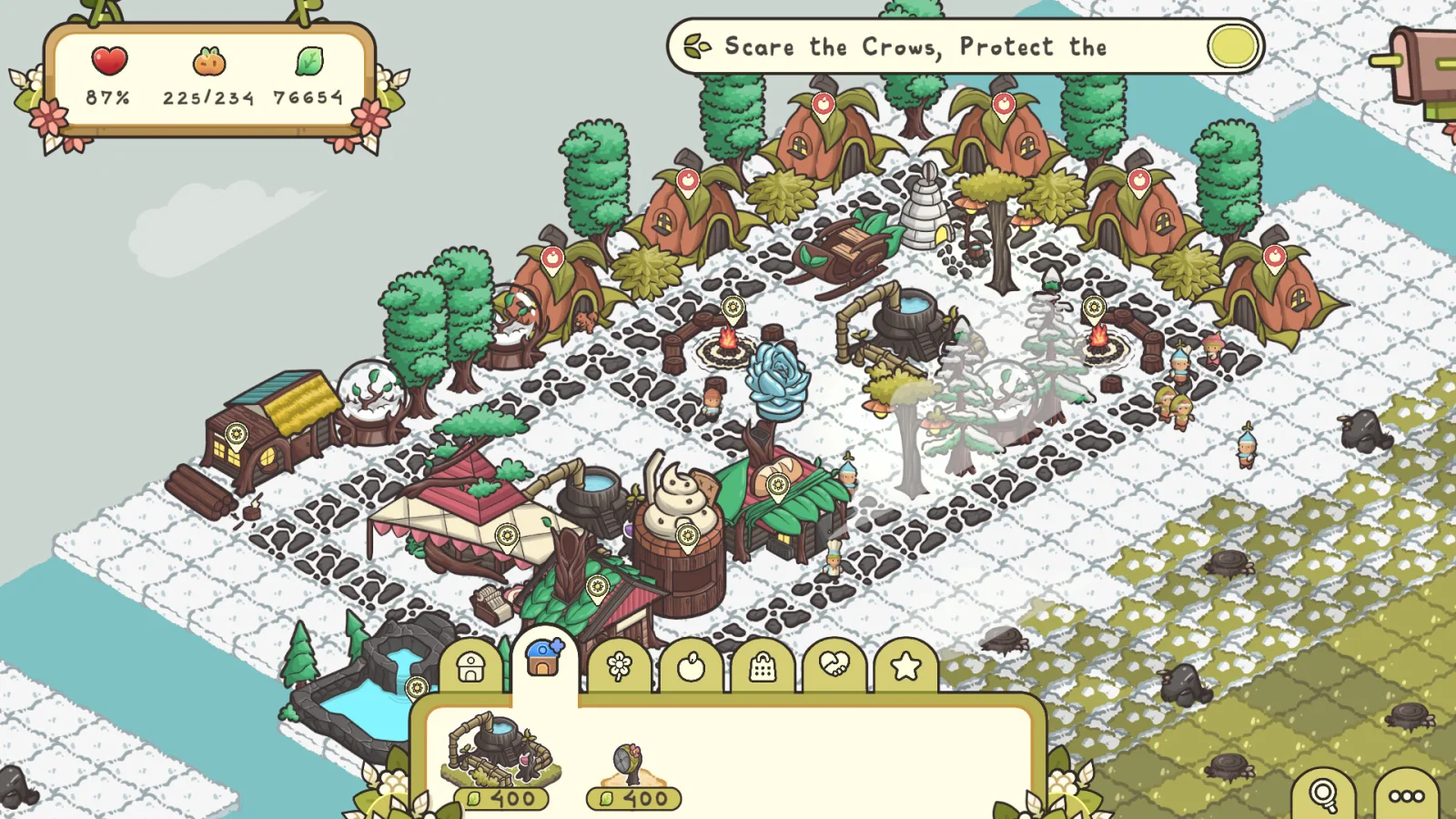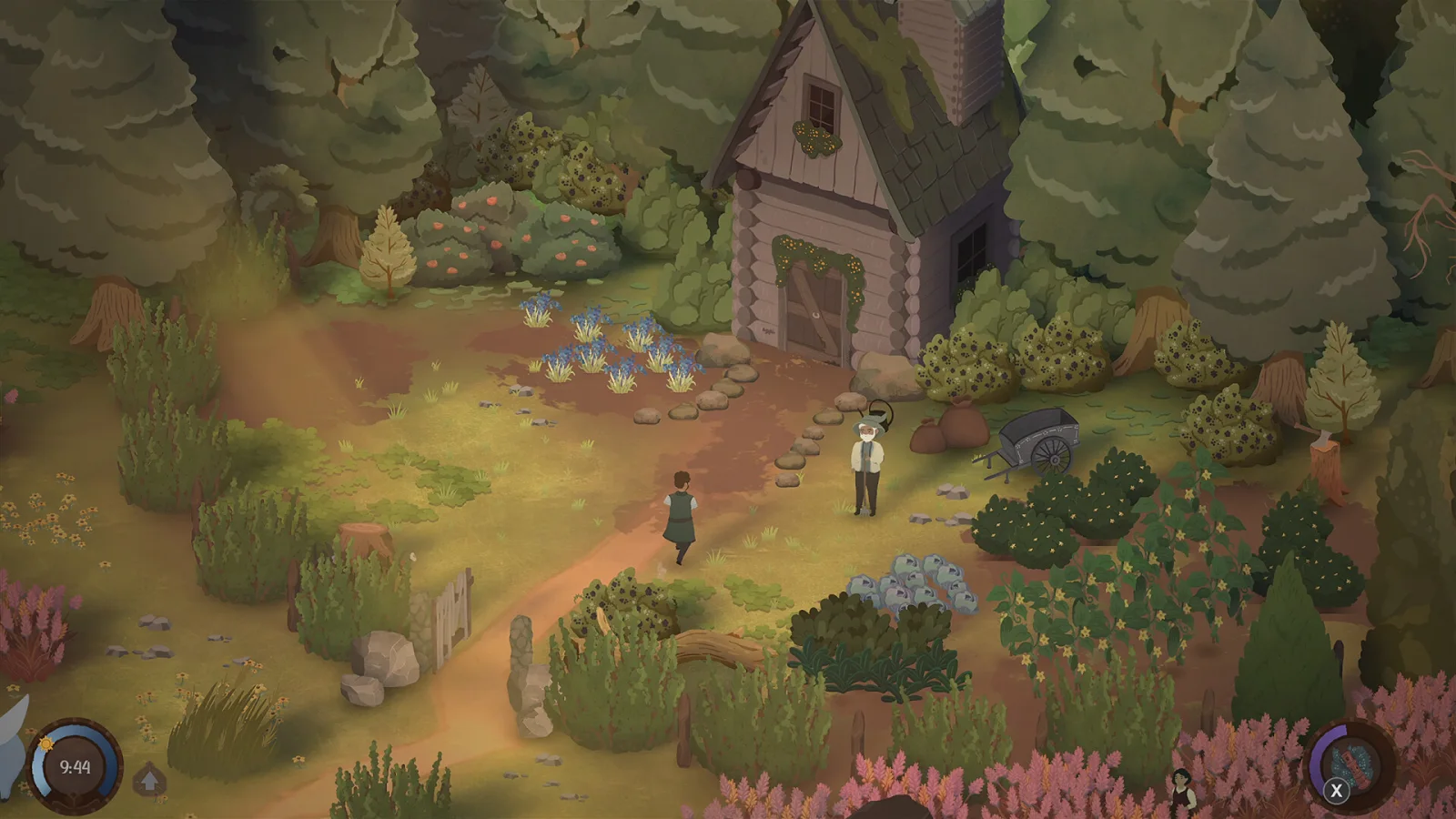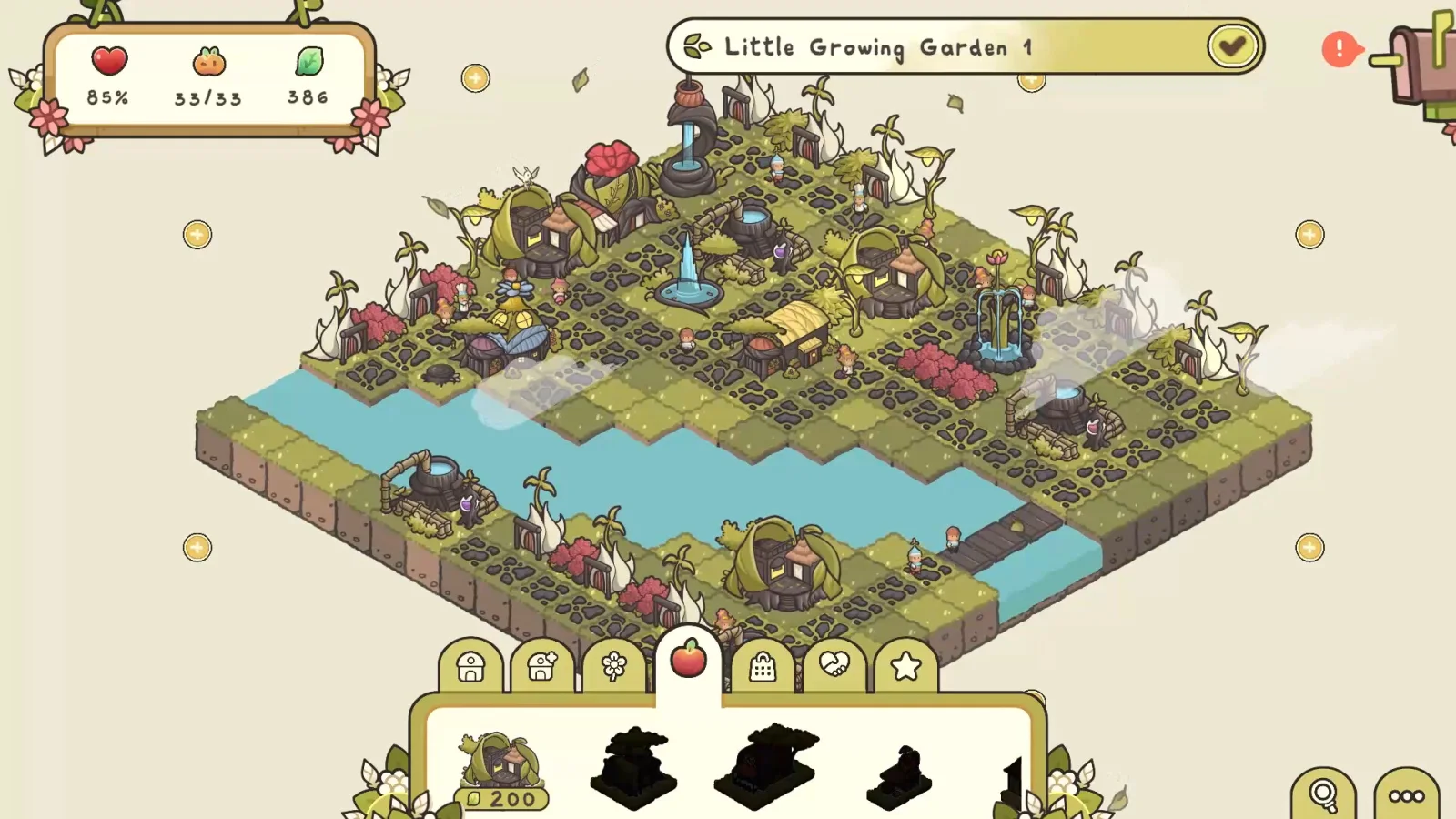
Verde is a city-management game from Antimeta Studio, published by Assemble Entertainment. It released for PC on August 12, 2026, with the official store listing also identifying Mac support. The listed genres are Casual, Indie, and Simulation, while the game’s own description places the emphasis more specifically on a cozy, nature-focused town-building loop: make homes for small residents called seedlets, answer their demands, attract more population, and continue building.
That is a clear statement of intent, and it is also a useful one. City builders can promise creative freedom while quietly making every decision serve an unforgiving optimization puzzle. Verde instead presents a different aspiration. Its stated audience is people who want to make attractive towns without worrying about efficiency, statistics, or perfect strategy. The announced design therefore invites a particular kind of question: can housing, population demands, decoration, and regional expansion give players meaningful reasons to shape a town while keeping pressure comfortably low?
The answer depends on implementation details the available description does not establish. It does not yet explain the range of buildings, the exact form of a seedlet demand, how population is counted, how regions are opened, or how challenges affect construction. Those omissions are not evidence of missing systems. They simply define the space where Verde will need its play experience to do the explanatory work. What is established is the intended loop, the nature-oriented presentation, and a philosophy that puts pleasant construction ahead of mastery for its own sake.
A stated loop of homes, demands, and population
Verde describes its core loop in unusually direct terms: build houses, fulfill demands, attract population, then build more houses. This suggests that homes are not merely visual pieces placed after the meaningful decisions are done. They are positioned as the point where town growth begins, while demands provide a reason to respond to the residents rather than simply fill empty land with structures.
At a high level, this arrangement could give a compact builder a dependable rhythm. A new home might create a new request; satisfying that request might make further residents available; a larger population might create opportunities or needs that lead back to more homes. If the links between those steps are legible, the town can become a visible record of decisions without requiring the player to memorize dense production tables or pursue an abstract efficiency target.
There is an important distinction between a loop being simple and a loop being shallow. A relaxed game does not need punitive failure states or a mass of competing currencies to create interest. It may instead derive texture from placement choices, changing requests, visual coherence, and the small satisfactions of making a settlement feel inhabited. Verde’s announced housing-and-demand structure could support that sort of gentle momentum, provided individual demands offer enough variation and their relationship to building space remains easy to understand.
Conversely, the description leaves open how demanding those demands will be. They could be brief placement prompts, longer construction objectives, resource-related requirements, or something else entirely. The wording supports the existence of demands, but not their cadence, complexity, consequences, or whether multiple residents can have overlapping needs. Those are central questions for a game that defines population growth through fulfillment. The eventual design will need to make requests feel like invitations to develop a town rather than chores that interrupt decorating it.
Cozy design needs room for expression
The official description makes customization a second pillar. Players are told they can put their own spin on a town through various cute designs, with the broader goal of creating something enjoyable to look at while relaxing. That is a sensible complement to the growth loop. If houses bring in seedlets and seedlets create demands, customization can stop expansion from becoming a purely functional exercise.
For a town builder aimed away from perfect strategies, visual authorship may carry much of the experience. The relevant design question is not whether every object has an optimized arrangement; it is whether different arrangements can feel intentional. A collection of designs could offer that feeling through contrast, repetition, neighborhood identity, or simply the pleasure of arranging a space until it suits the player’s eye. None of those specific behaviors are confirmed here, but they explain why decorative choice matters more than it might in a stricter management game.
The word “cute” also signals a tonal promise rather than a mechanical one. Verde appears to want its townscape and seedlet residents to be inviting, not imposing. That tone can help transform routine objectives into care-taking gestures. It can also make the town’s growth emotionally readable: an additional house is not only a capacity increase, but potentially another part of the settlement’s personality. Whether the finished game earns that response will depend on the visual variety and the responsiveness of its systems, neither of which can be judged from the announced description alone.
A forgiving creative game still benefits from boundaries. Complete freedom can become strangely directionless when players have no prompts to react to, while overly prescriptive demands can undermine the promise of personal expression. Verde’s stated mix of demands and customization could be a productive middle ground. Demands may give a player an occasion to alter the town, and the available designs may let them answer in their own style. The key is whether that relationship produces choices with character rather than merely a correct item to place.
Dewdrop Valley and the value of changing context
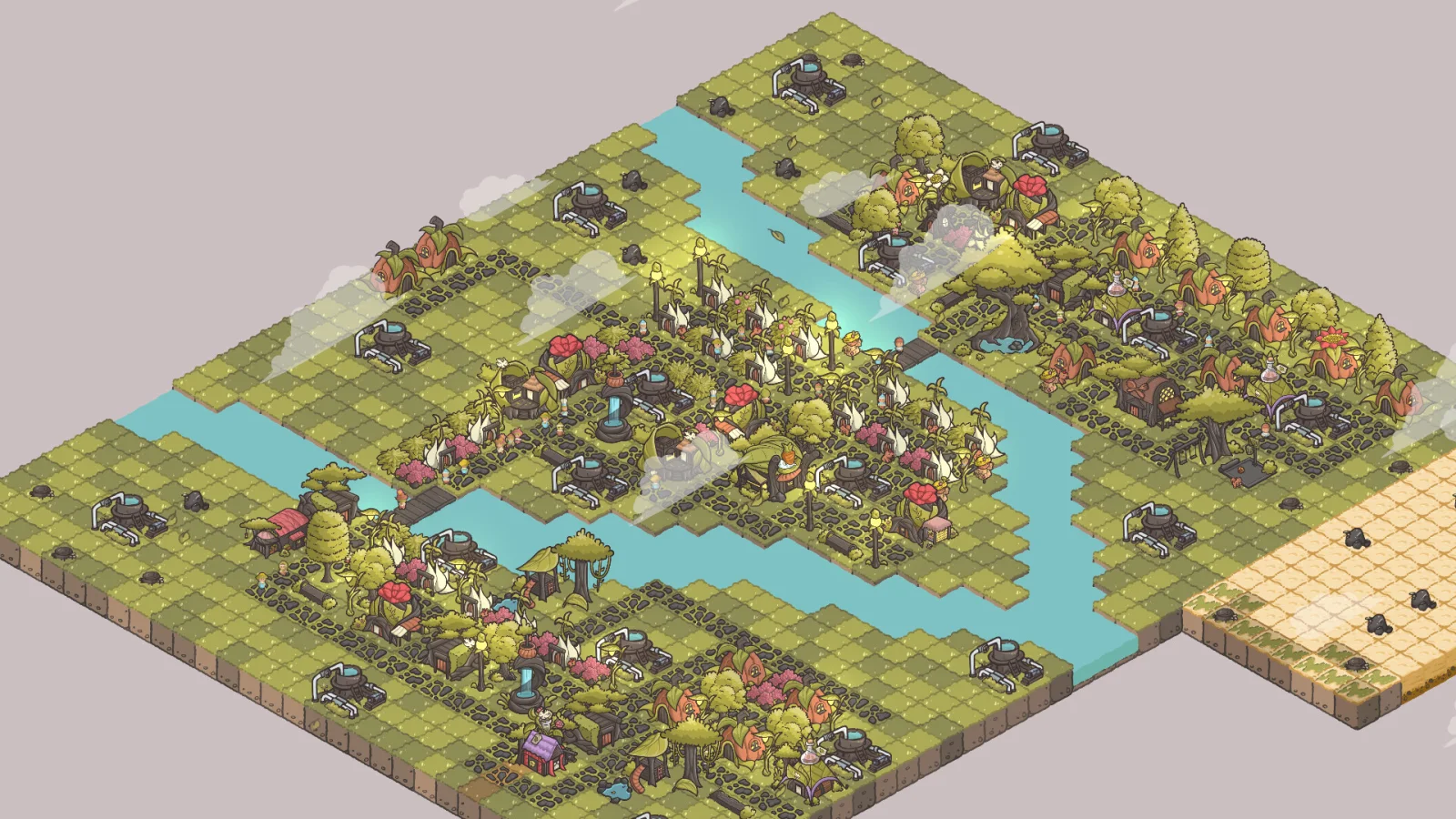
Verde also names Dewdrop Valley as its setting and says players will explore and build across different regions. Each region is described as having its own look and challenges. This is the most explicit suggestion that the game will change context over time rather than keep every construction decision on one uniform map.
Distinct regions could serve several useful purposes in a low-stress builder. Visually, they can refresh the town-making process by giving construction a new backdrop or atmosphere. Structurally, they can offer new circumstances for housing and demands without needing to turn the game into a high-pressure test. A challenge might ask for a different approach to the same basic cycle, encouraging the player to reconsider how their settlement grows. It could also simply frame each area as a new canvas with its own identity.
However, “unique challenges” is broad language. It does not establish what those challenges are, whether they are optional, how they relate to the seedlets, or whether regions are separate spaces or connected parts of one broader town. It also does not establish an order of access, a progression structure, or any conditions for reaching new areas. Those questions matter because regional change can either deepen a builder’s vocabulary or divide its attention among disconnected tasks.
The promising possibility is that Dewdrop Valley gives Verde a sense of discovery without asking the player to abandon its central calm. If each region changes the kinds of decisions worth considering while retaining familiar tools, the game could make expansion feel like adaptation rather than escalation. If the changes are mostly cosmetic, the regions could still be valuable as creative settings, though their “challenge” language would need more context to communicate what distinguishes them in play.
Management without the usual optimization mandate
Verde’s strongest announced identity may be its explicit rejection of pressure around efficiency, stats, and perfect strategies. That does not make it less of a management game. Rather, it suggests a different interpretation of management: responding to residents, organizing space, and growing a settlement at a pace that favors comfort over calculation.
This is not a trivial design choice. Conventional city-management systems often make players feel accountable to numbers even when the presentation is bright and friendly. There can be satisfaction in that rigor, but it creates a different emotional contract. Verde is presenting itself as a place where aesthetic preference should not be constantly subordinated to numerical performance. For players who want to build a lovely town without treating every tile as an efficiency problem, that is a focused and understandable proposition.
Still, low stress is not automatically the same as low engagement. The eventual balance will rest on whether the town supplies satisfying feedback for choices. Seedlets need to feel connected to the homes and demands associated with them; growing population needs to register as more than an unseen counter; customization needs enough visible impact that it feels worth pursuing. These are conditional design needs, not claims about Verde’s current implementation. They are especially relevant because the game foregrounds relaxation as a goal.
A useful gentle builder lets a player care about outcomes without making them fear mistakes. In Verde’s terms, that might mean demands are understandable, towns can develop in varied-looking ways, and regional challenges encourage experimentation instead of enforcing a narrow solution. The available information does not say how mistakes are handled, whether construction can be changed, or how strongly demands constrain layouts. Those details will determine where Verde falls between guided creative play and a more traditional management structure with a softer surface.
What the announced design makes worth watching
Verde has a coherent set of announced pillars: seedlet housing, resident demands, population growth, town customization, and multiple regions within Dewdrop Valley. The individual ingredients are familiar to the town-building genre, but their stated purpose is distinctive. The game is not pitching a contest to build the most efficient settlement. It is pitching the pleasure of making one that looks and feels pleasing while its small population expands.
That focus creates a sensible set of future questions. How many kinds of demand can seedlets make, and how directly do those demands influence town design? What makes one region of Dewdrop Valley play differently from another? How broad is the customization selection, and how much does it allow a player to establish a personal visual language? Most importantly, what gives continued building its momentum once the basic housing-and-population relationship is understood?
None of those questions contradict Verde’s calm ambition. They are the questions that ambition naturally raises. A game designed for unwinding may not need elaborate economic simulation, but it does need a steady supply of small, readable reasons to make another choice. Verde’s announced loop has the right broad shape for that: residents create a human-scale purpose, houses put the purpose on the map, and decoration makes the result belong to the player.
Players interested in other PC projects examined through their stated systems can also read our Radiotext PC design feature. Its subject is very different, but the same design-focused approach is useful when a game’s central promise needs to be separated from assumptions about how it will ultimately play.
The design case for Verde
Based on its official description, Verde is a released PC town-management game built around an intentionally unhurried premise. Players are meant to construct homes for seedlets, fulfill their demands, attract more of them, personalize the settlement’s look, and build through the varied regions of Dewdrop Valley. Antimeta Studio and Assemble Entertainment are presenting those elements as an alternative to optimization-heavy city building rather than as a stripped-down version of it.
The announced design is therefore easy to understand but still open in meaningful ways. Its appeal will hinge less on raw complexity than on the texture of its demand cycle, the individuality of its regions, and the expressive range of its town customization. If those components reinforce one another, Verde could make a modest management loop feel personal and restorative. If they do not, the same simplicity could leave the town without enough reasons to keep changing. The official description establishes the intent; the unanswered questions are where the design will either find its lasting charm or need further support.