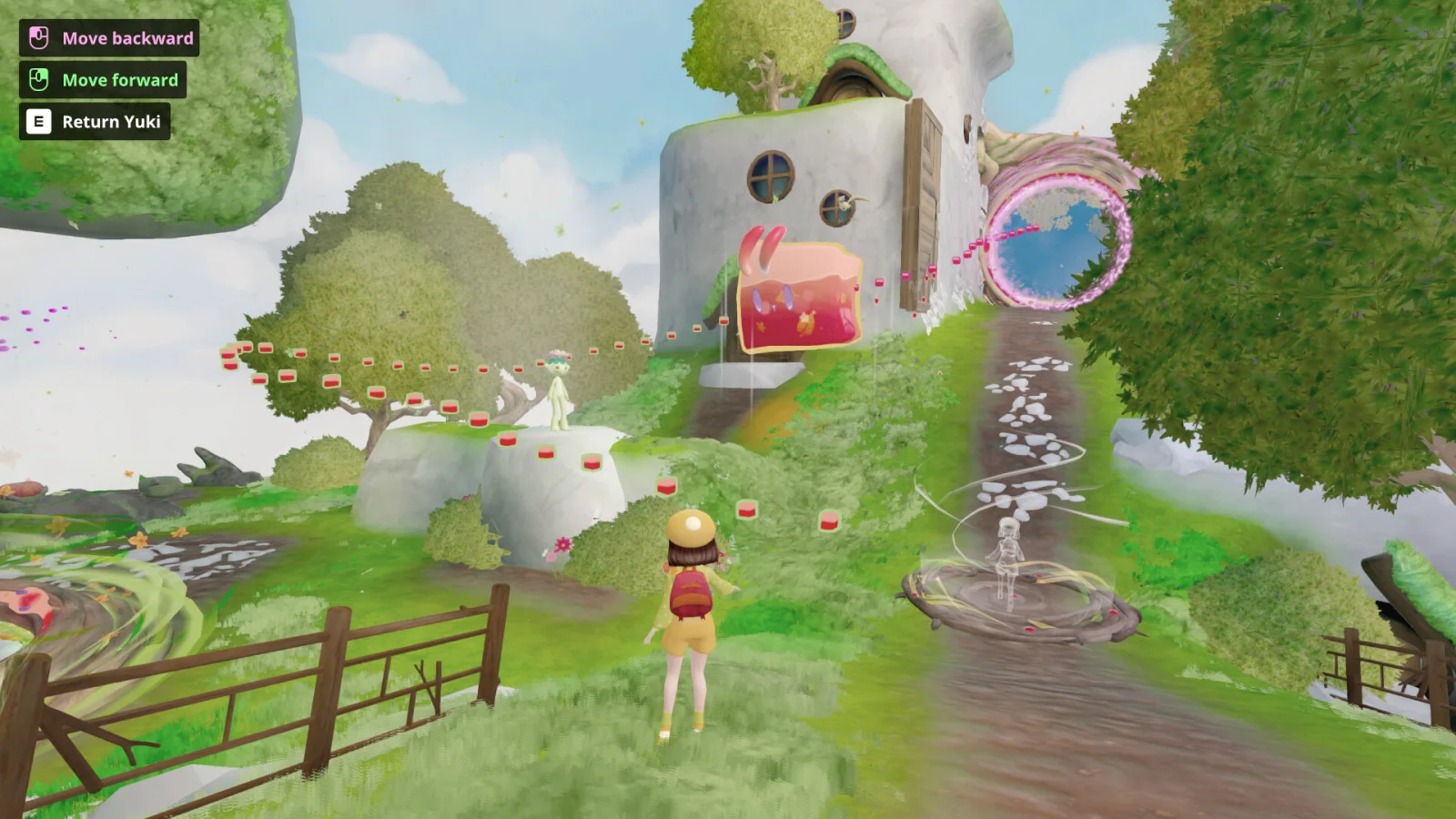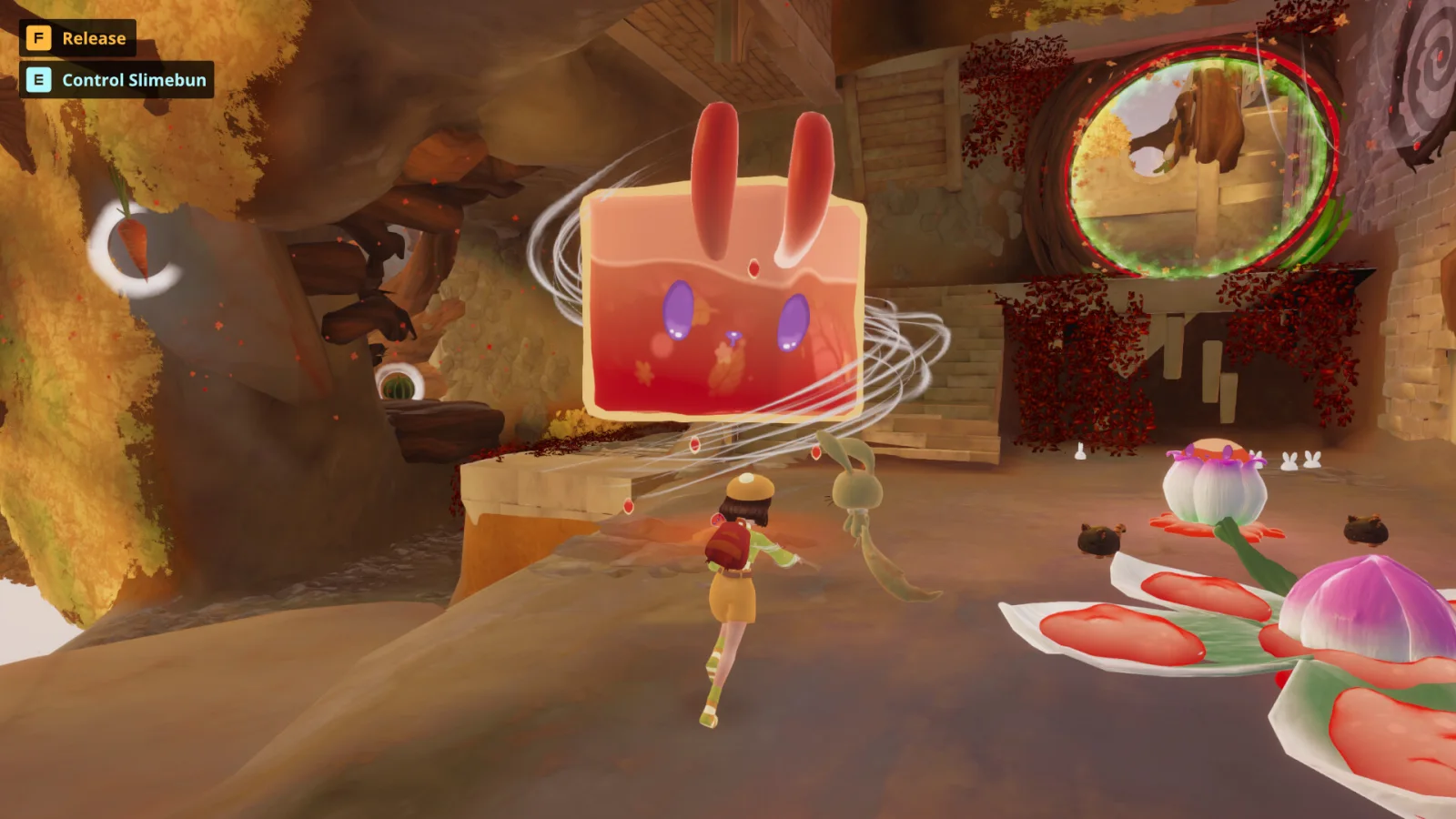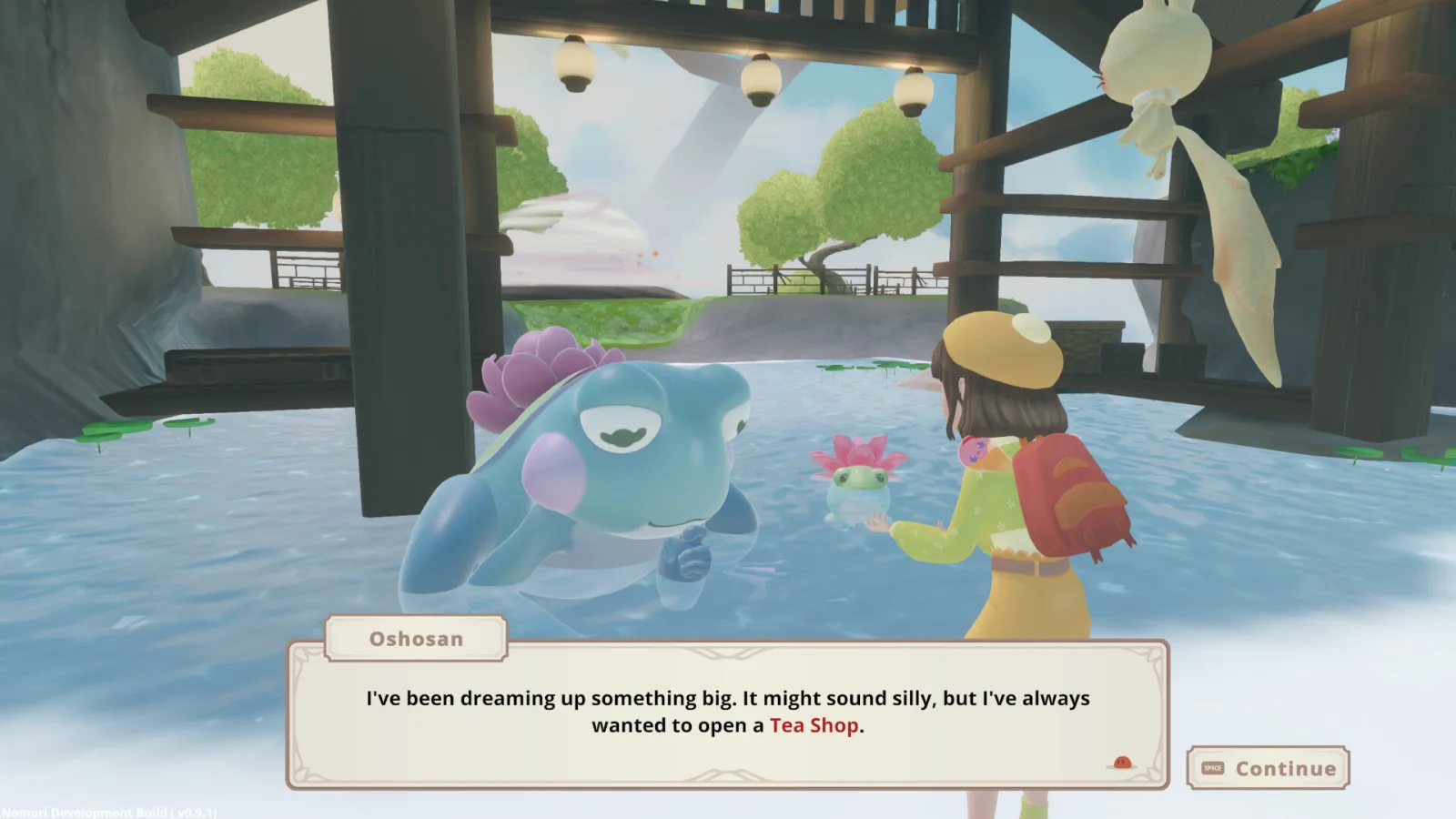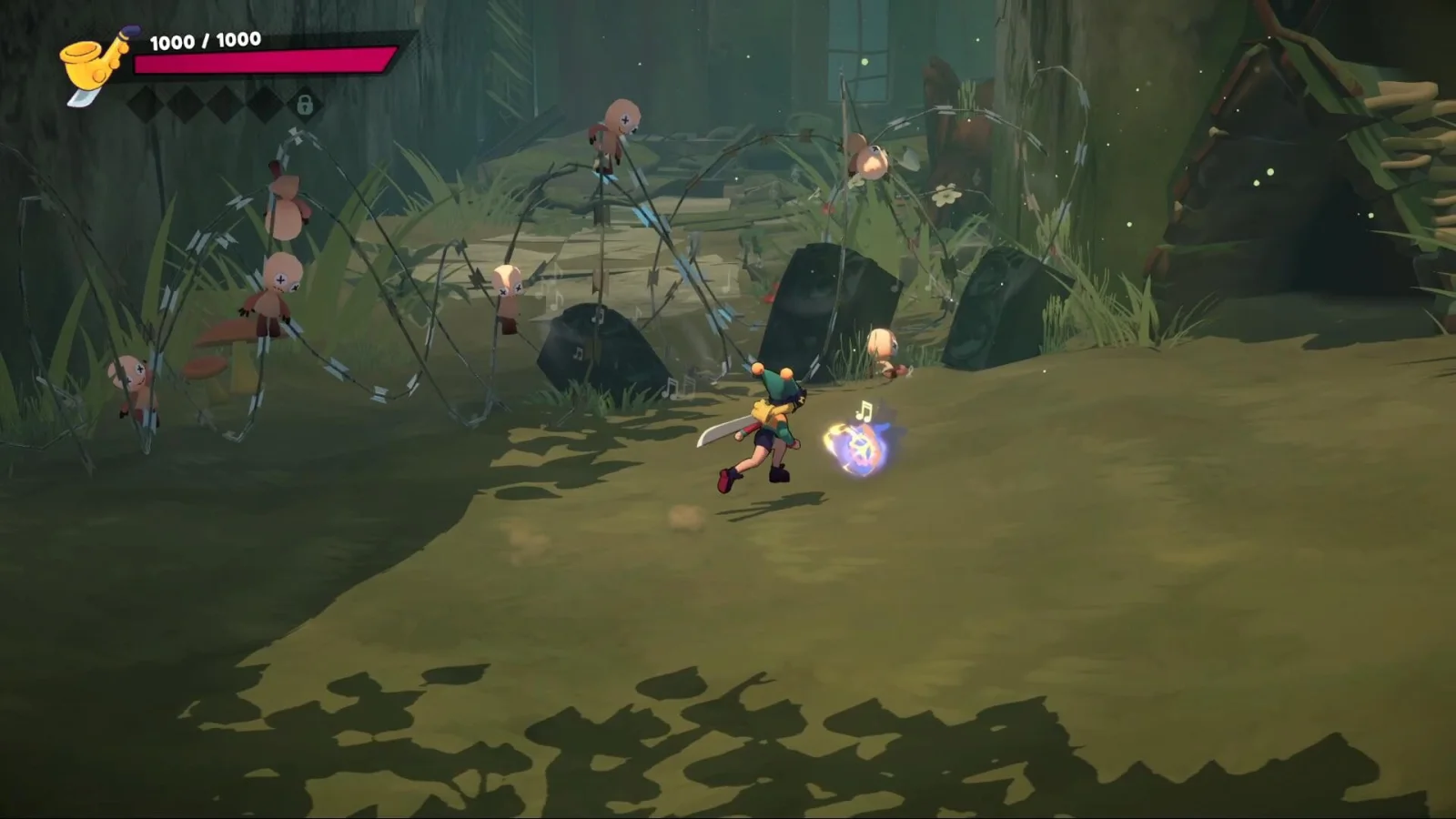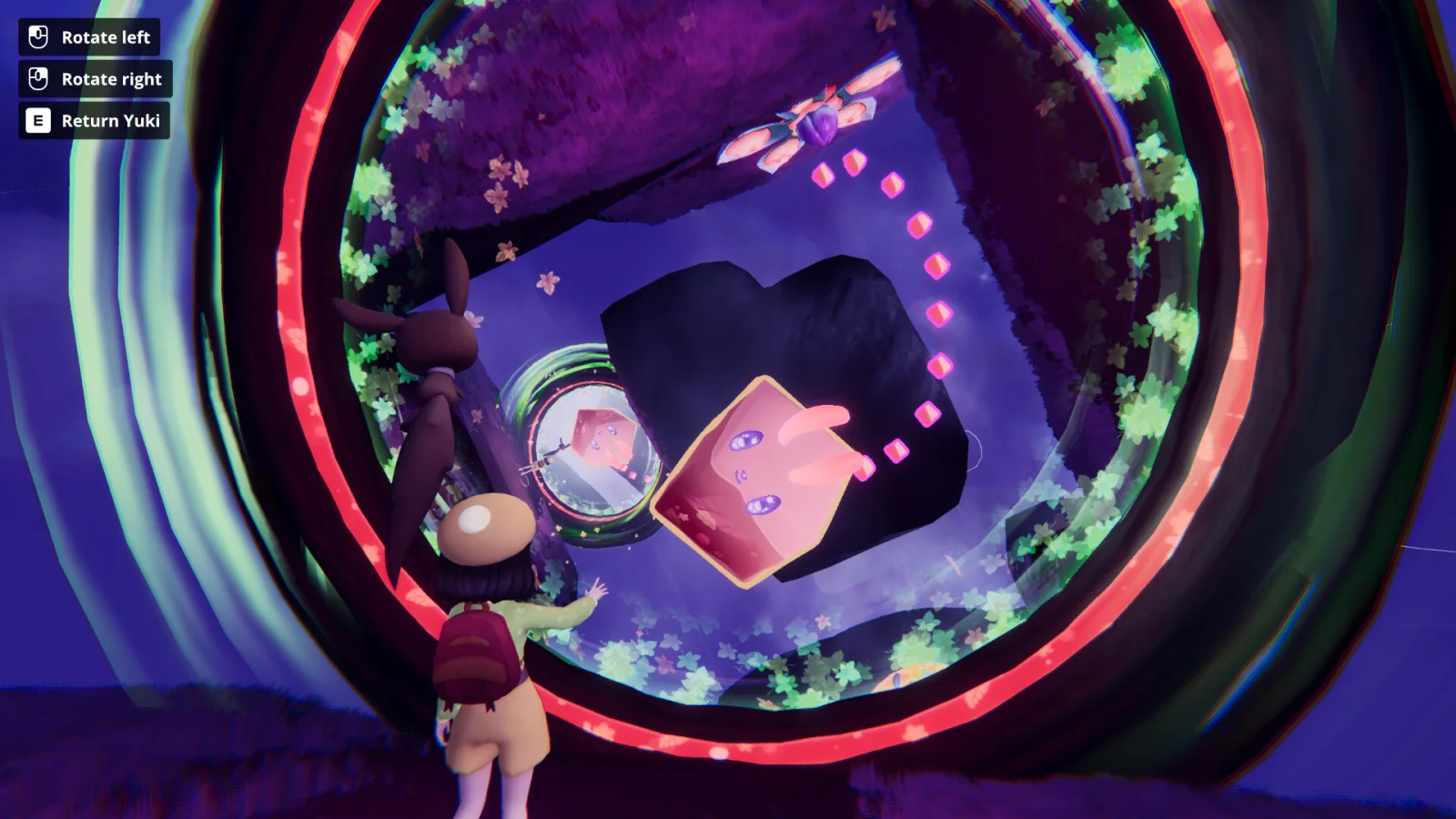
Nomori is an announced-design feature rather than a hands-on review. There are no Joking Joystick gameplay notes, performance tests, or completed-playthrough observations behind this assessment, so it makes no claim about how the game feels in motion, how reliably its systems work, or how successfully its story lands. What can be discussed is the public outline: Enchanted Works’ PC game places Kiko, a girl stranded in a spirit world, in an action-adventure RPG framework where portals can be placed, shifted, and rotated to alter gravity. The premise is substantial enough to invite close design analysis, but the important word remains could.
According to its public store description, Nomori released on PC on September 23, 2026. Enchanted Works is listed as both developer and publisher. The listing identifies Action, Adventure, Indie, and RPG genres, Windows support, and full controller support. Beyond those established details, the game’s potential rests on the stated promise that “up and down can change from moment to moment,” with portals used to make every surface a floor and to manipulate the gravity direction of other objects.
A portal is only interesting if it changes the question
Gravity mechanics are immediately legible because they begin with a physical certainty: a floor supports, a wall blocks, and a ceiling hangs above. Redirecting gravity turns those fixed assumptions into variables. That alone can create spectacle, but spectacle is the shallowest possible use of the idea. Nomori’s announced design becomes more interesting because it describes several portal operations—placing, shifting, and rotating—rather than treating gravity as a single switch. If these actions are meaningfully distinct in the finished game, they could create a puzzle language about position, orientation, timing, and consequence.
Placing a portal may establish an opportunity where none existed. Shifting one may imply that its location is an active part of a solution rather than a preliminary setup step. Rotating a portal may make direction itself the central decision. Those are not proven mechanical distinctions from play; they are useful questions raised by the pitch. A strong implementation would ensure that each action produces a readable result and a reason to choose it. A weak implementation could collapse them into repetitive repositioning until an obvious path appears.
The phrase “make every surface a floor” suggests a particularly valuable design goal: not just getting Kiko to a destination, but making players reconsider an entire room as navigable geometry. A wall that once served as a boundary could become a route. A ceiling could become a platform. A previously unreachable ledge could become a staging point. In the best case, this lets a level keep its physical identity while repeatedly changing its practical meaning. The player is not merely handed a new room; they are invited to reread the old one under new rules.
That is where a portal-and-gravity game can distinguish itself from a more ordinary movement puzzle. The ideal solution is not simply noticing a highlighted object or locating a single valid placement. It is understanding which orientation changes the relationship among Kiko, the environment, and the relevant objects. If Nomori asks players to form that relationship mentally before acting, then the game could make observation feel as important as execution.
Object gravity could give puzzles more than one moving part
Nomori’s public description says players can manipulate the gravity direction of other objects as well as alter the environment around Kiko. That detail may be the foundation of its more ambitious puzzles. Changing the player character’s direction is a traversal tool; changing an object’s direction can create a chain of events. An object may need to travel toward a different surface, clear a route, occupy a new position, or interact with some other part of the level. The announcement does not specify which objects respond, what they can affect, or how those interactions are structured, so none of those examples should be treated as confirmed content. They simply illustrate why object-specific gravity is a promising design statement.
For this system to be satisfying, causality would need to remain intelligible. Players should be able to see why an object moved, where it is likely to go, and what changed when gravity was redirected. Physics-based language raises the stakes here. Physics can create lively, surprising outcomes, but puzzle design needs surprises to remain understandable. If an object behaves in a way a player could not reasonably anticipate, retrying may become trial and error rather than discovery. Conversely, a system that makes trajectories and collisions legible could support the pleasure of making a plan, watching it unfold, and revising it when the result exposes a missed detail.
Timing is explicitly part of Nomori’s announced world, which could add a second layer to spatial reasoning. A static gravity solution asks where things belong. A timed solution may also ask when to redirect a fall, move a portal, or commit Kiko to another orientation. That combination has clear potential, but it also introduces an unresolved accessibility and pacing question. The more exact the timing demands become, the more the experience may lean toward action execution; the more generous they are, the more it may favor reflective experimentation. Neither emphasis is inherently better. The finished game’s identity may depend on how it balances them.
Freedom needs authored pressure
The description says each level can be explored as the player wishes, with rewards around corners, and that Spirit Powers can be combined to overcome obstacles in different ways. This points toward an appealing aim: gravity manipulation not as a rigid sequence of developer-approved inputs, but as a toolset that can support alternate approaches. It is also an area where public descriptions often promise more broadly than a finished level structure can practically deliver. The key questions are what counts as a distinct approach, whether alternatives are equally understandable, and whether rewards encourage curiosity without making exploration feel like a mandatory sweep.
A successful open-ended puzzle level does not require infinite answers. It requires answers that feel like answers rather than accidental loopholes. One route might prioritize direct navigation, another might ask players to reposition an object, and another might combine a power with a portal in a less obvious way. Again, those routes are hypothetical, not announced examples. The larger point is that multiple solutions need to express different reasoning. If every path ultimately demands the same portal placement with minor variations, freedom may feel cosmetic. If alternatives reveal different ways of interpreting the room, then the game’s central idea can sustain repeat observation.
The mention of rewards adds another design consideration. Optional rewards can give a level’s edges purpose: players who have reached the apparent exit may still look at the room from another angle. But their value depends on clarity. If a reward signals that an unusual use of a known tool is possible, it can teach through temptation. If its requirements are opaque, it can turn exploration into exhaustive checking. Nomori’s final design will need to establish how much information it gives players about unseen possibilities without draining the delight from finding them.
Spirit Powers and seasonal domains need to build a curriculum
Nomori is said to feature Spirit Powers and four seasonal domains, with each domain adding new twists to mechanics already learned. This is an encouraging structural claim because gravity systems can become unwieldy if every possibility arrives at once. A measured sequence could let players first understand redirection, then encounter object manipulation, then learn how powers complicate or extend those basics. The strongest version of this approach would repeatedly bring earlier lessons forward, allowing a player to recognize an old principle inside a more demanding situation.
There is no detailed public accounting of the powers, domains, or their order, so it would be unsupported to describe specific abilities or biome mechanics. The useful design question is instead whether new elements will deepen the original portal grammar or distract from it. A new power can be valuable when it changes the meaning of portal placement, gravity direction, or timing. It is less compelling if it solves problems without engaging the game’s defining idea. The seasonal structure may offer visual and thematic variety, but its most important job is likely mechanical: to keep the player’s understanding of gravity evolving.
The story premise supplies a human purpose for this progression. Kiko is described as meeting Spirits in a troubled, whimsical spirit world, helping them and seeking a route home while trying to heal Nomori. That establishes a framework of connection and restoration. It does not establish narrative quality, character depth, scene structure, or emotional effect. Still, there is a possible thematic fit worth noting. A game about changing perspective can naturally support a story about seeing others, and oneself, differently. Whether Nomori turns that conceptual alignment into a convincing narrative will depend on the writing and context absent from the public outline.
Orientation is also an interface challenge
When a game changes gravity frequently, it asks more from presentation than a conventional platforming space does. Players may need to identify Kiko’s current orientation, distinguish usable surfaces from background decoration, track objects moving under a separate gravity rule, and understand what portal rotation will do before committing. The official description confirms the gravity concept, not the camera, controls, visual signaling, or interface. Those are therefore major open questions rather than criticisms of a known implementation.
Full controller support is listed for the PC version, which is a concrete platform feature, but it does not tell us how portal placement, shifting, and rotation are mapped or how comfortably they operate. A controller-friendly system could make quick spatial adjustments feel tactile. It could also become cumbersome if several precision actions compete for limited inputs. Similarly, the game may need to preserve enough stable reference points that players can reorient after a dramatic change. Confusion can be deliberately productive in a puzzle game only when the player has a dependable way to recover understanding.
Nomori’s opportunity is therefore unusually clear. The announced feature set points to a game where gravity is not merely a visual trick or a one-button inversion, but an editable condition that can apply to Kiko and other objects. The broader promises—exploration, rewards, Spirit Powers, seasonal domains, and a perspective-focused story—could support that central idea if they consistently return players to meaningful spatial decisions. They could also dilute it if they are not integrated into the same logic.
For readers interested in another feature concerned with a game’s stated systems rather than a conventional scored verdict, see our Radiotext PC design feature. Nomori deserves the same provisional framing: its premise is rich enough to analyze, while the most consequential answers—clarity, challenge, variety, control feel, and narrative execution—remain matters for direct play rather than assumption.