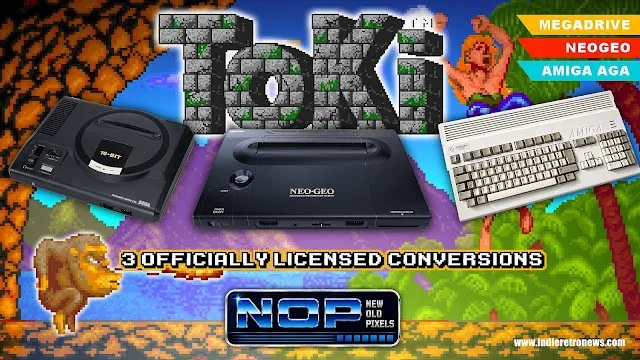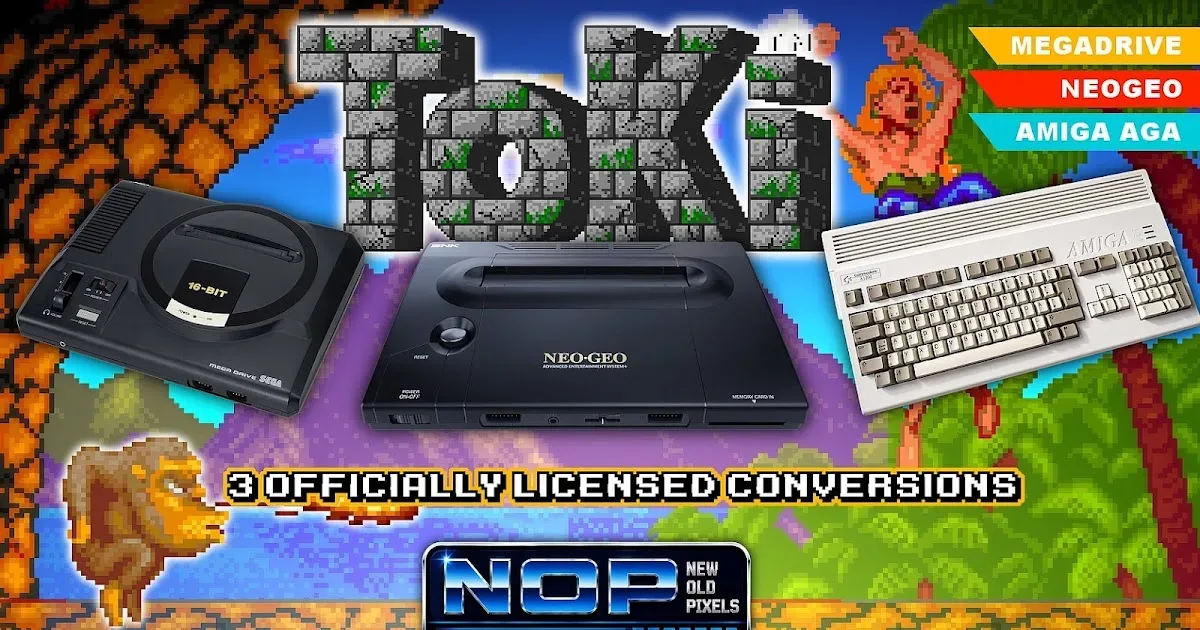
Toki, the arcade platformer from the 1980s, is being brought back to three original-era machines in a new round of licensed physical conversions. New Old Pixels has confirmed active development on versions for the Commodore Amiga AGA, Sega Mega Drive and SNK Neo Geo.
The project’s central promise is an ambitious one: reproduce the original arcade game’s play, visual presentation, animation and music as faithfully as possible, while adapting each edition to the strengths and limits of its target hardware. The publisher says it holds an exclusive licence to adapt and promote Toki on these platforms, and plans to release all three editions physically for use on original systems.
There is no release date, price, footage or screenshot set yet. New Old Pixels says official screenshots, gameplay videos, production updates and pre-order information are planned for a later date. Until those materials arrive, the most important detail is the scope: this is not one release repackaged across several machines, but three platform-specific attempts to bring an arcade game to systems that have very different technical profiles.
What is being announced
The announced versions target the Amiga’s AGA chipset, Sega’s 16-bit Mega Drive hardware, and SNK’s Neo Geo. Each is being developed as a complete physical edition intended to run on the original platform rather than being presented as a modern emulation release.
That physical emphasis matters because the formats and expectations around these systems are distinct. A conversion for the Mega Drive needs to work as a console release; an Amiga AGA version has to suit the capabilities of that specific Amiga graphics standard; and a Neo Geo edition must be built around SNK’s arcade-adjacent ecosystem. New Old Pixels’ stated aim is not merely to make Toki playable on those systems, but to pursue a version that feels close to the arcade cabinet on each one.
The publisher also says the releases will have collector-grade packaging. That is a presentation commitment, not a confirmed list of box contents, pack-in items, print runs or edition types. Buyers interested in the physical side should therefore wait for the eventual pre-order specifications rather than assuming what the packaging will include.
Why “arcade-perfect” is a meaningful goal here
In retro-game terms, an arcade conversion is a version of an arcade game rebuilt or adapted for home hardware. A faithful conversion generally seeks to retain the original game’s rules, stage flow, controls, audiovisual identity and overall feel. But “faithful” does not automatically mean identical at every technical level.
Every target platform has its own constraints and advantages. The number of colours available on screen, memory capacity, sprite handling, sound hardware and processing budget can affect what a developer can preserve and where it must make choices. Even timing and animation can be affected if the hardware handles scenes differently from the board that powered the arcade game.
Related coverage includes Toki Is Getting New Physical Arcade Conversions for Amiga AGA, Mega Drive and Neo Geo.
That is why the statement that each edition will be tailored to its host machine is important. The task is not simply copying art and audio files between formats. Developers must decide how to represent the arcade game’s graphics, movement and soundtrack within the individual platform’s design. A strong conversion may prioritize different technical solutions from one system to the next while trying to preserve the same player-facing result.
New Old Pixels specifically identifies gameplay, crisp graphics, fluid animation and the recognizable soundtrack as priorities. Those are the areas fans will likely scrutinize once material is shown. Gameplay concerns such things as player movement, responsiveness, enemy behavior and stage pacing. Graphics and animation cover both visual detail and whether action retains a convincing sense of motion. Soundtrack fidelity concerns the music’s character and delivery, not simply whether a tune is present.
Three systems, one arcade reference point
The Mega Drive, Amiga AGA and Neo Geo are a particularly interesting trio because they are not interchangeable platforms. A game that seems comparable in screenshots may reveal different compromises or strengths in motion, sound and the density of on-screen action. For this project, the arcade original is the common reference point, but the work will necessarily be platform-specific.
The Amiga AGA target is notable because it identifies a particular family of Amiga graphics hardware rather than treating “Amiga” as one uniform destination. That specificity signals that the team is designing around AGA capability. The Mega Drive version, meanwhile, faces the expectations attached to a major 16-bit console library. The Neo Geo version brings an additional appeal: it is a platform closely associated with arcade-style experiences, making a physical Toki conversion a natural curiosity for enthusiasts of SNK hardware.
None of that proves one edition will be better than another. It does explain why comparisons will be more interesting than a simple side-by-side resolution check. When footage arrives, the useful questions will be whether each version maintains the same gameplay structure, how closely its animation tracks the arcade game, whether music and sound effects communicate the same feel, and where a platform-specific adaptation becomes visible.
What has not been confirmed yet
The announcement establishes the platforms, licence, physical-release plan and broad fidelity target. It does not establish a launch window, a pre-order date, regional availability, pricing, final packaging contents or the exact differences between the three builds.
It also does not provide screenshots or gameplay footage at this stage. That makes it too early to assess the ports’ actual visual accuracy, performance or control response. The publisher has said those materials are forthcoming, so prospective buyers should treat the current announcement as confirmation that the project is underway—not as proof of a finished product.
That distinction is especially useful in the physical retro market. A completed box design, a confirmed production run, a cartridge or disk format, and compatibility details can all shape a purchase decision. None should be inferred from the promise of a physical edition alone. Collectors who enjoy display pieces may be interested in the packaging angle, while players will want confirmation that the final format runs on their particular original hardware configuration.
What to watch for when the first material appears
When New Old Pixels shares its first deep dives, there are several practical details worth checking:
- Platform footage: Footage from all three versions will offer a clearer sense of how the same arcade material has been adapted.
- Gameplay timing: Look beyond still images at movement, attacks, scrolling and animation during busy scenes.
- Audio presentation: The announcement prioritizes the arcade soundtrack, making music and sound-effect comparisons a central part of the project.
- Hardware compatibility: Physical retro releases can have format and system requirements that matter to owners of original hardware.
- Edition details: Packaging quality has been promised, but buyers should wait for the final contents and ordering terms before judging collector value.
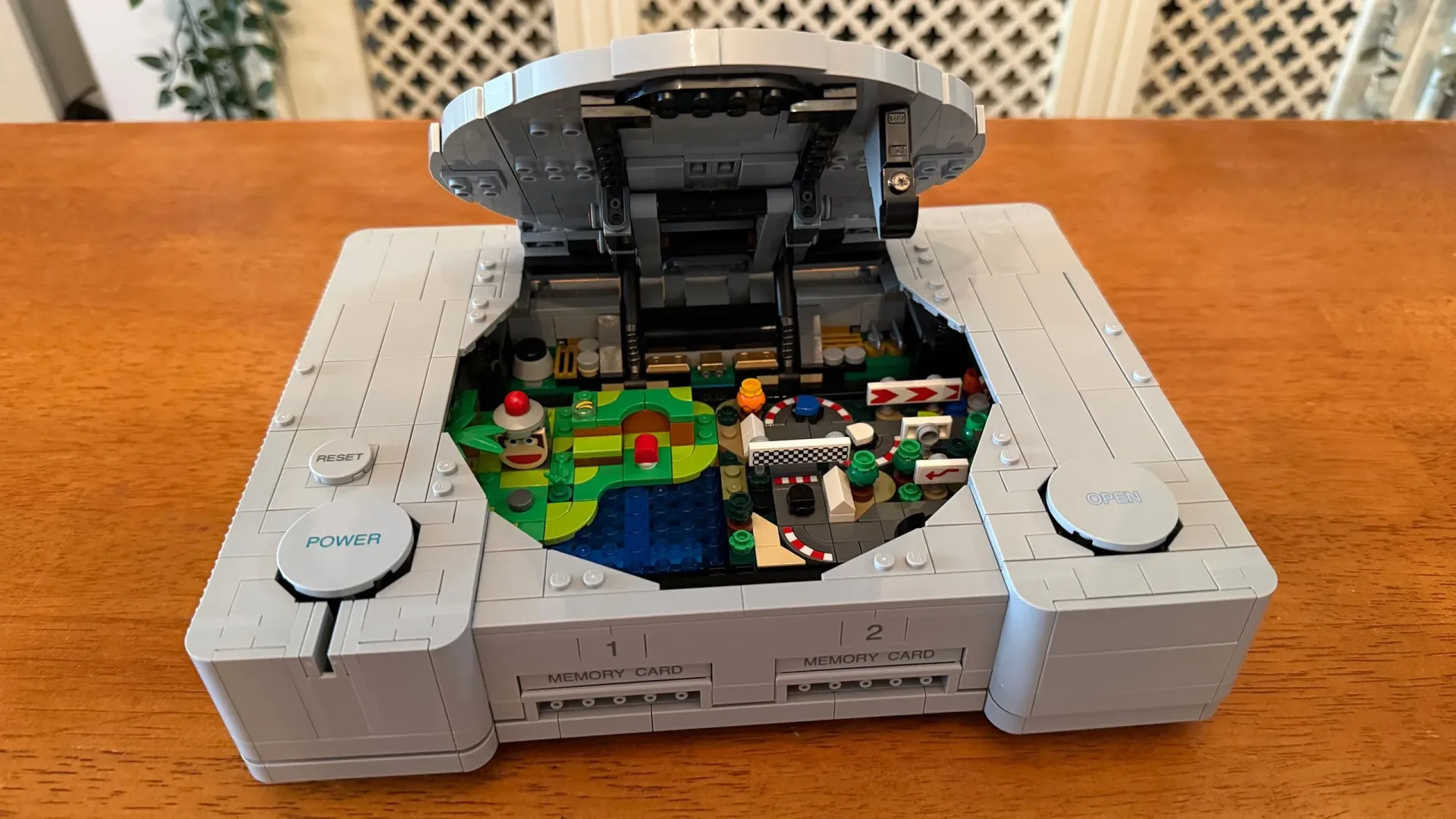
The new Toki editions sit at the intersection of preservation-minded development and physical retro releases. That combination will naturally appeal to players who want another way to experience the game on period hardware, as well as people who value a carefully produced boxed release. Anyone following physical game presentation may also appreciate how projects such as this differ from display-focused creations like this Final Fantasy VII LEGO PlayStation diorama: one is meant to be played on original systems, while the other centers on a fan-made collectible scene.
For now, the announcement’s value lies in its intent and platform selection. The real test will come with the promised footage and technical breakdowns. If the finished releases can convincingly preserve Toki’s arcade identity while respecting the distinct nature of the Amiga AGA, Mega Drive and Neo Geo, they could become a notable set of new physical options for retro players.