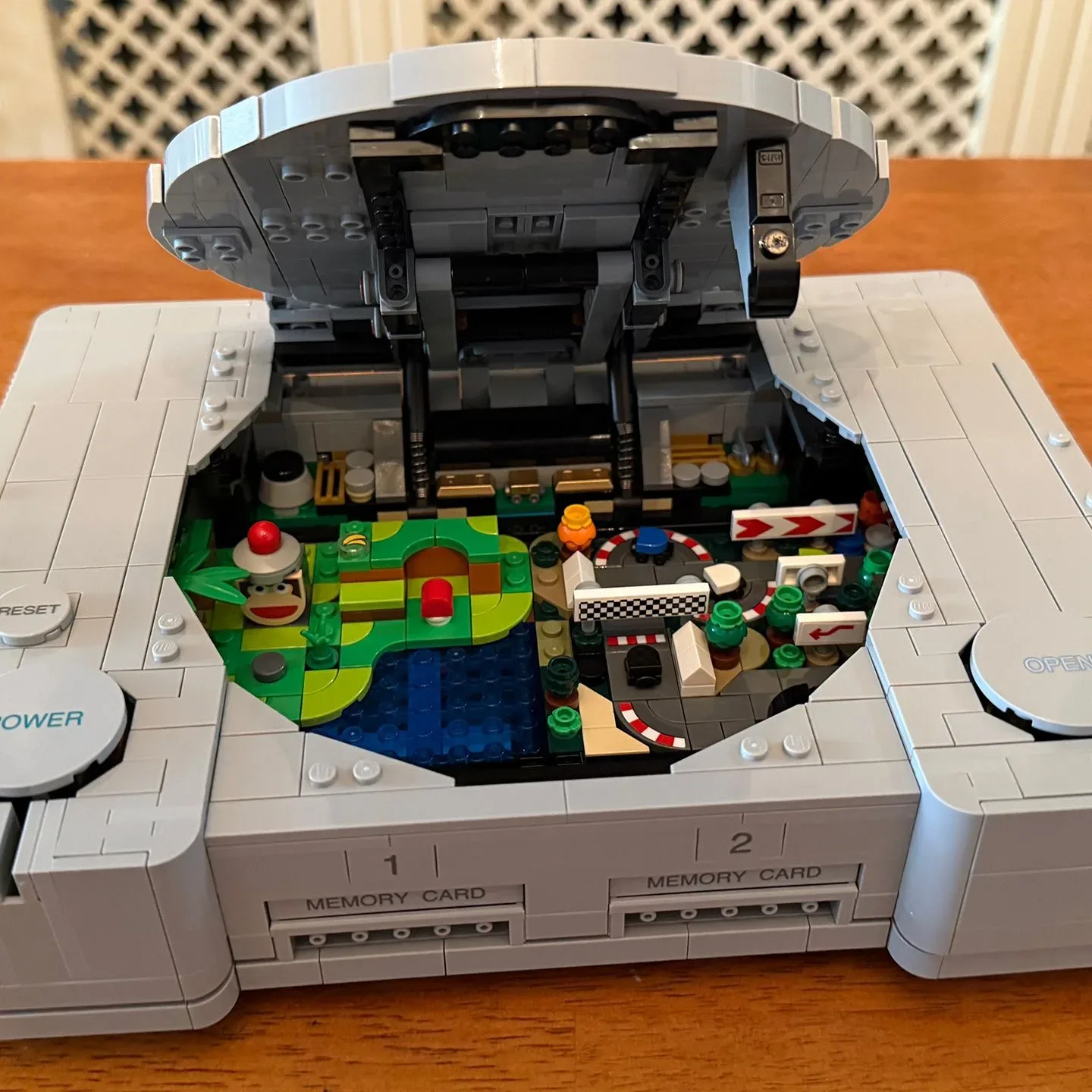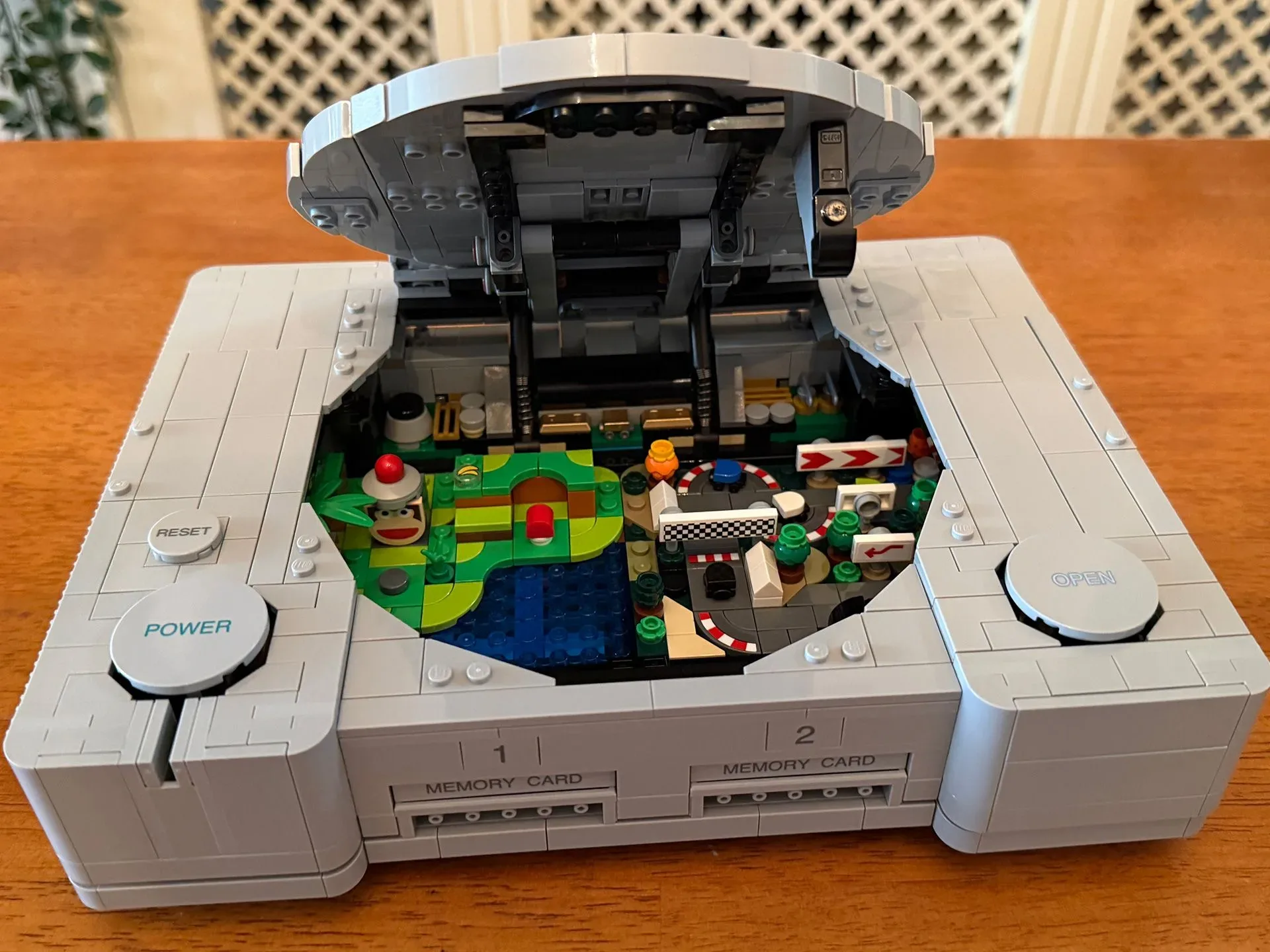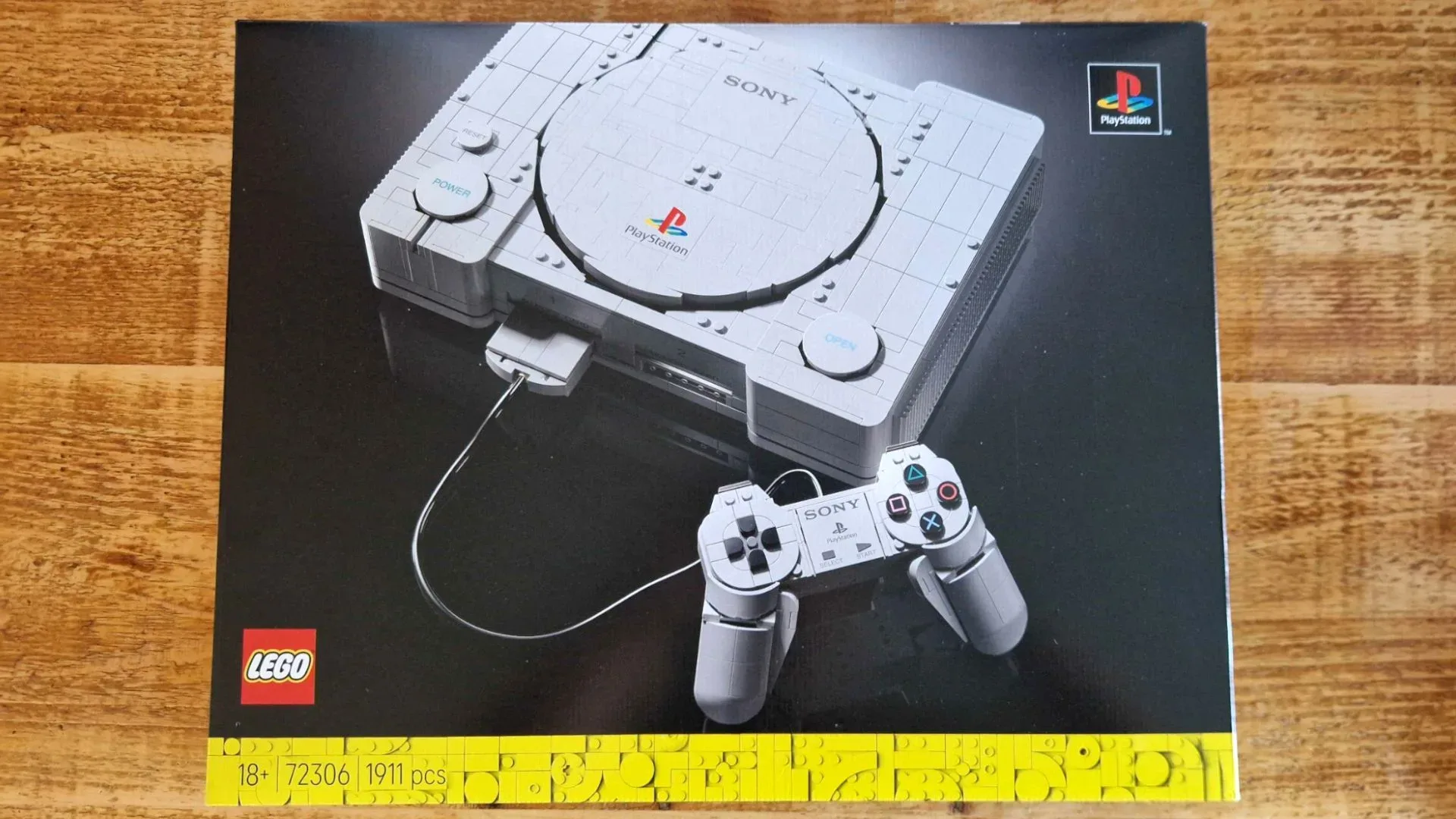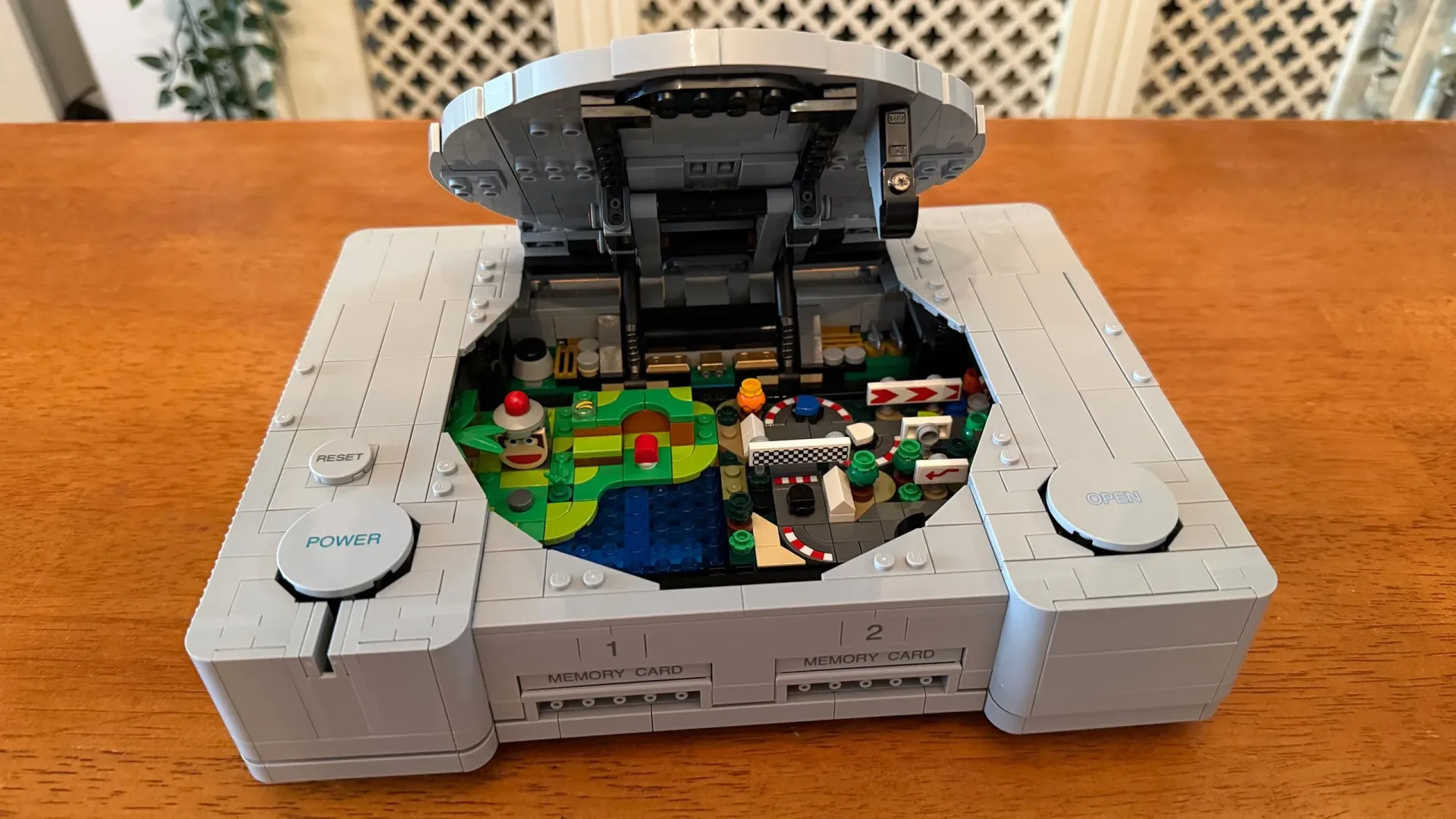
A fan-made Final Fantasy VII build has found an unusually effective foundation: the new LEGO PlayStation. Builder hachiroku24 has created a compact diorama that sits directly on the brick-built console, turning a familiar piece of hardware into a stage for a Midgar-inspired battle.
The work is striking not simply because it combines two recognizable PlayStation-era touchstones, but because it makes the base model participate in the action. Terrain appears to spill outward from the console itself, while several minifigures use the controller as a launching point for their next moves. Rather than placing a scene beside a display model, the builder has treated the PlayStation, its disc area and its controller as part of the setting.
Posted to Reddit, the creation had drawn roughly 4,000 upvotes at the time it was highlighted. The response reflects the appeal of the idea: a model of a console associated with Final Fantasy VII becomes the literal ground beneath a brick-scale confrontation.
A diorama that uses its base, not just its bricks
A diorama is a three-dimensional scene arranged to evoke a particular place, event or moment. In LEGO building, that can mean a standalone landscape, a framed slice of a fictional world, or a scene mounted on a display base. The clever part here is the choice of base. A LEGO PlayStation could have remained a nostalgia-focused replica; hachiroku24’s addition recasts it as an environmental feature.
The terrain rising out of the model creates the sense that the battle is too large to stay confined to one small platform. That visual decision also connects the physical build to the source material’s industrial, vertical Midgar setting without requiring the console to disappear underneath a conventional landscape.
Using the controller as an action element is an equally strong display choice. Controllers are normally accessories in console replicas, included to complete the hardware silhouette. In this scene, it becomes a ramp or springboard. The move gives the composition height and direction, helping the minifigures read as active participants in a fight rather than as a lineup posed around scenery.
The diorama includes most of the major Final Fantasy VII characters in what is described as a life-or-death battle. Fine details matter greatly in this kind of fan work because the minifigure scale leaves little room for ambiguity. A recognizable pose, a carefully selected weapon shape, or a small patch of terrain can do much of the storytelling that a larger model might accomplish through sheer size.
Why the PlayStation connection works so well
Final Fantasy VII and the original PlayStation are a natural pairing in the public imagination, but the build’s success is not dependent on that association alone. The best crossover displays give both halves a meaningful job. Here, the PlayStation is more than a logo-bearing pedestal, and Final Fantasy VII is more than a collection of figures placed on top of a branded object.
Related coverage includes Final Fantasy VII Diorama Turns LEGO PlayStation Into a Stunning Midgar Battle Scene.
The console’s form introduces an intentional contrast. Its low, geometric hardware design is interrupted by uneven terrain and character movement. That collision between clean machinery and a spreading action scene gives the display its energy. It looks less like an add-on placed carefully above the console and more like a game world breaking through its physical container.
There is also a practical lesson for builders who make display modifications: an existing set can be a compositional constraint rather than a limitation. Working around buttons, panels, a controller and the proportions of the console forces choices about where scenery can rise, where characters can stand and which components should remain visible. In this instance, the build appears to embrace those constraints instead of concealing them.
Another ambitious build from hachiroku24
This is not hachiroku24’s first notable game-inspired LEGO project. The builder is also known for a LEGO GTA 6 set, a timely fan creation given the intense interest around Rockstar’s upcoming game. For readers trying to keep clear of unreliable claims around that release, our guide on avoiding GTA VI spoilers and fake leaks before launch explains why separating confirmed information from fan-made or fabricated material matters.
The builder has also submitted a Midgar diorama to the LEGO Ideas program. LEGO Ideas is a fan-submission program in which creations can gather support from users and, if they progress far enough, potentially reach LEGO for consideration. Reaching that stage does not guarantee that a proposed model will become an official product. It does, however, provide a route for fan concepts to be evaluated beyond their original social post.
That distinction is important for anyone seeing the PlayStation-based Final Fantasy VII scene and hoping to buy it. The featured model is a fan creation, not a confirmed retail set. The submitted Midgar project and the PlayStation diorama are also separate things: one is an Ideas submission, while the other is an imaginative modification built around the newly released LEGO PlayStation model.
Can builders recreate it?
There are currently no published instructions for reproducing this exact Final Fantasy VII diorama. That means a faithful copy is not a straightforward matter of opening a manual and ordering one defined inventory. Anyone inspired by it would need to begin with the LEGO PlayStation set and develop their own approach to the terrain, figures and action poses.
LEGO’s Pick a Brick service is one potential route for sourcing individual elements when a builder knows the shapes and colors they need. It is especially useful in principle for custom work because a scene like this is driven by small visual decisions: parts that can suggest broken ground, elevated platforms, character equipment, or supports that make a figure appear to leap from the controller.
Still, access to individual parts is not the same as access to a design. The difficult element is likely to be the planning. Builders would need to decide which portions of the PlayStation remain uncovered, how the terrain attaches or rests around the console, and how to keep the finished display visually legible rather than turning it into a pile of disconnected details.
What this build demonstrates for custom display projects
- Let the base set remain recognizable. The PlayStation needs to read as a PlayStation for the crossover concept to land.
- Give existing accessories a role. Repurposing the controller as part of the action makes the overall scene feel designed as one piece.
- Use height selectively. Raised terrain and jumping figures can establish movement without obscuring every recognizable feature of the underlying model.
- Build around a specific moment. A battle scene offers a clear narrative focus, which is often more compelling than a broad but unfocused assortment of references.
Fan creativity, not a product announcement
The enthusiasm around the model is understandable, especially as the LEGO PlayStation is already a strong display piece on its own. Yet the most useful way to view this particular creation is as inspiration for what can happen after a retail set leaves its box. It shows how a licensed-style replica can become a platform for personal storytelling without losing the identity that made someone want to display it in the first place.
For Final Fantasy VII fans, the result is a small-scale Midgar battle that makes the PlayStation part of the fiction. For LEGO builders, it is a reminder that a carefully chosen base can provide more than structural support. And for hachiroku24, it is another high-profile example of a style built around reimagining major game worlds in brick form.