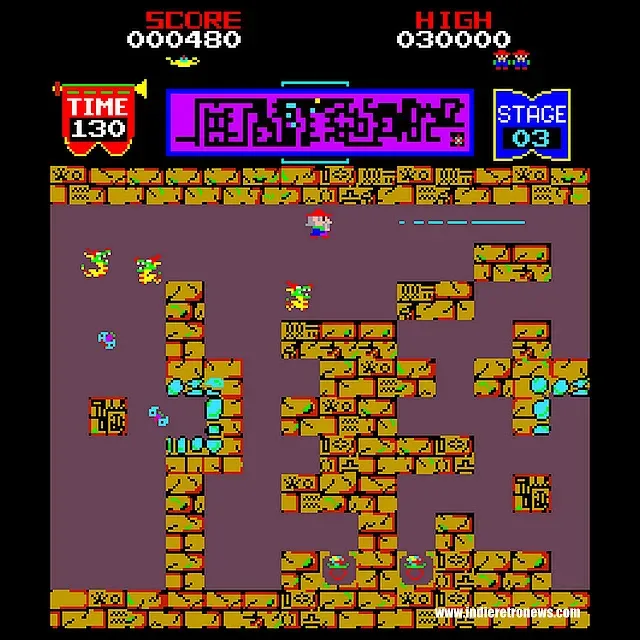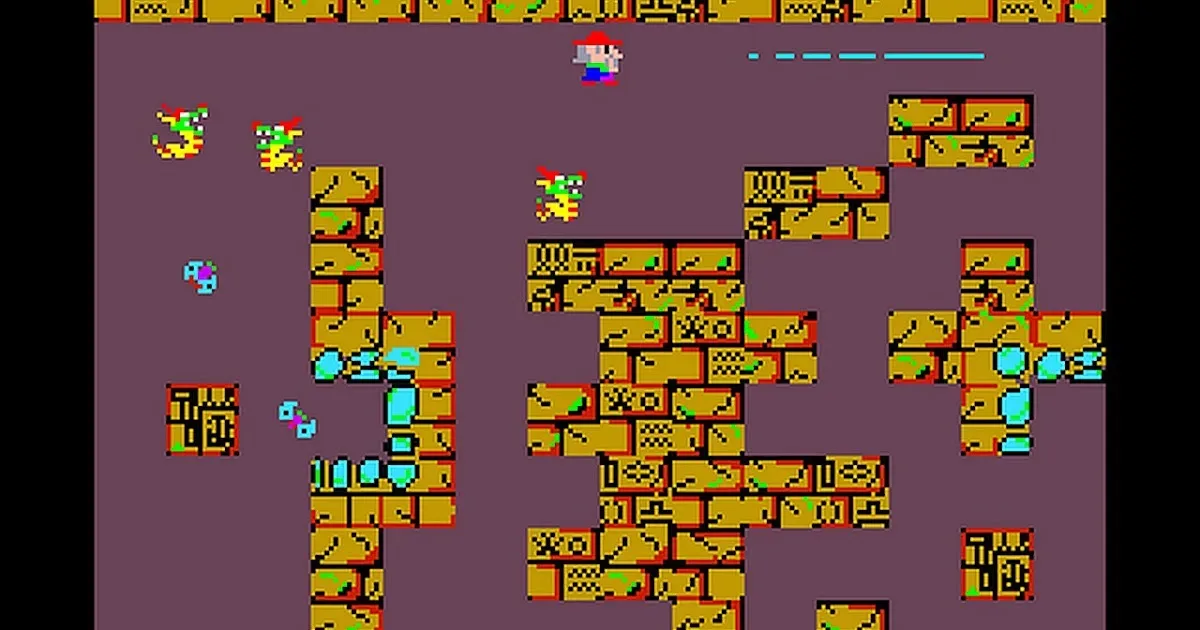
LC-Games has released Tutankham, a new Commodore Amiga tribute to Konami’s 1982 arcade game. The release brings the tomb-raiding premise to Amiga hardware with a stated compatibility range that includes PAL OCS, ECS and AGA systems, plus NTSC ECS and AGA machines. The listed memory requirement is only 512 KB of Chip RAM.
The news is notable for two overlapping reasons. Tutankham belongs to the early arcade tradition of tense, enclosed exploration, while the Amiga remains a platform where new projects and adaptations continue to find an audience. This is not presented as a newly discovered vintage Amiga release; it is a modern tribute designed for the original family of Commodore systems.
An arcade tomb raid reworked for Amiga
The game puts players in control of an explorer robbing Tutankhamun’s tomb. The objective is not simply to reach an exit: players search the catacombs for valuables and must fend off the creatures guarding the tomb on the way through.
The treasure list establishes the game’s central loop. Players are looking for:
- maps
- lamps
- chests containing gold and jewels
- the golden mask of King Tut
Those items frame the catacombs as more than a backdrop. Maps and lamps imply tools or discoveries that matter to moving through the tomb, while gold, jewels and the mask establish the reward at the center of the expedition. The hostile creatures give that search immediate pressure: every push further into the maze is also a confrontation with its defenses.
That structure is particularly suited to the arcade lineage invoked by the release. Rather than building its premise around a long campaign or an elaborate character narrative, Tutankham is built around a direct proposition: enter a dangerous tomb, locate precious objects, survive its guardians and find a route through the underground passages.
What the compatibility list means
The hardware support is one of the clearest practical details available for the release. LC-Games lists the game as working on PAL OCS, ECS and AGA Amiga systems, as well as NTSC ECS and AGA systems.
PAL and NTSC refer to two television and video standards associated with different regions. In practical terms, the distinction matters to owners of original hardware because software can be built with one standard, the other, or both in mind. The stated support means the game is not confined to PAL machines: NTSC users with ECS or AGA hardware are also within its listed compatibility range.
Related coverage includes Tutankham Returns to Commodore Amiga in New LC-Games Tribute.
OCS, ECS and AGA identify successive Amiga graphics and hardware generations. For a prospective player, the important point is not to treat “Amiga” as one completely uniform specification. The release explicitly calls out which generations it supports, with OCS support listed for PAL machines and ECS/AGA support listed for both PAL and NTSC configurations.
Chip RAM requirement
The required 512 KB Chip RAM is also significant. Chip RAM is memory accessible to the Amiga’s custom hardware, making it a key part of the platform’s technical vocabulary. Here, the requirement is presented as the amount needed to run the game, rather than as a recommendation for a more expanded configuration.
That relatively modest stated threshold is useful information for people maintaining period-appropriate machines. It suggests that the release targets a broad section of the compatible Amiga range described above instead of requiring a large memory expansion. It does not, however, answer every setup question. The available information does not specify distribution format, installation steps, peripheral requirements or whether the game has additional optional modes on particular configurations.
A specific Amiga release, not a blanket platform claim
The wording around compatibility deserves a close read. PAL owners are covered across OCS, ECS and AGA systems. NTSC owners are covered on ECS and AGA systems. An NTSC OCS configuration is not included in the stated support list, so it should not be assumed compatible merely because the game supports OCS on PAL systems.
For enthusiasts setting up original hardware, that distinction is more useful than a broad “works on Amiga” label. Before treating a machine as supported, check two things:
- Whether it operates in PAL or NTSC mode.
- Whether its chipset is OCS, ECS or AGA.
Then compare those details with the exact matrix provided for this release. Owners meeting the listed 512 KB Chip RAM requirement have the memory baseline named by LC-Games, but the region-and-chipset combination remains the more important compatibility checkpoint.
Why the 1982 connection matters
Konami developed the original Tutankham arcade game in 1982. That date places the concept in an era when arcade games often communicated their stakes through a compact set of visual and mechanical ideas: a recognisable setting, immediate danger, collectibles or objectives, and an escalating need to stay alive.
The new Amiga version’s description preserves that concise identity. An explorer enters the tomb. The tomb contains riches. Creatures protect it. The player needs to navigate the catacombs and ultimately locate the way through. The golden mask is singled out above the other treasure, giving the hunt a clear marquee prize even as maps, lamps, gold and jewels fill out the expedition.
Calling this release a tribute is important. It establishes a relationship to the 1982 arcade game without treating the new Amiga project as interchangeable with the original. The supplied details identify a fresh release from LC-Games that draws on Tutankham’s premise and arcade heritage; they do not outline every mechanical or audiovisual difference between the two versions.
The continuing appeal of original-hardware releases
New games for legacy machines occupy a distinctive space. They are contemporary releases intended for hardware whose original commercial era has long passed, which makes technical support information part of the news rather than a footnote. A player may be approaching Tutankham with an original Amiga, a carefully maintained regional setup, or simply an interest in what can still be produced for these systems.
The low stated memory requirement and the broad PAL coverage make the release especially relevant to the Amiga community, while the inclusion of NTSC ECS and AGA support widens the intended audience beyond one video standard. For readers following other current Amiga-focused work, recent AGA enhancements for Monkey Island 2 and Fate of Atlantis offer another example of enduring attention to the platform.
Tutankham takes a more compact route: a tomb, a haul of artifacts, dangerous guardians and a maze-like path through the catacombs. For Amiga owners whose machines match the listed PAL/NTSC and OCS/ECS/AGA requirements, LC-Games’ release offers a new way to revisit an arcade concept that began in 1982.