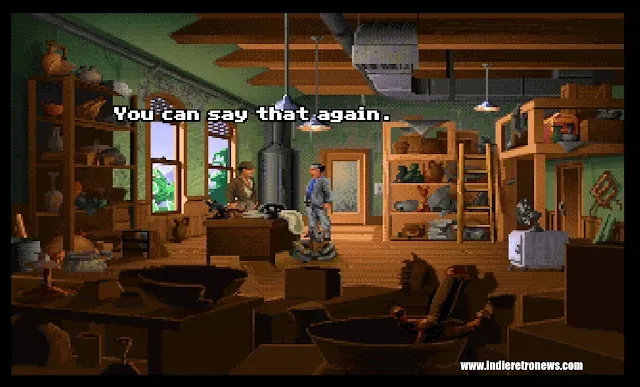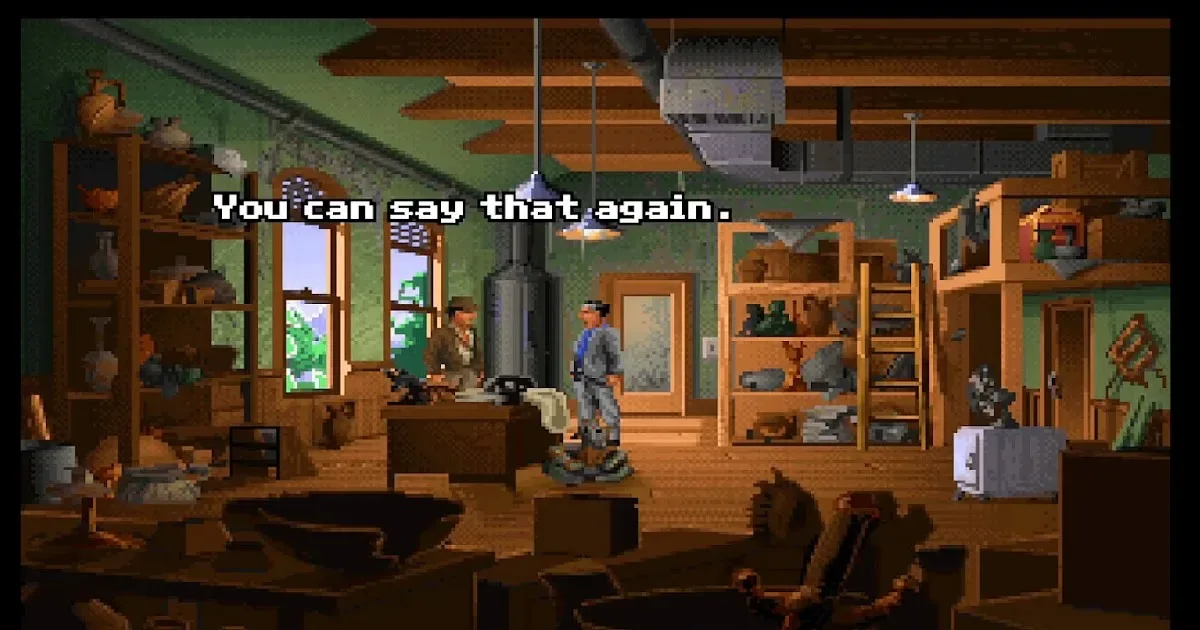
Two towering point-and-click adventures are being given a notably ambitious Amiga-focused refresh. Developer dlfrsilver has created enhanced builds of Monkey Island 2: LeChuck’s Revenge and Indiana Jones and the Fate of Atlantis for the Amiga 1200, rebuilding elements of their underlying game engines to deliver 256-colour AGA presentation and a substantially expanded music-and-effects implementation.
The work targets the gap between the original Amiga OCS versions and the PC editions. Rather than treating the update as a simple palette swap, the project is described as an engine re-engineering effort: the games now operate with an 8-bitplane, 256-colour display. The intended result is visual integration that more closely accommodates the richer artwork associated with the PC releases while running on Amiga hardware.
Audio is equally central to the enhancement. The builds replace tracks absent from the original Amiga versions with PC SoundBlaster iMUSE music and sound effects. That is a sizeable undertaking because the PC arrangements are more complex than the audio setup being targeted here. To make them fit without notes being cut off, dlfrsilver implemented a bespoke six-voice system using two hardware voices and four software voices.
What the AGA upgrade means
AGA, short for Advanced Graphics Architecture, is the graphics chipset associated with machines including the Amiga 1200. In this case, “256-colour” refers to the number of colours the enhanced display can show at once, a major visual step beyond the original OCS editions referenced by the project.
The important detail is the stated use of eight bitplanes. A bitplane is a way of organizing screen image data used by the Amiga’s display hardware. With eight planes available, a 256-colour mode becomes possible. It is technical language, but its practical relevance is straightforward: the engine work is meant to let these classic adventures display richer colour information as a cohesive part of the game, rather than merely bolting a new soundtrack or a handful of revised assets onto the older version.
That distinction matters for adventure games. Their scenes carry a great deal of the experience: locations establish mood, direct players toward interactive objects, support jokes and sell the setting before a line of dialogue appears. Monkey Island 2 needs its pirate-world comic detail to land, while Fate of Atlantis depends on globe-trotting adventure atmosphere. A broader colour range is not automatically a better game, but it can meaningfully change how faithfully those scenes translate to a particular platform.
The description of the project also says AI assistance was used to speed development from the PC versions. That should not be confused with a claim that the porting challenge was automatic or effortless. The supplied technical details point to hands-on implementation work: game-engine changes, an audio system tailored for the platform, and the conversion of demanding music into a constrained voice budget. AI assistance may have accelerated portions of the process, but the reported outcome rests on platform-specific engineering choices.
Rebuilding the soundscape for standard Amiga hardware
The audio side may be the more revealing part of the project. Both games use iMUSE, an interactive music system designed to manage game music and its transitions. In plain terms, it is not only a matter of playing a song from beginning to end. Interactive scoring can need to respond cleanly to scenes and actions, and that makes reducing arrangements to a smaller number of simultaneous voices especially difficult.
Related coverage includes Monkey Island 2 and Fate of Atlantis Get 256-Colour Amiga AGA Enhancements.
The enhanced builds use six voices in total: two hardware voices plus four software voices. A hardware voice is handled directly through dedicated sound hardware, while a software voice is generated or mixed by the system’s processor. Using software voices opens the door to more simultaneous parts, but it also places extra work on the CPU. The project therefore has to balance musical completeness with the processing headroom of the intended Amiga configurations.
One reported example captures the scale of that balancing act. A complex nine-voice Iceland track reportedly took two full days to condense into the six-voice implementation. Reducing nine simultaneous parts to six is not just a question of deleting three notes. The adaptation has to decide which musical lines, effects or rhythmic elements are essential, then make them coexist without obvious clipping or a broken arrangement.
“Clipping notes” in this context means audible interruptions or unwanted losses when the system cannot sustain every sound needed at once. The custom voice system is intended to avoid that failure while preserving the character of the fuller PC SoundBlaster music and effects. It is a useful reminder that classic-platform enhancement work is often as much about intelligent compromise as raw specification: the goal is to make a stronger version that still behaves convincingly on the hardware it was built for.
Hardware requirements: 68020, Fast RAM and a hard drive
The stated baseline is a 14MHz 68020 processor with 8MB of Fast RAM, plus a mandatory hard drive. The developer indicates that the memory requirement may be workable with less in some circumstances, but 8MB Fast RAM is the listed target. Performance is said to improve further with a 68030 accelerator.
For prospective users, those conditions are more than a footnote. Fast RAM is memory accessed by the processor without the contention associated with chip memory, so it is particularly useful when an application is carrying out CPU-heavy tasks. That is relevant here because four of the six audio voices are software-based and because the project is supporting a more demanding graphics arrangement than the original OCS versions.
The 68020 is the minimum processor named for the builds, while a 68030 accelerator is presented as a performance improvement rather than a strict requirement. An accelerator is an expansion that provides a faster processor or otherwise improves a system’s capabilities. In practical terms, owners of a suitably configured Amiga 1200 have a defined starting point; users with a 68030-equipped machine should expect more comfortable performance.
The hard-drive requirement is unambiguous: one is mandatory. No alternative installation or distribution method is specified in the available details, so it would be premature to assume floppy-based support, a particular package format, or any broader compatibility beyond the listed hardware guidance.
Why this is more than a cosmetic retrofit
Retro enhancements can mean many different things, from small fixes to full engine replacements. Here, the supplied details describe a project in the middle: it retains the identity of the Amiga releases while altering two foundational parts of the presentation—how the games draw their scenes and how they reproduce their score and effects.
That makes the builds interesting for people who value original hardware as well as for adventure-game fans. The appeal is not simply that two well-regarded games have more colours. It is that the changes are designed around a real Amiga configuration, including processor limits, memory needs, voice allocation and storage requirements. The six-voice approach is a clear example of that philosophy: it does not claim to erase all hardware differences, but attempts to deliver a fuller musical result within them.
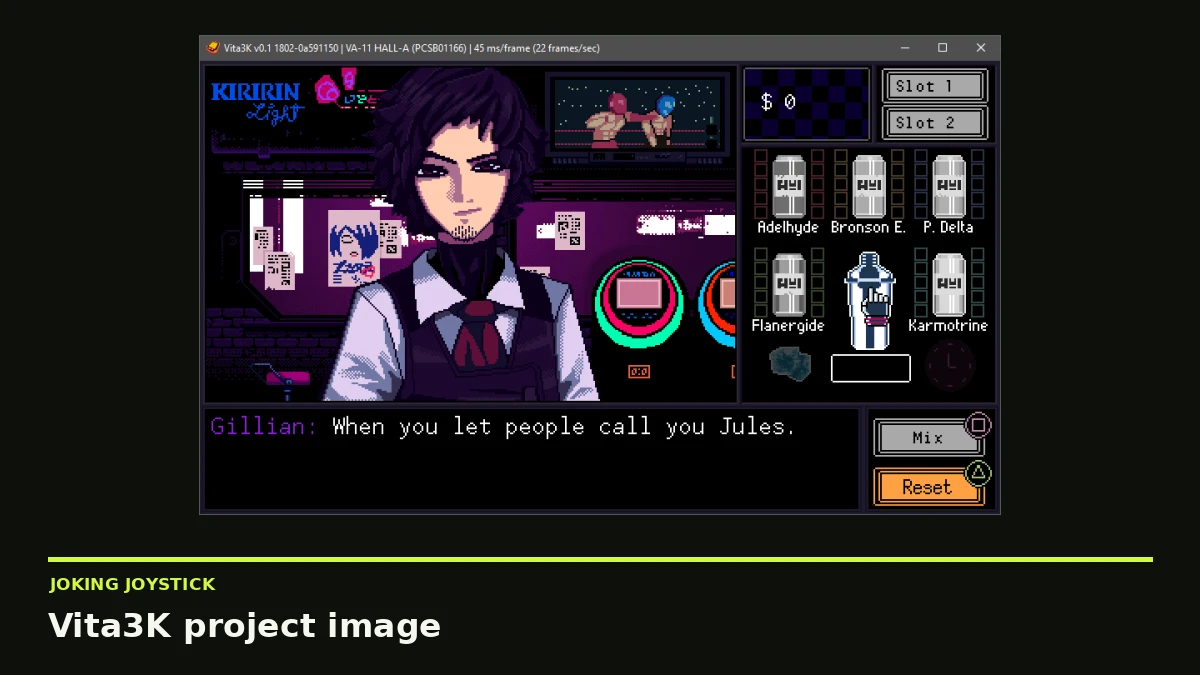
It also fits a broader pattern of ongoing platform-focused projects, where developers revisit old software with new tools and a close understanding of legacy systems. Readers following that side of the hobby may also be interested in this look at a recent Vita3K emulator snapshot, another example of technical work aimed at keeping game software accessible in different environments.
For these two adventures, the key takeaways are concrete: 256-colour AGA graphics through an eight-bitplane display path, PC SoundBlaster iMUSE music and effects replacing missing Amiga audio content, a custom six-voice system, and a stated requirement of a 14MHz 68020, Fast RAM and a hard drive. The reported performance gains on 68030 hardware should make the enhanced editions especially notable for owners of accelerated Amiga 1200 setups.