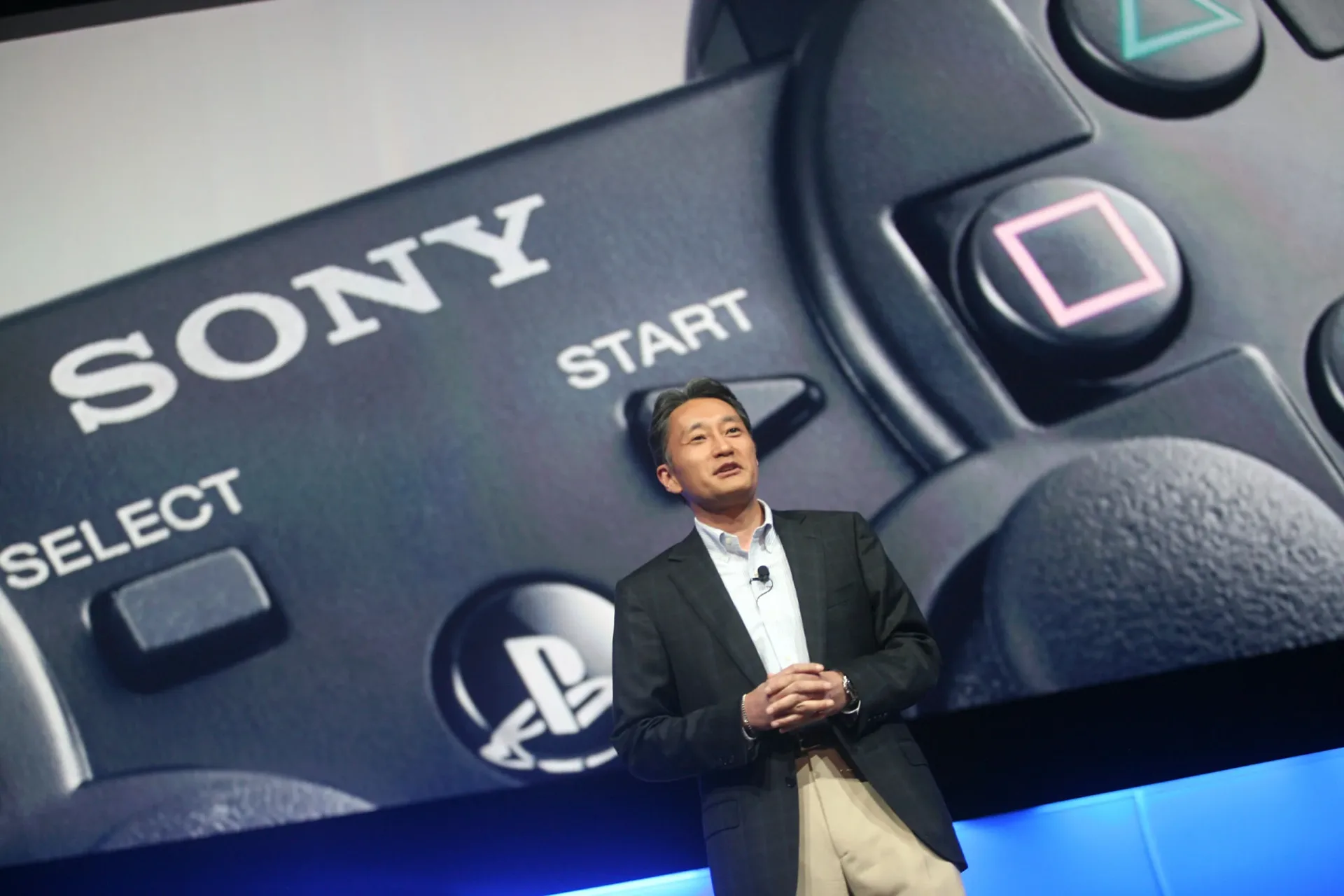
Kaz Hirai’s years leading PlayStation produced one of the internet’s most enduring gaming-business images: a public face from the much-maligned 2006 E3 presentation who seemed disarmingly relaxed amid an extraordinarily high-stakes console launch. But Hirai’s recent recollections suggest that the attitude associated with that moment was not merely a stage persona. It reflected a leadership instinct he applied inside Sony as well: PlayStation, in his view, needed room to make its own calls.
Reflecting on his tenure as president of Sony Computer Entertainment, Hirai described occasions when senior Sony leaders outside the games business offered direction for the PlayStation brand. His response was blunt: “What headquarters says isn’t important. We’re PlayStation!” He said he would follow his own direction when then-Sony CEO Howard Stringer and other executives made recommendations.
That line is memorable because it sounds confrontational, but Hirai’s broader account draws a more useful distinction. Independence for a specialized division is not necessarily the same thing as operating without accountability. It can mean that the people closest to a market, platform and audience are trusted to judge the practical consequences of decisions made elsewhere in a large company.
Why PlayStation’s autonomy mattered to Hirai
PlayStation was a console business inside a much larger company, and Hirai’s description of its management culture centers on the value of expertise. A games division must contend with hardware launches, software ecosystems, player expectations and a competitive entertainment market. The supplied account does not identify the recommendations Hirai rejected, so it would be wrong to treat his statement as evidence of a particular dispute over hardware or software strategy. What it does establish is his conviction that the division could not simply become an extension of corporate preference.
That position also helps explain why the slogan-like declaration has resurfaced. “We’re PlayStation” frames the brand as more than a Sony department. It is an argument for a distinct operating identity: a unit with its own professional knowledge and an obligation to defend the choices it believes best serve its business.
For players, corporate structure can sound remote until it affects the things they actually encounter: a console’s direction, the types of games a platform pursues, or the confidence behind a launch. Hirai’s comments do not reveal a new PlayStation product plan or change any current Sony policy. Their relevance is historical and organizational. They provide a clearer explanation of how one influential PlayStation leader viewed decision-making when a brand’s needs did not neatly match the instincts of its parent company.
From PlayStation president to Sony CEO
Hirai’s relationship with Stringer ultimately became strong, despite Hirai’s willingness to disregard recommendations coming from the corporate side. When Stringer stepped down in 2012, Hirai became Sony’s CEO. The promotion changed the scale of the job immediately. He was no longer responsible only for PlayStation as the company approached the PS4 launch; he was responsible for Sony as a whole.
The timing was fraught. Sony had posted its worst net loss to that point, contributing to a serious loss of confidence inside the company. Hirai also recalled skepticism around his appointment. He said one article reduced his promotion to a personal connection with Stringer, portraying him as someone who knew only gaming and music and who had been selected because he could understand Stringer’s English-language jokes.
Related coverage includes Kaz Hirai Explains the Independent Streak That Defined His PlayStation Leadership.
The details matter because they show the mismatch between an outsider’s shorthand and the problem Hirai believed he had to solve. The criticism was not simply that a new executive might make poor strategic choices. It questioned whether he possessed the breadth, authority and legitimacy to lead a company facing deep uncertainty.
Hirai’s answer, at least at the start, was not presented as a grand operational overhaul. He focused first on trust. Employees were concerned about the kind of executive he might be: someone who could undermine colleagues, seize credit for victories, or pass blame downward when things went wrong. Hirai said that if he could not gain their respect, the company could not work hard together.
“If I couldn’t earn people’s respect, we could never work hard together. So I started by making sure they knew I was someone they could trust.”
He put that belief into practice by visiting departments without announcing the trips and speaking with people directly. The account does not claim that these visits alone resolved Sony’s financial or organizational challenges. Still, they illustrate a management priority that is easy to overlook in discussions focused only on products and earnings: a leader’s credibility can determine whether teams believe they are being asked to solve a shared problem or merely absorb someone else’s risk.
A key change in philosophy: from division-first to company-wide direction
Hirai’s recollection has an important qualification. The executive who had championed PlayStation’s freedom from outside interference did not carry that same hands-off approach into the CEO role. As Sony CEO, he concluded that individual departments could not all operate according to their own preferences in the way PlayStation had during his earlier career.
Instead, he sought a common objective for Sony: creating moving experiences, with that goal intended to guide departments across gaming and the rest of the company. The shift is a concise example of how management philosophy changes with responsibility.
At the PlayStation level, Hirai valued autonomy because he believed a dedicated gaming operation needed latitude to act on its own knowledge. At the Sony level, he saw a need for alignment because a company made up of separate units requires a shared reason for those units to move in the same direction. These views are not inherently contradictory. They address different organizational problems.
What “alignment” means in this context
In management terms, alignment does not have to mean identical products, identical audiences or every department pursuing the same immediate objective. In Hirai’s account, it meant establishing a defining company-wide purpose. The supplied material identifies that purpose as making moving experiences.
That is deliberately broader than a console strategy. It can accommodate different Sony businesses while still giving employees a common frame for their work. The practical challenge, as Hirai’s experience suggests, is balancing that common frame with the specialized judgment of the people closest to each field. Too much central direction can disregard expertise; too little can leave a large company fragmented.
Hirai’s two roles therefore reveal a tension familiar to any company that houses strong brands. A division needs enough ownership to protect what makes it effective. The parent company needs enough coordination to ensure that separate divisions are not merely following unrelated agendas. His comments do not offer a formula for permanently resolving that tension, but they clearly show that his answer differed depending on whether he was protecting PlayStation’s identity or steering Sony overall.
The PS3 context behind the reputation
The 2006 E3 appearance remains a frequent reference point in memories of Hirai’s PlayStation years, but it is not the entire record. During his time at PlayStation, Sony launched the PS3 and improved the hardware’s fortunes after a difficult start. That turnaround is particularly relevant to his reflections because it provides context for his confidence in the games division’s instincts.
No single quote can explain a platform’s outcome, and the available account does not assign the PS3’s recovery to one executive decision. But Hirai’s stated preference for an independent PlayStation indicates the kind of internal culture he believed was necessary while the business was navigating major challenges. It is a reminder that the public memory of a console generation often compresses years of complicated work into a few presentations, memes and headline moments.
Gaming’s corporate history is full of similarly compressed stories, including how visual identity can become strategically important; the last-minute origin of GTA 3’s cover grid and its transformation into a franchise signature is another example of an industry decision gaining a longer legacy than the immediate circumstances around it. Hirai’s remarks similarly complicate a familiar image by linking the public persona to a consistent internal belief in PlayStation’s distinct identity.
Hirai’s legacy, in his own terms
Hirai stepped down as Sony CEO in 2019 and remained an adviser through 2024. His latest reflections do not rewrite the difficult circumstances surrounding Sony when he took the top job, nor do they turn an intentionally provocative PlayStation quote into a universal rule for corporate leadership.
They do, however, lay out a coherent arc. Hirai defended PlayStation’s right to make decisions based on games-industry knowledge. When elevated to lead Sony, he placed more emphasis on earning confidence across the company and creating a shared direction that could connect distinct departments. The first approach was about protecting a specialized brand’s judgment; the second was about making a wider organization capable of working together.
For anyone looking back at the PS3 era, that is the real value of the anecdote. “We’re PlayStation” was not just a piece of bravado. It was Hirai’s compact description of why he thought the brand needed to retain its own voice. And his later change in approach shows he understood that leading the entire company demanded something different: not every division marching to its own tune, but people trusting one another enough to pursue a purpose they could recognize together.