Sony has published a US patent application describing an “AI-adapted non-player character for video game system,” and its most unsettling possibility for action-game fans is not merely more conversational NPCs. The document outlines a system that could collect information on how a player reacts to attacks, then use machine learning to generate game content before play, during play, or after play.
In the boss-fight context, that could mean a game observes reaction time, the timing of attacks and defensive moves, and the frequency and success rate of dodges, blocks, and parries. It could also consider boss-specific interaction data: which attack patterns are avoided or countered, changes to the boss’s health, and use of environmental elements.
That is a big “could,” rather than evidence that a PlayStation game is about to deploy an enemy that reads the controller inputs, laughs at every panic roll, and invoices the player for emotional damage. Patent applications lay out possible systems and uses; they do not confirm a product, a release plan, or implementation in a particular game. Still, the application gives a useful look at one vision of adaptive game AI—and why the design details would matter as much as the technology.
What the patent application actually describes
Filed in the United States in March and published on October 1 as US-20260295429-A1, the application begins from a broad technical premise. As games become more complex, it argues there is an ongoing need for better rendering, real-time physics, scalable virtual environments, and more lifelike interactions with non-player characters.
NPC means non-player character: a game-controlled character rather than a person playing through a controller. The application’s proposed approach involves gathering player and game data, using that material to train a machine-learning model, and incorporating generated content into a game.
Machine learning, in this context, refers to a system trained on data to recognize relationships or produce outputs, rather than one where every possible response is individually scripted in advance. The patent describes the resulting content in general terms. It is not limited to combat, and it does not establish that any single model must run live inside a shipping game.
One suggested use is more expressive NPC behavior. The document discusses NPC emotional characteristics and voices that could vary in pitch, volume, and rhythm depending on a situation. The examples span urgency, calmness, fear, aggression, warmth, encouragement, and connection. In practical terms, that points toward characters whose presentation could change with game circumstances instead of relying on one fixed vocal delivery for every state.
The same framework is also proposed for combat encounters. That is where the idea becomes particularly provocative. An adaptive enemy could theoretically notice that a player routinely responds to one move with the same counter, or that a player’s parry attempts are consistently successful, and generate content informed by those tendencies.
Related coverage includes Sony Patent Explores AI That Could Adapt Boss Fights and NPCs During Play.
The important distinction: adaptation is not automatically unpredictability
“Adaptive boss” can describe several very different design choices. The most aggressive interpretation is a fight that changes its tactics as the player performs well against specific moves. But the patent’s discussion of generation before, in real time, and after gameplay leaves room for less immediate approaches too.
- Before gameplay: Content could be generated before a game is executed, potentially using available player or game data to prepare variations.
- During gameplay: The system could use data generated as the game runs, creating the possibility of live adaptation.
- After gameplay: Data from a completed session could inform later content or future encounters.
Those timing options have very different consequences. A boss that shifts something between attempts is not necessarily the same as a boss that alters its behavior mid-combo because it has detected a successful response. Likewise, a system that gives different players different encounter variants is distinct from one that continually manufactures new actions during a single fight.
The published application explicitly covers all three broad timing models. That breadth makes it a flexible technical proposal, but it also means no firm conclusion can be drawn about how Sony might balance readability, difficulty, fairness, performance, and player control in an actual game.
That uncertainty is central. A patented concept can be useful for protecting a range of potential implementations without becoming a promised feature. Nothing in the application identifies a game that will use this technology, says that a live adaptive boss system is being built for release, or ties the proposal to a particular studio.
Why Souls-style boss design makes this feel especially dangerous
For difficult action games, repeatability is often part of the appeal rather than a limitation. A player sees an attack, fails to answer it, and learns what to try next time. Gradually, an intimidating enemy becomes intelligible: a telegraph is recognized, a safe opening is found, and a defensive response becomes reliable.
A telegraph is the visual, audio, or animation cue that communicates an impending move. A wind-up before a slam, a change in stance, or a distinct sound can all act as telegraphs. They give players information from which to make a decision. In a hard encounter, the sense that failure can teach something is closely connected to the feeling that a win was earned.
This is why the patent’s references to reaction time and defensive success rates can inspire both curiosity and dread. If an enemy learned that a player was consistently exploiting a known opening and then eliminated that opening without a clear signal, the player might not feel challenged so much as deprived of a lesson. An encounter can become difficult in a way that is hard to read, reproduce, explain, or improve against.
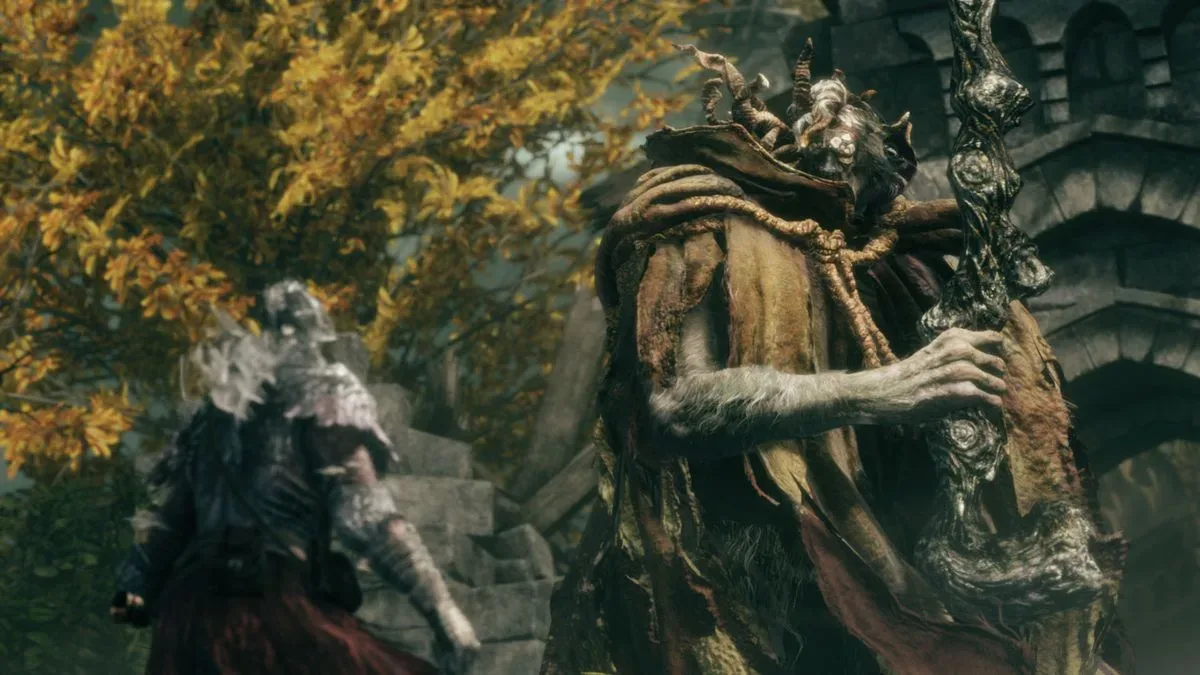
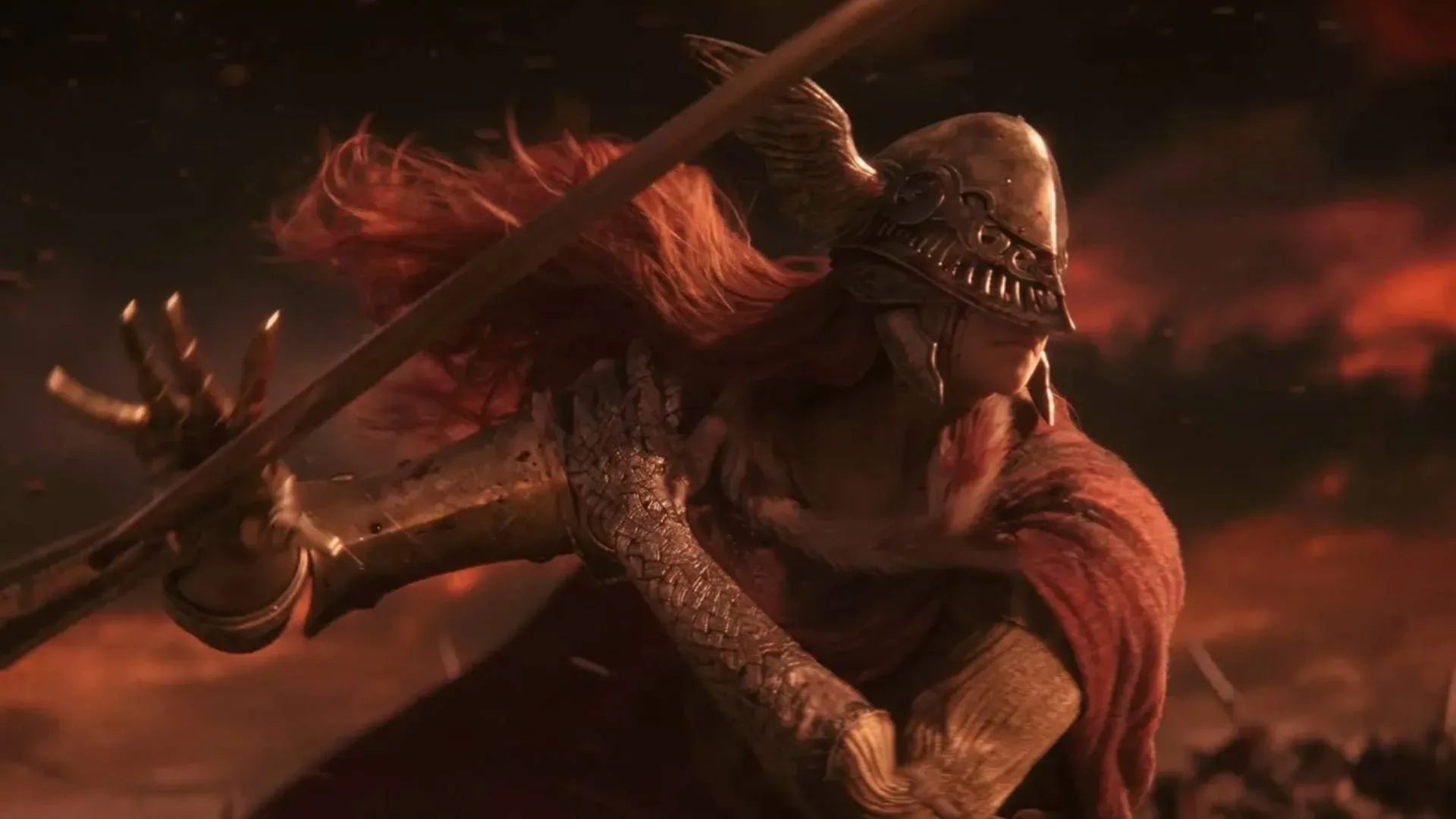
The nightmare scenario is a boss that treats player knowledge as a defect to be erased. Imagine mastering a stagger setup only for the enemy to stop permitting it, or becoming competent at avoiding a signature attack only for the encounter to skew toward whatever still defeats you. The familiar fantasy example is Elden Ring’s Malenia responding to a player’s success by leaning into an attack such as Waterfowl Dance because that player struggles with it. That is an illustration of a concern, not a feature Sony has announced.
There is also a difference between an enemy reacting to the player’s broad style and an opponent with near-perfect tactical information. The former could make a fight feel dynamic. The latter could resemble facing a highly skilled fighting-game opponent who keeps detecting habits, except the opponent also controls the rules, the move set, and perhaps the information it reveals about its next decision.
Where adaptive design could be useful
None of that means adaptive systems are inherently hostile to player mastery. Carefully constrained adaptation could create meaningful variety without dissolving the rules players are trying to understand.
For example, the data types described in the patent could be used to choose among established behaviors rather than constantly inventing opaque ones. The key word is bounded: the boss would still work within a designed set of recognizable attacks, animations, counterplay options, and limitations. It may respond to repeated tactics, but it should communicate that response clearly enough for a player to form a new plan.
That approach could make an encounter less mechanical on repeat attempts while retaining a stable foundation. Players could still learn the boss’s vocabulary; they would simply need to pay attention to which choices the boss is emphasizing. The fair version of an adaptive enemy is not one that always knows the optimum response. It is one that presents a new, comprehensible problem.
The same principle applies beyond bosses. NPCs with emotional changes in voice and behavior could potentially make scenes feel more responsive, but only if the game preserves consistency. If a character’s mood shifts, players need a reason they can perceive in the surrounding situation. Responsiveness without legibility risks feeling arbitrary.
Practical questions a real implementation would need to answer
If a game ever used the proposal in the live-combat form outlined by the application, developers would face design questions that are more important than the AI label itself.
- Can players read the change? If an enemy has adjusted, its animation, positioning, dialogue, or tactical choice should give the player usable information.
- Is the adaptation limited? A boss should not have unlimited responses to every tactic, especially if it can use a player’s failures as targeting data.
- What remains consistent? Reliable timing, recognizable telegraphs, and stable counterplay are the building blocks of deliberate mastery.
- How does it affect accessibility and difficulty? A system designed to locate weak points could unintentionally make an already demanding experience harsher for the people who need the most predictable feedback.
- How is player data handled? The patent discusses collecting player and game data, so any consumer-facing use would need clarity about what is collected, when it is used, and what choices players have.
These are not abstract concerns. Players assess demanding games not only by whether they are hard, but by whether they can identify why they lost and act on that knowledge. An adaptive system that protects that relationship could add variety. One that conceals its adjustments could turn progress into guesswork.
The patent arrives amid broader interest in AI across consumer technology, a subject also likely to feature prominently around AI-focused platform presentations. In games, however, the most compelling question is less whether a model can generate a response than whether that response serves the experience a designer is trying to build.
A patent is a possibility, not a boss-fight sentence
For now, Sony’s application is best read as a set of potential directions for AI-adapted NPCs. It contemplates player-informed content generation at multiple stages of use, emotional variation for characters, and combat data that includes reaction times, defensive habits, counters, health changes, and environmental play. It does not establish that Sony will implement those ideas in a PlayStation release, much less that a forthcoming action game will field a boss built to dismantle every hard-earned habit.
But the thought experiment is valuable. It highlights the line between enemies that feel responsive and enemies that make players feel surveilled by the encounter itself. The best difficult bosses do not need to be completely predictable; they need to be understandable. If AI adaptation ever reaches this part of game design, preserving that distinction will be the real test.