Sony has filed a patent describing an AI-assisted support system that could monitor a PlayStation for warning signs, use a large language model (LLM) to prepare a potential patch, and either apply a remedy or send the findings onward for engineering review. It is a provocative vision of console maintenance: less time spent deciphering an error and more time actually playing.
It is also only a patent. That distinction matters. A patent can protect an idea or a technical approach without confirming a consumer feature, a release window, or even a final product plan. Nothing in the available material establishes that this system is coming to PlayStation 5, a future PlayStation platform, or any retail console at all.
Still, the concept raises unusually immediate questions because it concerns a machine in someone’s home. A support tool that merely identifies an issue is one thing. A tool that can generate repair instructions and potentially act on a device is another. The difference between helpful automation and an overconfident digital mechanic could come down to permissions, transparency, human review, and a reliably accessible off switch.
What the patent appears to describe
At its center, the proposed system would watch a console for signs of hardware or software trouble. When it spots something suspicious, an LLM could be used to create a patch intended to address the problem before it becomes more disruptive. Alternatively, the information could be assembled into a report for Sony’s engineers rather than immediately being used for an automated repair.
An LLM, or large language model, is an AI system built to process and produce language-like output. In this proposed setting, the relevant leap is that it would not simply write a friendly troubleshooting message. It could help formulate technical repair instructions or code-related changes. That makes the quality of the model’s constraints especially important: a confident-looking output is not the same thing as a safe, verified fix.
There is a sensible appeal to early diagnosis. A console could potentially detect patterns that are difficult for an owner to describe: recurring crashes, unusual system behavior, or a conflict that only appears under a particular combination of software conditions. A report prepared from those signals could make it easier for engineers to investigate a widespread issue. For players, that might mean less hunting through settings or waiting to learn whether a fault is local or broadly affecting other systems.
But the patent’s premise also means the system may need broad visibility into the console’s operations. To monitor for a wide range of potential hardware and software issues, it could need access to a significant amount of device activity and data processed on the PlayStation. The available description does not spell out the exact data categories, where information would be processed, how long it could be retained, or what choices users would receive. Those are not minor implementation details; they would define whether the feature feels like support or surveillance.
The useful version needs narrow permissions
The best case is easy to picture. A console sees a clearly known fault, explains what it found in plain language, offers a limited fix, and lets the owner decide whether to run it. The player can inspect what information is involved, decline the change, and return to normal use without punishment or lost functionality. If the system lacks confidence, it creates a diagnostic report for a qualified person instead of improvising on a live machine.
Related coverage includes Sony Patent Envisions AI That Could Diagnose and Patch PlayStation Problems.
The difficult part is that “monitor the system for problems” is a very broad instruction. A genuinely player-friendly design would need boundaries that are specific rather than decorative. At minimum, those boundaries could include:
- Clear opt-in and opt-out controls: Players should know whether monitoring is enabled and be able to disable it without navigating an obscure menu.
- Separate consent for diagnosis and repair: Letting a service observe technical signals is not necessarily consent to install a generated change.
- Readable explanations: Before any repair, the console should say what appears wrong, what will change, and what effect the action could have.
- Reversible changes: A repair system should favor changes that can be safely rolled back if they worsen the problem.
- Escalation over guesswork: Where diagnosis is uncertain or the stakes are high, producing a report for engineers is safer than acting automatically.
These are practical implications drawn from the patent’s general idea, not announced PlayStation policies. The material available does not confirm any particular privacy controls, approval screen, rollback process, or repair workflow. That absence is precisely why it would be premature to judge a hypothetical product as either a brilliant convenience feature or an unavoidable privacy disaster.
Why autonomous patches are a different level of risk
Software updates are already a familiar part of console ownership. The distinctive concern here is an on-demand response shaped by an AI system’s diagnosis of an individual device. The patent itself recognizes the need for careful guardrails when automated repair instructions are being sent to a device in a living room. That is a refreshingly direct acknowledgement of the core problem: a minor hiccup must not become a much larger failure because the remedy was wrong.
In technical terms, a patch is a targeted software change intended to correct a bug, security issue, compatibility problem, or other behavior. A well-tested patch can be a routine and welcome repair. An incorrect patch, however, can introduce a new conflict or remove behavior that was not actually broken. The more tailored a patch is to an individual device’s inferred condition, the more important validation becomes.
The nightmare scenario is commonly described as bricking a device. A “bricked” console is one that no longer functions normally enough to be used, evoking the usefulness of a brick. The available material raises the possibility that an inadequately trained or constrained LLM could make a coding mistake in an on-demand fix, with consequences severe enough to render PlayStations unusable.
That possibility does not establish that such a failure would happen. Nor does it mean an AI could never participate safely in a support pipeline. It does mean that a sensible deployment would need layers between an AI-generated suggestion and an irreversible action on consumer hardware. A system can be highly automated while still requiring approved repair templates, strong testing, restricted permissions, verification checks, and a safe recovery path.
There is an important distinction between an AI that helps classify logs for human engineers and one that is authorized to alter system behavior. The first is primarily an analysis tool. The second becomes part of the console’s maintenance and security chain. The patent appears to contemplate both a repair route and a reporting route, and that reporting path may be the less controversial application if the concept ever becomes real.
Privacy is not a side issue
For many players, the central question will not be whether AI can identify a technical pattern. It will be what the system must see while looking. The patent description suggests that comprehensive monitoring could require extensive access to data processed on the PlayStation. Without a meaningful choice to disable that access, the convenience trade-off could be difficult to accept.
“Data” is not a useful disclosure by itself. A user would need a practical account of what is being collected or examined, whether it remains on the console or is transmitted elsewhere, and whether the same information is needed for every level of troubleshooting. Broad monitoring may be more capable, but it also makes trust harder to earn.
That is especially true because technical telemetry can feel abstract to users until it is not. People should not need specialist knowledge to learn whether a support agent is looking at crash information, configuration information, account-related signals, or something more expansive. Nor should they have to infer whether disabling a feature prevents repairs, reports, monitoring, or all three.
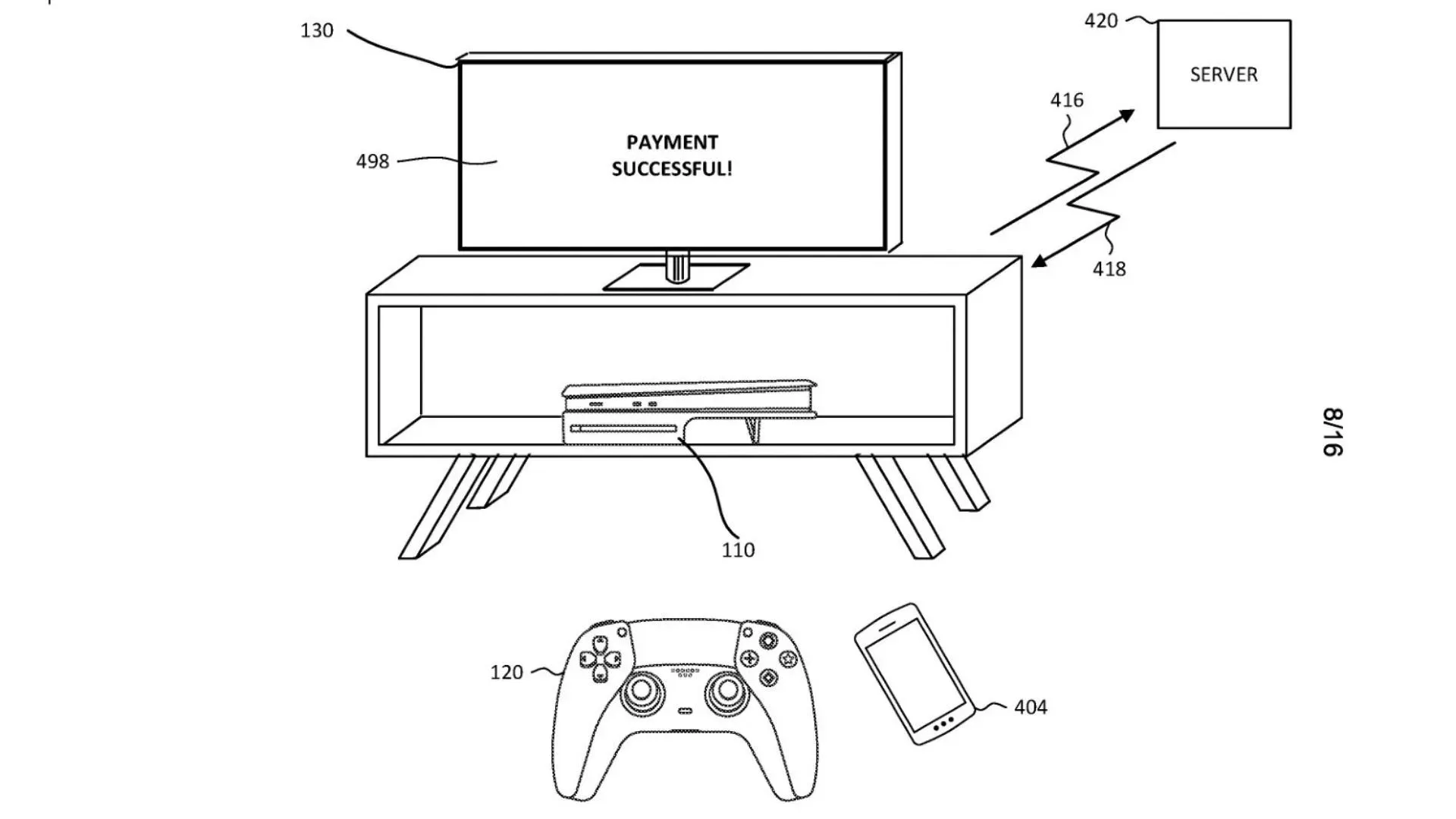
Sony has explored other ideas around how players might interact with PlayStation hardware; for example, a separate patent imagines tapping a card or phone on a controller for payments and setup. That controller-focused concept is a useful reminder that patents map possible directions, not firm product roadmaps. The same caution applies even more strongly to a proposal involving remote diagnostic insight and AI-generated repairs.
What this could mean for the next PlayStation generation
The material does not say when, or whether, the patent’s AI support system will be implemented. It also speculates that a future PlayStation could have persistent communication with Sony’s servers, which would make this kind of system easier to deploy. That remains speculation, not a confirmed feature set for any next-generation PlayStation.
If a platform does maintain regular server communication, it could simplify the logistical side of receiving diagnostic reports and distributing fixes. It would not settle the harder issues. Connectivity does not automatically answer who authorizes a repair, what happens when a connection fails, how a change is verified, or whether players can keep automated monitoring off. Those are policy and product-design decisions, not merely networking tasks.
For now, the most grounded takeaway is modest: Sony has protected an idea for using AI to spot PlayStation problems and help generate a response. The idea could lead to faster troubleshooting and better engineering reports. It could also create serious privacy and reliability concerns if monitoring is too broad or automated repairs are given too much freedom.
Any eventual implementation should be judged on the controls it actually gives players, not on the novelty of putting an LLM in the support loop. A repair feature earns trust when it is transparent, optional, cautious, and recoverable. Nobody wants their console’s first attempt at “vibe-coded” technical support to be its last boot.