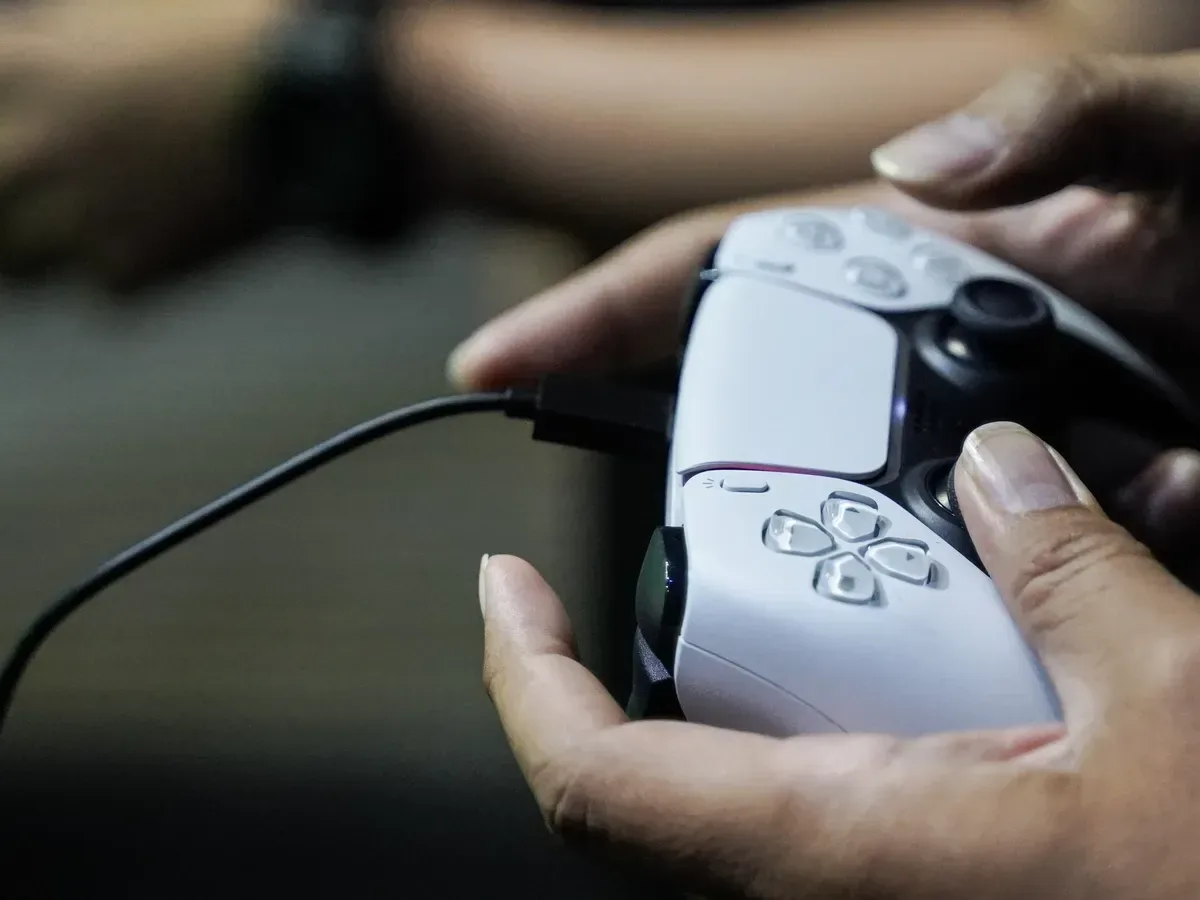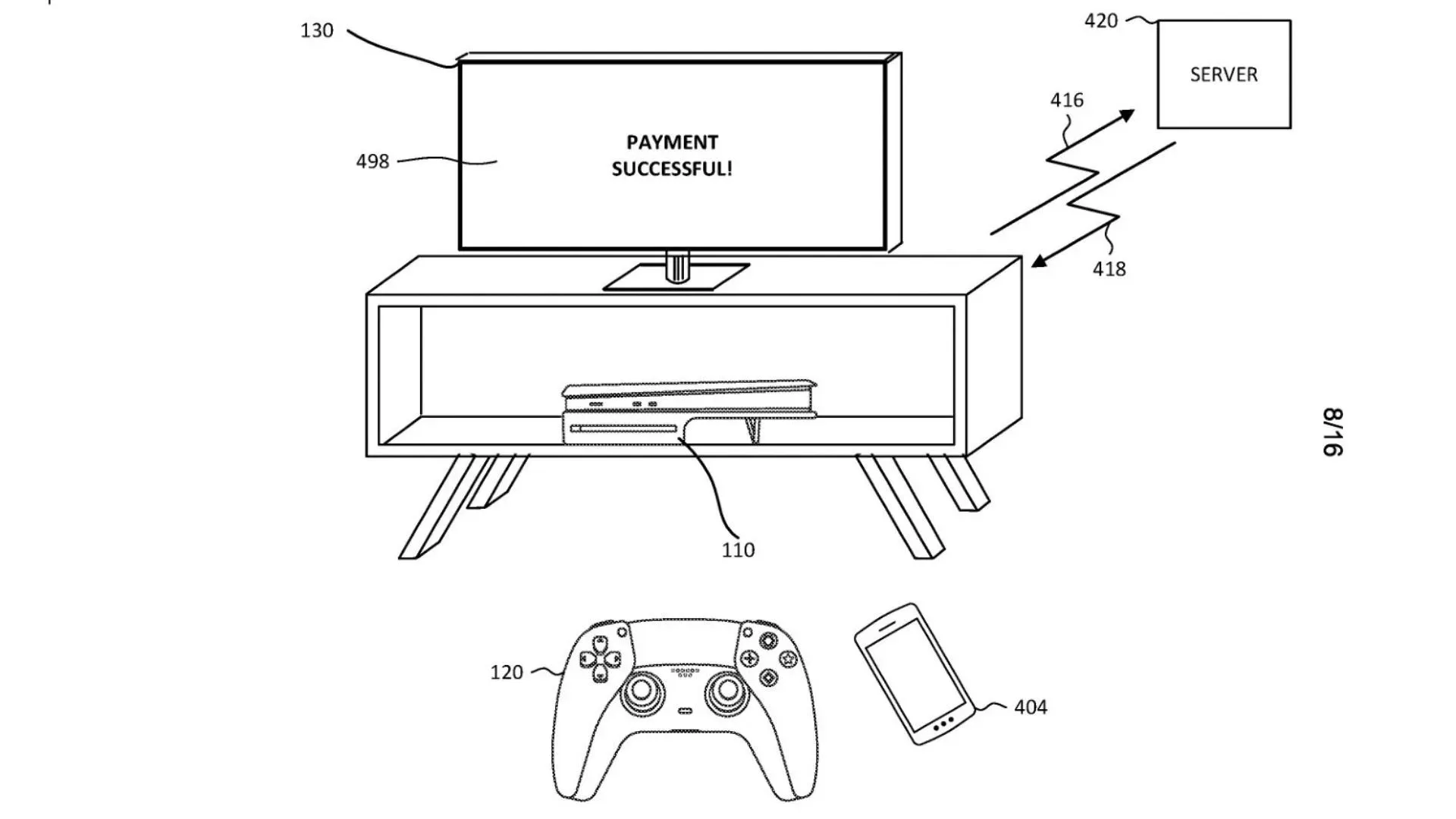
Sony has filed a patent for a system that could make a PlayStation controller do a little more than steer cars, fire plasma rifles and collect fingerprints from snack residue. The filing, titled video game controller-driven information transfer, describes a controller with near-field communication, or NFC, that can accept information from a phone or payment card and pass it to a console.
The most immediately understandable use is payment: tap a card or phone against the controller rather than manually entering card details through an on-screen keyboard. The same proposed arrangement could also help move PlayStation account information onto a new console. That is a potentially appealing idea for anyone who has spent a console setup screen pecking at letters one thumbstick movement at a time.
There is an important limit on the news, though. A patent records an idea and a possible implementation; it does not confirm a consumer product, a feature list or a release plan. The filing has prompted speculation about a future PlayStation system, but it does not establish that an NFC controller will arrive with any particular console. For now, it is best read as an outline of a problem Sony may be considering and one possible way to solve it.
What the patent describes
The core proposal is straightforward. An NFC-capable controller would receive information from another NFC device, such as a credit card or a phone, then transfer that information to the attached or nearby game console. In practical terms, the controller would become the convenient contact point for actions that currently require several steps on a television interface, mobile device or separate keyboard.
NFC is a short-range wireless technology designed for close-proximity exchanges. It is familiar from tap-to-pay terminals and from phone-based actions such as adding a card to a digital wallet or quickly pairing certain accessories. The short range is useful because it makes an intentional physical tap part of the interaction. A player would not need to search a console menu for a pairing option just to begin an exchange.
That distinction matters. A controller is already in a player’s hands when they are browsing a console storefront or completing initial setup. Putting the NFC reader there could turn an otherwise awkward living-room process into a single physical gesture. It also avoids asking the player to aim a phone camera at a television, type lengthy details using a controller, or repeatedly switch attention between two devices.
The account-transfer angle may be more significant than the payment one. When replacing or adding a console, players need a reliable way to identify themselves and connect the new hardware to their existing account. A phone tap could serve as the opening step in that process, with the console receiving the information needed to begin account setup.
The friction Sony appears to be targeting
The patent documentation discusses conventional routes for entering or moving data, including on-screen keyboards and QR codes scanned with a phone. It argues that coordinating several operational steps across several devices can hurt console performance or cause one or more console operations to fail.
Related coverage includes Sony Patent Explores NFC Payments and Account Transfers Through a PlayStation Controller.
That is the filing’s technical rationale, and it is worth separating from the ordinary convenience argument. A controller-based NFC exchange is not merely being framed as faster than typing. It is being presented as a way to reduce the number of connected steps involved in a transaction or account transition.
In theory, a shorter chain can mean fewer chances for a setup flow to go wrong. A QR code must appear correctly on the display, a phone must scan it, the appropriate account state must be recognized, and the handoff must finish properly. An on-screen keyboard introduces its own friction, especially when a controller is the input device. NFC does not make every difficult part of account setup vanish, but it could make the initial handoff more direct.
There is still a meaningful distinction between a patent’s stated ambition and a demonstrated advantage. The available information does not show a finished controller, real-world reliability data or a comparison proving that NFC setup is less prone to failure than existing methods. Any conclusion that it would definitively prevent setup problems would go beyond what the filing establishes.
Convenience is not the same thing as authentication
A tap is convenient, but it cannot be the only safeguard for sensitive actions. This is especially clear for account migration. If possession of a phone and a quick tap were enough to move an entire account, someone with temporary access to that phone could potentially attempt an unauthorized transfer. The same general concern applies to any purchase flow involving a payment card.
Authentication is the step that proves a person is permitted to perform an action. It is different from simply transferring data. NFC may provide the transfer mechanism, but a secure system would still need a way to verify that the account holder approves the result.
One possible model is a secondary confirmation on the phone or a code that must be entered on the console. Another existing-device setup approach uses a visual confirmation pattern scanned by the new device’s camera before account information is transferred. The patent does not establish which protection Sony would choose for a controller-based process, and there is no reason to assume a controller would include a camera. The broader point is simpler: a future version would need more than proximity alone for a high-stakes task.
That extra verification is not necessarily a strike against the idea. Payment systems and account transfers routinely balance speed against protection. The useful design question is whether the controller tap reduces the tedious portions without weakening the moment where a player must clearly authorize a purchase or account move.
Why the controller is a logical place for NFC
Controllers are already personal objects within the console setup. They are paired to the system, kept close to the player, and used to approve many of the actions that happen on screen. Using one as a point of contact for a phone or card is less strange than it first sounds; it is an extension of the controller’s role as the physical interface between a person and the console.
There are some practical caveats. A card or phone would need to be positioned near the NFC area, and the feature would need clear on-screen prompts so players know when a tap is expected and what information will be used. The interface would also need to distinguish carefully between adding payment information, starting a purchase, signing in and transferring account details. Those are not interchangeable actions, even if they share the same tap hardware.
For payment in particular, the appeal is obvious: it could eliminate a clumsy entry process when a player wants to buy something through the console. Yet the final user experience would depend on details not contained in the patent, including the confirmation steps, the supported card and phone workflows, and whether the feature would be enabled in every region where a console is sold.
For account setup, the potential gain may be less about raw speed and more about reducing the awkwardness of moving between screens and devices. That is a familiar headache in a living-room environment, where the phone is in hand, the TV is across the room and the controller is the only conventional way to navigate the console interface.
Patent reality check: promising concept, not product confirmation
It is tempting to treat every console-related patent as a preview of the next hardware generation. That temptation is particularly strong when a proposal sounds consumer-facing and easy to imagine. But patents cover concepts companies may investigate, protect or never use. They do not guarantee engineering completion, public announcement or inclusion in future hardware.
Nothing in this filing confirms a product name, launch timing, final controller design, price or compatibility plan. It also does not prove that Sony has settled on NFC as the preferred answer to payments or account migration. A future controller could adopt a substantially different method, or this particular idea could remain a piece of intellectual property with no retail counterpart.
Still, the patent is notable because its proposed benefit is legible. Rather than describing an abstract hardware flourish, it focuses on two everyday console chores: paying and getting an existing account onto new hardware. The controller has long been the player’s primary point of contact with PlayStation systems; turning it into a secure, short-range handoff point could be practical if the implementation respects consent and security.
It also arrives at a moment when controller design remains a visible part of PlayStation’s identity. For a look at a currently announced PlayStation release, see The House of Tesla: Definitive Edition’s PS4 and PS5 release details. The NFC patent, by contrast, is not a game announcement or a confirmed hardware reveal. It is an early glimpse at one way Sony could try to make a future console’s less glamorous moments feel less like administrative side quests.