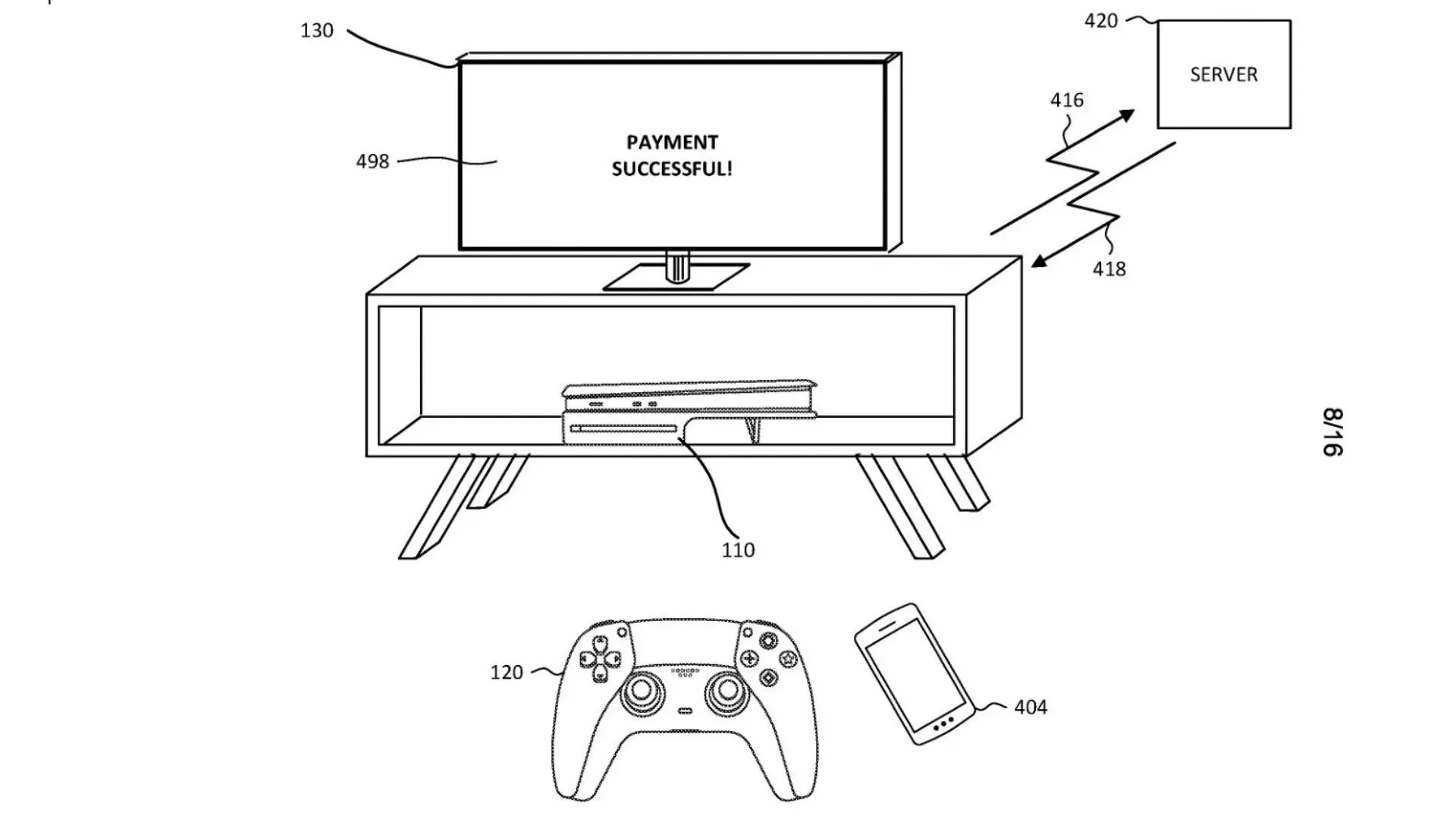
A Sony provisional patent filed in 2025 outlines a potentially simpler route through some of the least glamorous screens on a game console: payment, account access and other forms of information entry. Titled “Video game controller-driven information transfer,” the filing describes a controller that could communicate with a nearby device, such as a phone, and relay approved information to a console.
The important word is could. A patent describes an idea and a possible technical implementation; it does not confirm that a controller is in production, that it will ship with a future PlayStation system, or that every described use will become available. Still, the proposed interaction is easy to understand: rather than painstakingly entering details with a controller, a player could bring an already-equipped phone close to the pad and approve a transfer.
That is more accurately understood as a controller-assisted handoff than a conventional card reader. The supplied description centers on the controller detecting a nearby phone or other device, receiving confirmation from that device, and passing information on to the console. The controller would be the physical bridge between a player’s phone and the PlayStation interface—not necessarily the place where card data is manually entered or stored.
What the patent describes
The proposed sequence has three parts:
- The controller detects a nearby device, such as a smartphone.
- The nearby device receives a signal and confirms the requested action.
- The controller sends the relevant information to the console.
The filing contemplates proximity-based communication using NFC, Bluetooth, or both. NFC, short for near-field communication, is the close-range technology commonly associated with tap-based interactions. It is used for contactless payments on many phones and wearables. Bluetooth is another wireless connection method and can provide a different route for a nearby device to communicate with the controller.
In practical terms, an on-screen console event could prompt the transfer. The examples associated with the patent include purchasing a game, entering gift-card details, signing into a PlayStation account and joining a multiplayer match. Rather than treating every task as a string of controller-driven text fields, the system could ask the phone to confirm the identity or information needed for that one moment.
That distinction matters. A tap gesture alone is not the useful part. The useful part is that the phone may already hold account credentials, payment settings or an easier approval method than a console keyboard can offer. The controller would make that information available at the TV without requiring the player to move through a separate phone workflow first.
Why this could be useful at checkout
Console storefronts are built to sell games, downloadable content and other digital items, but typing can still be awkward with a gamepad. Moving a cursor across an on-screen keyboard to enter payment details, a password or a code creates friction at precisely the point where a player wants to finish a purchase and get back to playing.
Related coverage includes Sony Patent Explores Tap-Based PlayStation Payments and Sign-Ins.
A controller-driven transfer could reduce that friction. A purchase request on the console might be followed by a nearby-phone prompt, then an approved handoff back through the controller. The possible benefit is not merely speed; it is a clearer division of labor. The TV remains the place where a player browses and chooses content, while the phone handles information that is often easier to secure or enter there.
There is a business implication as well. Every additional field, menu and manual entry step is a chance for a person to pause or abandon a purchase. Making the process more direct could be useful for players and for PlayStation’s digital store alike. That does not mean a patent proves a specific checkout flow is coming, but it explains why payment is a prominent example in the concept.
The timing also makes the idea notable. Sony has said it will shift fully to digital formats and discontinue physical disc production in 2028. If that plan proceeds as described, the convenience of discovering, buying and accessing digital games becomes even more central to the PlayStation experience. A better payment or account-linking flow would fit that direction, even though the filing itself does not establish any product roadmap.
Sign-in may be the more interesting use
Payments draw attention because NFC is widely associated with tapping to pay. Yet the account-sign-in scenario may be just as meaningful for ordinary console use. The patent diagrams suggest a player could use a nearby device to log in to a PlayStation account. That could be useful after being signed out, when setting up access on another console, or when visiting a friend and wanting to use one’s own profile rather than a generic guest session.
A profile can matter beyond a name on the home screen. It is the personal context through which a player accesses their own account and participates in console activities. A faster way to establish that identity on a shared or unfamiliar console could make the experience feel less anonymous while avoiding some of the tedium of controller-based credential entry.
The supplied material notes that passkeys have already simplified account access for some users. The patent’s approach would not necessarily replace passkeys. Instead, it appears to offer a possible physical interaction for triggering or completing a transfer: tap the device near the controller, confirm the request, and continue on the console. Whether such a flow would ultimately use NFC, Bluetooth, a passkey system, or a combination of methods is not established here.
NFC on controllers is not an entirely new idea
The underlying wireless technology is familiar territory in games. The Wii U GamePad and Nintendo Switch Pro Controller use NFC to scan amiibo figures. In those cases, the controller acts as a convenient place to present a compatible item to the console.
Sony’s patent applies a similar proximity principle to digital information from a nearby device. The comparison should not be stretched too far: scanning an amiibo is not the same job as approving a payment or moving account data. But it demonstrates why the controller is a sensible location for an NFC-related interaction. It is already in the player’s hands and generally close to where an on-screen request appears.
That placement also potentially makes the interaction easier to understand. Instead of asking a player to search through menus on the console and then independently navigate a phone, the system could frame the controller as the immediate point of contact. The controller receives the prompt, the phone is brought near it, and the console receives a confirmation.
Convenience has to coexist with control
The patent description suggests that the nearby device receives a signal and then sends confirmation back. That confirmation stage is significant. For financial or account-related actions, a system should not treat physical proximity alone as approval. A player would reasonably expect a visible request on the phone and a meaningful chance to accept or refuse it before any information reaches the console.
It is also worth separating what is described from what is unknown. The available details indicate possible transfers of payment details or account information and list several console events that could trigger them. They do not spell out a final consumer interface, a release date, device compatibility, supported regions or the precise protections a shipping product would use. Those are all questions for any eventual implementation, not answers provided by the patent concept.
The Bluetooth option introduces a similarly open question about how proximity would be defined in practice. NFC generally implies an intentional close-range tap. Bluetooth can support nearby-device communication but does not by itself tell us what confirmation screens, pairing requirements or distance rules would apply. The filing identifies possible technologies, not a finalized user experience.
A small idea with a potentially broad role
What makes the patent more compelling than a simple payment shortcut is its flexibility. The phrase “an event that has occurred at the video game console” encompasses more than buying something. The examples point to a general-purpose mechanism for moving approved information from a phone to PlayStation when the console needs it.
- Store purchases: passing payment-related information after a player chooses a game or add-on.
- Gift cards: helping provide redemption details without laborious controller input.
- Account access: using a nearby device to assist with sign-in.
- Multiplayer: supporting an account-related handoff when joining a match.
Not every one of those tasks would require the same information, and the patent does not say they would all work in one identical way. The broader point is that the controller could become a gateway for short, contextual transfers instead of functioning only as an input device for buttons, sticks and text entry.
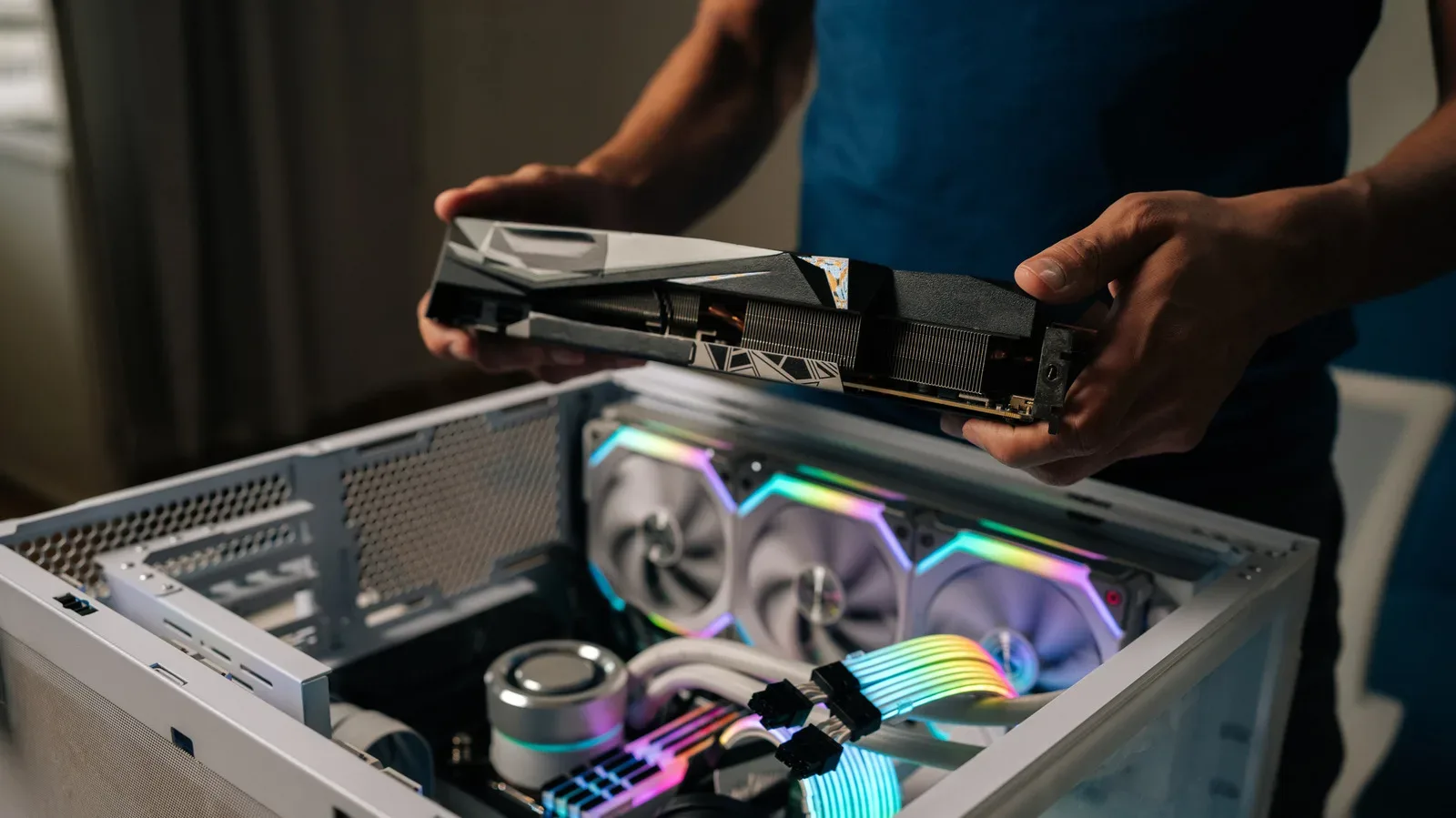
That is a modest evolution of the controller’s role, but it aligns with a digital ecosystem where purchases and account identity regularly sit beside play itself. It may also be relevant to the broader discussion around future PlayStation hardware, alongside the practical questions players already have about how console performance maps to other platforms, such as this look at the PC hardware comparison most often made with PS5.
Do not read a patent as a product announcement
Patent filings are valuable as evidence of what a company has explored. They are not guarantees of retail hardware. Sony may develop the concept further, alter it substantially, use only portions of it, or never release it at all. There is no confirmed PlayStation controller, console generation or launch plan attached to the details described here.
For now, the clearest takeaway is straightforward: Sony has explored a controller that uses NFC, Bluetooth or both to transfer confirmed information from a nearby device to a PlayStation console. If it ever reaches consumers, its appeal would probably lie less in novelty than in removing routine annoyance—especially where a phone can handle identity or payment information more naturally than an on-screen keyboard.