UnderMire, the hand-drawn first-person co-op roguelite horror game from Table Knight Games, is scheduled to launch for PC via Steam on Friday, November 13, 2026. The release date arrived alongside a new trailer that adds several concrete details to the game’s unsettling descent beneath an old English manor.
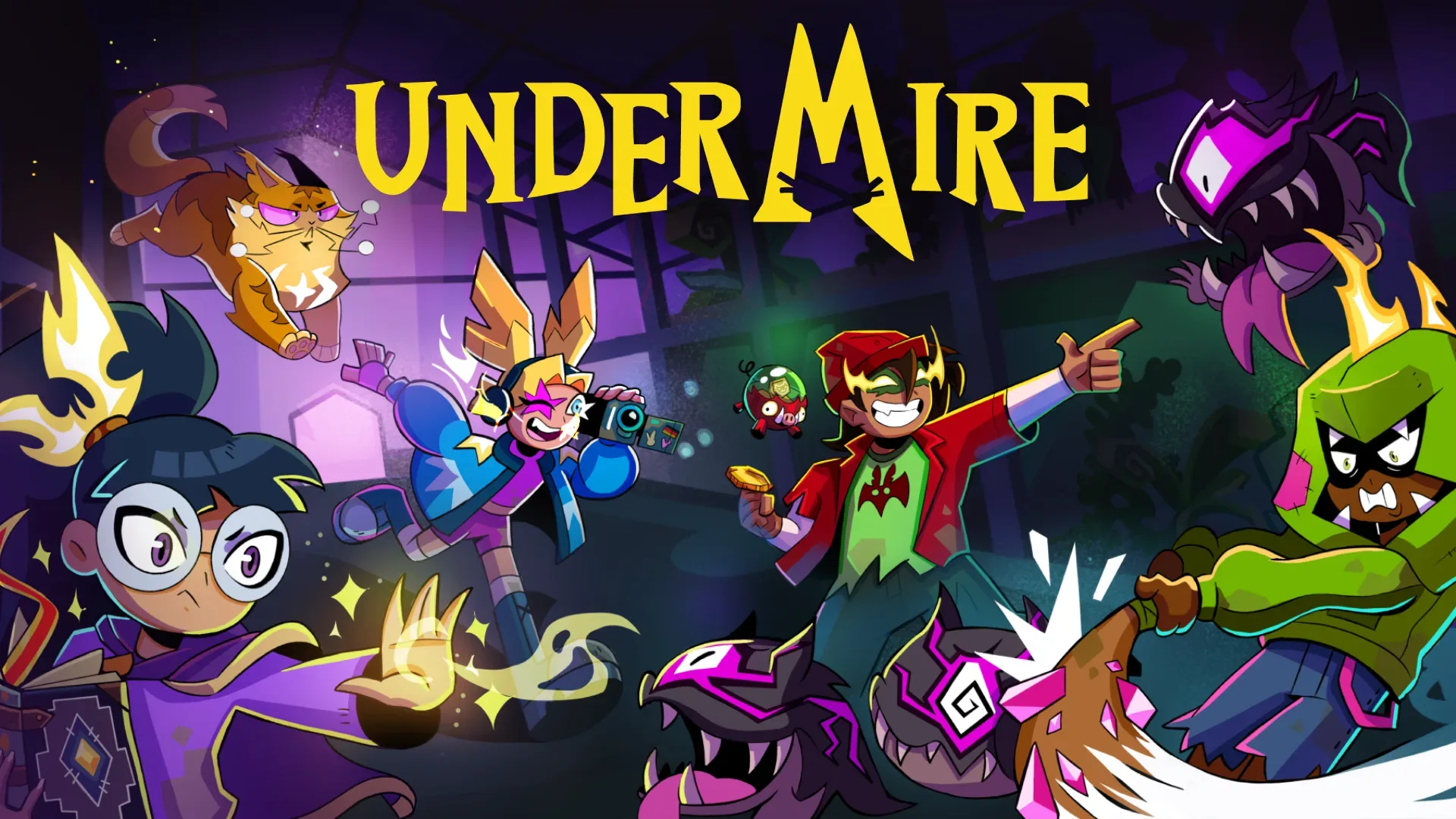
Most notably, the trailer introduces Rawiah, a newly revealed playable character who carries a spell-casting tome. New key art also identifies the complete playable roster: Hannah, Leo, Rawiah and Sam. The footage offers a first view of the Bunker’s initial layer, including a grassy biome and an encounter with the elusive Mothman.
A free playable demo is currently available. The full game’s confirmed platform is PC through Steam.
A bunker built to change beneath your feet
UnderMire is designed for one to four players in online first-person co-op. Its central location is an ever-changing magical bunker underneath an old English manor, where players descend through hostile spaces, confront fear-fuelled monsters, navigate hazards, carry out unusual tasks and gradually uncover the mystery below.
For more context, explore Star Wars: Ahsoka — Escape From Thrawn Comic Will Arrive With Season 2 in January 2027.
The word roguelite signals a structure centered on repeated attempts rather than a single fixed route through a game. In UnderMire’s case, the changing Bunker and its shifting biomes are the important promise. A group’s next descent is not simply a matter of retracing a memorized map: the environment, threats and complications are meant to keep plans from becoming too comfortable.
That changing structure matters especially in a co-op horror game. Horror frequently depends on uncertainty, while multiplayer groups often reduce uncertainty by pooling knowledge, calling out threats and refining an efficient routine. An evolving bunker gives UnderMire room to push back against that tendency. Players may know their characters and understand the broad objective—go deeper—but should still need to react to whatever layout, enemy presence or environmental danger appears during a run.
The new grassy biome offers a useful early indication that the Bunker is not being framed as a uniform concrete maze. A magical underground setting can support a wider range of spaces than its premise initially suggests, and the trailer’s first-layer glimpse points toward environmental variation as part of the game’s identity. The available details do not establish how many biomes there will be or how their systems differ, but enemies and bosses are planned across changing biomes.
Rawiah joins Hannah, Leo and Sam
Rawiah’s reveal completes the announced four-person lineup. Her spell-casting tome immediately distinguishes her from a roster described as having unique characters and different playstyles. The game has not detailed the exact mechanical differences between all four characters, so it would be premature to assign fixed team roles to Hannah, Leo, Rawiah or Sam. Still, a tome-based spellcaster gives the group a clearly supernatural toolset within a game otherwise concerned with scavenged junk, monsters and improvised survival.
Character differentiation can be particularly meaningful in a one-to-four-player format. Solo players need a character whose approach feels viable on its own, while groups need reasons to consider how their choices fit together. A distinct playstyle is not automatically a rigid class system; it can instead change the kinds of decisions a player makes when danger builds. Rawiah’s inclusion suggests that supernatural abilities will stand alongside the game’s makeshift item systems rather than being kept separate from them.
The freshly shown key art is therefore more than a visual roll call. It clarifies the initial playable cast ahead of launch and places Rawiah alongside the three previously identified characters. For players deciding whether to approach UnderMire alone, with a regular group or through drop-in online co-op, it establishes the available cast without promising details that have not yet been announced.
The SMUSH system makes junk part of the survival plan
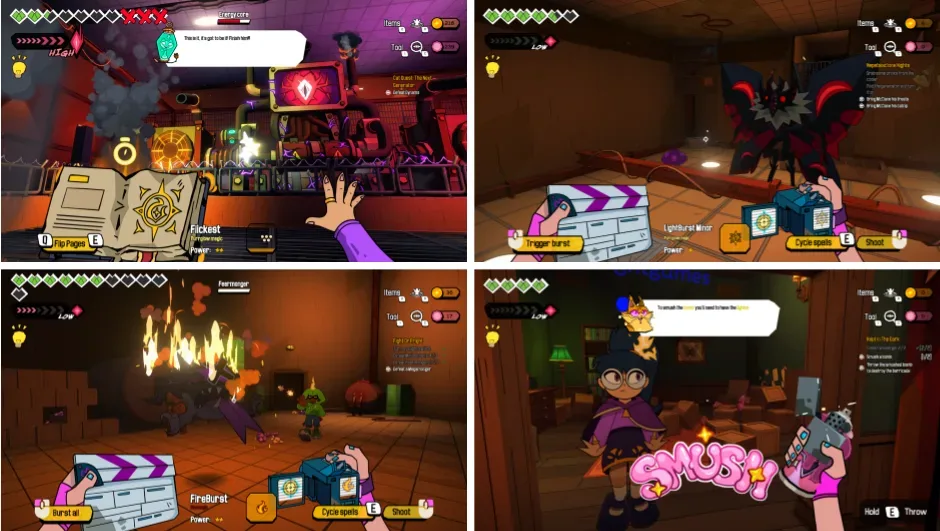
UnderMire’s key crafting-and-combination feature is called SMUSH. It allows players to combine ordinary junk into useful gear, including weapons, healing items, explosives and more. The core idea is simple: objects that might initially look disposable can become the answer to a dangerous situation.
This is closely tied to the game’s emphasis on improvisation. Rather than presenting every bad moment as a test of whether a squad brought exactly the correct preselected equipment, UnderMire aims to make players work with what is available. A resource that becomes a weapon, a restorative item or an explosive depending on how it is combined can make on-the-spot decisions more consequential.
There is a practical co-op question embedded in any system like this: what should the group consume now, and what should it preserve for a potentially worse encounter later? UnderMire has not disclosed recipes, inventory limits or precise item interactions, so those details remain unknown. But the listed outcomes already establish the intended rhythm: find junk, assess the immediate threat, make something useful, and accept that a solution may be imperfect.
That tone is a natural fit for horror. Improvise does not mean every choice is safe or optimal. It means a plan can unravel, supplies can be repurposed, and a group may have to decide whether its available materials are better spent staying alive, dealing damage or escaping the next hazard. The title’s stated focus on what happens when plans go wrong makes SMUSH sound like a central survival language rather than a peripheral crafting diversion.
Fear is a system, not only an atmosphere
Alongside enemies and hazards, UnderMire asks players to manage a fear gauge. This is one of the game’s more notable design details because it turns fear from a mood into a resource or pressure mechanic that players must actively account for.
The available information does not specify what raises fear, what happens at particular levels, or how players reduce it. Those are important unanswered questions. What is clear is that fear management sits alongside combat, task completion and hazard navigation. The game is not only asking players to defeat monsters; it is also asking them to withstand the conditions created by the Bunker.
Mechanically represented fear can change the group dynamic in interesting ways. A party might need to slow down, change priorities or support a teammate whose situation has become difficult. Because UnderMire includes proximity voice chat, communication is likely to be part of the tension rather than merely an external convenience. Proximity chat generally means a player’s voice is governed by in-game distance, so someone who moves away from the group may be harder to hear. Here, that feature aligns naturally with a game about navigating an unpredictable subterranean space together.
It is worth separating the confirmed feature from assumptions about implementation. Proximity voice chat is included, but no further rules have been detailed. Likewise, the game confirms fear management without spelling out exact penalties or recovery methods. The strong takeaway is not a particular hidden system value; it is that UnderMire combines social coordination, spatial separation and psychological pressure in its stated design.
Mothman and the first layer’s dangers
The trailer’s Mothman appearance provides an early example of the strange creatures inhabiting the Bunker. The creature is described as elusive, which establishes its presence without revealing whether it functions as a boss, a recurring enemy, an environmental threat or something else. UnderMire does confirm that its changing biomes include enemies and bosses, but it does not attach a specific role to Mothman.
That restraint is important. The trailer gives players a look at the kind of folklore-tinged oddity they may encounter, while the game’s broader premise leaves room for mystery. UnderMire is about uncovering what is hidden beneath the manor, and revealing every creature’s purpose ahead of release would cut against that setup.
For now, the first-layer reveal does two things. It grounds the Bunker in a visible biome instead of only describing it abstractly, and it shows that the descent will include more than generic monster encounters. The game’s horror has a distinctly magical, surreal framing: a grassy underground region, a spell tome, fear-fuelled monsters and an elusive Mothman are all part of the same space.
What players can confirm before launch
- Release date: November 13, 2026.
- Platform: PC via Steam.
- Player count: One to four players, with online co-op.
- Perspective and format: First-person roguelite horror adventure.
- Playable roster: Hannah, Leo, Rawiah and Sam.
- New character detail: Rawiah uses a spell-casting tome.
- Core systems: An ever-changing bunker, changing biomes, fear-gauge management, hazards, tasks, enemies, bosses, proximity voice chat and the SMUSH item-combination system.
- Try it now: A free demo is available ahead of the full release.
UnderMire’s new trailer is most useful as a clearer outline of its intended co-op experience: a four-character descent where groups face uncertain environments, manage mounting pressure and turn everyday debris into whatever tool survival demands. The November date now gives that premise a firm target, while the demo offers the available way to investigate the Bunker before its full Steam arrival.