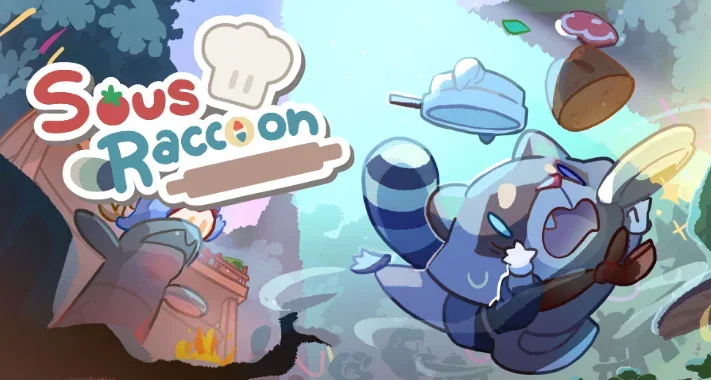
Sous Raccoon, the cooking roguelite from Novice Flow, is scheduled to leave Early Access and receive its full Steam release on October 1. The release adds online co-op for as many as four players and introduces a new Endless Mode.
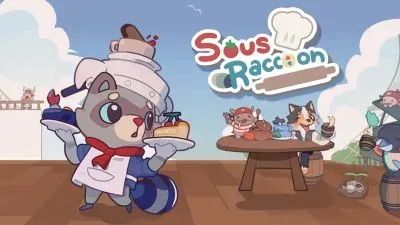
The premise is agreeably unruly: players are raccoons attempting to keep restaurant work under control across four restaurant worlds. That means managing dinner orders while also dealing with monsters, all under the looming threat of getting fired. It is a setup built around competing pressures rather than a calm, methodical kitchen routine. The order queue wants attention, the monsters are another problem entirely, and the raccoon staff apparently cannot count on management to be sympathetic.
What the full release adds
The clearest new feature is online co-op. Up to four players will be able to work together, turning a game about keeping a restaurant functioning amid chaos into a shared responsibility. In practical terms, co-op changes the nature of a multitasking game even when the fundamental objective remains the same. Players can split their attention between orders and threats, but they also need to communicate well enough to avoid duplicating work or overlooking the most urgent task.
That distinction matters for a kitchen-focused game. Adding more players does not automatically make a hectic situation easier; it can simply create a larger, louder kitchen if everyone chases the same order while another task goes unattended. The appeal of four-player support, then, is not merely that more people can participate. It is that a group can decide how to divide the work when the restaurant is under pressure.
Novice Flow has not detailed how roles, progression, matchmaking, difficulty scaling, or other online-co-op systems will operate. Those are meaningful details for prospective players, but they should not be assumed from the announcement alone. What is confirmed is the player count: online co-op supports up to four players.
Endless Mode puts the focus on staying employed
The October 1 release also brings an Endless Mode. The name establishes its broad purpose: it is a mode centered on continuing play rather than reaching a stated endpoint. In a game whose central tensions include orders, monsters, and the possibility of being fired, that can make endurance the central test.
“Endless” can mean different things in different games, so it is important not to read unconfirmed rules into the label. No specific scoring structure, escalating challenge model, leaderboard, unlock requirement, or reward system has been detailed. There is likewise no confirmed information on whether Endless Mode uses a separate format from the main roguelite structure. Still, it is a natural fit for a premise where composure and task prioritization are likely to matter as much as speed.
For players, an endless format can be useful as a more direct measure of sustained coordination. A brief successful run may demonstrate that a team can solve an immediate problem. Continuing indefinitely, or for as long as possible, asks whether that same team can preserve its rhythm once pressure accumulates. In Sous Raccoon’s case, the likely point of friction is apparent from the announced setup: dinner service and monster trouble demand attention at the same time.
What “cooking roguelite” tells us—and what it does not
Sous Raccoon is described as a cooking roguelite. “Roguelite” is commonly used for games that borrow elements associated with roguelike design, often including repeatable runs and systems that vary between attempts, while not necessarily following every convention of the traditional roguelike genre. It is a broad label rather than a full ruleset.
That makes the term useful for setting expectations at a high level, but insufficient for claiming specifics about Sous Raccoon’s progression. The available details do not establish what carries over between runs, how randomization is handled, whether the game uses permanent upgrades, or what ends a particular attempt. Players looking for those particulars will need further information from Novice Flow.
The cooking portion is more concrete. The game places players in restaurant worlds, asks them to juggle dinner orders, and layers monster combat or confrontation into that work. The result is not presented as a pure restaurant simulator. Its hook is the collision between service work and danger: make the food, keep the operation moving, deal with monsters, and somehow avoid dismissal.
Four restaurant worlds, one very precarious shift
The full game spans four restaurant worlds. That gives Sous Raccoon a defined multi-world structure, although the individual themes, environments, menus, and differences between those worlds have not been specified. Four worlds is the announced scope; anything beyond that would be guesswork.
Even with limited detail, the structure helps explain why the game’s central idea has room to develop. A restaurant world is more than a visual backdrop when the game is about taking orders and surviving hazards: it is the context in which players must read demands, make decisions, and cope with disruption. The announcement does not say precisely how each world changes the challenge, so the sensible takeaway is simply that the full release encompasses four distinct restaurant settings.
The raccoon premise gives the game a comic edge without reducing the challenge to a joke. These are novice chefs in a hostile workplace, attempting the ordinary act of serving dinner under distinctly non-ordinary circumstances. Monster interruptions transform kitchen workflow into something closer to crisis management. The threat of being fired adds a familiar workplace anxiety to a scenario already complicated by animal staff and supernatural-or-at-least-hostile intruders.
Why co-op is a meaningful addition for this setup
Online co-op is particularly relevant in games organized around simultaneous demands. One player can potentially focus on an order while another reacts to monsters; with three or four participants, a group can create an informal division of labor. That is an interpretation of why the feature suits the concept, not a claim that Sous Raccoon assigns fixed jobs or requires particular strategies.
There is also a social dimension. Kitchen-chaos games often turn missed priorities and last-second recoveries into the moments players remember, because the outcome is shared. A group can celebrate a rescue or collectively accept blame when the restaurant collapses into a furry labor dispute. Four-player capacity means a full party can take that on together when the Steam release arrives.
For solo players, the announcement does not say that single-player options are being removed or changed. It only confirms that online co-op is being added for up to four people. Likewise, no other platform release has been announced in the supplied details; the stated full release is for Steam.
What to watch for on October 1
The transition out of Early Access is the headline, but the practical questions around a full launch will be how online sessions feel, how Endless Mode is structured, and how the four restaurant worlds fit into the broader roguelite loop. Those questions remain open because the announced information is focused on the release date and its two major additions rather than a complete feature breakdown.
For now, the confirmed picture is straightforward: Sous Raccoon reaches its full Steam release on October 1; it has four restaurant worlds; it is built around raccoons balancing dinner orders and monster problems; it adds online co-op for up to four players; and it adds Endless Mode. That is plenty of responsibility for a crew that already has to worry about keeping its jobs.
Players interested in other small-scale PC games built around a sharply defined central challenge can also read our Arrow Survival: 15 Seconds PC assessment. Sous Raccoon’s challenge is very different, but its pitch similarly hinges on making pressure and fast decisions the heart of the experience.