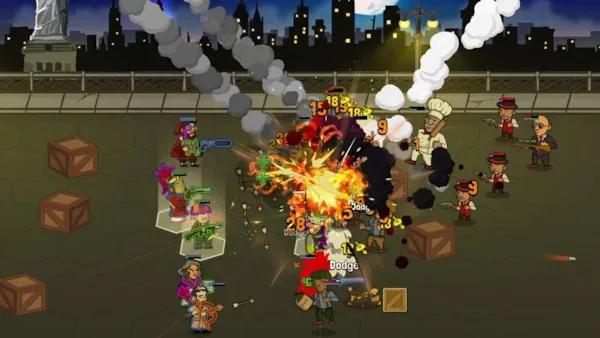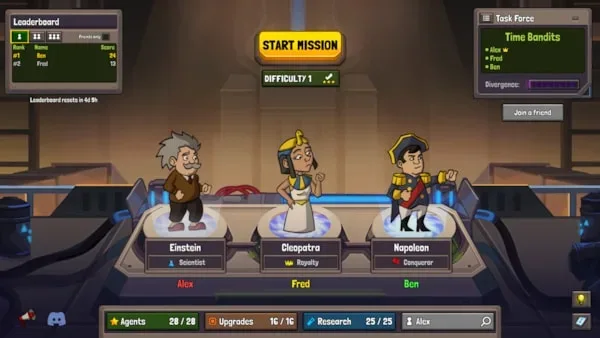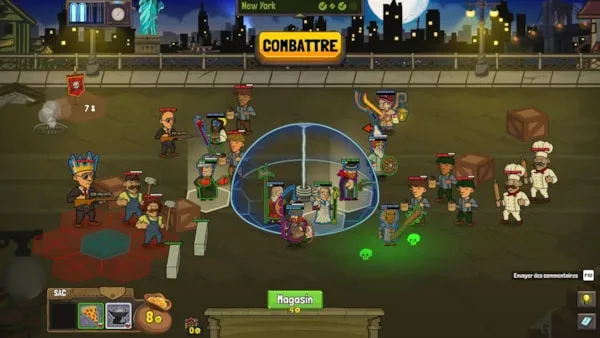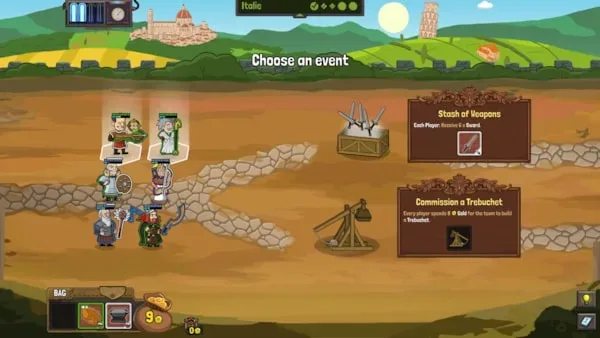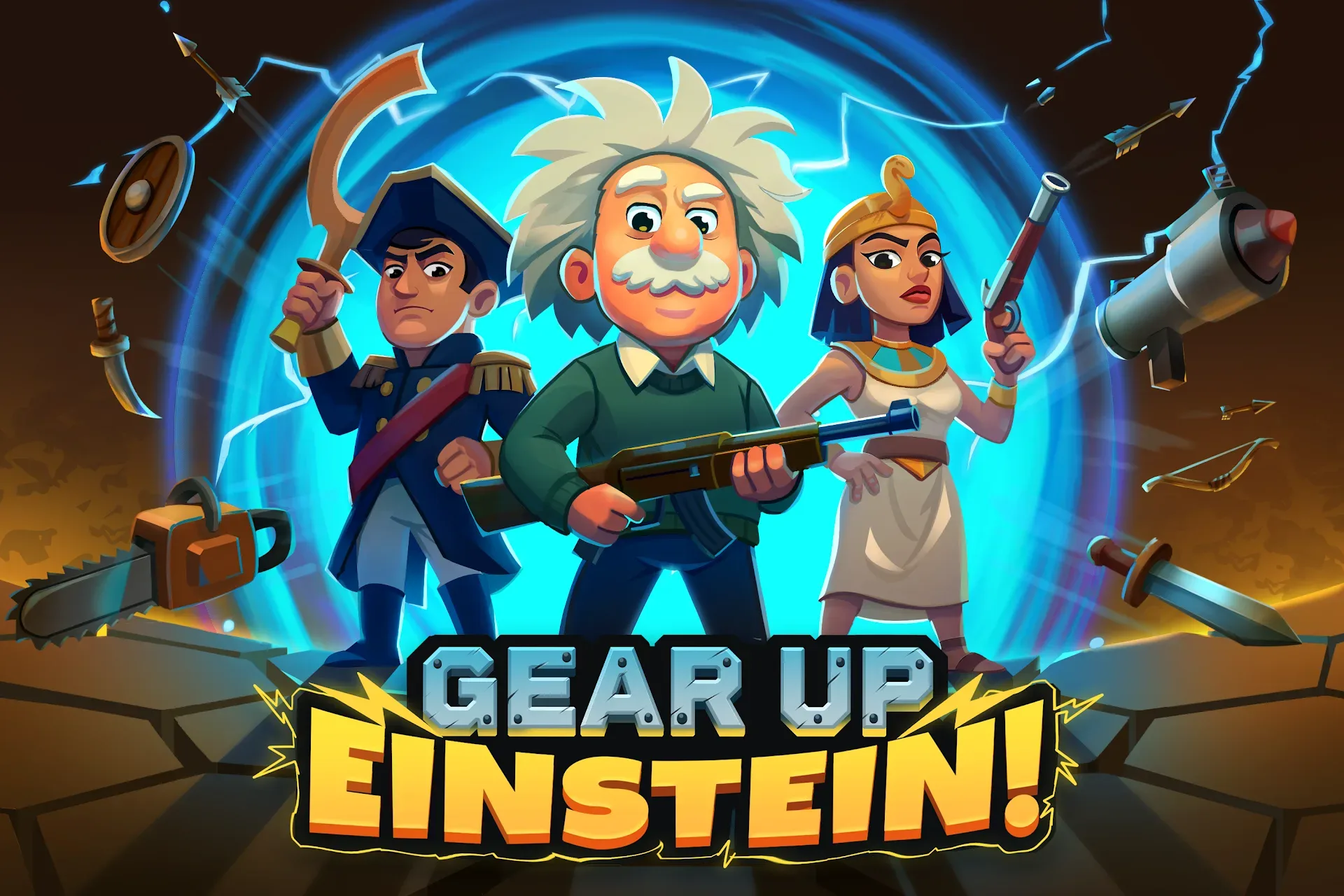
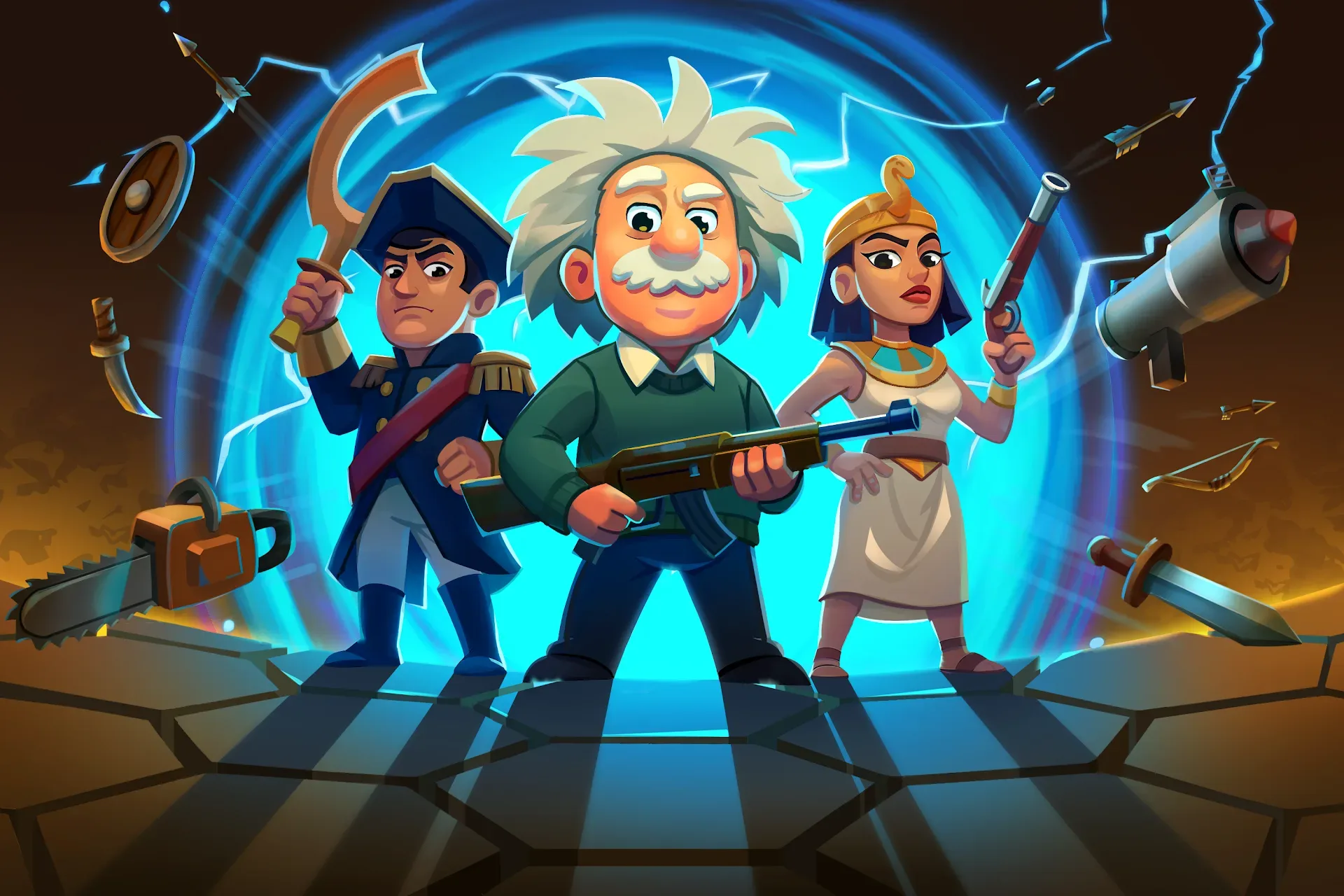
Gear Up Einstein! has entered Early Access on Steam, bringing a deliberately unusual setup to PC: recruit historical figures, hand them the right equipment, then send the assembled team into tactical auto-battles across a series of changing runs.
Developed by No Deadlines Studio, the game supports one to three players, whether playing solo, locally with others, or through online co-op. It is available on Windows, Mac and Linux through Steam, with crossplay between Steam and Itch.io. The Early Access launch is scheduled for November 6, 2026, at 1 p.m. EST / 10 a.m. PST / 6 p.m. GMT / 7 p.m. CET.
The listed launch pricing is £11.59, $14.79, or €13.59. A 15% discount applies for the first two weeks.
A roguelite built around preparation rather than direct control
The central loop in Gear Up Einstein! is straightforward in outline but leaves room for experimentation. Each mission is a fresh run. Players put together a squad from a pool of historical characters, obtain and assign equipment between encounters, and work through a sequence of fights spanning historical settings.
Einstein and Queen Elizabeth are among the figures named for the roster, while Egypt and New York are cited among the locations. The premise is intentionally broad, using familiar people and places from different eras as the basis for a strategy game rather than attempting a historical simulation.
The term roguelite generally describes games structured around repeatable runs. A run begins with a new attempt, asks players to adapt to what it offers, and ends with success, defeat, or a stopping point before another attempt can begin. Here, that structure means the squad construction and gear choices are not merely a one-time setup screen: they are the key decisions repeated across missions.
The game is also an auto-battler. In that format, combat resolves automatically once it begins. The strategic test is therefore concentrated before the battle: selecting units, building a group that works together, and deciding which gear goes to whom. The available description emphasizes equipment combinations and item synergies, suggesting that the outcome of a fight may depend as much on a well-matched loadout as on which historical figures make the initial roster.
What “gear combos” and synergies mean for a run
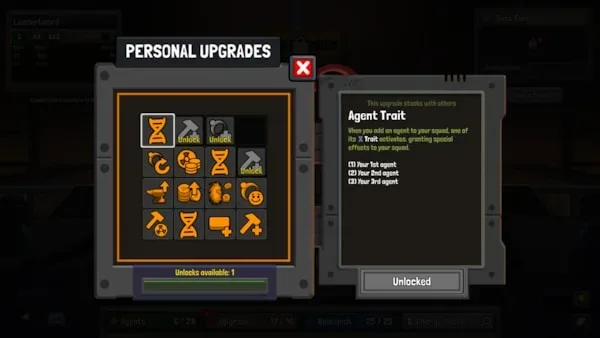
Gear is the practical heart of the game’s stated design. Players recruit their figures, find items between fights, and equip them before the next automatic encounter. Because the battles themselves are not manually directed, those inter-fight decisions carry unusual weight.
Related coverage includes Gear Up Einstein! Enters Steam Early Access With Co-Op Roguelite Battles.
An item synergy is an interaction where elements are stronger together than separately. In a squad game, that could mean the usefulness of a character changes depending on their equipment or on the other members of the team. The precise effects and individual item rules have not been detailed, so players should not assume a particular character role or combo from the historical names alone. What is clear is that the game frames discovering such combinations as a major part of a successful run.
That makes the title a potentially good fit for groups who enjoy discussing a plan before watching it play out. The decision-making is not absent because battles are automated; it is relocated. Instead of demanding rapid inputs in the middle of combat, the game asks players to make choices at the recruiting and equipping stages, then see whether the assembled build performs as intended.
For solo players, the same format should foreground experimentation: try a squad composition, judge its result, and use the next mission to pursue a different setup. For co-op teams, the declared three-player limit provides a naturally compact group size, avoiding the need to organize a large lobby just to begin a run.
Local, online and cross-platform co-op
Gear Up Einstein! offers both local and online co-op for up to three players. That distinction matters. Local co-op is for players in the same physical space, while online co-op allows separated players to take part together. The game additionally supports crossplay between its Steam and Itch.io versions, meaning players using those two PC storefronts can play in the same group.
Crossplay is particularly useful for a co-op-focused game because it reduces a basic coordination problem: everyone does not need to own the game through the same store. It does not change the stated platform family—the release is for PC systems—but it does make the available multiplayer pool less dependent on storefront choice.
PC players can access the game on Windows, Mac, and Linux. Its listed language support is also extensive: English, French, Simplified Chinese, German, Italian, Japanese, Korean, Polish, Portuguese, Russian, Spanish, Thai, Turkish, Ukrainian and Czech are all included.
Early Access changes what prospective players should expect
Early Access means the game is being sold and played before it reaches a final release state. It is not a guarantee of a particular future feature, timetable, amount of content, or balance direction. The available information establishes the current foundation—historical-figure recruitment, gear-driven team building, repeated roguelite missions and co-op auto-battles—but does not provide a roadmap or specify planned additions.
That distinction is worth keeping in mind for anyone considering a purchase based on a preferred historical character, a desired era, or a specific kind of tactical depth. The announced roster examples and locations communicate the game’s tone, but they should not be read as a complete list of figures, maps, modes, or systems.
For players comfortable with games in development, the appeal is clear from the pitch: a run-based strategy game where the comedy of building a team from famous names sits alongside more deliberate decisions about gear and team interaction. The question each mission poses is less “Can you click quickly enough?” than “Did you build a squad capable of handling the next battle?”
Where it fits among current PC releases
The game arrives as another PC co-op release with a sharply defined multiplayer hook. While Snow Panic takes a chaotic eight-player approach to competition, Gear Up Einstein! is centered on a smaller co-operative party and strategic preparation. Its historical cast and automatic fights also set it apart from a conventional action-first multiplayer game.
At its most basic, No Deadlines Studio’s new Early Access release is a squad-building game with a knowingly absurd time-traveling frame. Players recruit recognizable figures from history, travel across varied locales, hunt for equipment interactions, and see whether their planning survives the next automated confrontation. With solo, local, online and Steam-to-Itch.io crossplay options, it is designed to let that process work either as an individual build-crafting exercise or as a three-person strategy conversation.