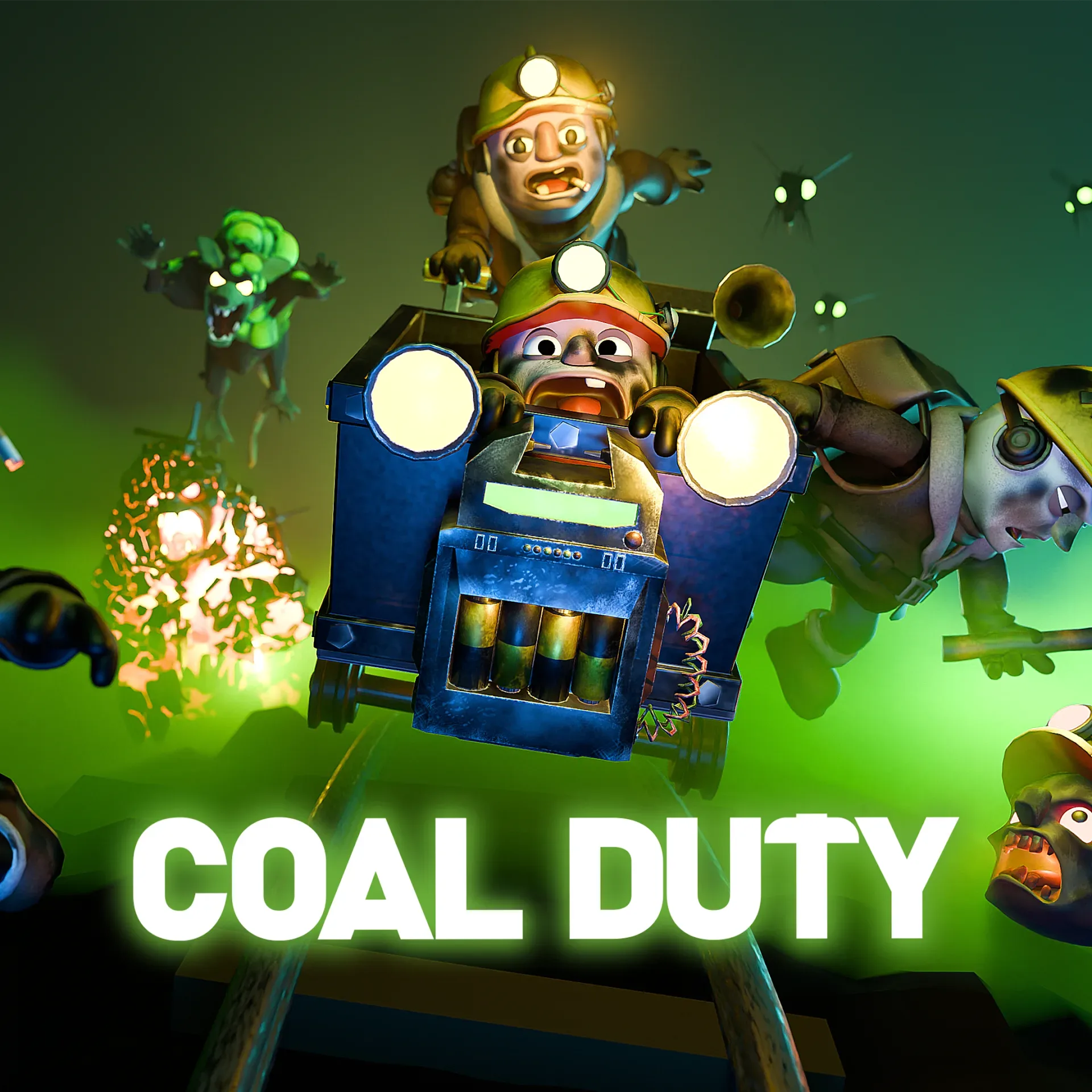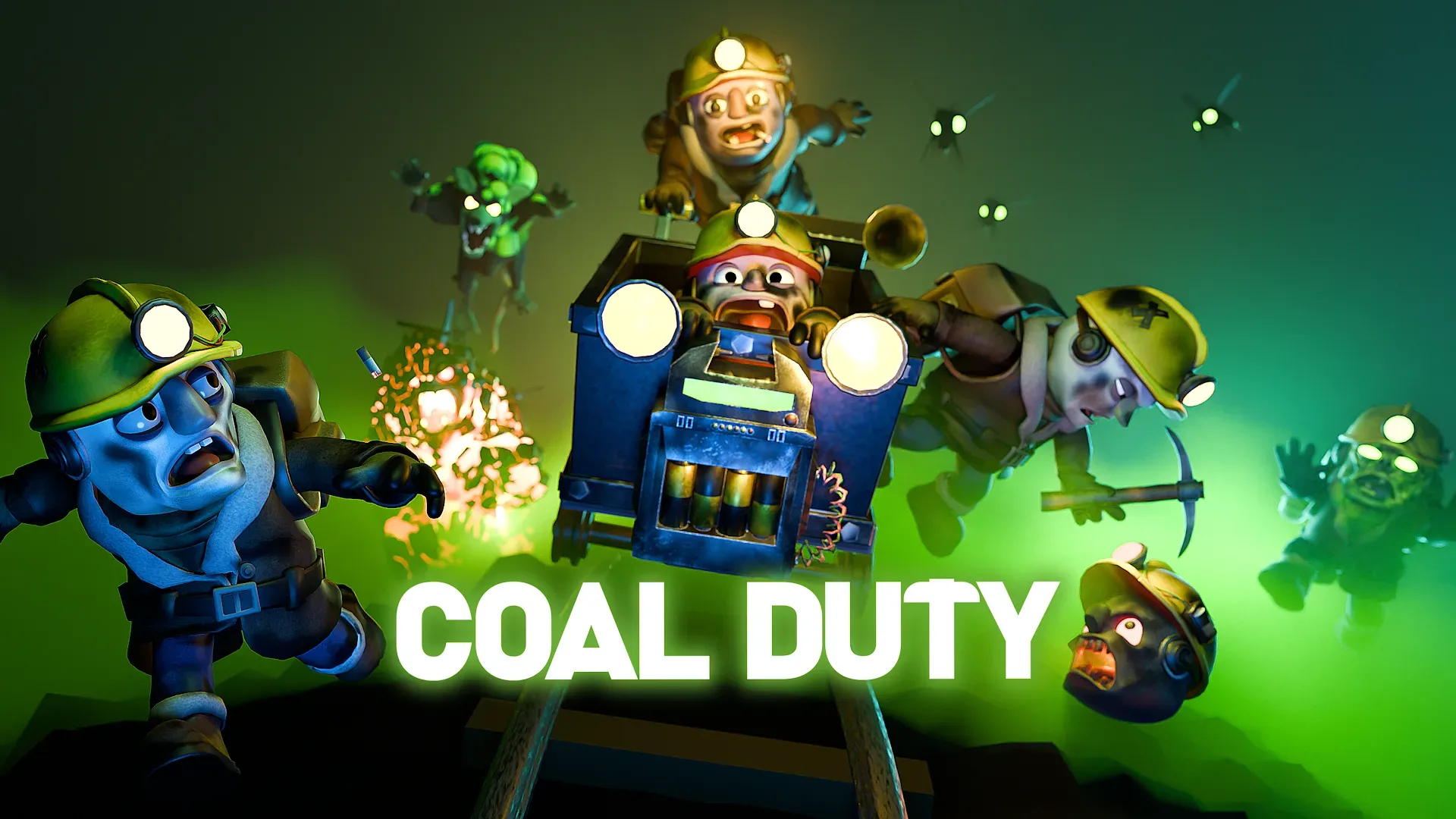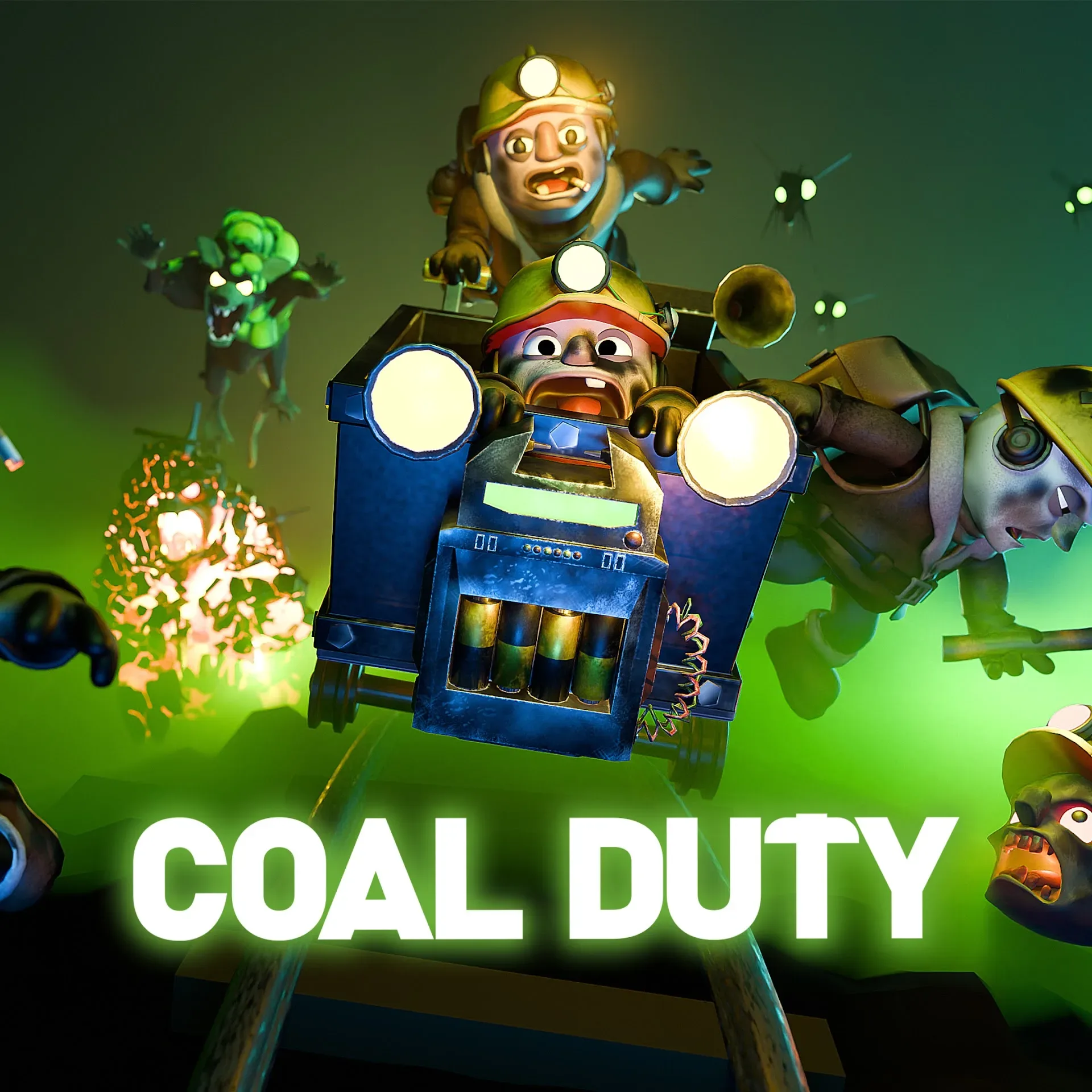
Coal Duty, a co-op extraction horror-comedy from Istanbul-based developer Corecrew Games, is now available in Steam Early Access. Published with indie.io, the game puts up to five players into a newly generated mine on each shift with a simple official objective: fulfill the State’s coal quota.
The less official objective is the one driving its Early Access structure: find a way out. Players can work toward escape between mine descents by entering forbidden areas, trading with a smuggler in a restricted zone, and gradually assembling an exit plan. Corecrew says there are multiple escape routes and endings planned within that framework.
Coal Duty costs $8.99 at launch and is discounted by 20% through November 10. The studio expects the game to remain in Early Access for roughly 12 to 18 months, and says its price will not rise when it reaches its full release.
A mining job with two competing priorities
The central setup gives Coal Duty a deliberately uneasy rhythm. A crew must gather enough coal to satisfy its assigned quota, yet the broader game is about undermining the organization that assigned the work. That friction is where the horror-comedy premise has room to operate: miners are performing a dangerous job for an increasingly hostile company while quietly trying to arrange their departure.
In practical terms, the quota means a group cannot necessarily treat every expedition as a pure escape attempt. The game frames each mine visit as a shift, suggesting that players will need to balance immediate workplace demands with the longer-term work of finding illicit opportunities and pursuing an exit route. The available details do not specify how quickly those plans can be completed or what each ending requires, but the stated presence of multiple routes makes choice of approach a core part of the premise rather than a single closing objective.
The mines are freshly generated each shift. Procedural generation is a design approach in which systems assemble layouts or environments anew rather than presenting players with one fixed level every time. Here, that should mean crews cannot simply depend on memorizing a mine’s exact corridors from an earlier run. It also fits the game’s co-op tension: a group has to orient itself, meet its target and respond to threats amid conditions that may change from shift to shift.
Five miners, close-range communication and a dangerous descent
Coal Duty supports crews of up to five miners. Its mines span multiple biomes and three floors of difficulty, with conditions becoming worse as a group pushes farther down. Dozens of creatures inhabit the underground spaces, though Corecrew has not detailed the individual enemies or their behaviors in the launch information.
The phrase extraction horror can be useful shorthand here, but it is worth separating it from a promise of any specific feature set. In this case, the confirmed elements are cooperative mining, hostile creatures, escalating difficulty and a need to plan an escape. The word “extraction” describes the pressure of entering a hazardous area to complete objectives and then get back out; it should not be read as confirmation of systems that have not been described, such as a particular inventory-loss rule or a competitive player-versus-player mode.
Related coverage includes Coal Duty Enters Steam Early Access With Co-op Mining, Monsters and Escape Plans.
One confirmed tension-building system is proximity voice chat. Rather than making every spoken word equally clear to every teammate regardless of location, proximity chat makes voice communication most audible to players who are near the speaker. That can turn ordinary coordination into a spatial problem. A miner who spots a threat, discovers a useful route or wants to keep an escape scheme discreet may have to get close enough to be heard. Conversely, crews that split across a large shaft may find their ability to communicate less reliable at precisely the moment the mine becomes most dangerous.
That mechanic is especially aligned with a game about a workforce operating under pressure. Groups can still decide how to handle communication, but physical separation carries a social cost. Staying together may make coordination easier; spreading out may cover more ground but leave players with weaker contact. Those are analytical implications of the described system, not a claim about the best strategy, which will depend on the game’s final balance and the situations players encounter.
Early Access is centered on expanding the ways out
Corecrew’s Early Access plan places escape routes and endings at the top of its stated additions. The roadmap also includes more creatures, biomes, hub activities, tools and items. The hub is the between-descent space where miners can access forbidden areas, deal with the smuggler and develop their plan, so expanding its activities could matter as much to the game’s larger escape arc as new mine content does.
Early Access means the game is being sold while development continues, with the expectation of additions and adjustments before the eventual full release. It is not a guarantee that every roadmap item will arrive in exactly the expected form or on a fixed schedule. In Coal Duty’s case, Corecrew’s 12-to-18-month estimate communicates an intended development window, while the roadmap identifies broad priorities rather than committing to a dated sequence of updates.
The studio says players can help influence those priorities through its Discord, Steam discussions and feedback forms. That is particularly relevant for a co-op title with procedural mines and several proposed escape paths, because balance and readability can be shaped by how groups actually navigate the systems. Still, player feedback channels are opportunities for input, not assurances that every request will be adopted.
For players trying to understand the broader idea of an extraction loop, Joking Joystick’s guide to how extraction works in MW4 DMZ offers useful general context on why leaving a dangerous area can be as important as completing the task inside it. Coal Duty’s setting and mechanics are its own, but its emphasis on planning an exit puts it in conversation with that wider design principle.
What is available now
The present Early Access version already establishes the game’s principal loop: groups of up to five enter generated mines, work toward a coal quota, contend with creatures across different biomes and difficulty floors, and use the space between shifts to pursue a larger escape. The game supports 13 languages from day one.
Its comic edge comes from the contrast in that setup. The workplace’s instruction is bureaucratically direct—make the quota—while the miners’ larger project is clandestine and existential. The company becoming worse as players descend gives that contrast an escalating shape: the deeper the crew goes, the more intense the job and its opposition become.
Coal Duty is made by a five-person team, which provides useful context for the Early Access approach. A smaller developer can use the extended period to prioritize features with community feedback, but players should approach the roadmap as a development plan, not as a catalog of content already in the game. The studio’s stated commitment not to increase the price at full release is a clear purchasing detail for anyone considering whether to join during the development period or wait for the finished version.
Key details
- Platform: Steam Early Access.
- Developer: Corecrew Games, a five-person studio based in Istanbul.
- Publisher: indie.io.
- Price: $8.99, with a 20% discount running through November 10.
- Co-op: Up to five miners per crew.
- Confirmed features: Generated mines, multiple biomes, three difficulty floors, creatures, proximity voice chat, forbidden zones, a smuggler, and multiple planned escape routes and endings.
- Early Access estimate: 12 to 18 months.
- Planned areas of expansion: Escape routes, endings, creatures, biomes, hub activities, tools and items.
- Languages: 13 at launch.
For now, Coal Duty’s appeal rests on whether its quota-driven work, increasingly severe underground hazards and slowly constructed escape plans produce the kind of stories co-op groups want to retell. The framework is in place at Early Access launch; the next 12 to 18 months are intended to broaden the mine, the equipment, the hub and, most importantly, the number of ways a crew can finally get out.