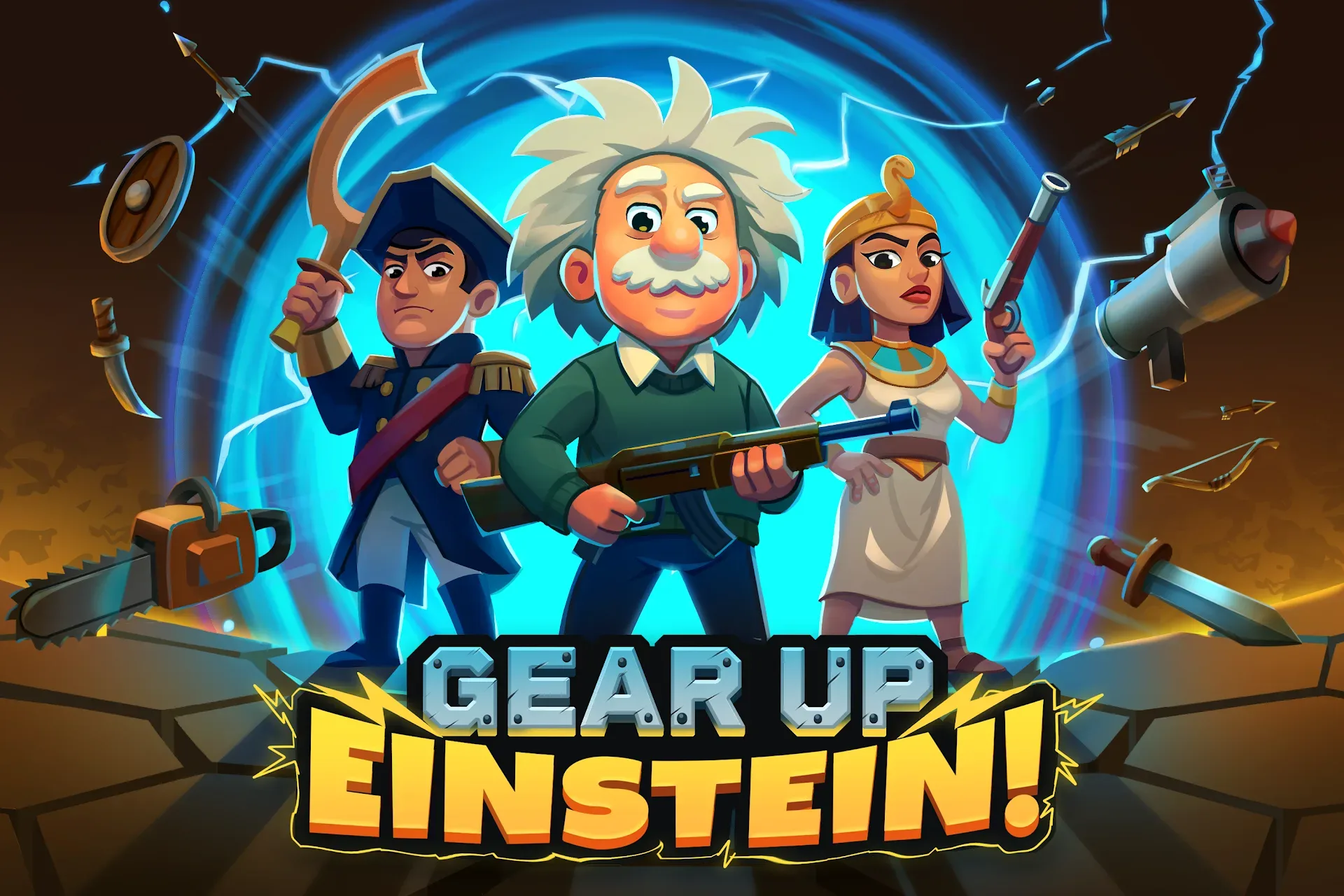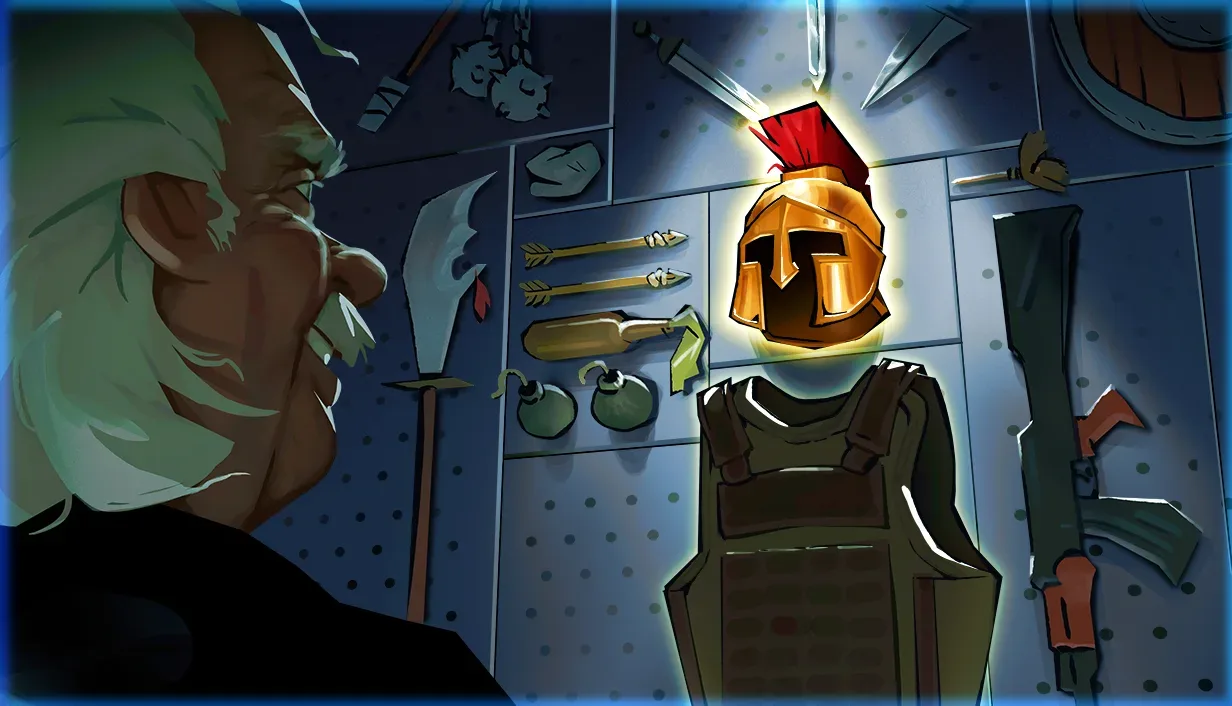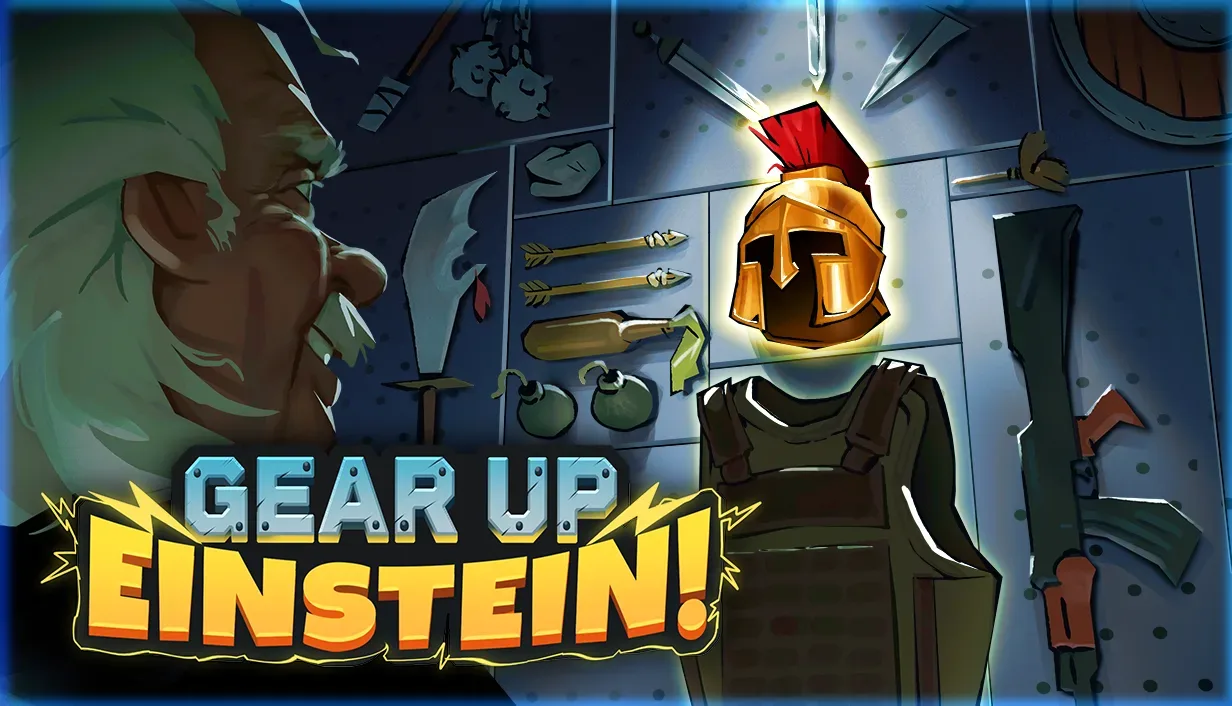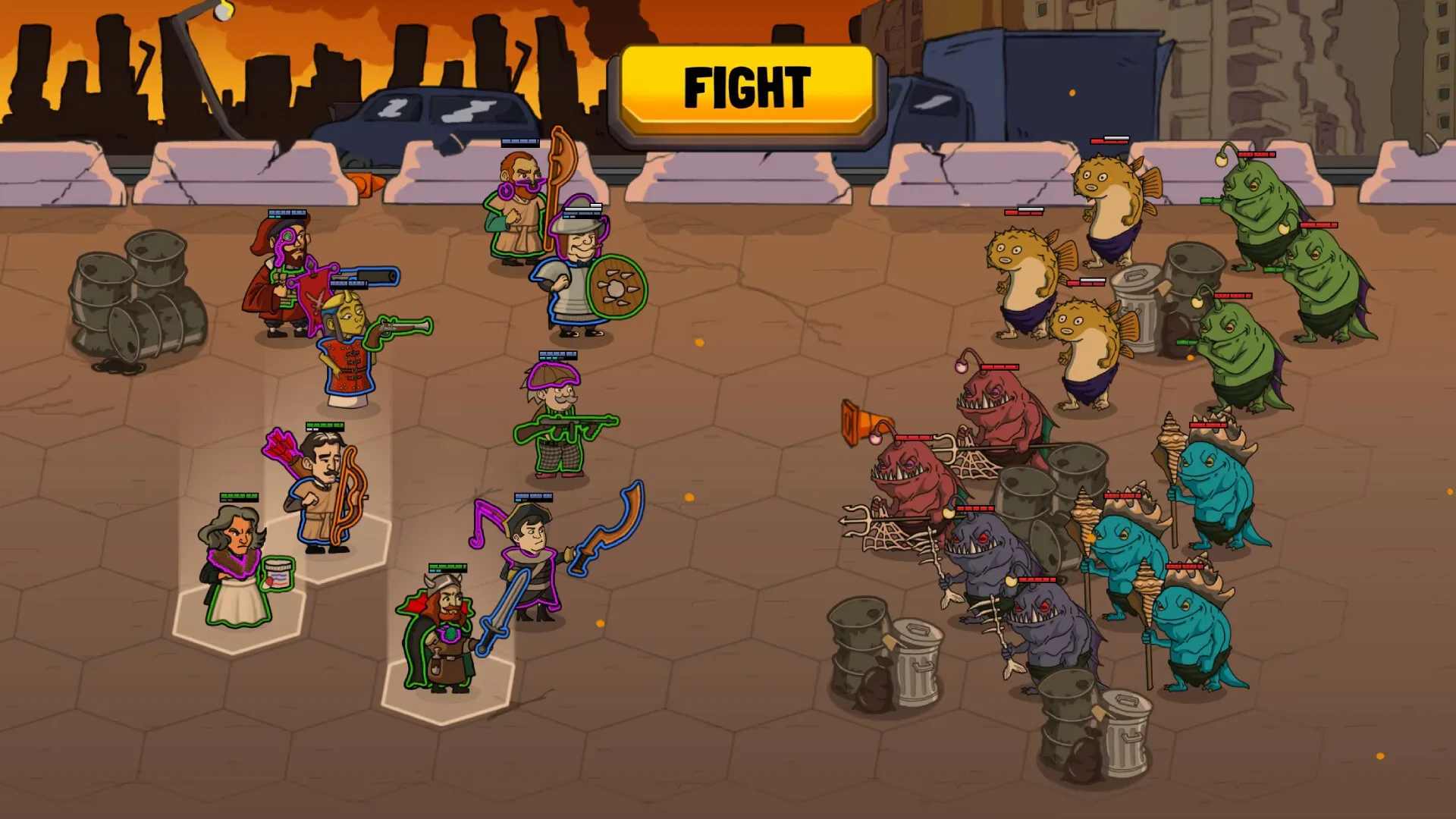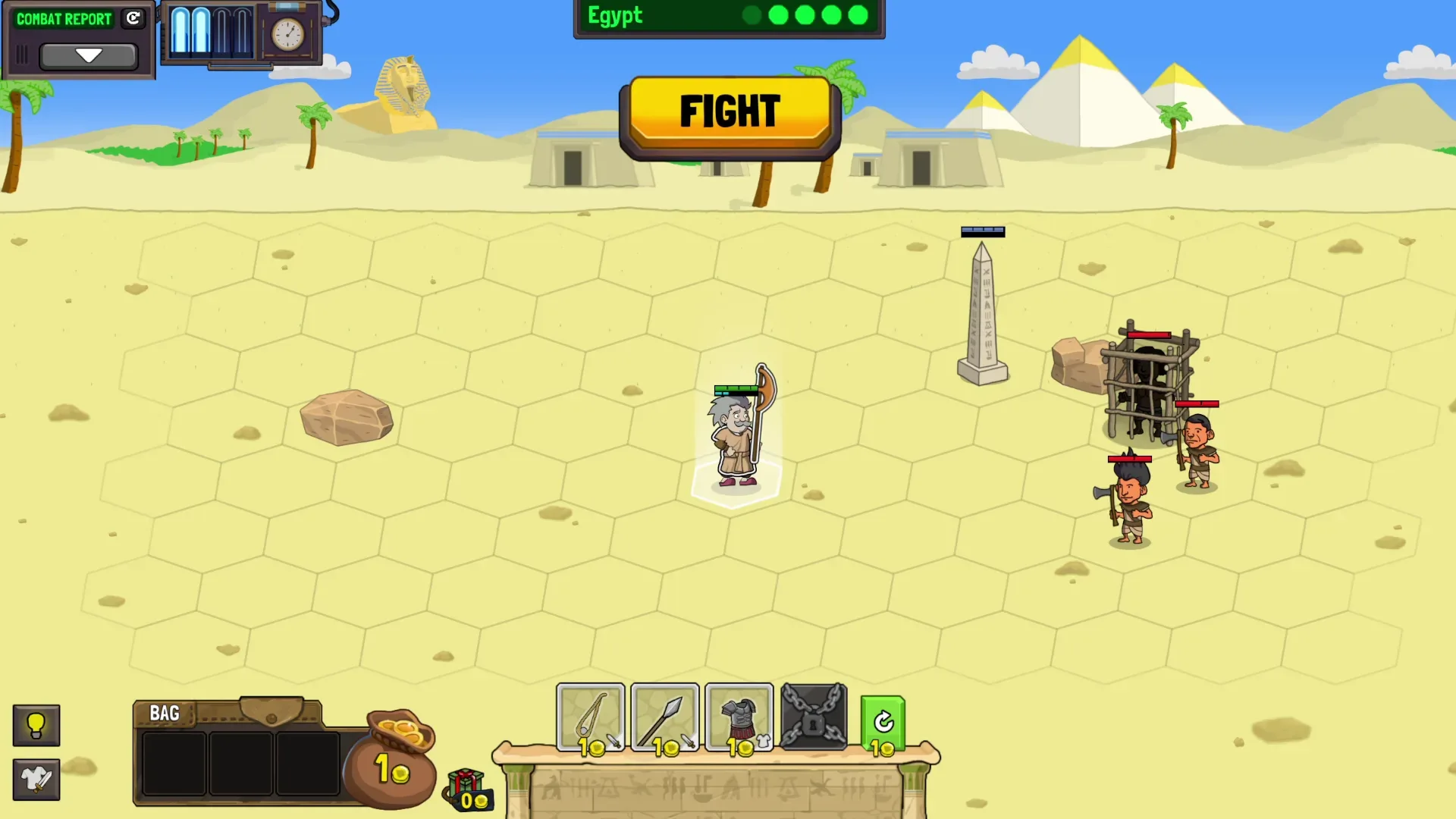
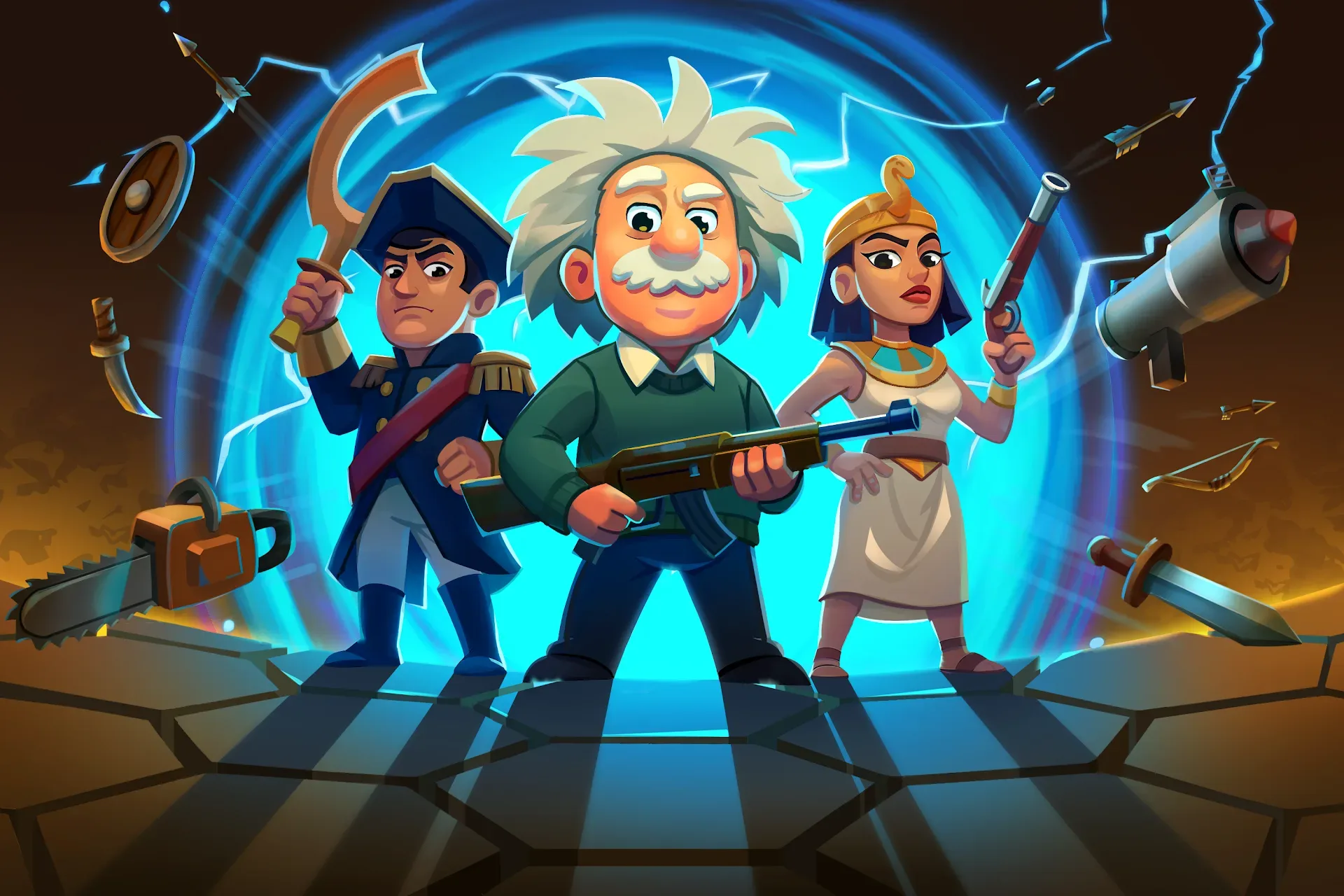
Gear Up Einstein is scheduled to launch on Steam on November 6, bringing a deliberately eccentric tactical premise to PC: travel through time, recruit historical figures, hand them equipment, and build combinations capable of getting through tactical missions. The game supports one to three players, including co-op.
The setup is concise but promisingly strange. “Einstein” in the title points to the game’s willingness to use well-known figures from history as recruits, while “Gear Up” signals that equipment choices are central rather than incidental. The intended appeal appears to be less about controlling every action in the moment and more about constructing a team and loadout that can produce unexpectedly powerful—or gloriously ridiculous—results when a battle begins.
An official trailer is available ahead of release, offering the clearest pre-launch look at the game’s time-traveling premise and its combat-focused structure.
What kind of game is Gear Up Einstein?
Gear Up Einstein is described as a strategic roguelite auto-battler. Those three labels each convey something different, and together they suggest a game built around preparation, adaptation and repeatable runs.
An auto-battler is a strategy format in which combat proceeds automatically after players make their key decisions. Rather than issuing every movement or attack command during a fight, the player’s influence is concentrated beforehand: selecting units, deciding who belongs together, and choosing the equipment or upgrades that best support a plan. The tactical question is therefore often not “what button do I press right now?” but “have I assembled a group that can handle what is about to happen?”
In Gear Up Einstein’s case, the announced emphasis on recruiting historical figures and equipping them indicates that its central choices concern roster-building and item synergy. A synergy is a combination whose parts become more effective together than separately. The announcement specifically promises “ridiculous combos,” which suggests that experimentation is not merely allowed but is one of the game’s defining goals.
The roguelite label usually identifies a run-based structure: players take on a sequence of challenges, make choices along the way, and begin another attempt after a run ends. It is important not to overstate the specifics here, as no detailed progression system, mission structure, or persistence mechanics have been announced. Still, calling the game a roguelite establishes that adapting to the choices and opportunities of an individual attempt is part of its design language.
Put together, those terms frame Gear Up Einstein as a game where strategic judgment occurs across a run. Players will be asked to decide which figures to recruit, what equipment they should receive, and which team arrangements make sense for the tactical missions ahead. Once combat is underway, the value of those decisions should become visible in the interactions among characters and gear.
Historical figures are the hook, equipment combos are the engine
Time travel gives the game a broad premise for its roster. The confirmed description says players recruit historical figures, but it does not identify a full cast, explain how recruiting works, or detail how individual figures differ mechanically. That leaves the specifics open ahead of launch, while the basic concept is clear: recognizable people from across time are being used as the raw material for a combat team.
The announcement’s stronger gameplay emphasis is on gearing those recruits up. Equipment is presented as a tool for creating combinations, not simply as a linear stat increase. That distinction matters for an auto-battler. If every item only makes a unit a little stronger, the optimal choice can become obvious. If equipment changes how characters interact, creates complementary roles, or encourages unusual pairings, it can make each roster decision more meaningful.
Nothing currently confirms the precise kinds of gear available, whether equipment can be combined, or how many characters a player fields at once. Likewise, “tactical missions” establishes the game’s objective-driven framing without spelling out individual mission types. Players interested in exact unit lists, item systems, unlock requirements, difficulty settings, or long-term progression will need to wait for more detailed information or the November 6 release.
That uncertainty is worth keeping in view, but the core pitch has a clean logic. Historical recruits create the collectible team-building layer; gear supplies the customization layer; and automatic battles are the payoff for the strategy chosen before the fighting starts. The result aims for a comedic spin on tactical planning without abandoning the need to make coherent choices.
Co-op for up to three players
Gear Up Einstein supports one to three players, with co-op available for groups of up to three. The announcement does not explain how responsibilities are divided in multiplayer, whether players control separate recruits, or how roguelite decision-making is handled among a party. It does, however, establish that co-op is part of the game’s launch proposition rather than a feature being discussed only for a later update.
For a strategy game built around team composition and combinations, co-op could make the planning stage as important socially as it is mechanically. Players may find themselves debating whether a new recruit fits the current lineup, which character should take a contested piece of equipment, or whether an odd-looking combination is worth trying. That is analysis rather than a confirmed feature breakdown, but it follows naturally from the game’s stated focus on recruiting, gearing and building combos.
Solo players are also explicitly included. A one-player option matters for a run-based strategy title because it means the central loop is not dependent on arranging a group session. The available information supports both routes—individual planning and co-op play—while stopping short of defining matchmaking, online requirements, local play, cross-platform support, or communication tools.
Steam release date and pre-launch coverage timing
The announced platform is Steam, and the release date is November 6. No other platforms have been confirmed in the supplied release details, so prospective players should treat Steam as the only announced destination at present.
Coverage of the game is timed around an embargo lifting on Thursday, November 5 at 09:00 PST / 12:00 EST / 17:00 GMT / 18:00 CET. In practical terms, that is the point at which more detailed reporting and impressions can begin appearing ahead of the November 6 launch. The embargo timing does not itself confirm reviews, scores, early access, or any particular kind of coverage; it simply identifies when restrictions on coverage are due to end.
That one-day gap should be useful for players deciding whether the game’s mix of automatic combat and strategic setup is for them. The initial announcement establishes the broad concept well, but it leaves many practical questions unanswered: how deep a typical run is, how varied the tactical missions become, what each historical recruit contributes, and how consistently the equipment system produces satisfying combinations.
For now, Gear Up Einstein’s clearest selling points are its unusual time-travel roster concept, its stated focus on gear-driven builds, and its support for co-op groups of up to three. It arrives in a PC news cycle that also includes much larger releases—such as the newly shared imagery around GTA 6’s November launch window—but its pitch is aimed at a very different kind of session: smaller-scale tactical runs where the plan is to assemble the weirdest workable team history never recorded.