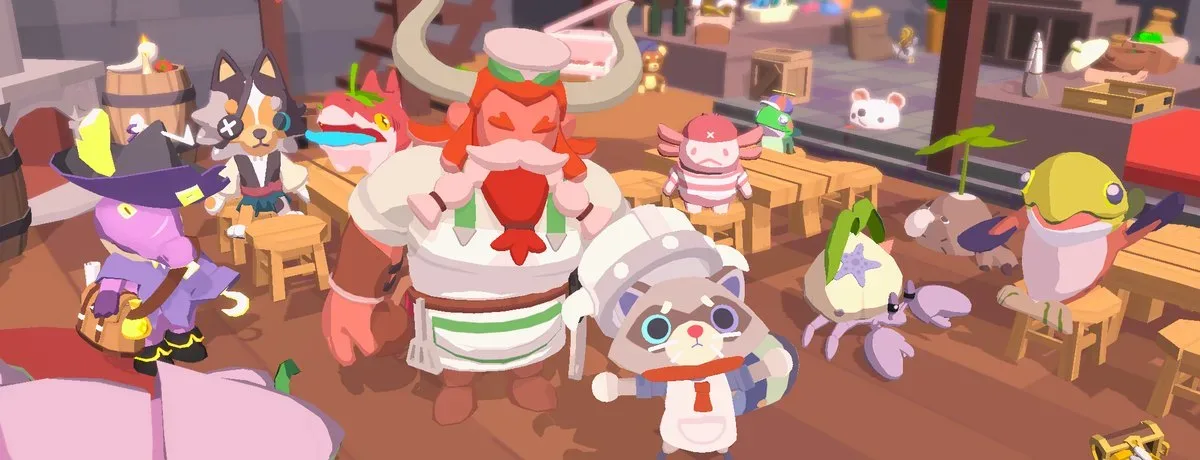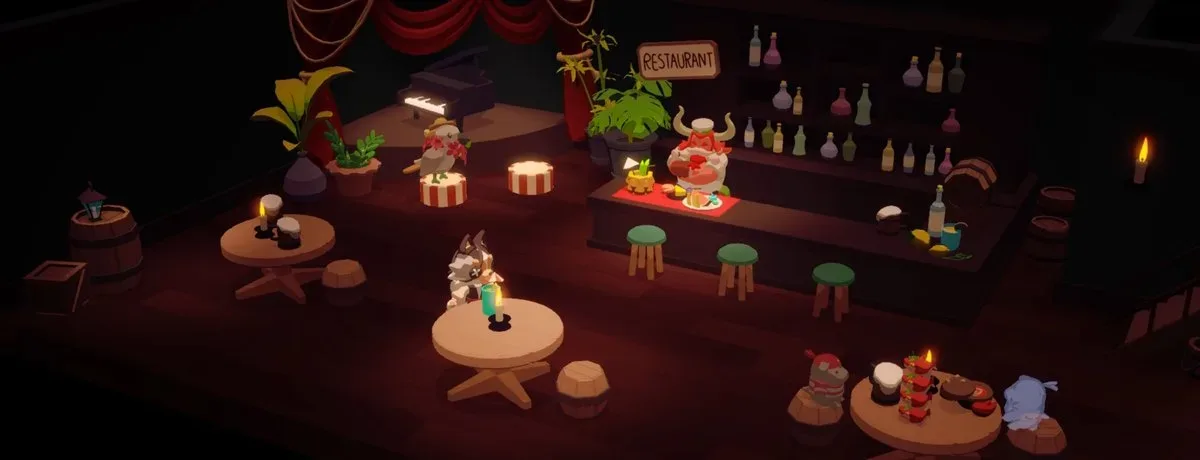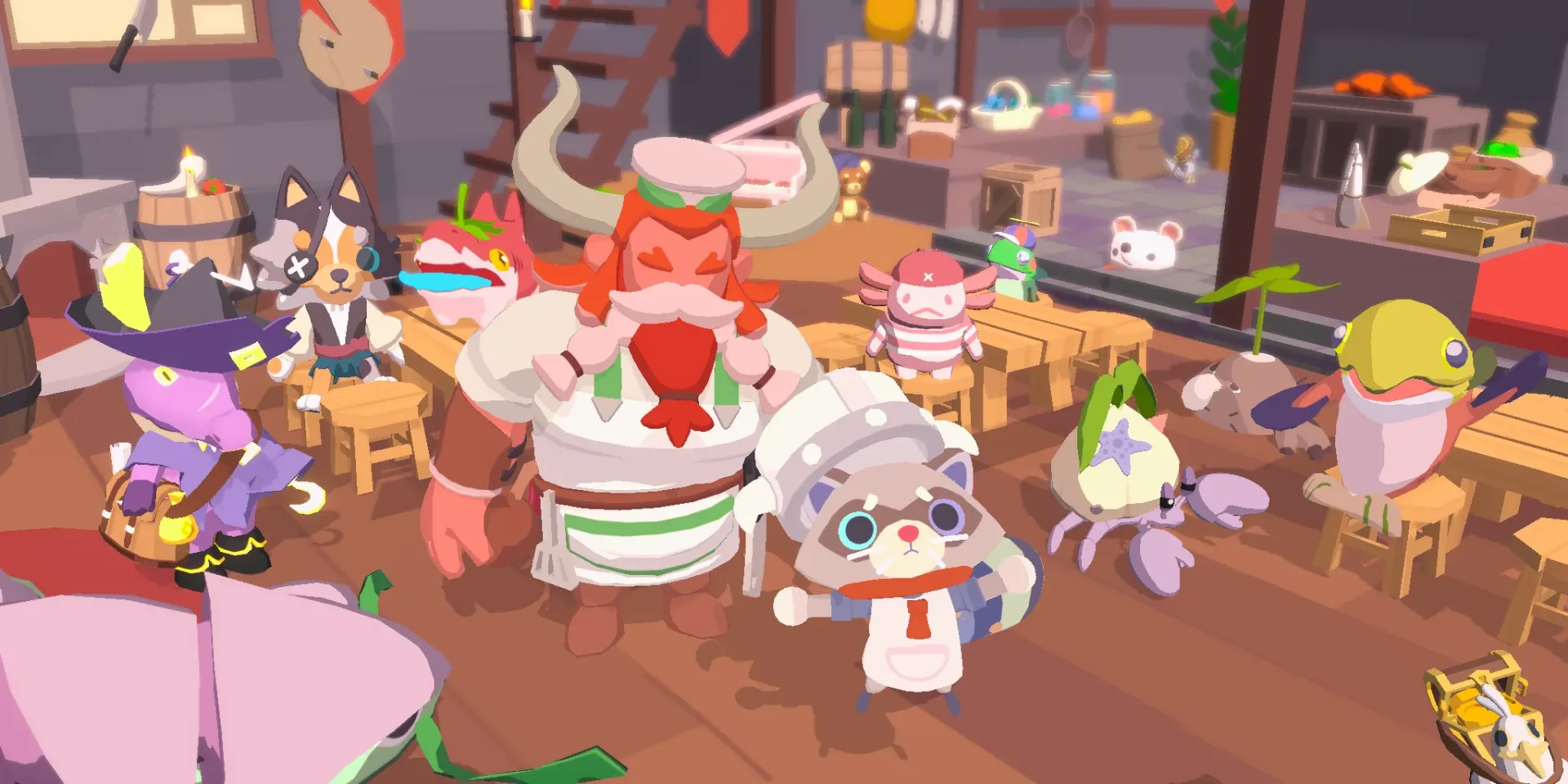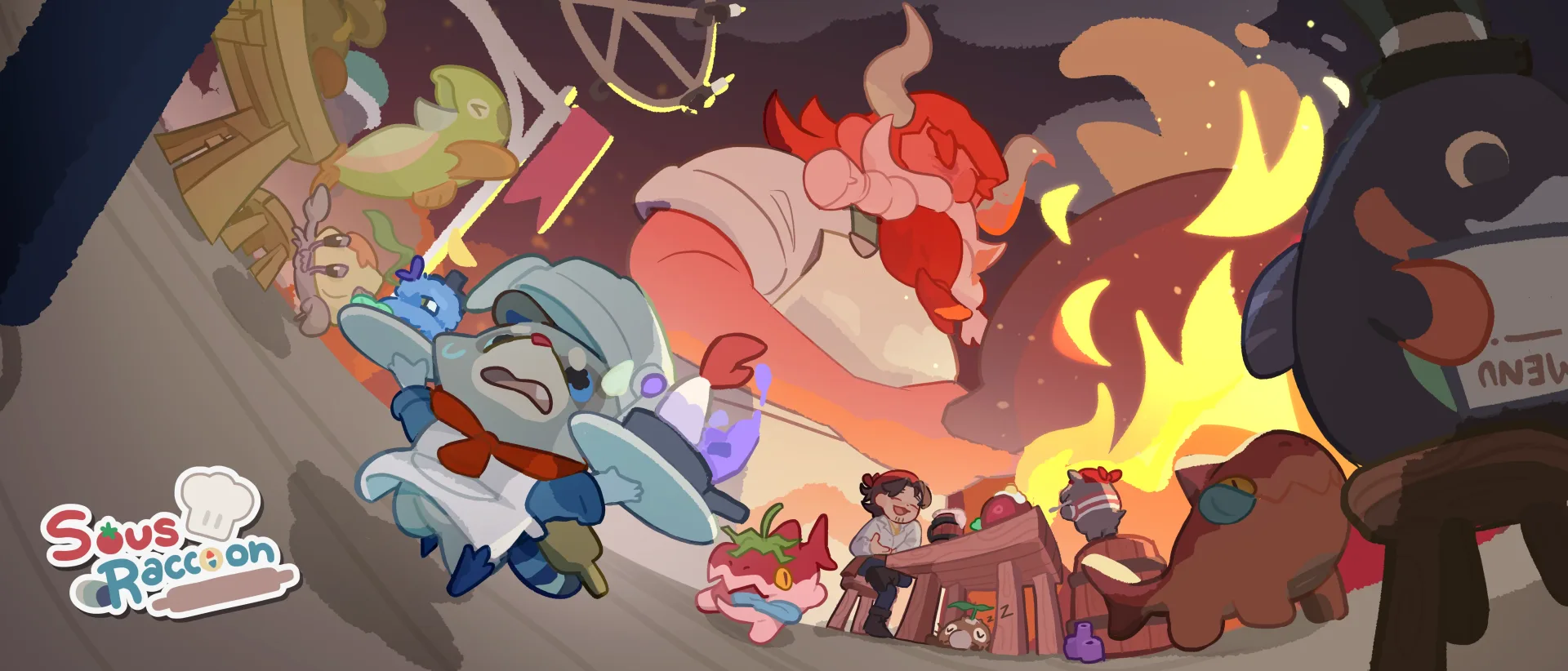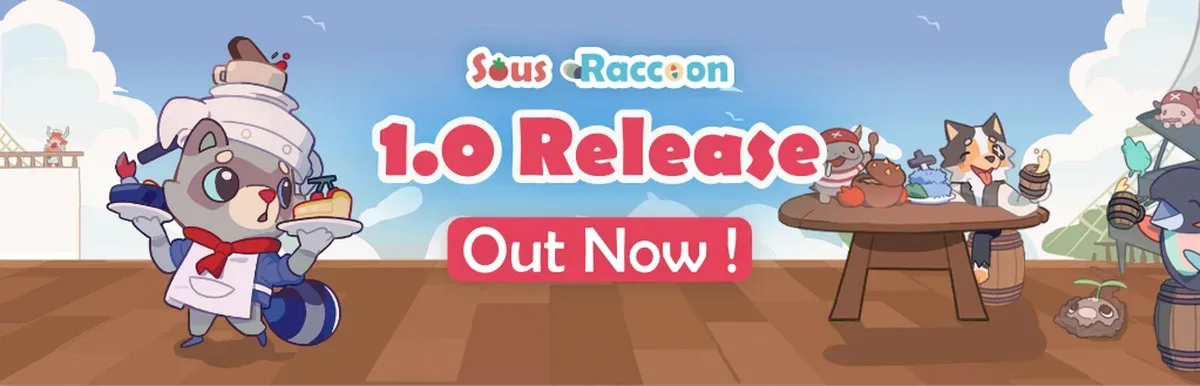
Sous Raccoon has reached version 1.0 on Steam, bringing its Early Access period to a close with a pile of new ways for its kitchen chaos to boil over. The cooking roguelite puts players in the paws of Elmo, a raccoon thief who has somehow traded criminal aspirations for the considerably more stressful role of sous chef. Orders must be cooked and served, monsters have to be held back, and an extremely short-tempered Chef is presumably not interested in hearing that the lunch rush had teeth.
The full release adds an Endless Mode, a final boss at Stage 4, a lobby bar with three competitive minigames, 13 additional skins, player rooms, soundtrack changes, and refinements for controllers and online co-op. Most importantly for groups with a shared appetite for culinary panic, up to four raccoons can now work together online in one kitchen.
That is a substantial final-version package for a game built around runs that change the restaurant, the upgrades available to the player, and the hazards that arrive through the door. A roguelite, in this context, is a game structure where each attempt is variable rather than a fixed sequence: players begin another run, face a different combination of conditions and upgrades, and try to push farther or perform better. Sous Raccoon applies that uncertainty to restaurant work, where a normal demand for food service is complicated by monsters and combat.
Endless Mode turns the restaurant into a survival shift
The largest new mode is Endless Mode. Its mission is blunt: keep the restaurant operating for as long as possible. Each day increases the number of customers and monsters, creating a mounting survival challenge instead of a clearly finite finish line.
When an Endless run ends, players receive a score summary and can earn a place on Steam Leaderboards. That score-driven structure changes the practical question players are asking. In a standard run, reaching an ending may be the goal. In Endless Mode, the meaningful measure becomes how efficiently a team can continue to function as pressure rises: can orders be handled before the kitchen is overwhelmed, can monsters be managed without derailing service, and can the restaurant remain open for one more day?
The mode should also give returning players a reason to revisit the game after seeing its core progression. A leaderboard does not automatically make a mode competitive for everyone, but it does provide a visible benchmark for players who want to compare runs beyond their own personal best. Since the customer count and monster threat both escalate, survival depends on handling a conflict at the center of the game’s design: food preparation needs attention, while danger prevents anyone from simply treating the shift like a peaceful cooking exercise.
The secret is no longer a secret: a final boss at Stage 4
Version 1.0 also reveals a final boss that had been deliberately withheld during Early Access. The encounter appears at Stage 4. Details of the boss’s identity, behavior and mechanics have not been laid out, so players should not assume a particular kind of fight or strategy before encountering it.
What is clear is its role in the release: it gives the run structure a newly defined late-game destination. Bosses generally serve as concentrated tests of the skills a game has asked players to develop, but Sous Raccoon’s exact test remains for players to discover. Given that the basic loop combines cooking, serving and monster control, the Stage 4 encounter is likely to matter as a capstone to a run rather than merely another customer-management complication. That is an interpretation of its placement, not a description of unannounced mechanics.
For people who played during Early Access, holding the boss back means the full-release discovery is not limited to cosmetic additions or quality-of-life updates. There is now a previously unseen obstacle at a specific point in progression, alongside an alternative endurance-focused mode for those who prefer score chasing to a finite endpoint.
A lobby bar adds three lighter competitive distractions
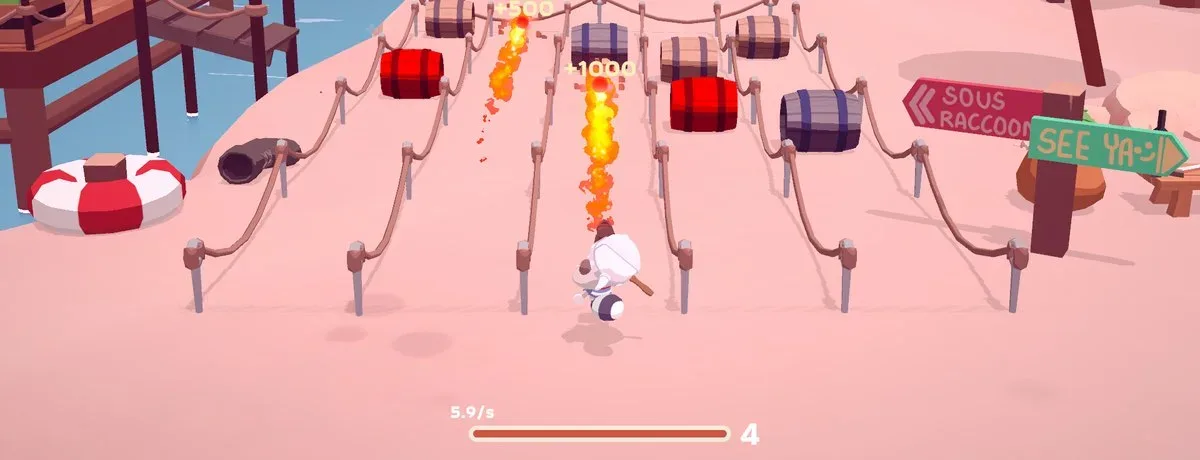
Outside the main restaurant runs, Sous Raccoon now has a lobby bar containing three minigames: Mix Food, Tower Stack and Barrel Blast. Each has its own leaderboard, and all three can be played either alone or in co-op.
The separation is useful. Main runs ask players to balance several duties while conditions change around them. Minigames can offer a more focused contest, whether someone wants a brief solo score attempt or a smaller co-op activity without committing to a full restaurant shift. Separate leaderboards also mean performance in one bar activity is not folded into a single broad ranking with unrelated skills.
The names alone do not establish the exact rules of each activity, so it would be premature to label one a puzzle game, an action challenge or a test of reflexes. Still, the trio broadens the lobby’s function beyond simply being a place between runs. It gives a party something to do while gathering, and it gives solo players additional score targets apart from Endless Mode.
Four-player online co-op makes kitchen roles a team problem
Online co-op now supports as many as four players in the same kitchen. In practical terms, that allows a group to divide responsibilities among cooking, fighting and serving. It also introduces the familiar co-op challenge of deciding who owns which responsibility when several emergencies happen at once.
Role division is not the same as a rigid class system; no fixed character jobs have been detailed. Instead, it describes an informal way a group can organize itself. One player may focus on food preparation while another responds to monsters, with others filling gaps in service or shifting tasks as the restaurant becomes more chaotic. The value of four-player support is not just that more people can join. It is that a group has more options for reacting to simultaneous demands.
Version 1.0 also includes a new co-op tutorial, which should help establish the basics for players joining their first shared kitchen. The release additionally refines controller and online play, including menu navigation with either the D-pad or analogue stick and support for the Steam On-Screen Keyboard. These are practical interface improvements rather than headline gameplay systems, but they can matter substantially in a coordination-heavy game. A menu that behaves predictably on a controller and a smoother process for entering text can remove friction before a run has even begun.
For readers interested in other recent discussions of how PC game systems create group tension and coordination problems, Joking Joystick has also looked at how a shared quota can turn every exit into a group argument. Sous Raccoon approaches the same broad social territory through kitchen work and monster pressure rather than a quota-driven extraction setup.
Skins, rooms and music provide persistent personality
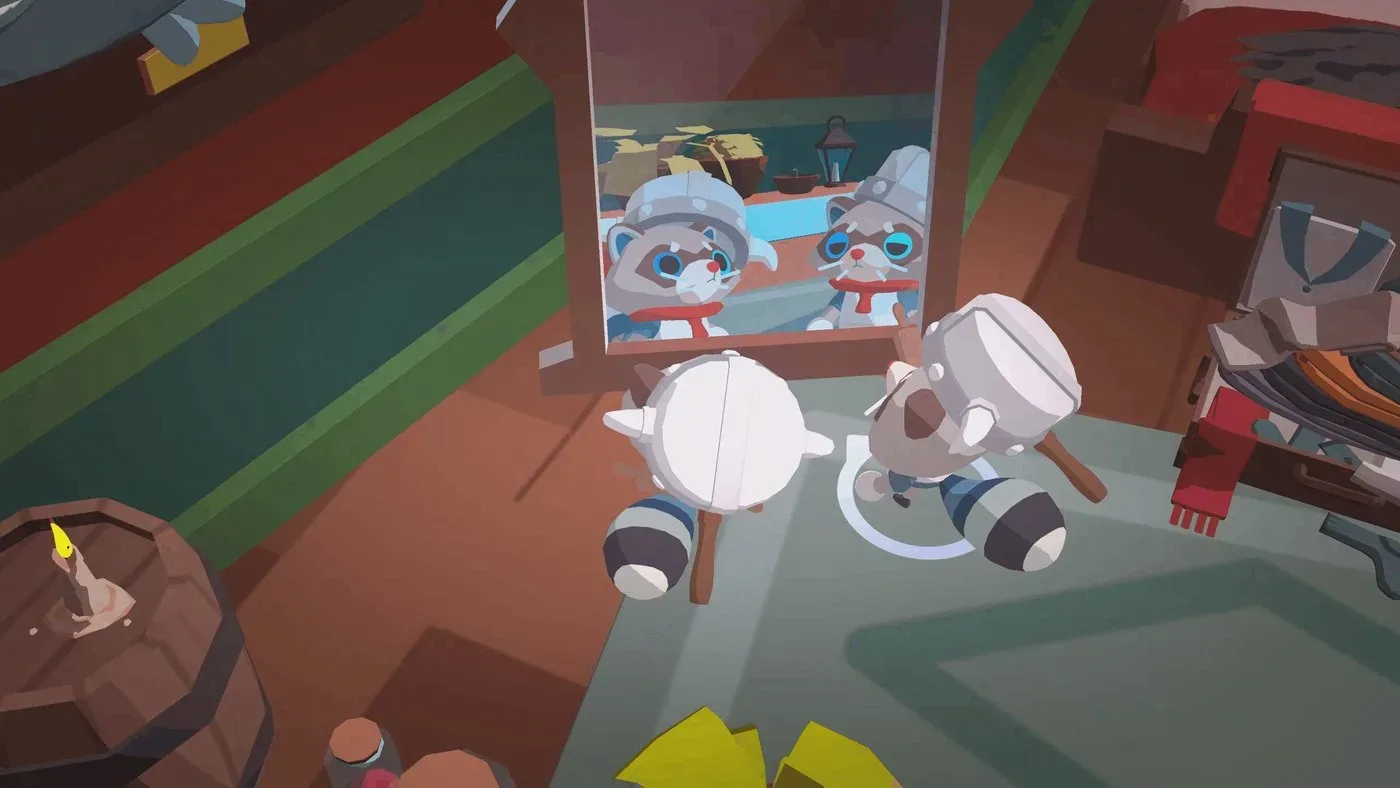
The release adds 13 skins, taking the total to 21. Some of those unlocks are connected to Steam Achievements. This gives achievement completion a cosmetic payoff, while the larger total offers more ways for players to distinguish their raccoon from the rest of a co-op crew.
Player rooms are another addition aimed at expression beyond the active restaurant. Players can buy furniture and preview styles and colors, and each participant in co-op retains their own room. The last point is important: the room is not described as a single communal space that one host controls. Each player maintains an individual area, allowing personal decoration to persist alongside shared kitchen sessions.
These additions do not change the fact that the game’s main challenge is finishing a shift amid escalating disorder. They do, however, give the loop a more personal layer. Skins make players recognizable during co-op, while rooms create a place for furniture choices and visual experimentation outside the immediate demands of service.
A new soundtrack that shifts by stage rounds out the version 1.0 changes. Stage-shifting music means the score changes in relation to the game’s stage progression, providing an audio transition as a run moves onward. No details have been provided about individual tracks or how those transitions sound, but the system aligns the music with the game’s changing run structure rather than presenting it as one unchanging background layer.
What the full release means for new and returning kitchen crews
For newcomers, version 1.0 offers the clearest entry point: the game now includes its final boss, Endless Mode, online co-op for up to four players, a co-op tutorial and the accumulated fixes made during Early Access. Players who prefer controllers also have specific navigation improvements to look for.
For returning players, the meaningful additions break into three types. The Stage 4 boss expands the late-game run experience. Endless Mode and the three lobby activities add repeatable score-focused play, each with leaderboard support. Meanwhile, skins, rooms, furniture and stage-based music add variety and presentation around the main challenge.
The central pitch remains agreeably absurd: a raccoon thief is expected to operate as a sous chef under a volatile boss while hungry customers and monsters make a clean shift feel unlikely. Version 1.0 does not replace that premise. It expands it with more endurance, more competition, more customization and more people capable of being blamed when the kitchen collapses into a very furry disaster.