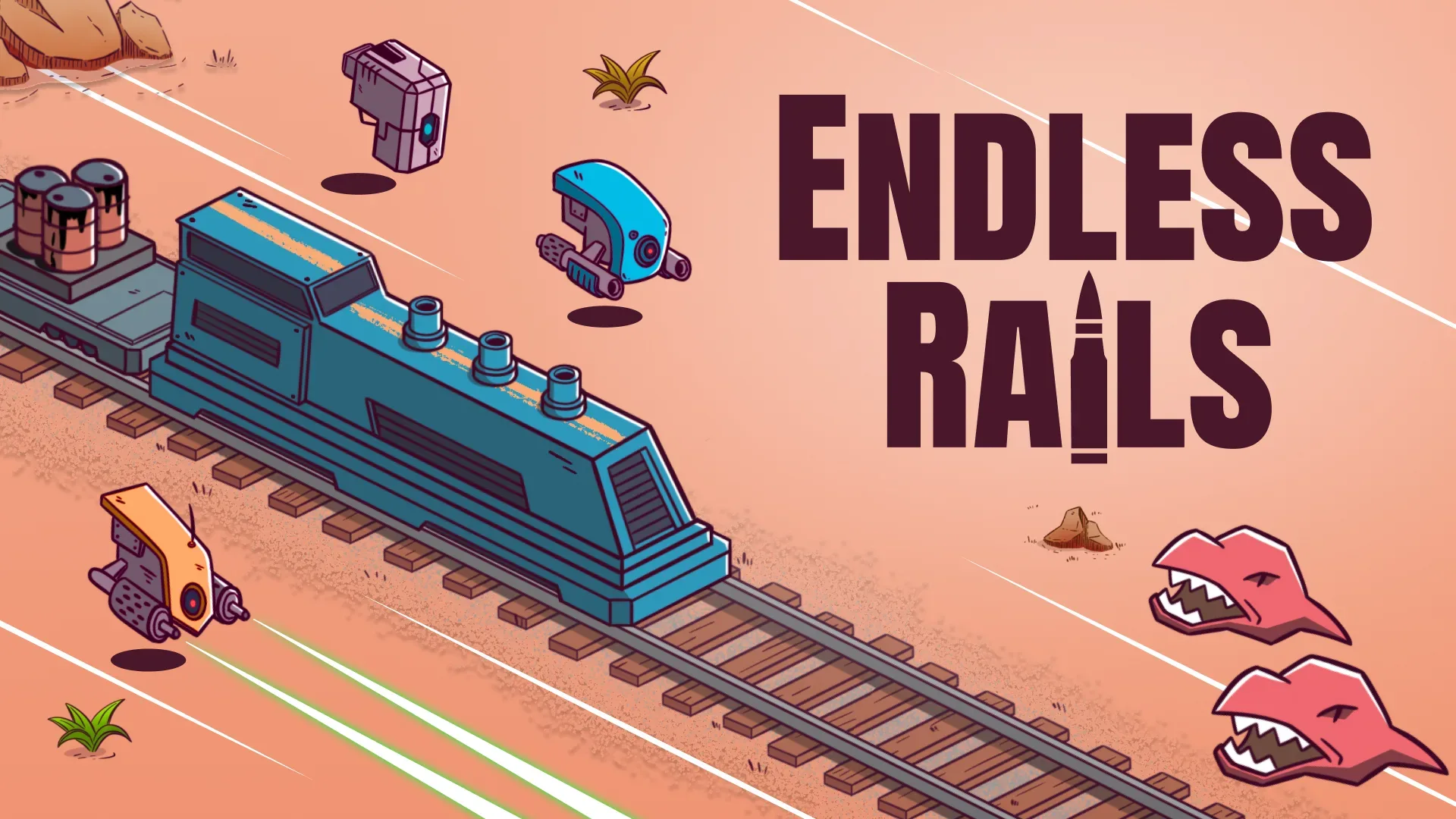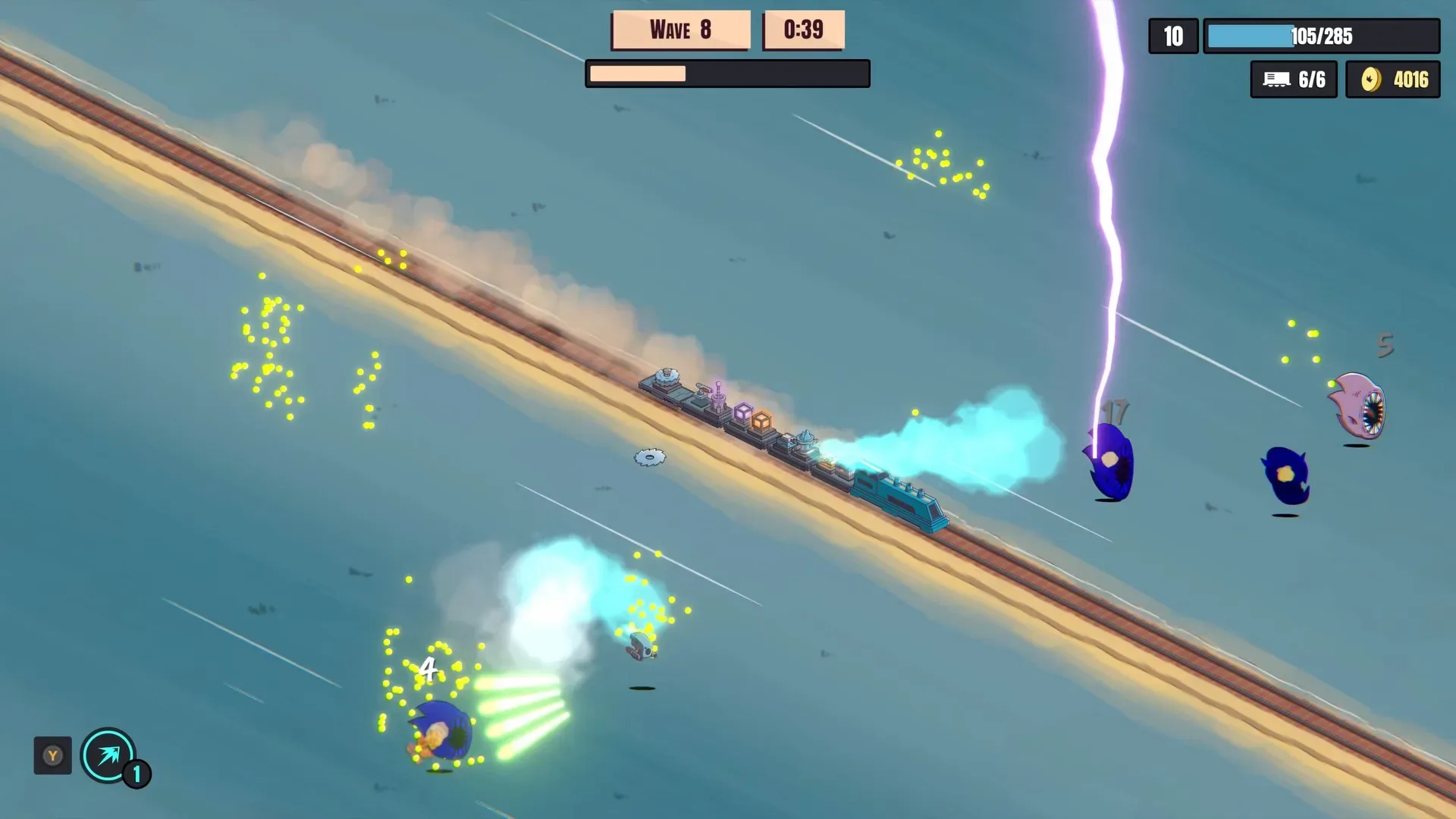
Endless Rails is now available on Steam. Studio Monoblok’s isometric bullet-heaven roguelite puts players in charge of a train crossing increasingly dangerous wastelands, with a defensive fleet of drones handling much of the firing while enemy swarms attempt to bring the journey to an abrupt stop.
The game is priced at $6.99 in the US, £6.29 in the UK and €6.99 in Europe. A 30% launch discount is scheduled to run for its first two weeks on sale.
Its central idea is pleasantly direct: keep the train alive, destroy the mass of attackers around it, reach the next station and turn whatever resources have been earned into a stronger, stranger rail-bound survival machine. That framework places the train itself at the centre of both combat and buildcraft, rather than treating it as mere scenery between fights.
A moving base with drones on defense
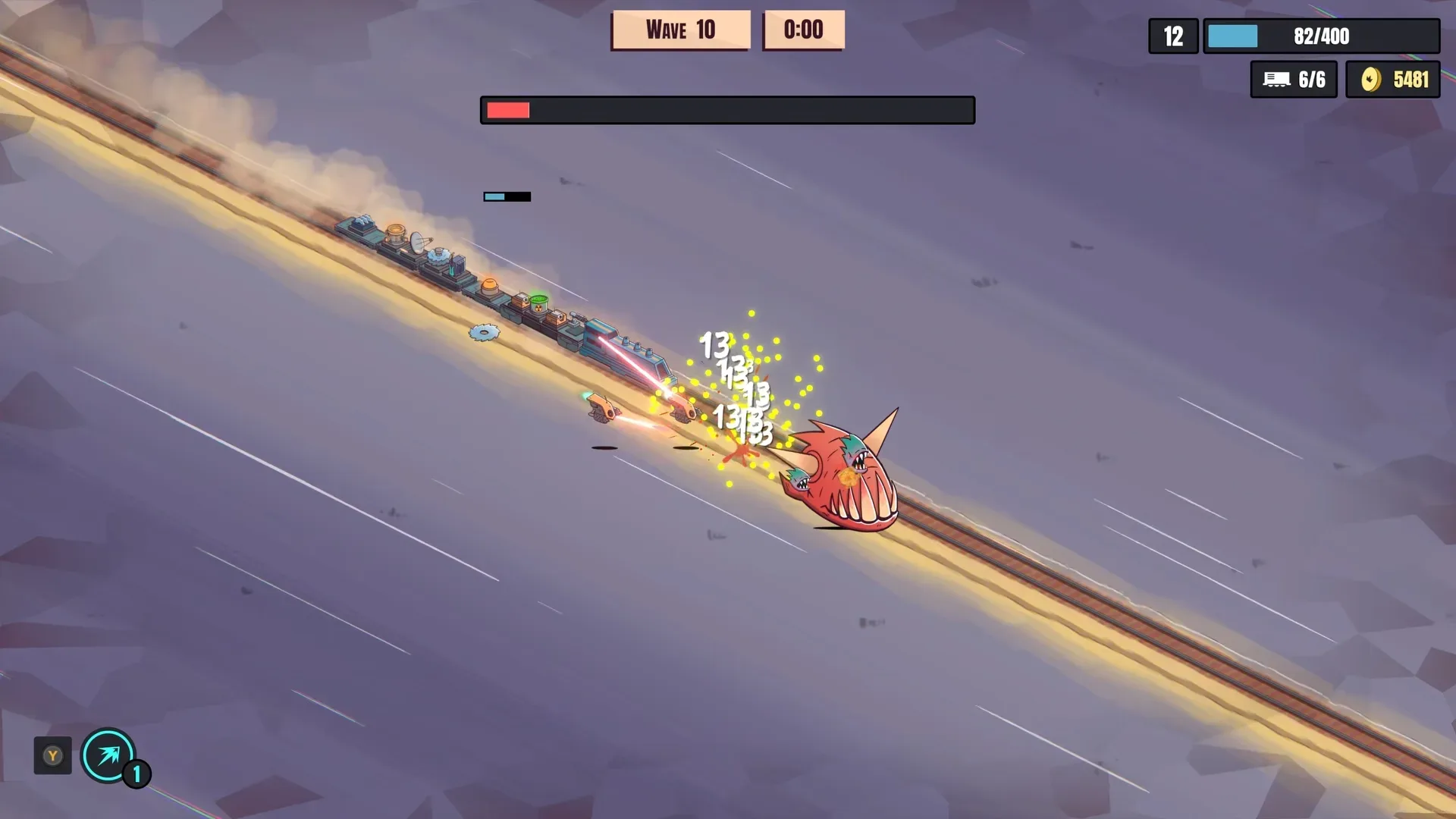
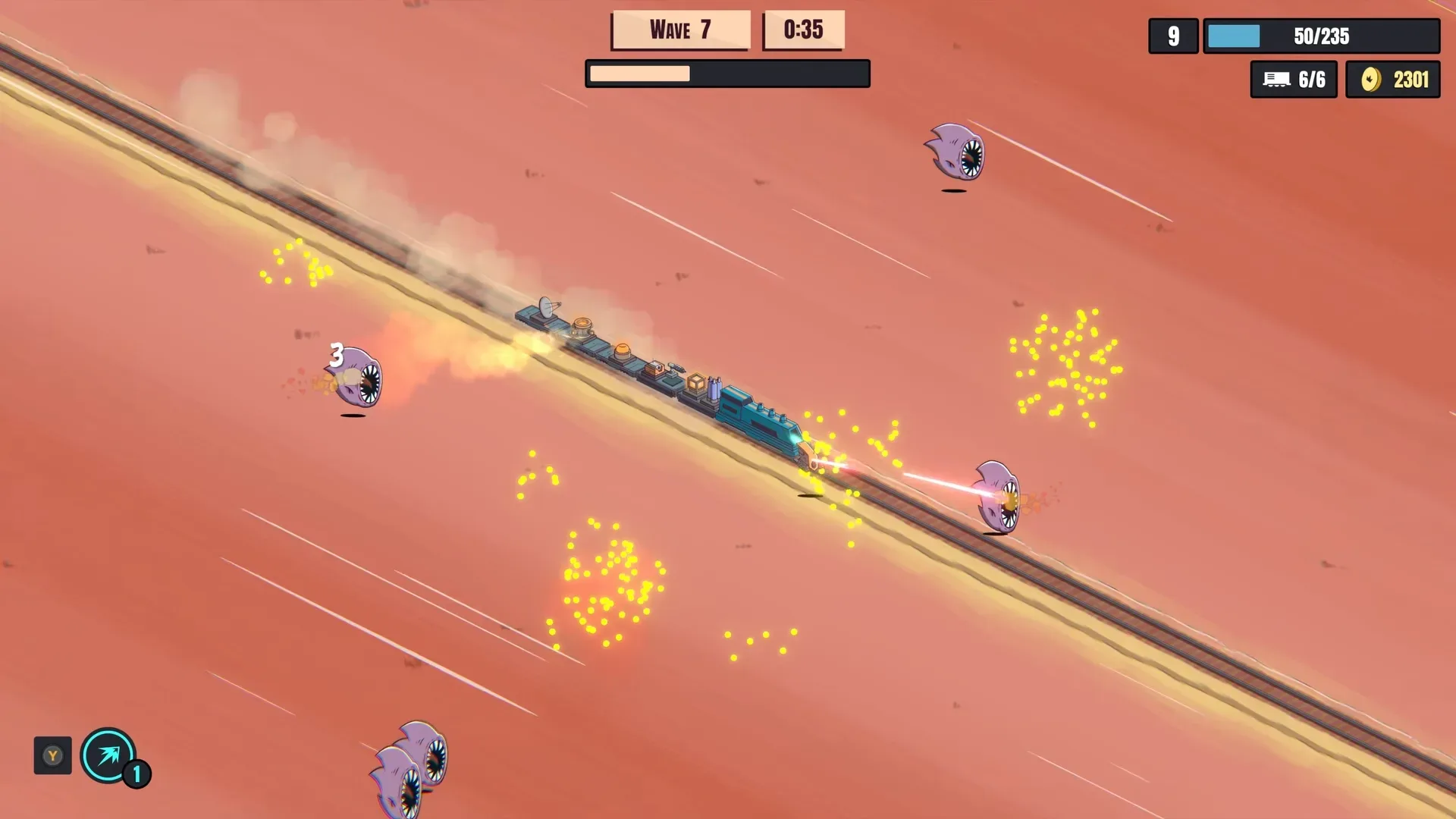
Endless Rails uses an isometric viewpoint, meaning the world is viewed from an elevated, angled perspective rather than straight overhead or side-on. That approach should make the train’s surrounding threat field especially important: enemies arrive in swarms, while a fleet of auto-firing drones orbits and protects the locomotive.
“Auto-firing” here means the player is not described as manually aiming every shot. The drones attack on their own, allowing the game’s moment-to-moment focus to rest on survival, positioning and build decisions. The supplied details do not specify direct controls or targeting rules, so it remains unclear exactly how much manual input is involved during each ride. What is clear is that the drones are intended to be a core protective layer against enemies trying to derail the train.
The bullet-heaven label is useful shorthand for this setup. It generally describes action games built around large enemy populations and a player build that attacks automatically or with limited direct aiming. The “heaven” side of the term points to the player eventually becoming a dense source of projectiles and effects; in Endless Rails, that escalating firepower comes from drone types, weapons, train cars and their combinations.
That distinction matters because the game is not simply presenting a fixed set of train defenses. It is built around assembling a changing combat platform. The train, its drones and the equipment attached to it are all parts of the same survival equation.
Stations are the decision points
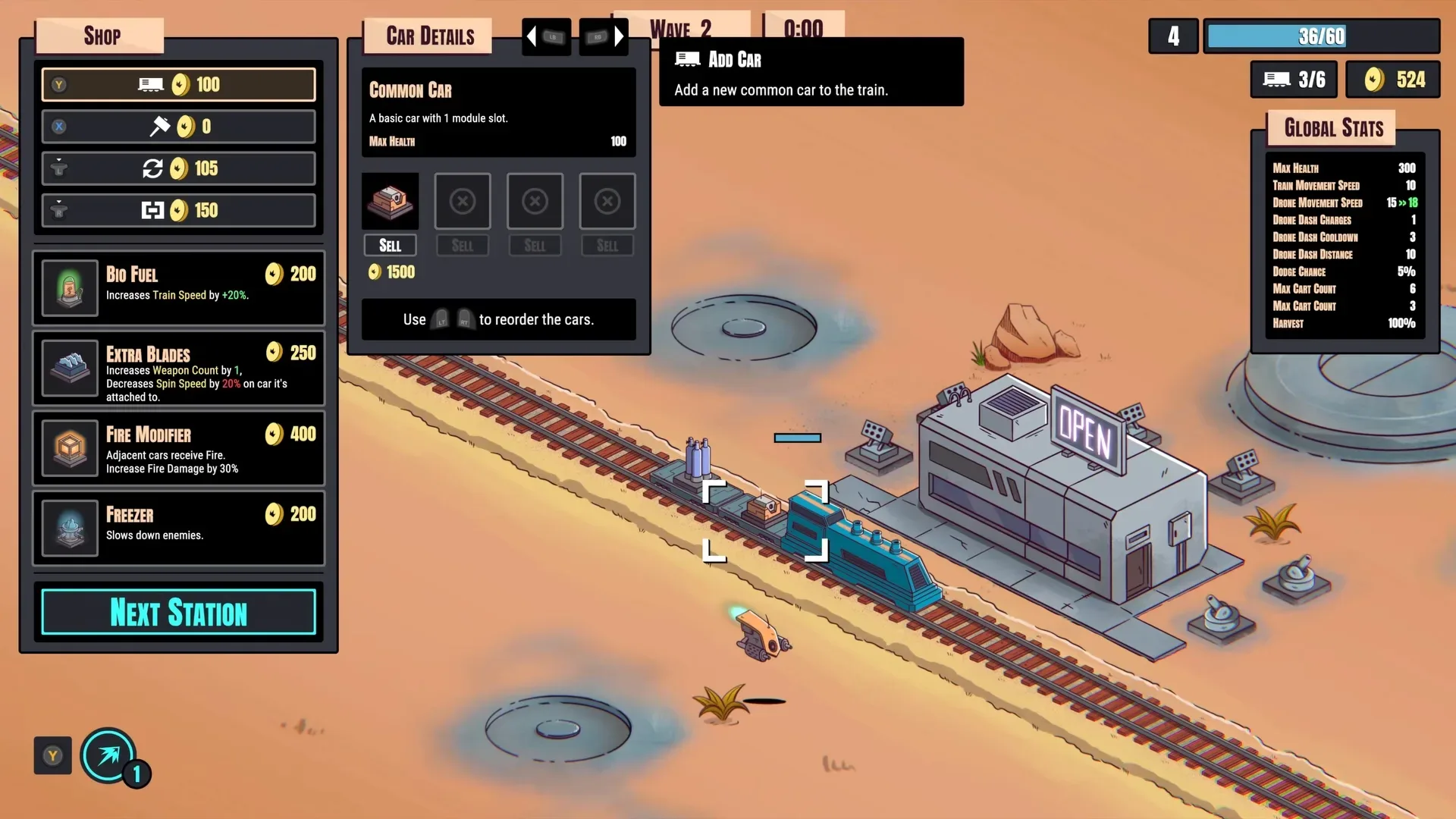
Each station acts as the break between combat stretches and the place to alter a run. Players can purchase new cars, weapons, drone slots and buffs. A buff is a temporary or run-specific beneficial effect, while a drone slot appears to be capacity for another protective drone. These choices give the station stops a practical role beyond a pause in the action: they are where a build acquires its direction.
Related coverage includes Endless Rails Launches on Steam With 30% Opening Discount.
Train cars can also be reordered or merged. Reordering suggests that the arrangement of a train is meaningful, while merging is explicitly said to make cars stronger and open up more module slots. Modules are equipment components or attachments, and more slots should mean more room to customize a car’s function within a run.
The result is a system with several layers of decision-making:
- New cars expand or alter the train’s structure.
- Weapons add offensive options to the overall setup.
- Drone slots expand the potential defensive fleet.
- Buffs can reinforce a chosen strategy.
- Reordering asks players to consider the train’s composition rather than only individual purchases.
- Merging trades or combines existing pieces for a stronger car and additional module capacity.
The available information does not identify individual weapons, car classes, drones, buffs or modules. Still, the stated emphasis on emergent synergies makes the intended appeal plain: useful combinations are meant to arise from how these systems interact, not only from selecting an obviously stronger single item.
What “emergent synergies” means for a run
In this context, a synergy is an interaction where two or more components work better together than they would independently. The word “emergent” suggests those interactions arise from the player’s shifting collection of train cars, weapon choices and drone types during a particular attempt.
For example, the game’s design is not described as a linear sequence of predetermined upgrades. A player reaches stations, sees available options, then decides whether to broaden the train, reinforce an existing car through merging, add drone capacity, purchase a weapon or take a buff. Because those choices can change from run to run, the final train build can change as well.
That is a key reason roguelites can sustain repeat attempts. A run is one self-contained attempt, usually ending when the player fails or completes its current objective. The next run starts over in some form, but it does not need to play out identically. Endless Rails is designed around exactly that repeatable structure: short fights, a station decision, another fight and a gradually evolving train.
The game also frames destruction as a major part of the experience, aiming for combat that feels weighty and visually satisfying as the defenses tear through enemy swarms. No specific enemies or effects have been detailed, but the stated goal fits the format: a good build should not only be effective, but legible enough that players can see its growing power amid the chaos.
Short rides, then a chance to rebuild
Individual action-heavy rides between stations are expected to last roughly 20 to 30 seconds. That is a notably compact combat interval. Instead of committing players to a long uninterrupted stage before they can make another major choice, Endless Rails is structured to return them to a station quickly.
There are practical effects to that pace. First, decisions receive quick feedback. If a newly purchased weapon, car or drone slot improves the train’s ability to handle an approaching swarm, that impact should become apparent in the next brief ride rather than far later in a lengthy map. Second, a failed run is less likely to be defined solely by a long period of repetition before the loss. Third, the rhythm supports the familiar “one more run” impulse: a short sequence makes it easy to believe the next rearrangement or upgrade could be the one that works.
That does not necessarily mean sessions themselves will be short. A player can string many 20-to-30-second rides together, with each stop adding decisions and stakes. Rather, the brief segments establish a fast cycle of action, reward, adjustment and renewed danger.
For players who enjoy games that make build experimentation central, the station cadence may be the feature to watch. Every stop potentially asks a different question: is it better to invest in a new part, consolidate what is already present through merging, create space for a module, or increase the number of drones guarding the train? The answers will depend on the options offered and the condition of that particular run.
Permanent progression sits outside the run
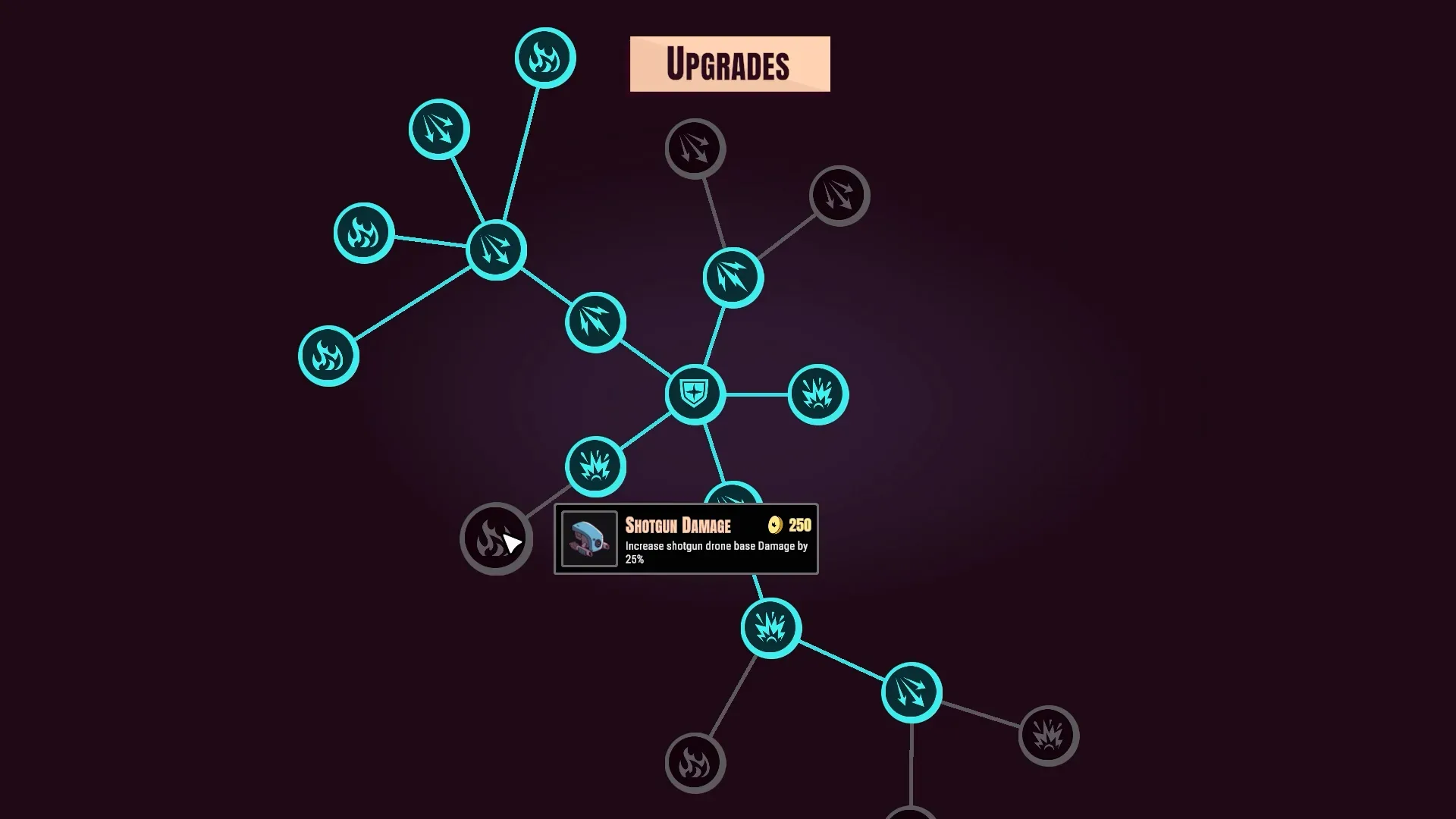
Not all advancement disappears after a run. Earnings can be spent between attempts on a permanent upgrade tree, allowing later runs to begin somewhat stronger. This is the “lite” portion of roguelite: repeated attempts retain a form of long-term progression, even while a run’s immediate train arrangement and purchases are built anew.
An upgrade tree is a branching set of lasting improvements funded through accumulated resources. The supplied information does not detail the branches, their costs or the kinds of bonuses they offer. It does establish their purpose, though: progress is intended to soften the starting point of future attempts and offer a continuing sense of advancement after a run ends.
Permanent upgrades can serve two complementary roles in a game with rapid repeat cycles. They give players a reason to keep earning even when a particular attempt falls short, and they can gradually create more room to explore the run-specific systems. In Endless Rails, that means the long-term tree exists alongside the immediate choices at stations, rather than replacing them.
The balance between those two layers will be important to how the game feels over time, but no claims can be made yet about its difficulty curve or progression rate. The confirmed structure is simply a mix of temporary build assembly during a journey and persistent improvement between journeys.
What to know before boarding
Endless Rails is aimed at players looking for a compact action loop with frequent upgrade choices rather than a slow-moving rail management simulation. Its train is both the objective and the build canvas; its drones provide automatic protection; and its stations are where players reshape the tools available for the next burst of combat.
Steam is the only confirmed platform. Those keeping an eye on the broader PC release calendar can also see how another recent PC launch has been covered in this look at The Witcher 3: Wild Hunt – Remastered’s PC review opening, though Endless Rails is a very different kind of game: a compact, systems-driven roguelite built around hostile wastelands and an ever-changing train of automated destruction.
For Endless Rails, the headline is the combination of scale and speed. Enemy swarms threaten the train, but the response is not a single fixed turret or weapon. Players can add cars, reshape their order, merge them for greater strength and module capacity, expand a drone fleet, acquire weapons and take buffs at successive stations. With 20-to-30-second rides keeping those decisions close to the fighting, the game’s appeal rests on whether each new train configuration can turn a doomed trip into one more successful stop down the line.