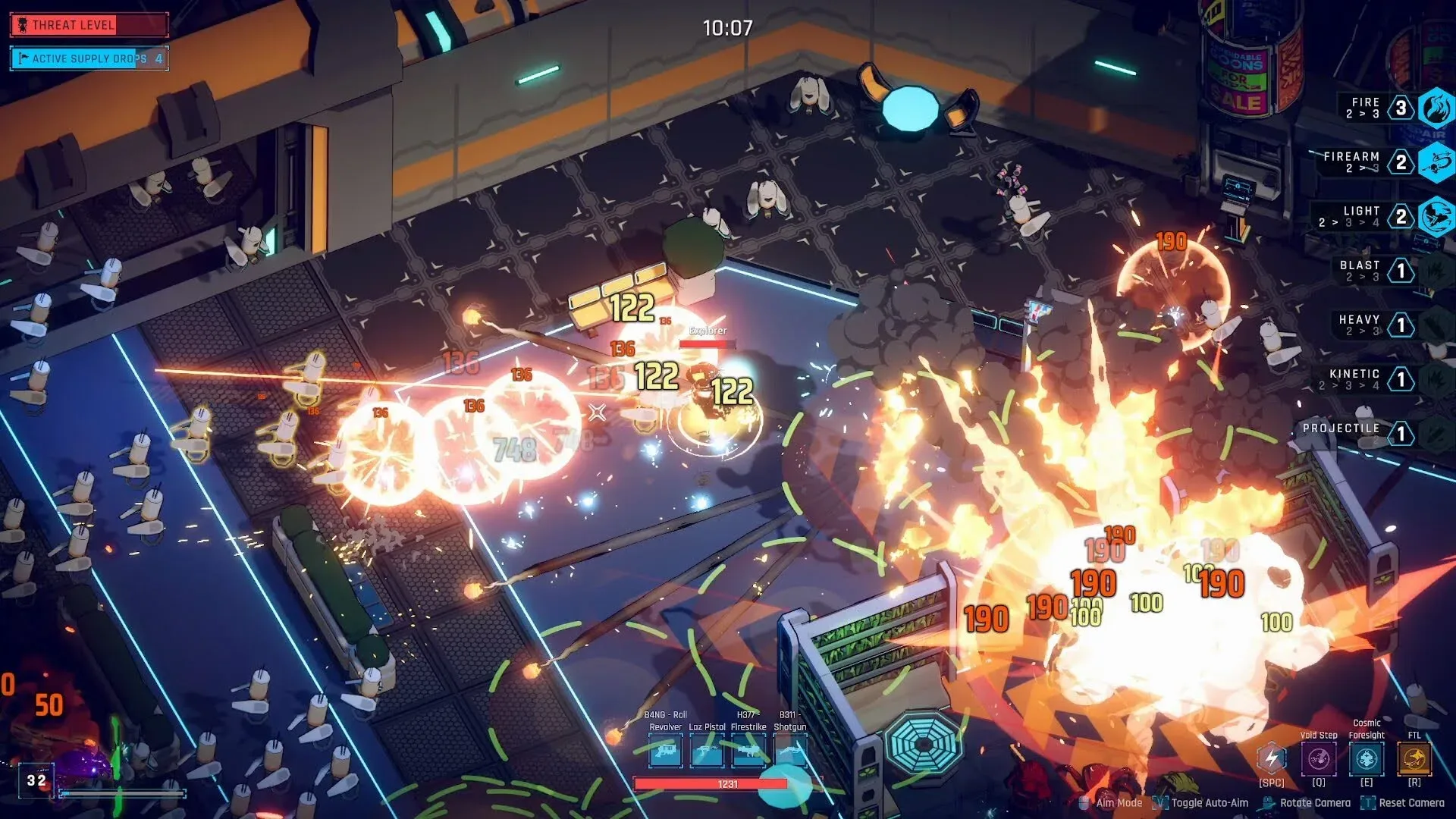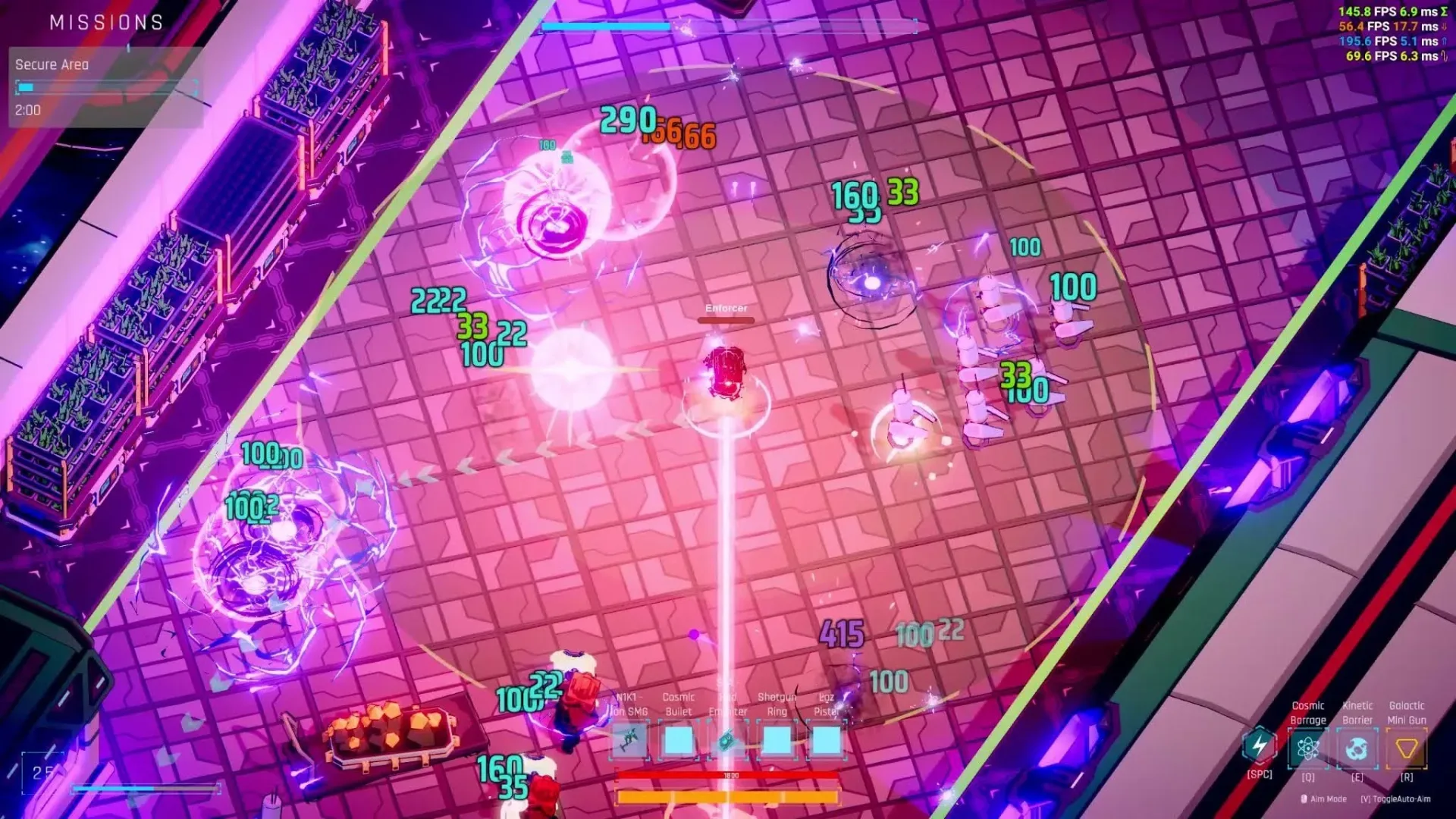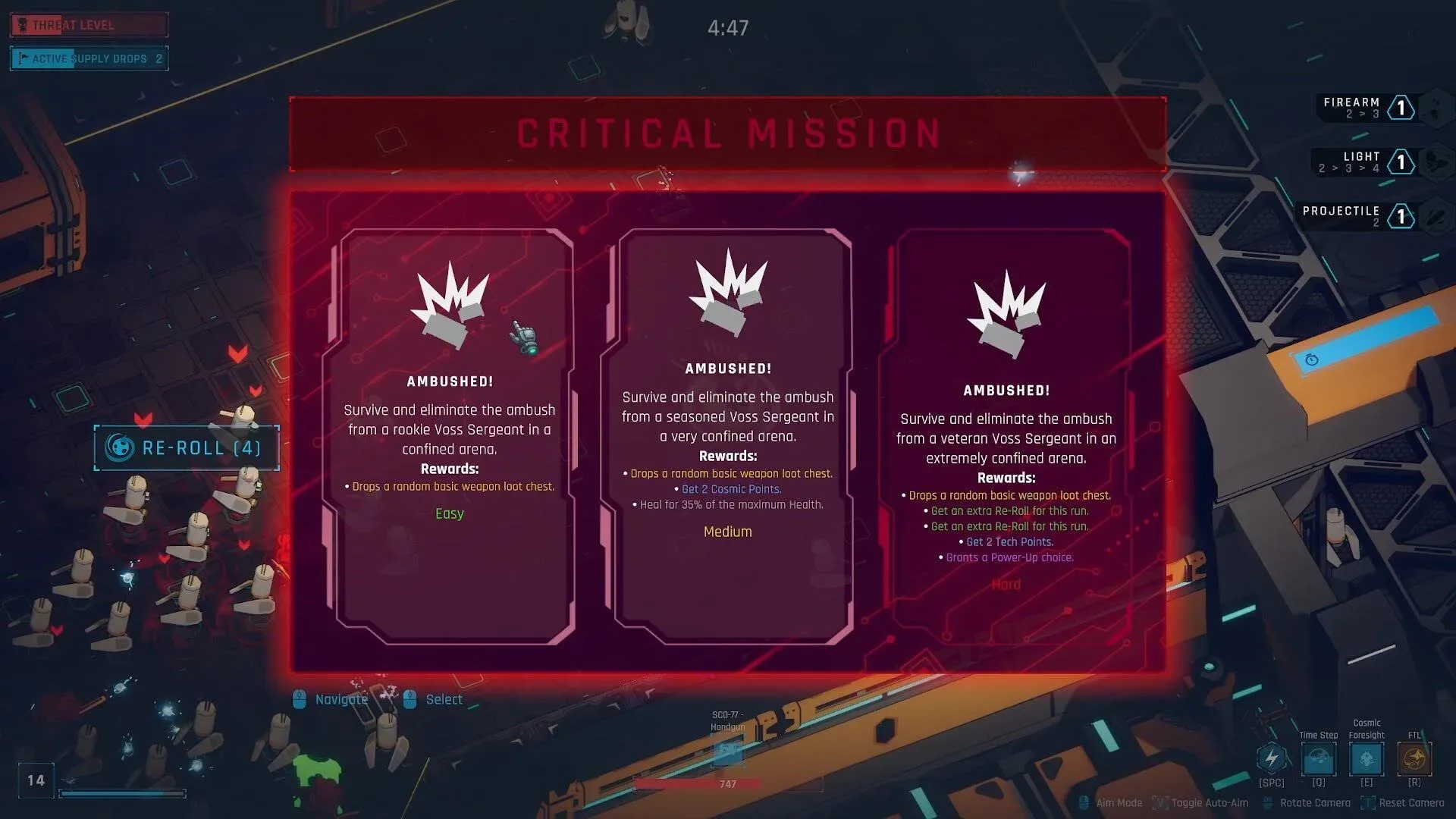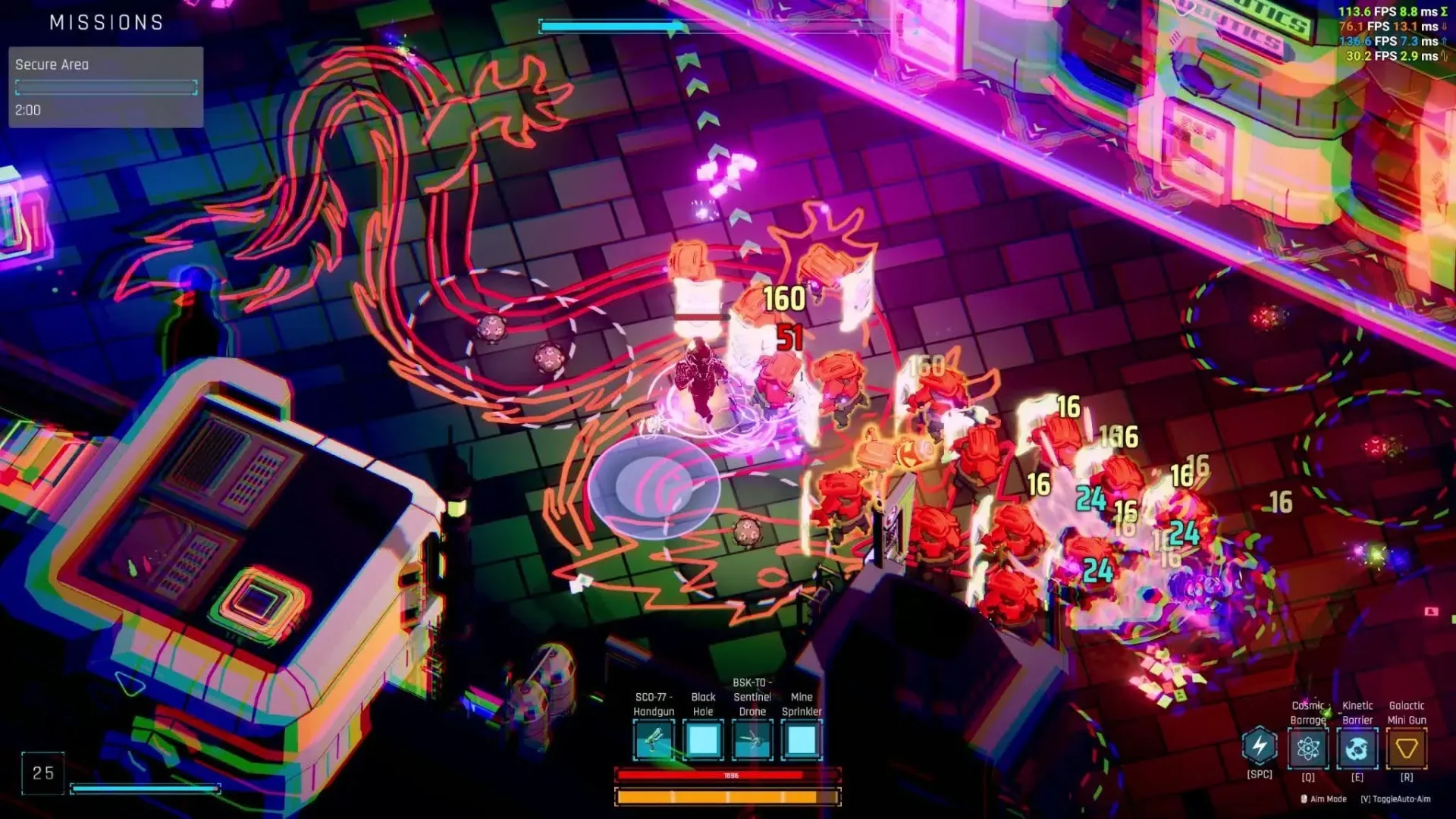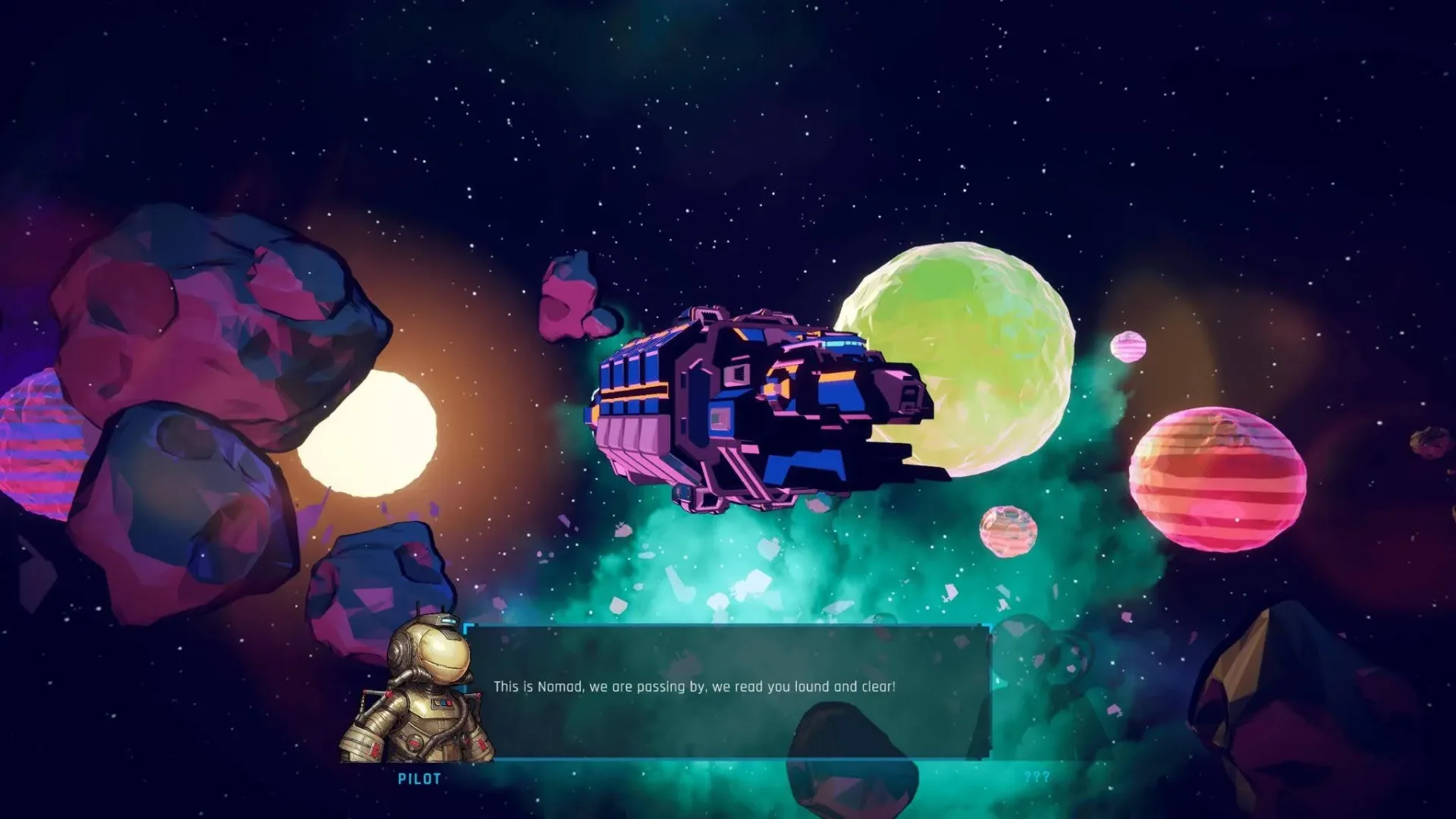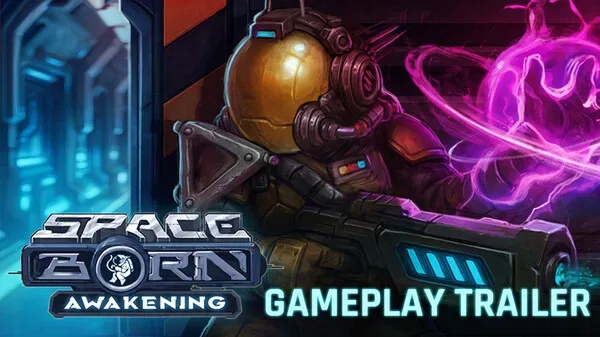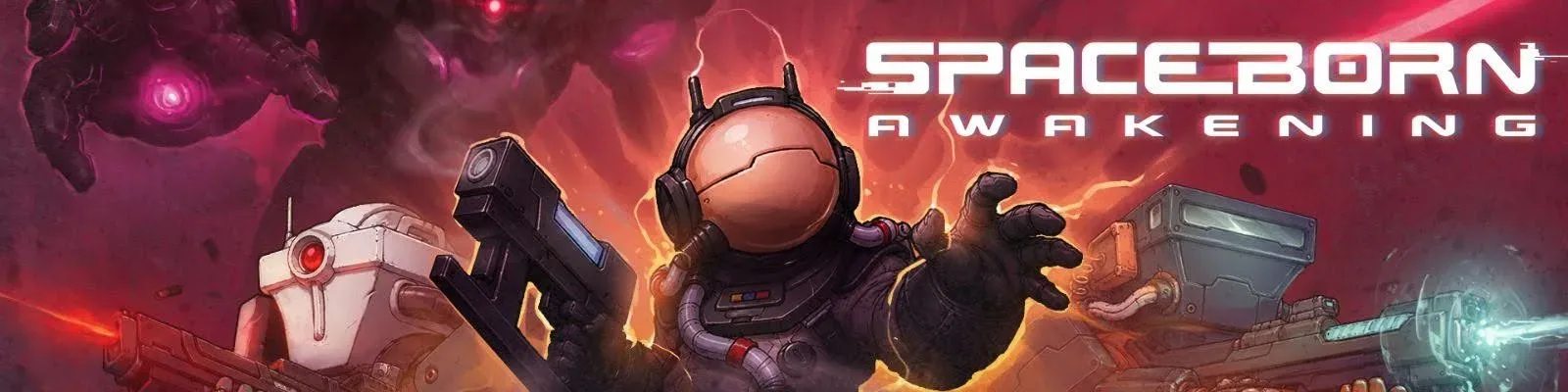
Spaceborn: Awakening has received a new gameplay trailer ahead of its planned Steam arrival later this year. Developed solo by Stathis Aposporis, the game is a bullet-heaven roguelite built around an unusually direct premise: its campaign is not simply a story placed between runs. Completing narrative chapters is intended to unlock the class awakenings and new features that change what players can do in subsequent attempts.
That makes the central pitch easy to state, if potentially demanding to execute. Players begin as an ordinary crew member, build up an arsenal of weapons and abilities, and eventually rise toward godhood as a chosen Spaceborn champion. The fiction follows a cosmic conflict between Light and Void, with corrupted swarms and the antagonist Voss Praetor standing in the player’s path. Awakening is framed as a prequel about the first Spaceborn.
The newly released trailer gives prospective players another look at that combination of narrative framing and densely populated, screen-clearing combat. A free demo is available now, while the full version is still described as coming soon to Steam.
A campaign designed to alter the next run
Roguelites are games structured around repeated runs. A single run generally ends in success, failure, or a decision to stop, but some form of progress persists: new options, systems, characters, upgrades, or knowledge that informs the next attempt. In Spaceborn: Awakening, the stated goal is to make story completion itself one of the mechanisms that supplies this persistent progress.
More specifically, finishing campaign chapters unlocks class awakenings and features that feed back into the run-based loop. The supplied details do not define every awakening or feature, so it would be premature to treat them as a fixed list of classes or upgrades. But the intended role is clear: story milestones should have mechanical consequences beyond advancing the plot.
That approach differs from a structure where narrative scenes are primarily rewards for reaching a checkpoint. Here, story chapters are presented as part of the player’s route to a broader build-making toolkit. The developer’s “mortal to god” description is therefore both a narrative arc and a description of the game’s progression curve: begin limited, gain access to stronger possibilities, and carry those possibilities into further runs.
“Becoming the first Spaceborn is the progression. The story and the roguelite loop aren't two separate things, they're one and the same,” Aposporis said.
Aposporis has also described Spaceborn: Awakening as a first solo-developed game. The design emphasis is explicitly on avoiding a situation in which story feels attached after the combat systems are already established. Whether the finished game delivers that cohesion will depend on how the chapter unlocks, awakenings, and run-to-run choices interact, but the trailer announcement establishes the project’s core design objective plainly.
What “bullet heaven” means here
Bullet heaven is a useful term for understanding the type of action Spaceborn: Awakening is promising. It generally describes games where a player faces very large enemy groups and accumulates powerful attacks capable of clearing substantial portions of the screen. The emphasis is on surviving escalating pressure while constructing a stronger and more synergistic set of weapons or abilities over the course of a run.
The phrase is often used in contrast to “bullet hell,” where carefully navigating dense patterns of incoming projectiles is the dominant challenge. That does not establish what specific movement, aiming, or damage rules Spaceborn uses; those details have not been specified. It does convey the fantasy at the heart of this game: beginning as a comparatively vulnerable crew member and ending with enough force to erase swarms.
Spaceborn’s description repeatedly points to that escalation. Players will grow an evolving arsenal across runs and use powerful abilities to clear the screen. “Evolving arsenal” suggests that returning to the game is meant to expand and reshape a player’s offensive options rather than merely repeat an identical starting kit. The exact weapons, ability combinations, and evolution requirements have not been detailed, but the build element is positioned as a major part of the experience.
Survival and Endless modes offer room for build testing
Alongside the campaign, Survival and Endless modes are planned as places to push builds further. Those names establish the broad function of the modes without confirming their objectives, enemy structures, rewards, or whether either mode has a defined endpoint. Still, their presence matters in the context of the game’s stated arsenal progression.
Players who unlock an awakening or new feature through a story chapter should have places to experiment with its effect beyond the immediate campaign beat. A survival-oriented format naturally foregrounds endurance, while an endless format implies continued pressure and a chance to see how long a build can remain effective. The practical appeal is not just seeing a new unlock appear in a menu; it is evaluating whether it changes the way a run is approached when swarms become overwhelming.
That is where the game’s campaign-first progression idea could be most meaningful. If narrative completion grants tools that materially affect build choices, Survival and Endless modes may become an arena for testing the consequences of those story advances. On the other hand, the announcement does not promise competitive rankings, co-op, procedural story branches, or any particular endgame system, so those should not be assumed.
Light, Void and the first Spaceborn
The narrative stakes are framed as a struggle for cosmic balance between Light and Void. Players take the role of Spaceborn champions fighting corrupted swarms and Voss Praetor. As a prequel, Awakening focuses specifically on the origin story of the first Spaceborn rather than presenting that status as a piece of distant lore.
That premise supports the mechanical progression theme neatly. An ordinary crew member’s ascent is not just an abstract power increase represented by bigger effects on screen; it is also the story being told. The game is therefore tying its terminology together: “awakening” can be read as the player gaining access to more powerful gameplay options, while also referring to the protagonist’s transformation into the first Spaceborn.
It is too early to draw conclusions about the campaign’s length, its cast beyond Voss Praetor, or the way its Light-versus-Void conflict resolves. The available information establishes the setup, but not those deeper story details. What is known is that the campaign is intended to be a cinematic component, and that its chapters have direct progression value.
What to watch for in the demo and trailer
For players deciding whether the premise is for them, the free demo is likely the most useful current route to assessing the fundamentals. The key questions are less about the scale of the cosmic premise and more about moment-to-moment readability: how weapon and ability choices shape a build, how clearly the game communicates the path to an awakening, and whether the action retains tactical decisions as the screen fills with enemies.
The new trailer is also worth viewing for those interested in the game’s presentation and combat tempo. It can be watched at the official Spaceborn: Awakening gameplay trailer. For a separate look at a recent PC-focused event story, see our coverage of the VR Games Showcase and its seven-game PC bundle.
Spaceborn: Awakening is currently planned for Steam later in 2026. Its defining claim is not merely that it combines a campaign with a roguelite structure, but that campaign completion is meant to actively reshape the pool of possibilities available in the next run. The demo and new trailer provide the first available ways to judge how convincingly that idea translates from pitch to play.