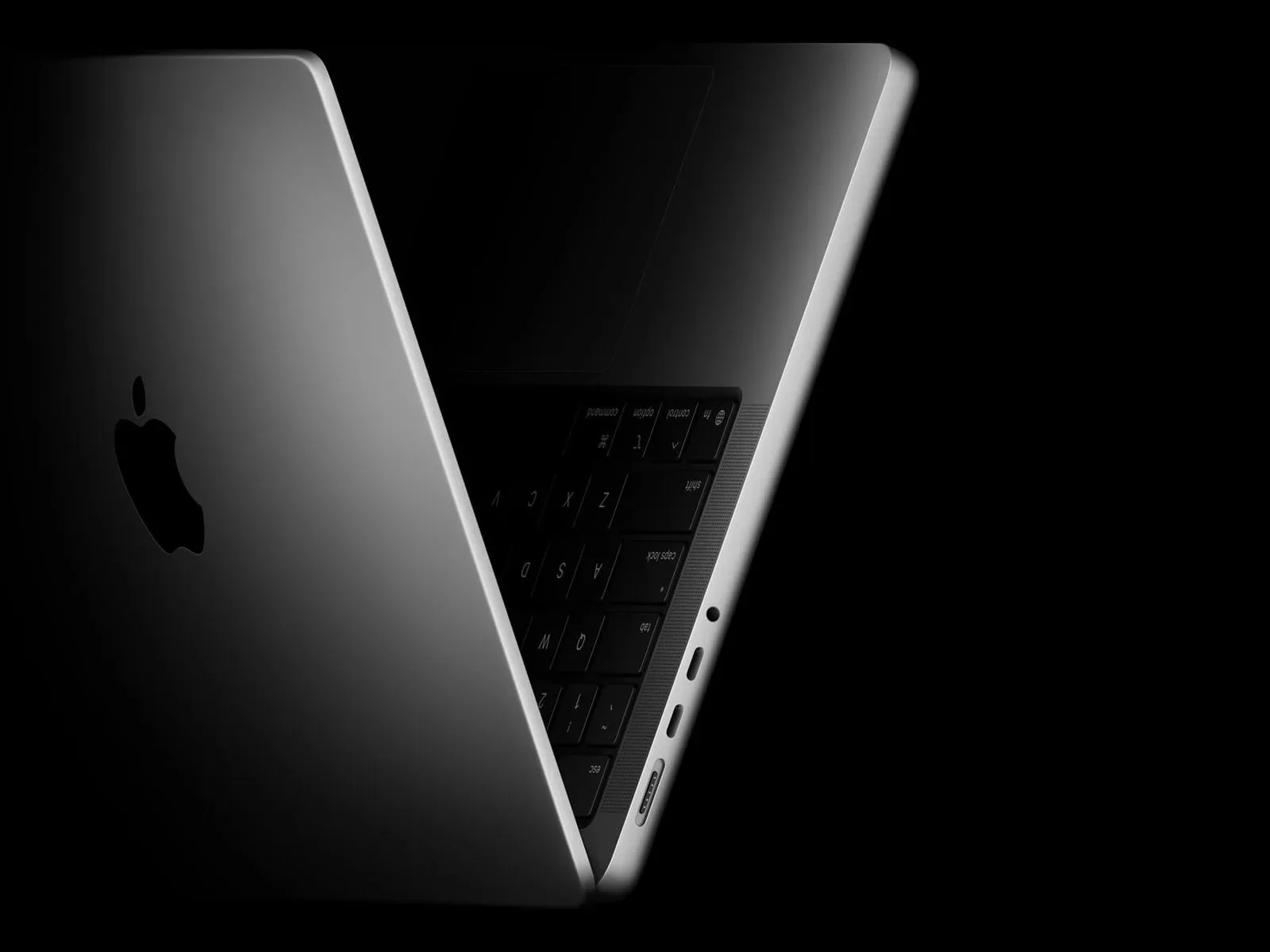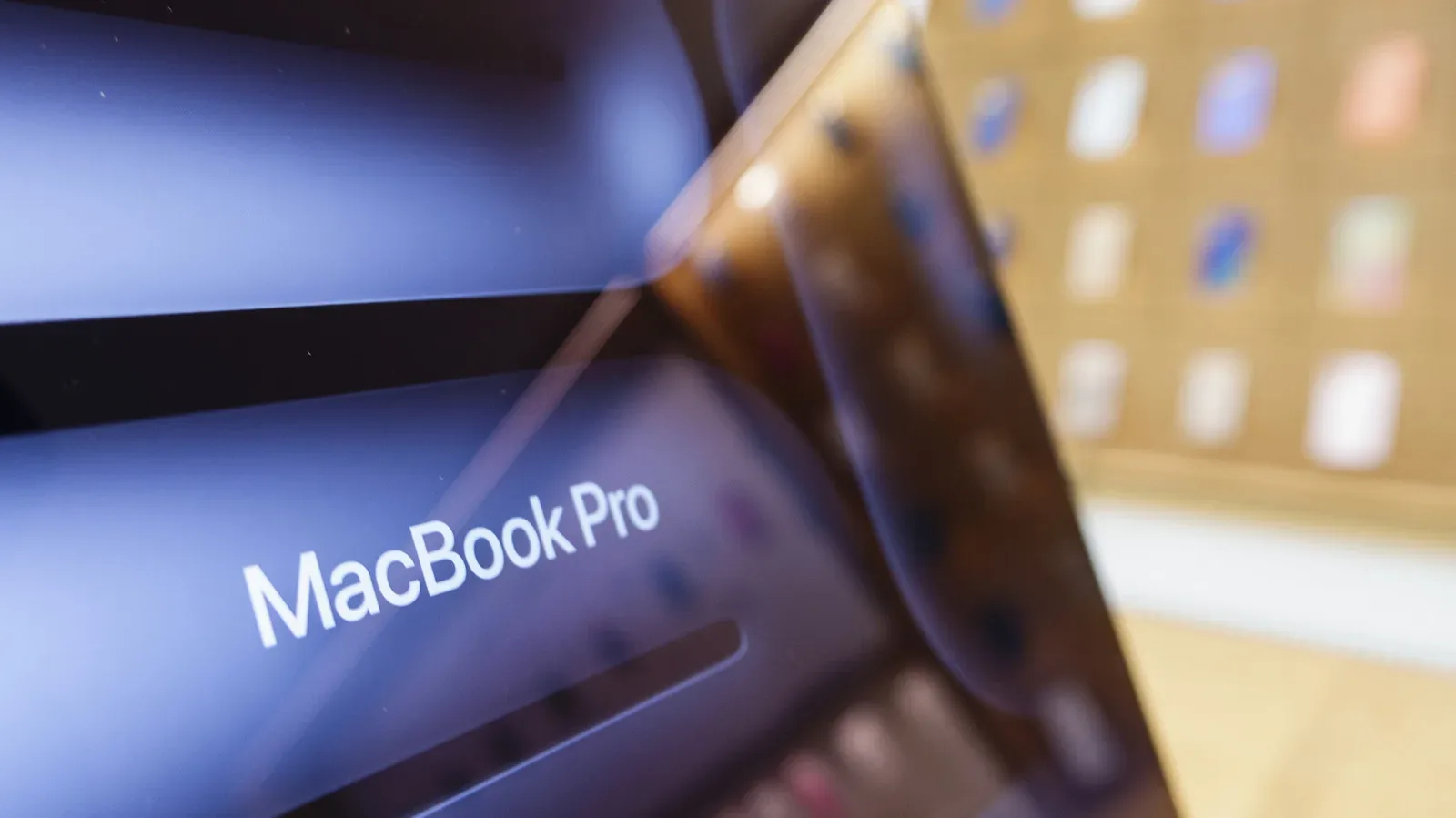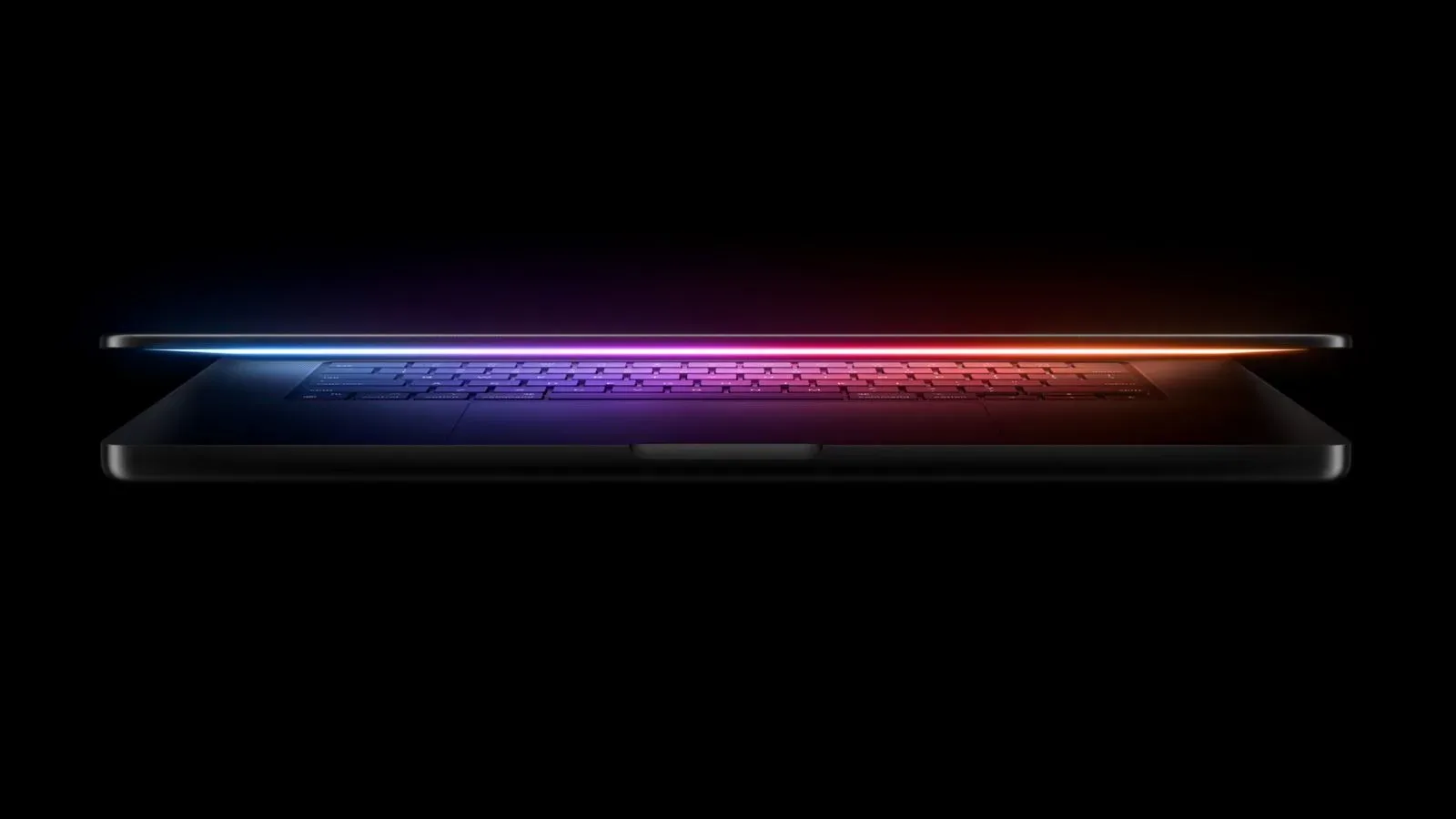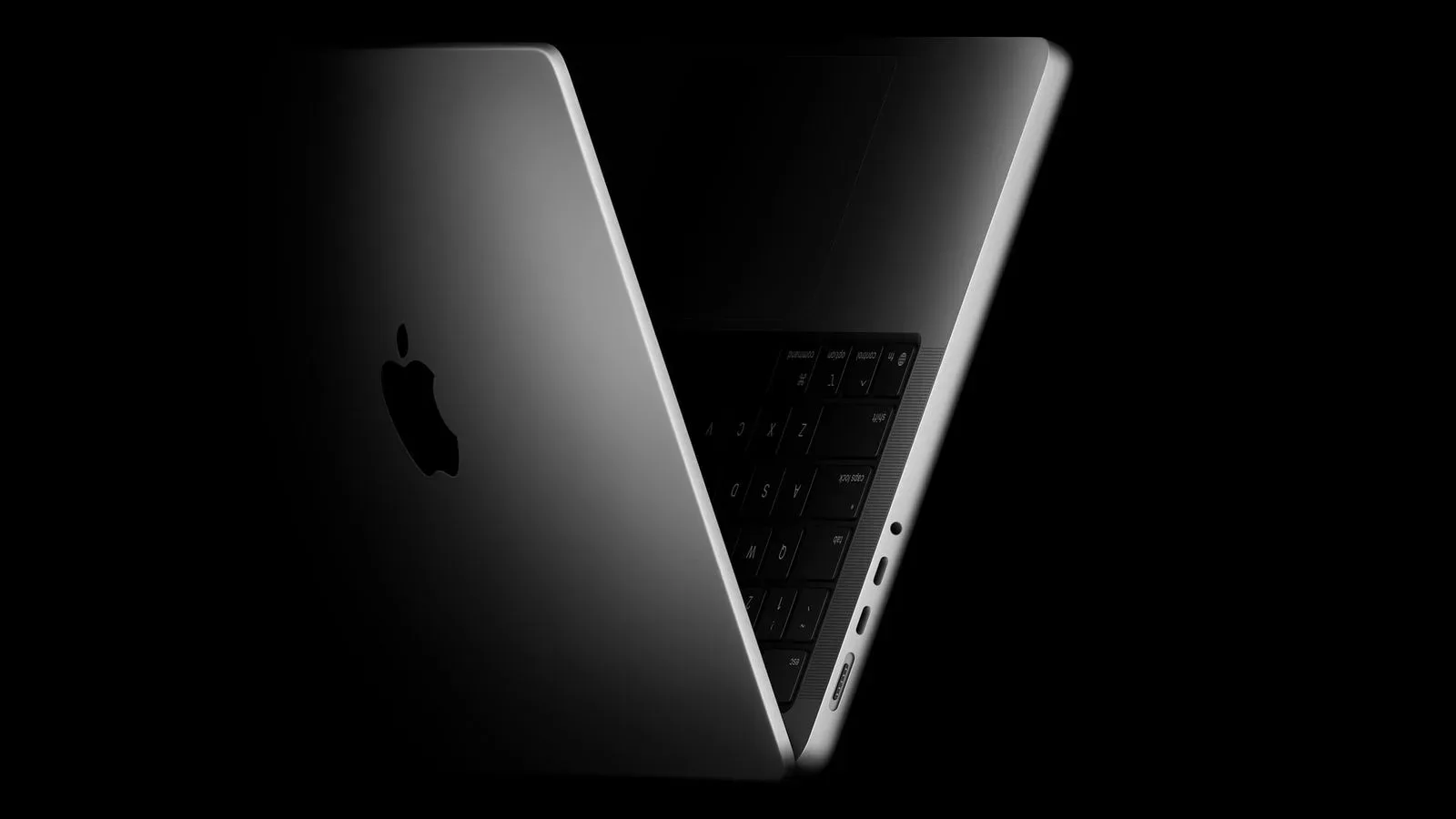
The rumored touchscreen OLED MacBook Pro may arrive with a more restrained physical redesign than earlier expectations suggested. The laptop is still expected to launch later this month, but the latest reporting indicates it may not be significantly thinner than current MacBook Pro models after all. The more meaningful claimed change is now substantial weight reduction.
That is an important distinction. “Thinner and lighter” is often used as a single piece of consumer-tech shorthand, as if one change naturally guarantees the other. It does not. A notebook can shed a noticeable amount of mass while retaining a broadly familiar thickness, and it can become thinner without becoming dramatically easier to carry. For prospective buyers—including PC gamers and creators who use a laptop as part of a desk setup as well as on the move—the difference affects expectations for portability, ports, thermal headroom, and daily handling.
The OLED MacBook Pro rumor has become more specific
Earlier reports from October 2025 described the OLED MacBook Pro line as having thinner and lighter frames. A subsequent report in November 2025 again characterized the touchscreen models as using a thinner chassis. The latest update walks that point back: the machine may not be significantly thinner in the final design, while still being significantly lighter.
None of that amounts to a confirmed specification. There are no dimensions, weight figures, display sizes, processor details, pricing, battery claims, or port details in the available information. Nor is there a confirmed explanation for how Apple could reduce the weight. Until the product is formally detailed, “significantly lighter” should be treated as a report about direction rather than a number buyers can use to compare models.
Still, the revised wording tells a clearer story than the earlier, wider “thinner and lighter” framing. The expected OLED MacBook Pro redesign may be aimed less at producing a visibly altered silhouette and more at making a professional notebook less burdensome to transport.
Why lighter and thinner are separate upgrades
Thickness measures the distance between the laptop’s top and bottom surfaces when it is closed. It affects how a system fits in a bag, how it looks on a desk, and potentially how much physical room designers have for internal components. Weight is the total mass a person actually carries. It affects the real-world effort of commuting, moving between rooms, packing a travel bag, or using the device on a lap.
A laptop’s thickness can stay similar even when its overall mass drops. Conversely, a manufacturer can reduce thickness yet make only a limited reduction in weight if major internal parts remain heavy. The available report does not identify construction changes or component decisions, so it would be speculation to assign the claimed reduction to any one part of the notebook. The practical point is simpler: a familiar-looking MacBook Pro could feel notably different in a backpack or in one hand.
For users who value a MacBook Pro for a portable workstation role, that may be a more tangible result than a small trim to the chassis. A few millimeters can matter for packing, but a lower carry weight changes every trip. That is particularly relevant to people who bring a laptop alongside controllers, chargers, external storage, headphones, and other gaming or production gear.
OLED and touch are still the bigger unconfirmed product shifts
The expected model is described as a touchscreen OLED MacBook Pro. Both terms matter, even though the report provides no detailed implementation information.
OLED, short for organic light-emitting diode, is a display technology in which pixels emit their own light. Unlike a conventional backlit display, an OLED pixel can turn off individually. In general technical terms, that can enable very deep black levels and strong contrast because black areas do not require the same kind of backlight illumination. The report does not provide brightness, refresh-rate, color, resolution, response-time, anti-reflection, or longevity specifications for the rumored notebook, so those characteristics cannot be assumed here.
For gaming and video work, display details beyond the OLED label will ultimately matter. A screen’s refresh rate describes how often it can update each second, while response behavior concerns how quickly pixels change state. Both can influence perceived motion, but neither has been detailed for this MacBook Pro. Likewise, an OLED panel’s potential contrast benefits do not by themselves establish how a game will perform on the hardware or how compatible any particular title will be.
Touchscreen means the display is expected to accept direct touch input. That could change how people navigate macOS applications or creative tools, but the information available does not explain software behavior, gesture support, stylus compatibility, hinge design, or whether touch interaction would be intended primarily for certain apps. It also does not establish a gaming control advantage. Many games are designed around keyboard-and-mouse, controller, or gamepad inputs; a touchscreen is not automatically a substitute for any of those.
A lighter chassis could matter more than a headline-grabbing profile
Ultra-thin hardware attracts attention because it is easy to photograph and easy to compare. But a significantly lighter notebook can be a more practical upgrade, particularly for a product positioned at users likely to carry demanding work and media projects between locations. A reduced weight may make a laptop more comfortable to pick up from a desk, use while seated away from a workstation, or carry through an airport. Those are mundane improvements, but they can determine whether a portable computer actually gets carried.
There is also reason not to treat the softened thinness claim as a disappointment by default. A dramatic chassis reduction can lead buyers to ask other questions: what happens to connectivity, cooling, battery capacity, or structural feel? The current report answers none of them, and it does not state that any capability is being preserved, removed, or changed. But retaining a broadly similar thickness while reducing mass could indicate that the redesign is not solely chasing the thinnest possible profile. That is analysis of the revised rumor—not confirmation of Apple’s engineering priorities.
For a gaming-adjacent audience, this distinction is useful. A laptop’s physical design is only one part of the experience. Anyone considering the machine for games should wait for official information on the areas that determine practical suitability: supported games, performance, display specifications, storage configurations, connections for accessories and displays, and the behavior of the touchscreen in actual software. The current rumor does not settle any of those questions.
What has changed—and what has not been established
- Reported: The touchscreen OLED MacBook Pro is expected to launch later this month.
- Reported: It may be significantly lighter than present MacBook Pro models.
- Revised: It may not end up significantly thinner, despite prior reports suggesting a thinner chassis.
- Not established: Exact dimensions, weight, configurations, price, display specifications, battery details, ports, or performance.
- Not established: How the touchscreen will work within macOS apps and games.
The revised expectation also provides a useful reminder for rumor reading. Early product reporting may accurately identify a broad redesign while later information refines the specifics. “Lighter” and “thinner” can point in the same general direction, but they are measurable claims with different outcomes for buyers. Until Apple presents the finished hardware, the responsible reading is that a lighter touchscreen OLED MacBook Pro is anticipated, while a major reduction in thickness is no longer a safe expectation.
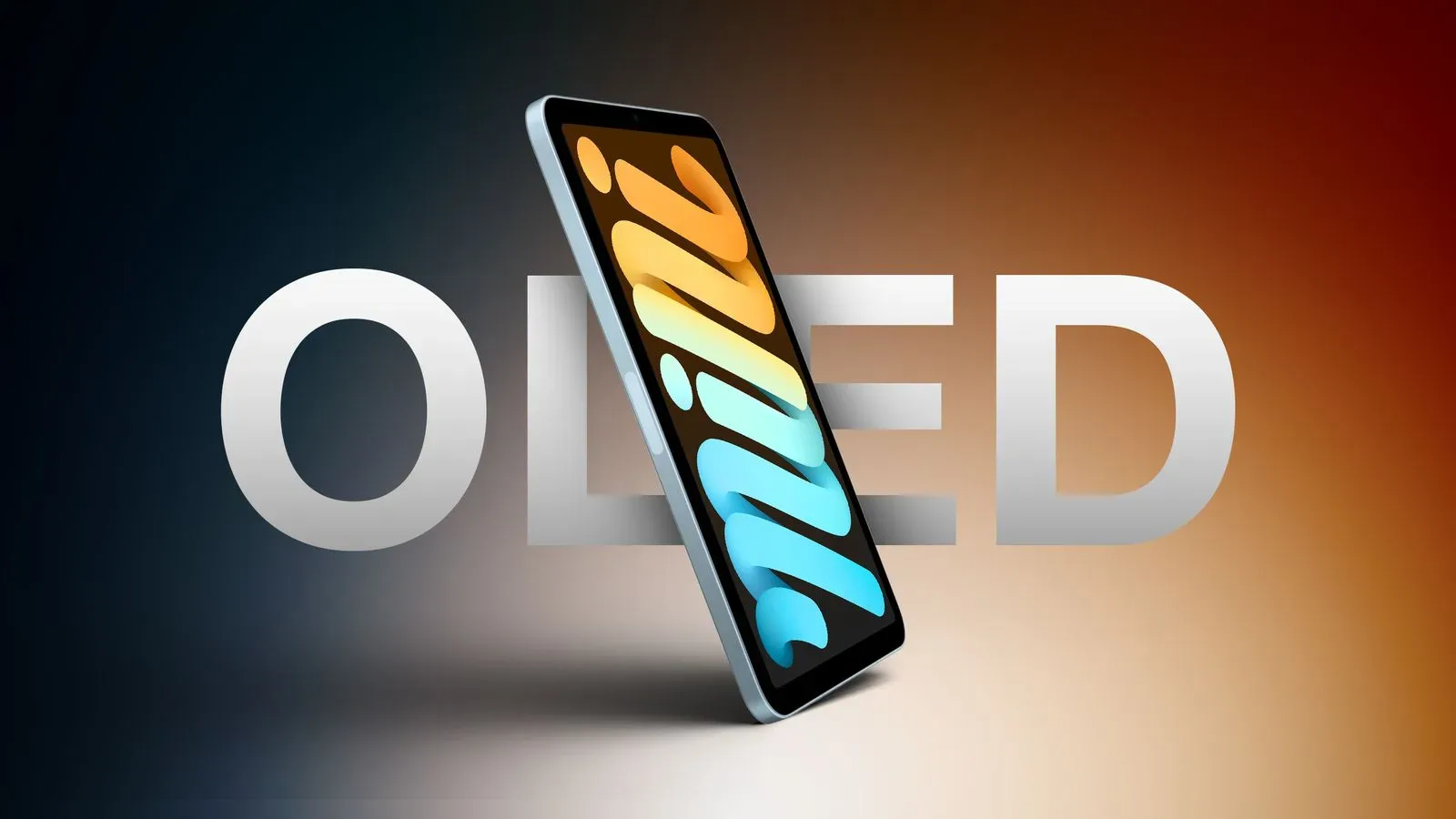
OLED is also increasingly central to the wider Apple-device rumor cycle. For related context on what panel terminology and refresh-rate claims can mean in another rumored Apple product, see our coverage of the iPad mini 8 OLED and 60Hz rumor.