Apple’s anticipated MacBook Pro redesign could pair two long-rumored changes—a touchscreen and an OLED panel—with a more immediately practical upgrade: less weight. Reporting indicates the new high-end notebook may be significantly lighter than present MacBook Pro models, with Apple said to be shrinking and rearranging internal components to get there.
The model is still expected as soon as next month, although the product, its exact dimensions, configurations, and final weight have not been formally detailed. That distinction matters. “Significantly lighter” describes the direction of the redesign, not a confirmed pound or gram figure, and there is no supplied breakdown showing how the claimed reduction would vary between screen sizes or chip options.
Even so, the combination is notable. A touchscreen layer and an OLED display are substantial changes for a professional laptop line, and an effort to lower mass at the same time suggests that the chassis is more than a routine processor refresh.
What is reportedly changing
The central claim is that Apple has reworked the computer’s interior through component miniaturization and a new arrangement of those parts. In ordinary terms, that means parts may occupy less room, or fit together more efficiently, allowing the company to reduce the enclosure’s weight while still accommodating the display, battery, cooling hardware, ports, speakers, logic board, and other essentials that make up a laptop.
That is a more meaningful engineering story than simply making an existing shell thinner. A laptop’s internals are a tightly constrained system: changing the placement or size of one part can affect heat management, structural rigidity, serviceability, speaker volume, battery space, and the position of connectors. Until Apple provides specifications, it would be premature to assume which compromises, if any, have been made to reach a lower number on the scale.
For perspective, current MacBook Pro configurations begin at 3.4 pounds for the 14-inch model and rise to 4.7 pounds for the 16-inch version. Those are useful reference points, but they do not establish a direct comparison yet. The upcoming product could arrive in multiple sizes, and “significantly lighter” has not been attached to a particular model.
Why OLED is a big deal for this line
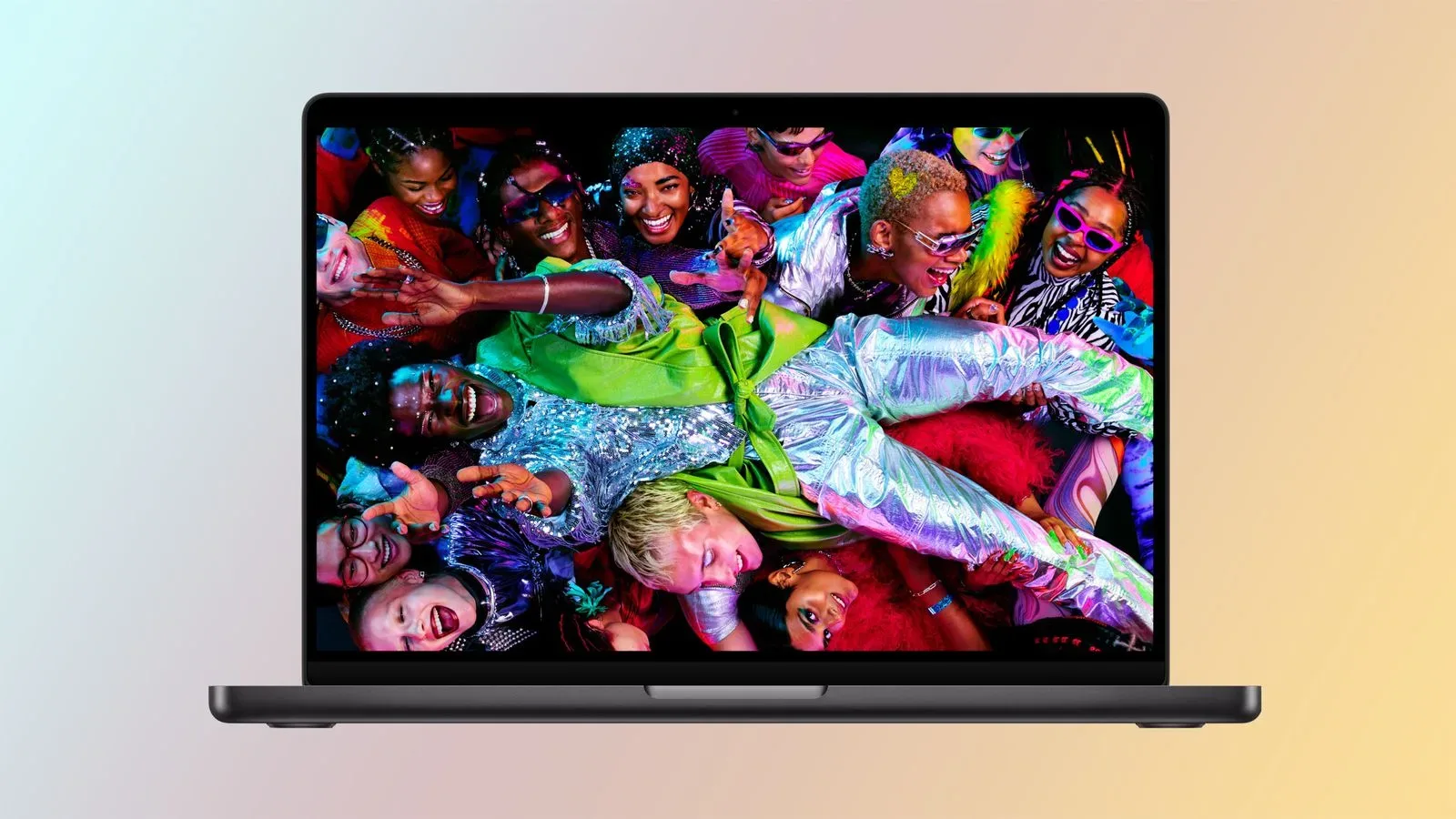
OLED, short for organic light-emitting diode, is a display technology in which pixels emit their own light. Unlike a conventional backlit panel, it does not require the same always-on backlight approach for every pixel. The practical result is that black areas can appear very dark because pixels can be turned off, while bright and dark elements can sit closer together with strong contrast.
OLED is therefore an important change not merely because it is a premium display label, but because it alters the visual character of the screen. It may be especially appealing for video work, photography, design interfaces, and entertainment where contrast is highly visible. That said, the available information does not specify the new MacBook Pro’s brightness, resolution, refresh behavior, color performance, power characteristics, or panel longevity. Those are all separate attributes, and none should be presumed solely from the word OLED.
Related coverage includes Touchscreen OLED MacBook Pro Could Be Significantly Lighter.
The report also places the MacBook Pro launch alongside the first iPad mini expected to use OLED. If both products appear on the suggested timetable, the overlap would make the display transition a broader hardware moment rather than an isolated notebook update.
A touchscreen changes the conversation, not just the panel
The touchscreen is equally consequential. MacBook Pro users generally work through a keyboard, trackpad, and often external accessories; a touch-capable screen adds a direct-input option to that familiar setup. The report does not describe the software behavior, gesture support, stylus support, or applications that would make use of it. Those unanswered details will determine whether touch is a useful complement to existing controls or simply an occasional convenience.
It also creates a design tension. Reaching forward to touch a laptop display is different from using a tablet held in the hands. The advantage is immediacy: tapping a control, moving an object, or interacting with a visual element can feel direct. The trade-off can be that the keyboard and trackpad remain more comfortable for extended typing and precision work. A touchscreen MacBook Pro does not automatically replace either input method; it expands the available choices.
Weight makes that transition more interesting. A lighter computer is easier to carry, easier to reposition, and less cumbersome when moving between a desk, lap, studio, or travel bag. The enduring appeal of portable hardware is often as much about where it can be used as what it can do. That portability-versus-capability balance has shaped plenty of devices before, including the unusual GameCube accessory explored in our look at how the Game Boy Player turned GameCube into a handheld gaming hub.
There is no indication that the new MacBook Pro is intended to become a tablet or a gaming handheld. The comparison is only about design priorities: hardware changes can expand the ways people physically engage with a device, even when its core role remains the same.
M5 now, rather than waiting for M7
The redesigned MacBook Pro is expected to use existing higher-end M5 chips rather than the M7 chips anticipated in early 2027. Apple’s M-series chips are the processors that power its modern Mac hardware. The number tells buyers which generation is involved, but it does not by itself reveal a specific performance level: higher-end variants within a generation can differ from entry-level versions in capability.
For prospective buyers, the key point is timing. The reported redesign is not being held for the next expected chip generation. Instead, it may combine a newly designed physical platform with higher-tier silicon already in Apple’s lineup. That could matter to people whose priority is the OLED display, touch support, or improved portability rather than waiting for the next processor family.
It is not evidence that M7 has been delayed, nor does it establish that M5 will be inadequate. It simply frames the expected product cycle as one where hardware design changes arrive before the next named processor generation.
What to watch when official details arrive
Because the current picture comes from reporting rather than an official product specification, several questions remain open:
- Actual weight: A precise figure, and the configuration it applies to, will determine how substantial the reduction really is.
- Model coverage: It is not yet clear whether every MacBook Pro size or tier would receive the same screen and touch changes.
- Touch implementation: Support for gestures, pro apps, and any specialized accessories would shape day-to-day usefulness.
- OLED specifications: Brightness, resolution, color behavior, and power use will matter as much as the panel technology itself.
- Thermal and battery behavior: Interior rearrangement can affect cooling and endurance, but neither is described in the available information.
- Configuration details: The report points to higher-end M5 chips, while the exact chip choices and product tiers are not established.
The hardware story also lands during a leadership transition. John Ternus, who recently became Apple’s CEO, is described as bringing a hardware-engineering background, in contrast to the supply-chain and logistics reputation of his predecessor. Reporting further indicates that rebuilding design teams was an early priority and that those teams now report directly to Ternus.
That context makes it tempting to treat the next MacBook Pro as a declaration of a new design era. It may eventually look that way, but that is analysis rather than confirmation. A single product can reflect years of engineering work, and the precise role of any new executive in its development cannot be inferred from its release window.
What is clearer is the potential significance of the package itself. A MacBook Pro with OLED, touch input, a reworked interior, and a potentially meaningful weight reduction would represent a material change in how Apple positions its professional laptop hardware. Until the company reveals it, however, the most important claims—especially the amount of weight saved and how touch works—remain reports worth watching rather than settled specifications.