The Game Boy Player solved a very specific problem. The Game Boy Advance had a growing library of strategy games, role-playing games, platformers and experiments, but its small, unlit screen kept that software tied to a portable machine. Nintendo’s 2003 accessory gave those cartridges a place in the living room, using the GameCube as the display, power source and control center.
That description can make the Player sound like a simple cartridge adapter. Historically, it was more interesting than that. The hardware connected the GameCube to three generations of Game Boy software, supported handheld systems as controllers, worked with selected link features and offered its own television-focused interface. It also exposed the compromises involved in moving portable games to a much larger screen.
The Game Boy Player was not a universal emulator and did not reproduce every Game Boy accessory. Its importance came from the balance it struck: broad cartridge compatibility, straightforward integration with the GameCube and enough display options to make handheld software comfortable on a television. Its story is one of Nintendo’s clearest experiments in bringing home and portable play closer together.
From Super Game Boy to a Game Boy Advance problem
Nintendo had already established the appeal of television-based handheld play with the Super Game Boy, a Super NES cartridge that accepted original Game Boy software. That accessory made portable games visible on a larger screen and allowed players to use a traditional console controller. The Game Boy Player inherited that basic idea, but arrived in a different hardware environment and served a much newer generation of software.
The Game Boy Advance was more capable than the original Game Boy and Game Boy Color, yet the original model still had a relatively small screen without built-in lighting. The Game Boy Advance SP improved the situation with a folding design and a front-lit screen, but it remained a portable device. The Player addressed a different audience: people who wanted a television, a full-size controller and a longer home session rather than another handheld.
Its compatibility also gave it historical reach. The cartridge slot accepted Game Boy, Game Boy Color and Game Boy Advance software. That made the GameCube a display point for years of Nintendo handheld releases, not merely a way to play the newest GBA games. A player could move from a GameCube disc to an older cartridge without changing the television or adopting a separate video input.
The 2002 announcement and 2003 rollout
Nintendo announced the Game Boy Player in Japan on November 19, 2002, with a planned Japanese release in March 2003. The Japanese retail launch followed on March 20, 2003. Nintendo’s early announcement described support for the full Game Boy family and positioned the accessory as a way to play handheld software through the GameCube.
The international rollout was staggered. Nintendo of Europe announced a June 20, 2003 release, while Nintendo of America released the accessory on June 23, 2003. Those dates are easy to blur together in retrospective coverage, but the separate launches mattered because bundles, colors and pricing were handled differently by region.
In North America, Nintendo announced a standalone manufacturer’s suggested retail price of $49.99. For a limited period, the Player was also bundled with new GameCube systems at no additional charge. Nintendo promoted the accessory as opening access to more than 1,300 Game Boy games, a figure covering the compatible Game Boy, Game Boy Color and Game Boy Advance libraries rather than a new software collection included with the device.
The timing placed the Player beside, rather than directly against, the Game Boy Advance SP. The SP offered portability and a brighter screen; the Game Boy Player offered a larger shared display and traditional console controls. Nintendo was not replacing the handheld. It was giving the handheld library another place to live.
A GameCube underneath the GameCube
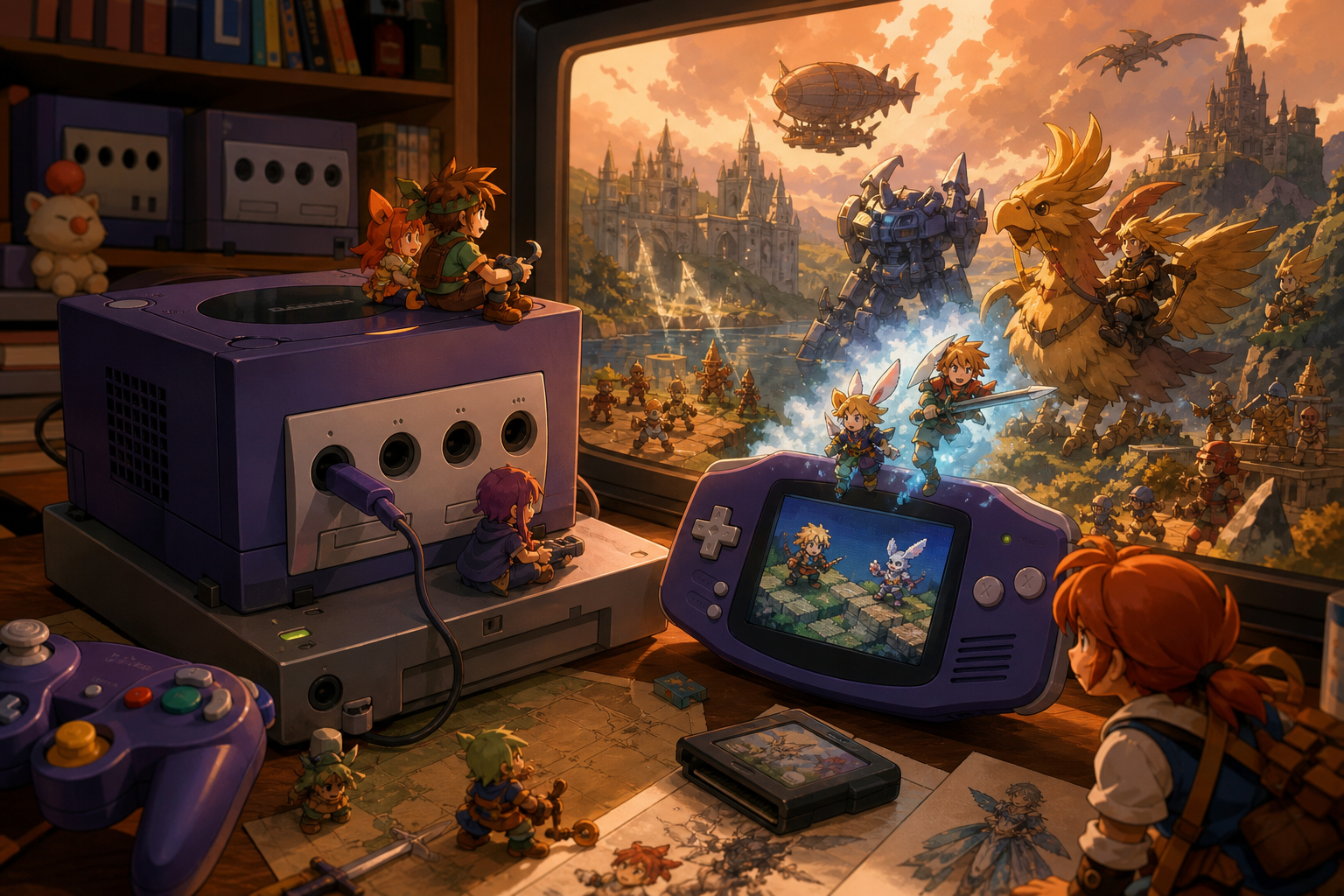
The physical design was deliberately plain. The Player fitted beneath the GameCube through the console’s high-speed port and extended the system’s footprint downward. A front-facing cartridge slot accepted Game Boy family Game Paks, while the accessory’s shape matched the console closely enough to look like an official lower section rather than an unrelated peripheral.
Nintendo’s manual describes the Player as drawing power from the GameCube. It did not need a separate external power brick, which kept the arrangement visually simple and helped the accessory feel like part of the console’s architecture. The unit also used attached screw-like fasteners to secure the connection, an unusually firm solution for hardware that was technically removable.
The Player still required a separate startup disc. The disc launched the Game Boy Player software interface, after which the inserted cartridge could run on the television. That requirement is important because the accessory was not an independent cartridge console. The GameCube supplied the system environment, video output and controller inputs; the Player supplied the handheld cartridge interface.
This division explains why the device felt integrated without becoming a new GameCube model. GameCube discs continued to use the console’s normal optical drive, while Game Boy software entered through the attached hardware. Nintendo had joined the two systems physically, but it had not erased the difference between their software platforms.
The television interface was part of the product
The startup software did more than display a raw enlarged picture. The Game Boy Player interface offered frame borders, screen-size choices, controller-layout options, a screen filter, a timer and a software reset function. Original monochrome Game Boy games could also use a selection of color palettes, giving players more control over how the four-shade image appeared on a television.
The screen-size options revealed the central compromise. A normal display preserved a smaller play area and kept the image closer to its original proportions. An enlarged mode made the picture easier to see from across a room, but Nintendo warned that enlargement could distort images or make them harder to read. Game Boy and Game Boy Color software could be expanded into the larger display area, though the resulting image did not necessarily retain the crispness of the original handheld presentation.
Nintendo’s manual also acknowledges that some games may appear shaky during scrolling. A television draws and presents moving images differently from a handheld LCD, so an effect that seemed unobtrusive on a Game Boy could become more noticeable on a larger screen. The Player’s screen filter and size controls offered ways to adjust the presentation, but they could not make a television behave exactly like a handheld display.
The interface therefore reflected Nintendo’s practical approach. Rather than promise a perfect visual replica, it gave players several reasonable compromises: a smaller, cleaner image; a larger image with more visible scaling; or a filtered presentation intended to soften the result.
A handheld library on the living-room screen
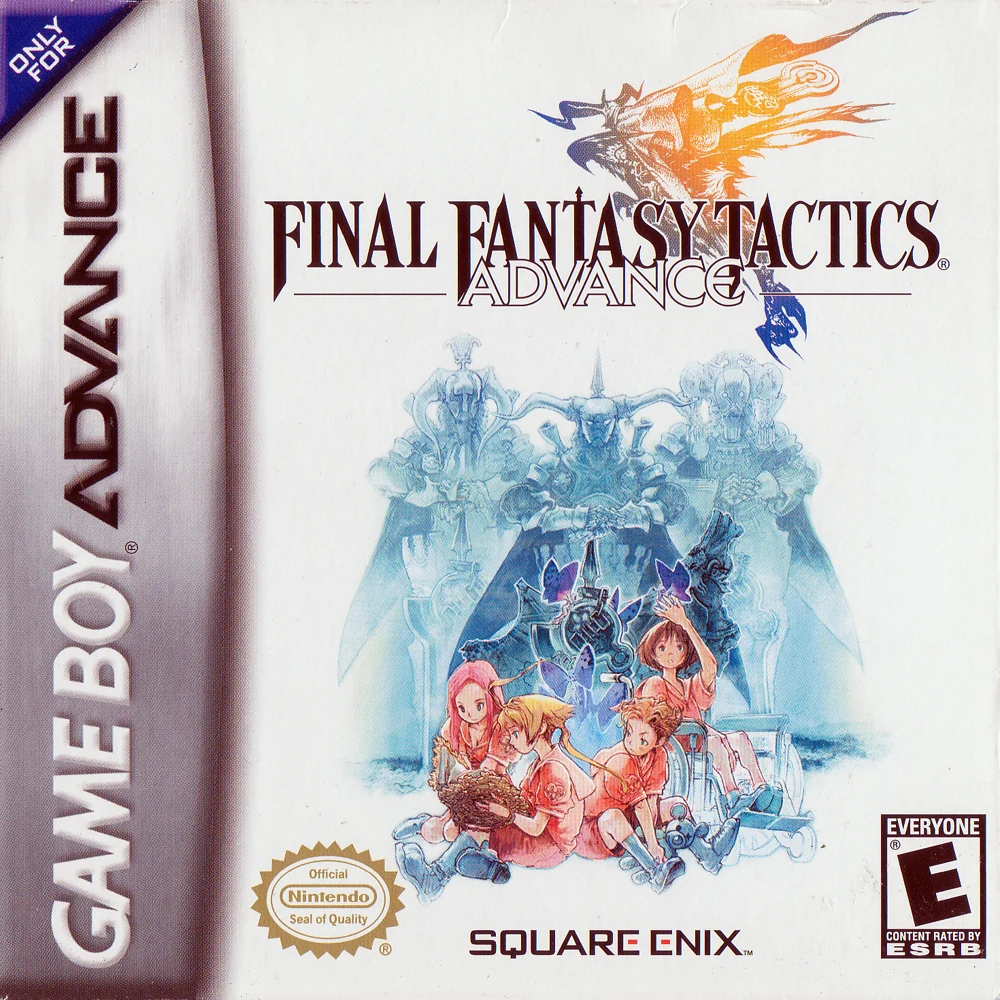
The Player’s strongest argument was its software range. Final Fantasy Tactics Advance showed how a handheld strategy role-playing game could benefit from a larger screen and a standard controller. Its grid-based battles, menus and character-development systems were designed for the Game Boy Advance, but they did not depend on portability. The television changed the setting without changing the game’s fundamental identity.
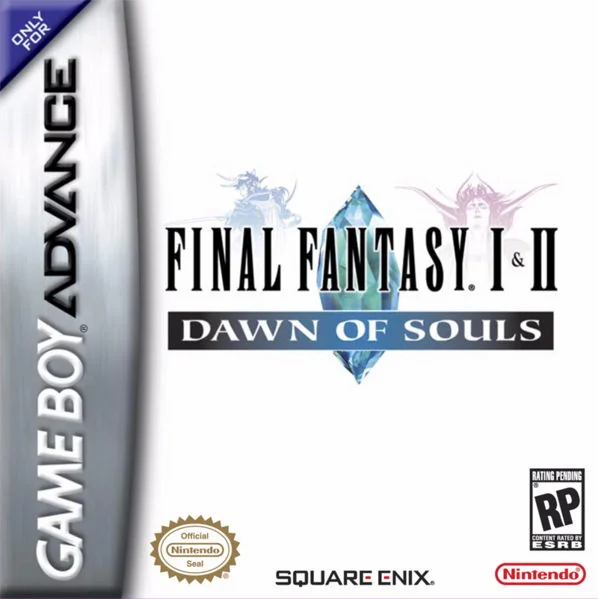
Square Enix’s later Game Boy Advance editions made the same point with traditional role-playing games. Final Fantasy I & II: Dawn of Souls, Final Fantasy IV Advance, Final Fantasy V Advance and Final Fantasy VI Advance brought substantial adventures to Nintendo’s handheld. Through the Game Boy Player, those releases became part of a GameCube-centered television library, even though they remained GBA editions rather than GameCube conversions.
Other examples showed the breadth of the catalog. Super Mario Advance 4: Super Mario Bros. 3 brought a classic platformer to the living room. Advance Wars 2: Black Hole Rising supplied turn-based tactical play. Pokémon Pinball: Ruby & Sapphire used a visual structure that was immediately readable on a larger screen. Metroid Fusion, Golden Sun and Castlevania: Circle of the Moon demonstrated that the Player was equally comfortable with action, exploration and long-form role-playing.
The point was not that every handheld game needed a television. The point was that the accessory made the distinction less restrictive. Players who preferred home-console sessions could experience software that had previously been available only through a Game Boy Advance, while existing handheld owners gained another way to approach games already in their libraries.
The Game Boy Advance could become a controller
The Player also belonged to Nintendo’s wider GameCube-to-Game Boy Advance connectivity strategy. With the appropriate GameCube Game Boy Advance Cable, a Game Boy Advance could serve as a controller for compatible GameCube software. This allowed the handheld’s buttons and screen to become an auxiliary interface rather than simply a way to supply a cartridge.
The arrangement had clear restrictions. A Game Boy Advance being used as a controller could not have a Game Pak inserted in its cartridge slot. The feature also depended on the individual GameCube game supporting the connection. It was not a general method for making every GameCube title use a handheld screen.
Final Fantasy: Crystal Chronicles and The Legend of Zelda: Four Swords Adventures illustrate the broader link-cable ecosystem. In those games, Game Boy Advance systems could provide separate screens, controls or multiplayer functions. That is different from playing a GBA cartridge through the Game Boy Player. The Player’s cartridge slot and the GameCube’s link features were related parts of Nintendo’s hardware strategy, but they performed different jobs.
The accessory itself included an external extension connector for compatible Game Boy systems and multiplayer arrangements. Nintendo’s documentation also warns users not to connect multiple Game Boy Players together through that connector. The limitation is a useful reminder that Nintendo supported particular connection patterns rather than every combination of Game Boy hardware.
Where the handheld illusion broke
Compatibility was broad, not absolute. Nintendo specifically states that cartridges using infrared features will not work with the Game Boy Player. A cartridge could use the familiar Game Boy form while still depending on hardware behavior that the Player did not reproduce.
The same principle applied to unusual control methods and specialized accessories. Software designed around tilt sensors, cameras, rumble features or other handheld-specific interactions could be difficult to use properly through a GameCube controller. The Game Boy Camera and e-Reader received support in documented configurations, but their compatibility did not mean that every Game Boy accessory or every peripheral-dependent game behaved identically to the original handheld.
The e-Reader is a particularly useful example of the Player’s flexibility and its limits. Nintendo’s documentation supports using the e-Reader with compatible Game Boy Advance or GameCube software in the appropriate cable arrangement. That extended some card-based functionality to the television, but it still depended on software designed for the connection and the correct external hardware.
Display behavior created another boundary. Period coverage praised the Player’s bright and clean output while noting that enlarged images could become soft or reveal visual flaws more clearly. Game Boy Color games could look especially stretched when expanded to fill the screen. The Player preserved the cartridge’s software and most of its controls more successfully than it preserved the exact visual character of a handheld LCD.
Reception: convenient, clever and not quite portable
Contemporary coverage generally approved of the Player’s basic idea. Reviewers liked the close physical fit with the GameCube, the use of existing console controllers and the access to a large handheld library. The low standalone price and temporary console bundles made the accessory feel like an expansion of the GameCube rather than an entirely separate platform.
The hardware also benefited from arriving when screen visibility was a significant concern for original Game Boy Advance owners. A television removed the need for a front light and made multiplayer or family viewing easier. The Game Boy Player could turn a solitary handheld cartridge into something that felt more like a conventional console game without requiring the publisher to create a new version.
Criticism focused on the compromises. Enlarged pictures could lose clarity, and some graphics exposed their limitations on a large display. The GameCube controller offered workable button layouts, but its arrangement was not identical to the compact GBA control scheme, and contemporary reviewers noted that more flexible remapping would have been welcome. The accessory also added height to the GameCube and was not especially convenient to remove and transport.
Link features were impressive but conditional. They required compatible games, cables and, in some cases, additional hardware. A player who wanted only a television version of a single-player GBA game could ignore those capabilities, while a household invested in Nintendo’s connected multiplayer ideas might see them as part of the Player’s larger appeal.
The result was a product with a clear audience. It suited players who wanted television access to handheld software. It was less suitable for anyone who valued the defining advantages of a handheld: portability, private play and controls designed specifically around the small machine.
The last official bridge before a different kind of hybrid
The Game Boy Player arrived during a transitional period. Nintendo still treated home and portable systems as separate platforms, but the company was increasingly connecting their software, screens and controllers. The Player made the GameCube a display and control hub for Game Boy cartridges, while link-cable games made the Game Boy Advance a companion device for selected console software.
Its legacy is therefore larger than its physical footprint. Nintendo had found a way to bring an existing portable library into the living room without rebuilding every game for the home console. That approach was efficient and attractive, but it also revealed why the two formats had remained separate. The television could not reproduce every handheld display behavior, the GameCube controller could not perfectly mimic every portable control layout and specialized cartridges could require hardware the Player did not contain.
The accessory also arrived just before Nintendo’s hardware strategy began moving toward a more direct combination of home and portable play. The Nintendo DS retained its own identity but expanded the idea of connected screens and handheld software. Much later, the Switch would make the home-and-portable distinction central to the design of the system itself. The Game Boy Player belongs to the earlier stage, when Nintendo was experimenting with bridges rather than building a single unified platform.
That makes the Player historically valuable even beyond its practical function. It was a physical demonstration that Nintendo’s cartridge handheld library could sit comfortably beside the GameCube’s disc-based catalog. The result was not a perfect imitation of a Game Boy Advance, but a convincing new role for the GameCube: part home console, part television-based Game Boy, and part link station for Nintendo’s connected software.
The Game Boy Player succeeded because it solved a specific problem instead of pretending to solve every handheld problem. It gave Game Boy, Game Boy Color and Game Boy Advance cartridges a place on the television, provided useful display controls and connected naturally to the GameCube’s controller and link-cable features.
Its limitations make the history more revealing. Infrared-dependent cartridges, specialized peripherals, stretched pixels, scrolling artifacts and imperfect button translation all show why a handheld is more than its cartridge. Even so, the Player remains one of Nintendo’s clearest experiments in joining portable software to home-console infrastructure.
Before Nintendo pursued a more complete home-and-portable hybrid, the Game Boy Player offered a transitional answer: keep the cartridges, keep the GameCube, and let the television become the biggest official screen the Game Boy family had received.